In modern orchards and large-scale farmland, spraying has moved far beyond the rough approach of simply “spraying until it reaches the crop.” What truly determines the effectiveness of plant protection is whether the droplets can penetrate the canopy, whether they can evenly adhere to both the upper and lower surfaces of leaves, and whether efficiency can be improved while minimizing chemical waste.
As agricultural drones continue to evolve, a deeper question is gradually emerging:
What truly defines an advanced spraying system?
- Is it a higher flow rate?
- Finer droplets?
- Or stronger airflow?
The answer may not lie in the parameters themselves, but in the principle of atomization.
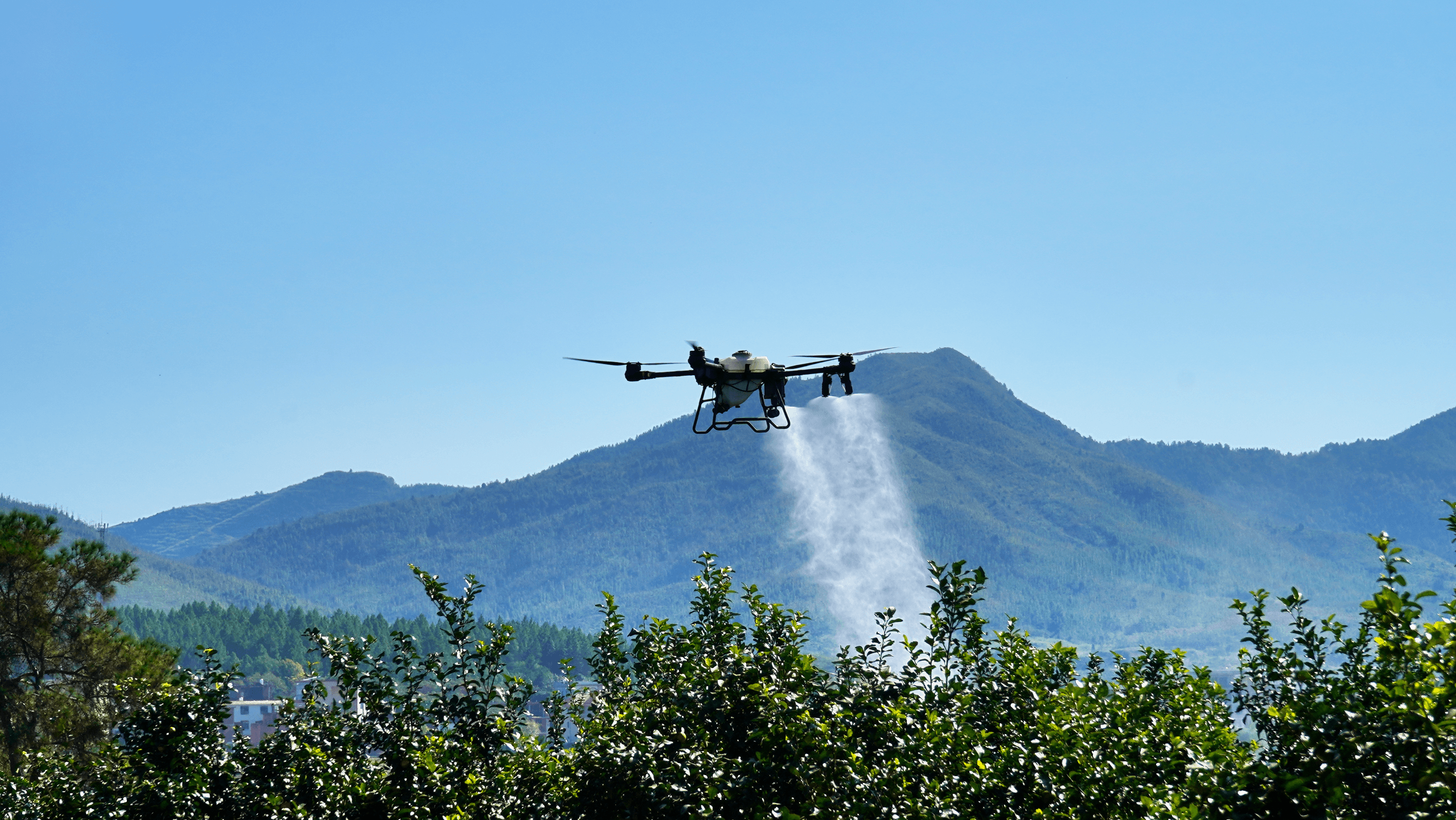
The Overlooked Variable: Temperature
In some traditional spraying approaches, certain fine atomization systems rely on thermal methods to generate extremely small droplets. Hot misting systems heat the liquid to rapidly evaporate it into droplets, while other systems regulate the spraying state through cooling or water-cooling structures. Their objective is the same—to produce finer droplets.
However, temperature itself is a critical variable that influences pesticide stability.
Excessively high temperatures may accelerate the volatilization of active ingredients and compromise formulation stability, while overly low temperatures can alter viscosity and fluidity, ultimately affecting spray uniformity and deposition performance.
For certain temperature-sensitive formulations, such thermal variation may alter the properties of the spray liquid even before it reaches the crop surface, potentially affecting the intended efficacy of the formulation.
How Room-Temperature Centrifugal Atomization Works
If adjusting temperature is one way to achieve finer droplets—but at the risk of affecting formulation performance—is there a solution that can deliver ultra-fine atomization without altering temperature?
Mechanical shear offers an alternative approach.
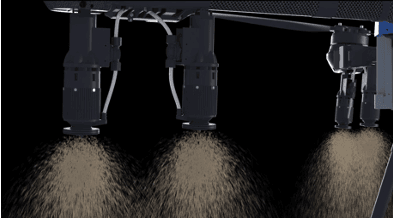
The core principle of room-temperature centrifugal atomization is to use centrifugal force generated by high-speed rotation to progressively break liquid into droplets of controlled sizes, all under stable ambient temperature conditions.
On the J150 agricultural drone platform, this system is achieved through a high-speed rotating atomization disk operating at up to 30,000 rpm. The liquid formulation is first evenly distributed across the surface of the rotating disk, where strong centrifugal force stretches it into a thin liquid film. Then, under the combined effects of air shear and high-speed airflow, the liquid film is further fragmented and refined into stable, uniformly sized droplets.
The entire atomization process takes place at room temperature, introducing no additional thermal variables and preserving the physical and chemical stability of the formulation.
With the support of the J150 control system, droplet size can be adjusted within a range of approximately 10–300 μm, meeting the requirements of different crops and operational environments.
Even under high-flow operation, the system maintains stable droplet formation, with a maximum flow rate of 40 L/min.
Beyond Droplets: How Airflow Determines Penetration
In drone-based operations, droplet size is not the only factor that determines spraying performance.
Even the finest droplets, without proper airflow guidance, may remain on the canopy surface and fail to reach the underside of leaves. This challenge becomes particularly evident in complex crop environments such as orchards.
- How can droplets penetrate dense foliage?
- How can they reach the underside of leaves?
- How can we avoid situations where the canopy surface is saturated while the inner canopy remains untreated?
Delivering spray droplets accurately and evenly to the target surface therefore becomes one of the major technical challenges for agricultural drone spraying systems.
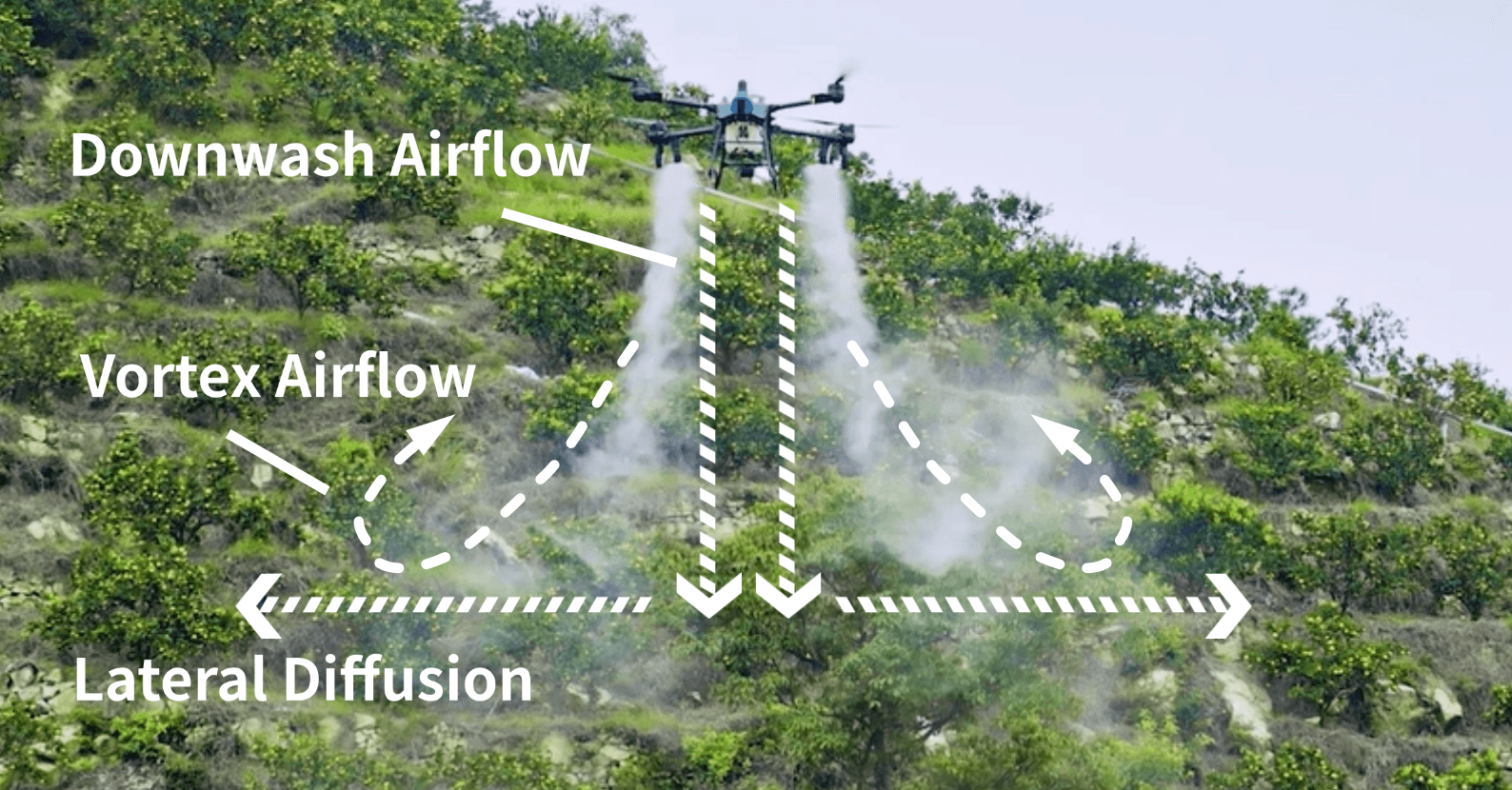
On the J150 platform, droplets and airflow are designed as a coordinated system. Through the combination of downward vertical airflow, ground-induced recirculating airflow, and horizontal diffusion airflow, a three-dimensional spraying structure is formed, enabling droplets to penetrate crop canopies more effectively.
Through the synergy between airflow and droplets, the system can improve penetration performance in complex orchard environments by approximately 15%.
From Parameters to Efficiency: How System Synergy Redefines Agricultural Spraying
In agricultural spraying, many technical parameters are often compared individually and sometimes overemphasized.
Higher flow rates, finer droplets, and stronger airflow may appear to represent technological advancement. However, if these elements operate in isolation without coordination, even the most extreme specifications may fail to improve real operational performance.
True progress may not come from maximizing a single parameter, but from the integration and coordination of the entire system.
On the J150 platform, atomization mechanisms, droplet size control, flow management, and three-dimensional airflow are integrated into a unified control system.
While operating at a flow rate of up to 40 L/min, the system maintains stable droplet structures. Airflow and spray modes are dynamically matched to ensure both penetration and diffusion performance. Meanwhile, droplet sizes can be adjusted within a 10–300 μm range to adapt to different crops and operating conditions.
This coordinated system design not only improves canopy penetration but also optimizes overall resource efficiency.
In practical applications, the system can achieve:
- Approximately 20% improvement in pesticide utilization efficiency
- Up to 90% reduction in water consumption
When droplets are precisely deposited onto target surfaces—rather than drifting away or accumulating excessively on outer foliage—spraying operations evolve from simple coverage to true precision delivery.
The future of agricultural spraying is not about stronger force, but greater precision;
not about higher input, but higher efficiency.
If you would like to learn more about how the J150 platform enhances spraying efficiency and resource utilization in real-world operations, please click “Contact Us” below to connect with our team.