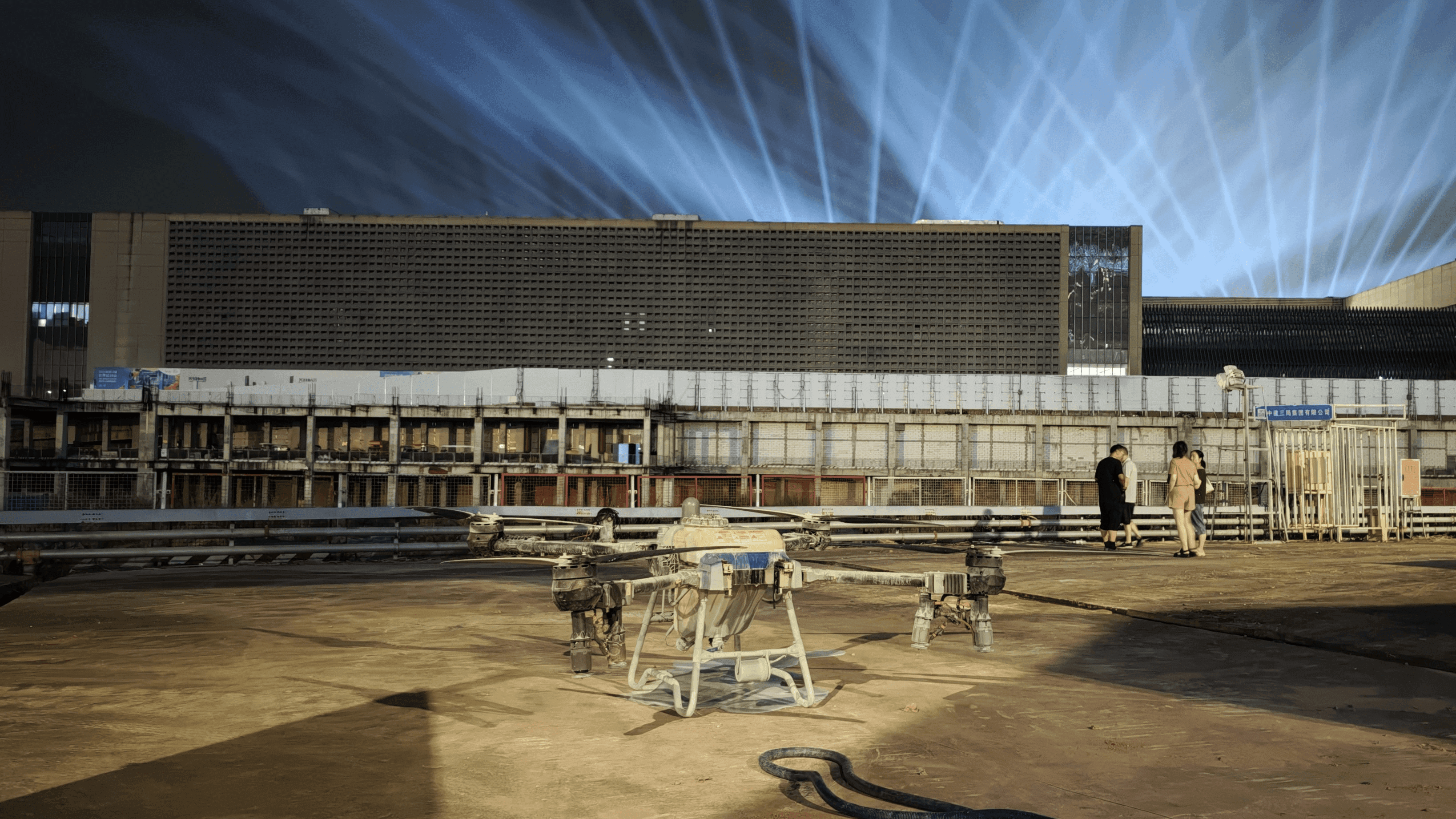
In agricultural drone operations, thin obstacles such as overhead power lines are among the most dangerous hidden risks in the air. Due to their extremely small diameter, these objects are difficult to detect —especially during high-speed flight. As a result, such subtle obstacles are often one of the main causes of flight accidents.
As agricultural drones continue to evolve toward higher speeds and greater intelligence, this challenge becomes even more critical. The faster the aircraft flies, the less reaction time the system has. The more complex the terrain, the greater the interference affecting obstacle detection and recognition. Enabling drones to “see” nearly invisible, ultra-thin targets remains a key technical challenge for the entire industry.
The EAVision J150 was engineered precisely to address this core problem.
Why Are Thin Power Lines So Difficult to Detect?
Unlike buildings or trees, power lines reflect very little light and have extremely subtle shapes. Their diameter is minimal, and their linear structure provides very limited visual information. Especially in complex agricultural environments, they are often surrounded by branches, crops, or shadows, making them nearly indistinguishable in captured images.
Traditional perception systems rely heavily on visual recognition. However, changing lighting conditions, dust, fog, and backlighting frequently reduce detection accuracy. In high-speed flight, even a brief delay in recognition can result in a serious collision.
To overcome these limitations, the J150 introduces a revolutionary upgrade to agricultural perception systems. By integrating an advanced ALS compound-eye LiDAR and phased array radar, it delivers true all-direction obstacle avoidance—bringing a new level of safety and reliability to high-speed agricultural operations.
Building a High-Precision 3D Environmental Model
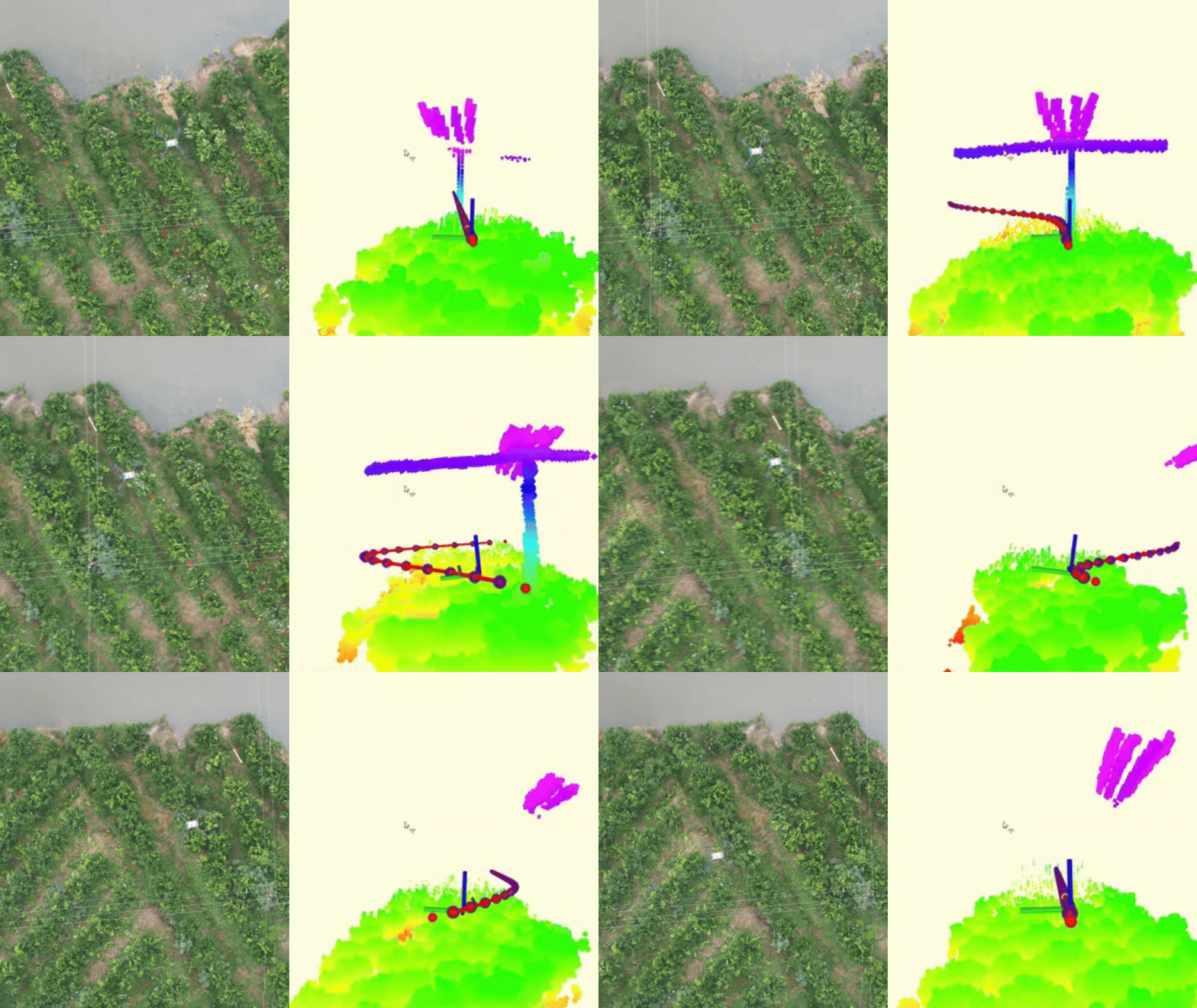
At the core of the J150’s perception system is its ALS spot-based LiDAR technology. Using an advanced laser scanning system, the drone generates up to 920,000 point clouds per second, dramatically reducing reliance on traditional image-based detection. Instead of passively interpreting visual data, the system actively emits laser pulses to measure distance and reconstruct a real-time three-dimensional environment.
Each laser pulse is transmitted toward a target object and reflected back to the sensor. By calculating the time of flight, the system precisely determines the object’s spatial coordinates. Millions of these measurements are processed every second, forming a highly detailed point cloud that accurately represents terrain, vegetation, and surrounding obstacles.
With such high-density spatial sampling capability, the system can even detect centimeter-level thin objects. These fine structures are rendered as continuous elements within the grid map, enabling accurate spatial avoidance and safe navigation—even at high speed.
Stable Flight Protection in Complex Terrain
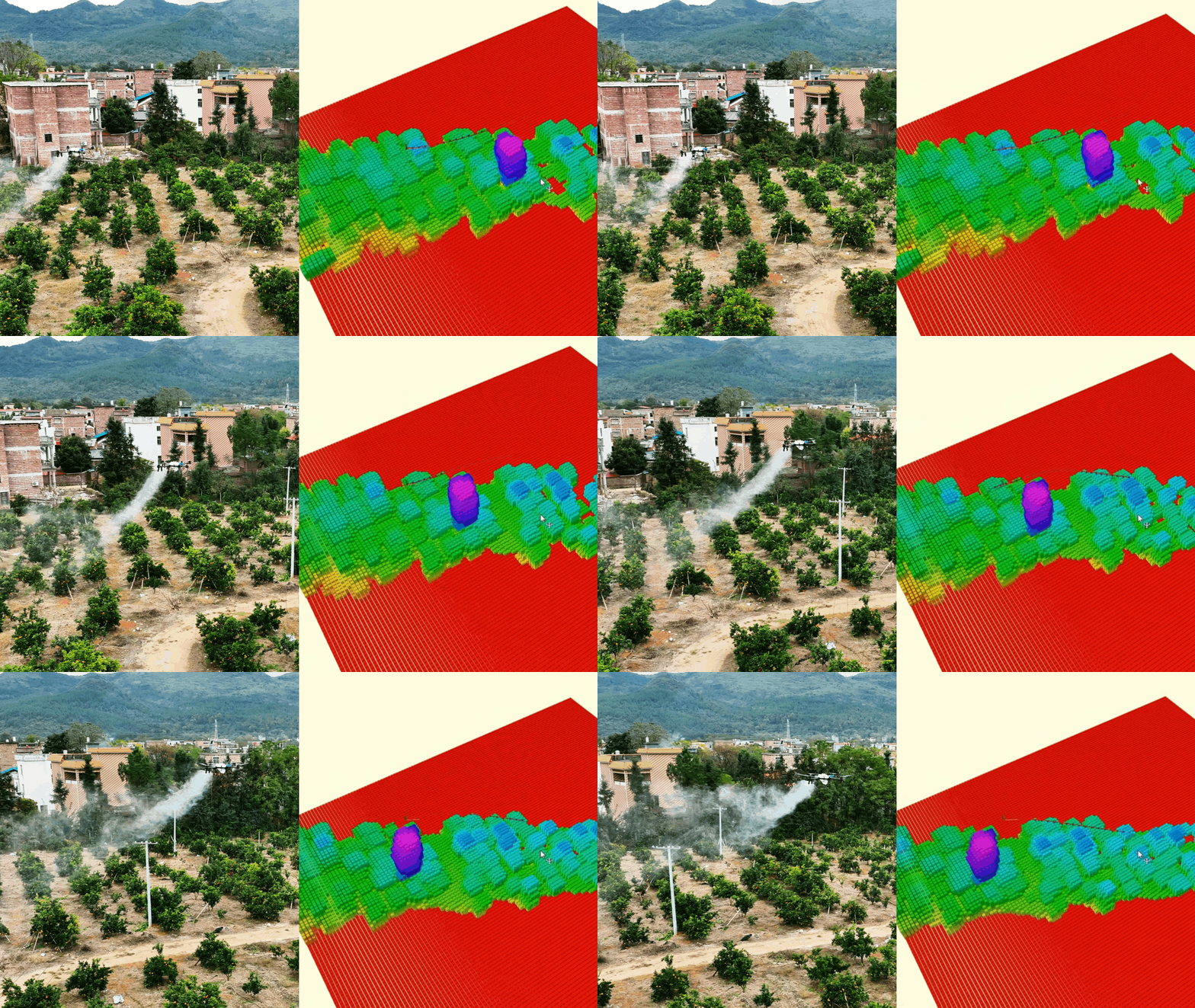
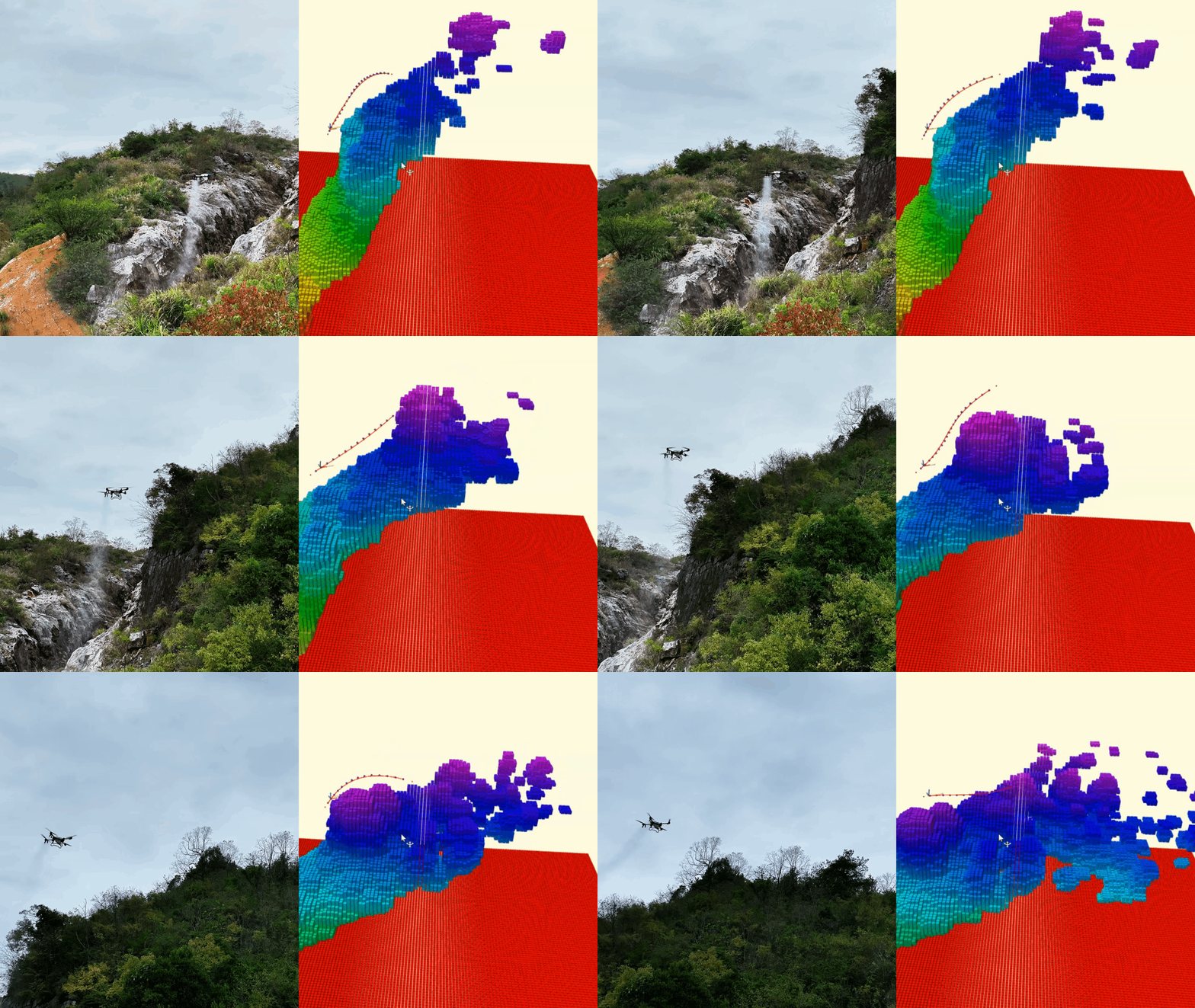
In addition to detecting small obstacles such as thin wires, agricultural operations frequently take place in challenging landscapes—mountainous areas and terraced fields with constantly changing elevation. In such environments, the drone must maintain a consistent flight altitude and stable spraying height to ensure both safety and operational precision.
With its continuous point-cloud grid mapping capability, the J150 delivers outstanding terrain-following performance. Powered by advanced terrain-following algorithms, the system continuously adjusts flight altitude in real time, allowing the aircraft to operate smoothly across slopes and valleys while maintaining full obstacle awareness.
Stable flight control and precise environmental perception reinforce each other, forming a fully integrated closed-loop safety system that ensures reliable performance even in the most complex agricultural conditions.
Multi-Sensor Fusion to Overcome Every Challenge
Every sensor performs best under specific environmental conditions. No single sensing technology can operate perfectly in all scenarios. LiDAR performance may be affected by heavy rain or dense dust. Cameras struggle in low-light conditions. Millimeter-wave radar offers strong penetration capability but has relatively lower spatial resolution.
To overcome these limitations, the J150 adopts a multi-sensor fusion architecture. Its four-layer sensing system—front-mounted LiDAR, upward-facing phased array radar, rear millimeter-wave radar, and FPV fisheye camera—enables synchronized data integration and cross-validation between sensors.
When the reliability of one sensor decreases, others compensate to maintain consistent perception performance. This redundancy-based design significantly enhances operational stability in real-world agricultural environments, ensuring reliable obstacle detection and safer flight under complex conditions.

Converting Distance into Reaction Time
In high-speed flight, greater detection distance directly translates into longer reaction time for avoidance maneuvers. The true benchmark of obstacle avoidance performance is not only what can be detected—but how early it can be detected.
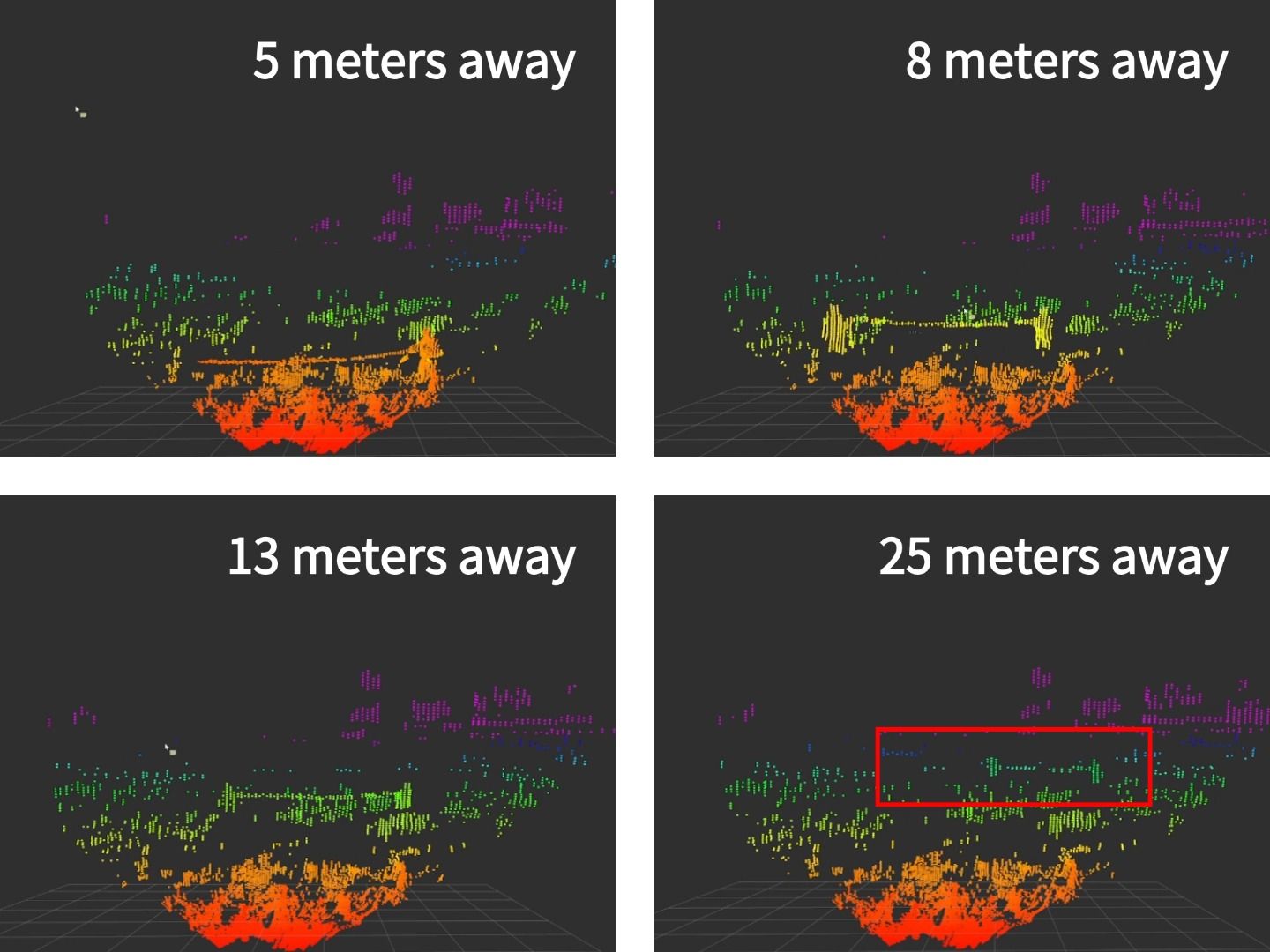
Under standard operating conditions, the J150 can detect a 1 cm diameter wire at a distance of up to 25 meters. At a typical operating speed of 7.0 m/s, this provides nearly four seconds of reaction time. Even at the maximum flight speed of 13.8 m/s, the system still retains approximately two seconds to respond.
Though brief, these seconds are critical. Within this window, the flight controller can evaluate multiple alternative flight paths, adjust speed and altitude, and execute smooth avoidance maneuvers—while maintaining uninterrupted spraying operations.
In high-speed agricultural missions, early detection is the cornerstone of operational safety.
Proven in Real Agricultural Environments
Across orchards, tea plantations, mountainous terrain, and open farmland, the J150’s perception system has undergone extensive field validation. These tests included multi-distance point-to-line detection experiments and high-speed flight trials under real operating conditions.
Even in changing weather and lighting environments, the results consistently demonstrated stable and reliable obstacle avoidance accuracy. From complex hillside orchards to large-scale field operations, the J150 has proven its capability in frontline agricultural scenarios around the world.
Ready to elevate your safety standards?
Contact our team to discover how the J150 can enhance your operational safety and maximize productivity.