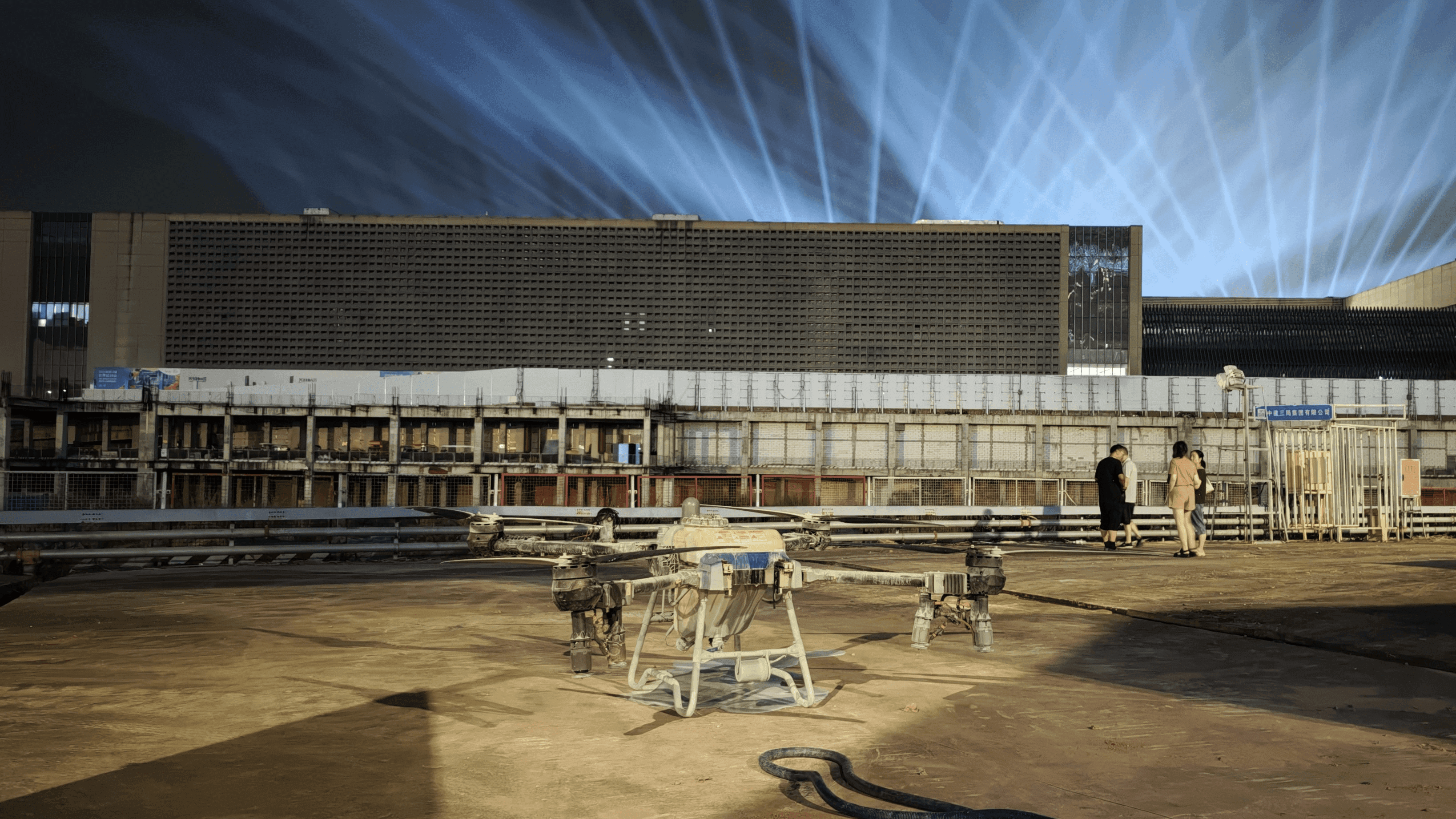
Crop Spraying Drones: How to Pick the Right One for Your Farm


Buying a crop-spraying drone isn't like buying a tractor. There's no showroom you walk through, kick the tires, and drive off the lot. The specs are confusing, the price range is huge, and one wrong choice can leave an expensive machine sitting in your barn. We've spent years helping growers across North America, Latin America, Southeast Asia, and beyond find the right agricultural spraying drone for their operation — and here's what we've learned.
Why Ag Drone Spraying Deserves Your Attention
Let's skip the hype and talk numbers. Farms can decrease their water use for spraying by up to 90% by using drones for precise spraying and monitoring. This targeted use of resources also leads to yields that are 5–10% higher across different crops.
And the market agrees. The agriculture drones market is estimated at USD 2.63 billion in 2025 and is projected to reach USD 10.76 billion by 2030, at a CAGR of 32.6%. That's not a fad — that's a full-on shift in how commercial farming works.
Hardware prices continue to fall, while fertilizer and pesticide costs rise, prompting growers to adopt sensor-guided spraying, which reduces chemical use by up to 35%. If you're still running ground rigs over every acre the same way, you're spending more than you need to.
What to Look For in a Crop Spraying Drone
Not all spraying drones are built equal. Here's what actually separates a smart investment from a headache.
Tank Size and Payload
This one's simple: bigger tanks mean fewer refills and more acres per flight. A 10-liter tank might work for a small plot, but if you're spraying 500+ acres, you need a machine that can keep up. The best models today carry 20 gallons of liquid or around 180 lbs for spreading — that's enough to seriously cut down on pit stops.
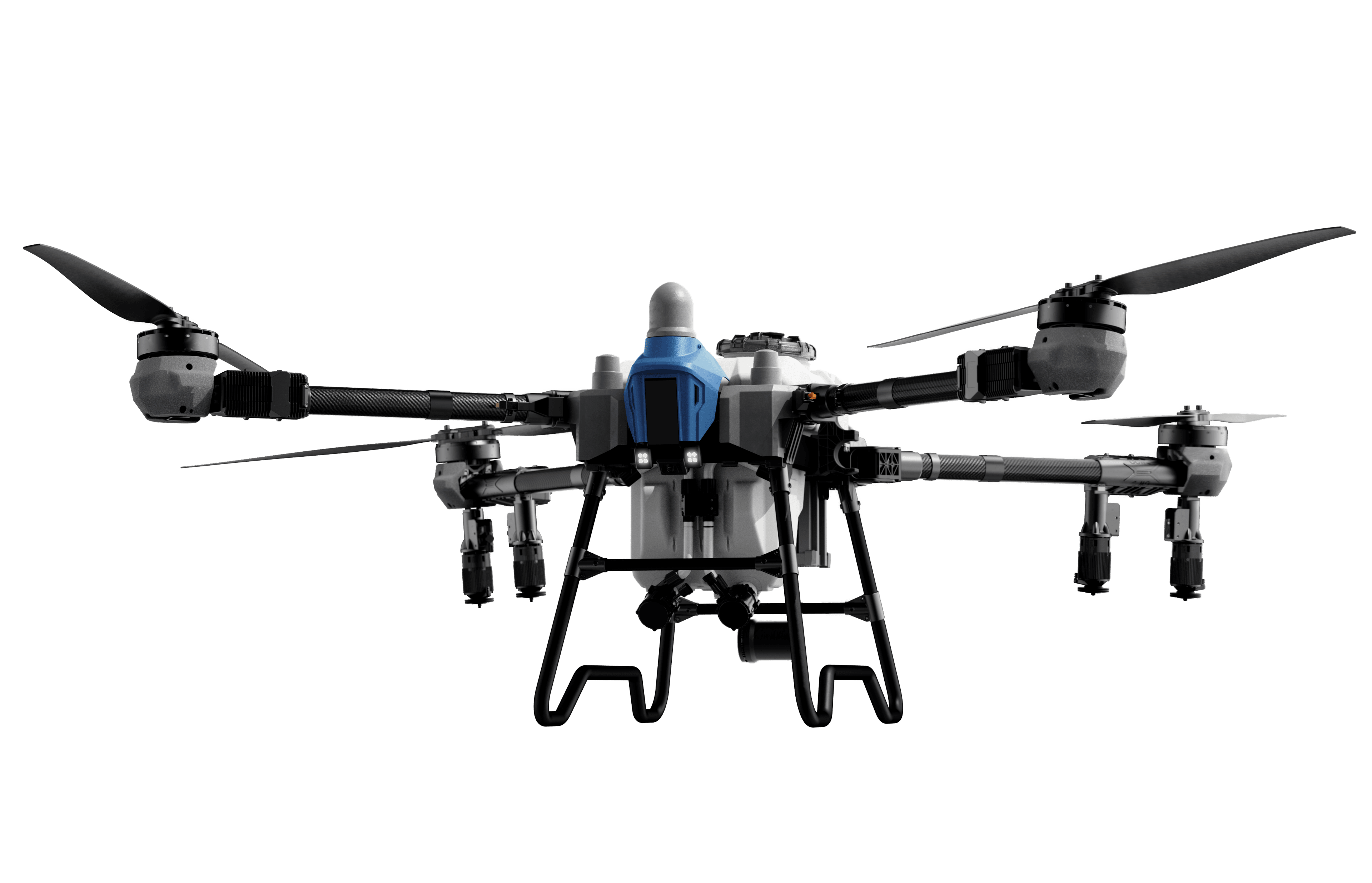
For example, the EAVISION EA-J150 carries a 20-gallon spray tank with a 180-pound spreader capacity and a spray flow rate of 10.5 gal/min. That kind of output means you're covering ground fast, not hovering around your landing zone swapping tanks every 15 minutes.
Obstacle Avoidance and Terrain Following
Here's the thing — flat, open fields are the easy part. The real test for an agricultural spraying drone is hilly terrain, orchards with tight rows, or fields with power lines, dead branches, and fence posts.
Look for drones with LiDAR + radar fusion, not just basic GPS altitude hold. The J150 combines five advanced sensing modules to create a 360° terrain and obstacle environment. Dual forward LiDAR, dual phased array radar, and a 360° millimetre wave radar provide sensing capability day and night — even during dusty and foggy conditions.
This system can identify 3 cm obstacles at 13.8 m/s flight speeds and 1 cm wires at 7 m/s, while maintaining precise terrain following. That's the difference between a machine that works in real conditions and one that looks great in a demo video.
Droplet Control and Nozzle Tech
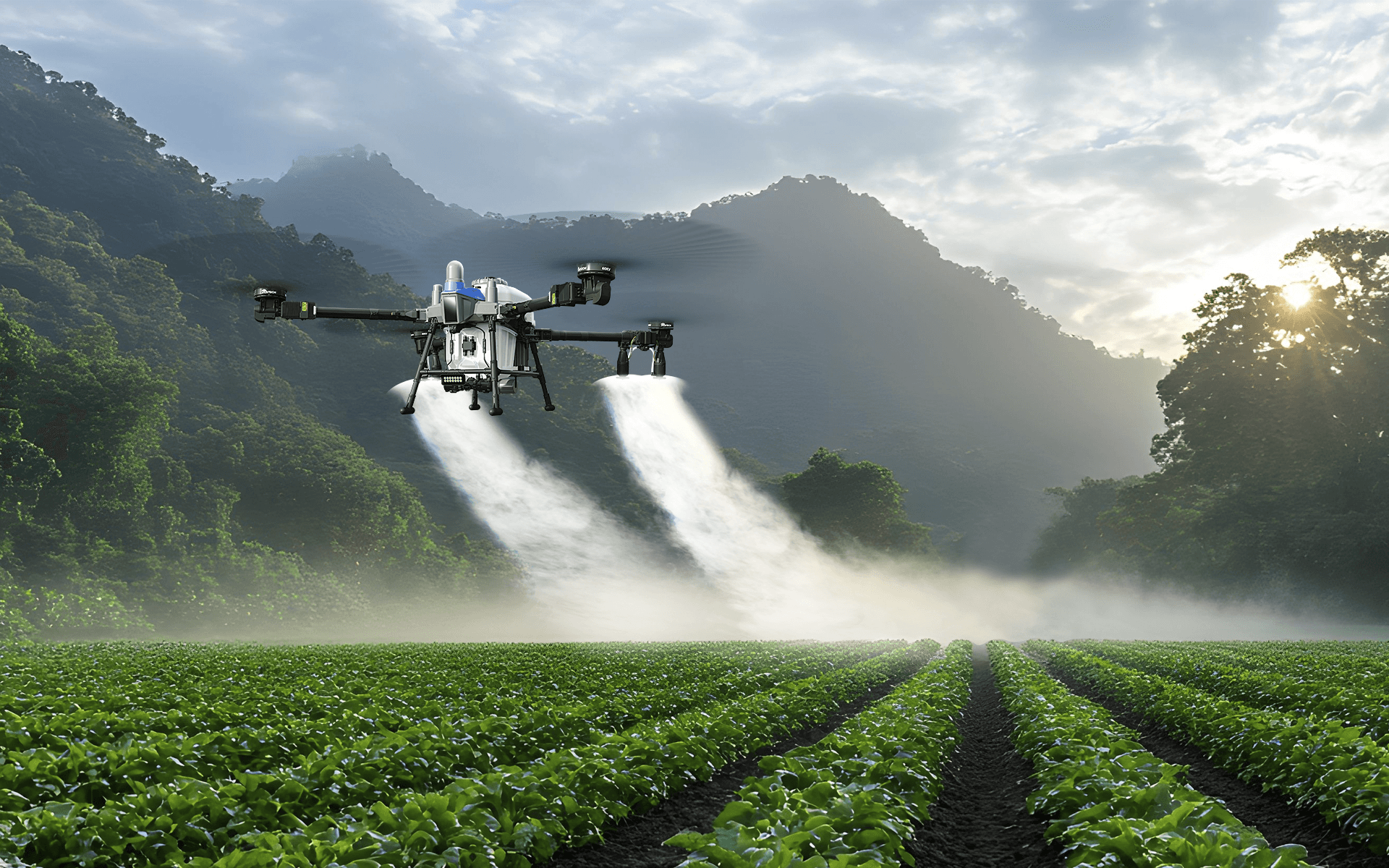
Most growers overlook this, but droplet size matters — a lot. Too large, and the liquid pools and runs off. Too fine, and it drifts away in the wind. You want a system that lets you adjust droplet size based on what you're spraying and on which crop.
A mixed droplet spray mode delivers four droplet sizes in one flight — large droplets coat leaf fronts while smaller ones cover backs for better coverage. In dense orchards, wind plus mist creates a rotating mist field, ensuring full canopy penetration. That's the kind of detail that separates precision from waste.
Matching the Drone to Your Crop Type
A rice paddy and a citrus grove are two completely different jobs. The drone that's perfect for flat grain fields may struggle in hilly orchard terrain. Here's a quick guide:
|
Crop Type |
Key Drone Features Needed |
Why It Matters |
|
Grain (rice, wheat, corn) |
Large tank, fast speed, wide swath |
Cover flat acres quickly |
|
Fruit trees (citrus, apples) |
Canopy-following, fine droplet control, obstacle avoidance |
Spray reaches inside the tree crown |
|
Commercial crops (cotton, tea) |
3D mapping, autonomous flight, adjustable spray modes |
Mixed terrain, varied plant heights |
|
Hillside/mountain crops |
LiDAR terrain following, high stability |
Safe operation on steep gradients |
EAVISION's UAVs have been proven across mountainous fruit farms where tree height differences reach 10 meters. On a sugarcane farm in Southwest China, they worked 50 times faster than traditional labor while boosting sugar levels by 3%. On a citrus farm in Guangxi province, they showed a 90% improvement over manual labor in preventing spider mites.
Those aren't lab numbers. That's field data.
How Much Does a Crop Spraying Drone Cost?
Let's be honest about the price tag. Crop spraying drone prices vary a lot depending on payload, sensor tech, and autonomy level.
Entry-level agricultural drones now retail for USD 2,000–4,000 (down from USD 14,500 in 2016). Mid-range platforms, priced at USD 8,000–15,000, include obstacle avoidance and automated mission planning features once reserved for enterprise models topping USD 20,000.
For a pro-grade machine like the J150, you're looking at the higher end — but the per-acre economics make the math work fast. The total cost per acre for drone applications is roughly $12.27 for farmers and $7.39 for custom operators. For comparison, custom hire rates for drone spraying sit around $16 per acre, while fungicide applications via crop duster cost about $12.50 per acre.
If you're running a spray service business, the payback period can be surprisingly short.
Our Pick for 2025
We're biased, sure — but with good reason. The EA-J150 is the agricultural spray drone built for serious operators who demand reliability, flexibility, and productivity at scale. It's already been tested on over 11,000 acres in the field, and U.S. distributors have logged 1 million EAVISION acres on U.S. soil in 2025.
EAVISION was founded in 2015 and focuses on precision agriculture technologies, with teams located in China and Silicon Valley. The company's core strengths are binocular vision technology and AI autonomous control for complex outdoor environments. We didn't start by building drones. We started by solving vision problems in the hardest possible terrain.
Key Takeaways
- Tank size and flow rate drive your acres-per-hour number. Don't undersize.
- Obstacle avoidance quality determines whether you can actually fly in real field conditions — not just flat demos.
- Droplet control is the unsung hero of spray efficacy. Adjustable nozzle systems save chemicals and improve coverage.
- Match the drone to your crop, not the other way around. Orchards, grain, hillside — each demands different specs.
- Per-acre costs are already competitive with traditional aerial application, and they're only going down.
FAQs
How many acres can a crop-spraying drone cover per hour?
It depends on tank size, spray rate, and terrain. A high-capacity drone like the EA-J150 spraying at 2 gal/acre and 30 mph can cover significantly more ground per flight than smaller models. Expect anywhere from 30 to 60+ acres per hour for pro-grade machines, factoring in battery swaps and refills.
Do I need a license to operate an agricultural spraying drone?
In the U.S., yes. You'll need FAA compliance, including drone registration, Part 137 authorization, and a 44807 exemption for agricultural spraying. Regulations vary by country — in Latin America and Southeast Asia, check with your national aviation authority for local rules.
What's the difference between LiDAR and radar on a spray drone?
LiDAR uses laser pulses to build a precise 3D map of your surroundings — great for detecting thin obstacles like wires and branches. Radar works better in dust, fog, and low-light conditions. The best drones (like the J150) combine both for all-weather, all-terrain reliability.
Can one drone handle both grain fields and orchards?
Yes, but only if it has adjustable droplet sizes and terrain-following capability. Flat-field spraying is straightforward, while orchards demand canopy-following flight and finer spray patterns. A multifunctional drone with modular spray configurations can do both well.
Is a crop-spraying drone worth the investment for a smaller farm?
It can be, especially if you run it as a service and spray neighboring farms too. The cost-per-acre drops dramatically with more acreage. For farms under 200 acres, a drone-as-a-service model — hiring an operator instead of buying — might be the smarter first step.