Drone Battery Fire: How to Reduce the Risk in Agricultural Operations


Drone battery fires are a real safety concern. In one documented U.S. incident in 2022, a research drone crashed, causing a lithium-ion battery cell to ignite and start a grass fire. Meanwhile, an American Spray Drone Coalition industry survey reported that U.S. agricultural spray drones treated more than 16.4 million acres in 2025, up 58.7% from 2024. Agricultural operations involve heat, dust, and pesticide exposure, making careful battery handling, inspection, and maintenance essential.
Here's what every operator and fleet manager should know to keep a drone battery fire from becoming an expensive or even dangerous reality.
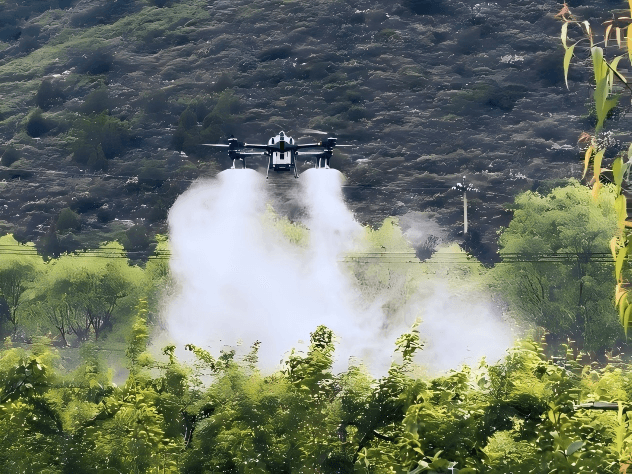
Why Ag Drones Face Higher Battery Fire Risk
Your average consumer drone flies 20 minutes in fair weather, then goes back in a case. An ag drone? It's running heavy payloads through 8- to 12-hour spray days in 35°C heat.
That workload matters. Agricultural drone batteries deal with:
- Sustained high-discharge cycles that generate more internal heat per flight
- Field dust, moisture, and chemical residue corroding connectors
- Hot vehicle transport (a parked truck bed can hit 60°C+ inside)
- Minor impact damage from rough landings on terraced or hilly terrain
None of these alone will start a fire. But stack two or three together, and you've got a cell creeping toward thermal runaway, the self-feeding chemical reaction that turns a battery from warm to flaming in seconds.
What Actually Triggers Thermal Runaway
Most LiPo and lithium-ion battery fires aren't random. They trace back to a short list of causes.
|
Trigger |
How It Happens on a Farm |
|
Overcharging |
Charger left unattended; wrong voltage setting |
|
Physical damage |
Hard landing dents a cell; connector gets bent |
|
Heat exposure |
Packs left in a closed vehicle or direct sun |
|
Improper storage |
Fully charged packs stored for days in a hot shed |
|
Short circuit |
Pesticide residue or dust corrodes terminals |
|
Cell imbalance |
One weak cell drags the pack into unsafe territory |
Once a single cell overheats, it can push neighboring cells past their limit. The reaction speeds up, gases vent, and you've got fire. At that point, you can't just pull a plug and walk away. The battery produces its own heat and oxygen. That's what makes a drone battery fire different from a normal electrical fire. And that's exactly why prevention beats response every time.
5 Battery-Care Habits for Agricultural Drone Operations
You don't need a complicated protocol. You need the same five checks, done every day.
1. Inspect before every charge. Look for swelling, cracks, discoloration, or a chemical smell. If a pack is puffed even slightly, pull it from rotation. No exceptions.
2. Cool down before charging. After a flight, batteries are hot. Give them 10–15 minutes in shade before plugging in. Charging a warm pack increases internal stress by a measurable margin.
3. Never charge unattended. This is the number-one rule in every battery safety guide for a reason. More fires start during charging than any other time. Stay in the area. Set a timer.
4. Store at 40–60% charge. If a battery will sit for more than 48 hours, bring it to storage voltage (around 3.80–3.85V per cell). Leaving packs fully charged degrades chemistry and raises fire risk. Keep them between 15–25°C in a dry, ventilated space, not a truck cab.
5. Keep packs away from farm chemicals. Pesticide residue and fertilizer dust corrode battery terminals and aluminum casings. That corrosion can cause micro-shorts that you won't see until it's too late. Wipe down connectors after every spray session.
Honestly, most of these take under 60 seconds each. The crews that build them into their daily routine almost never have battery issues.
Charging Setup: Get This Right
Your charging area matters more than your charger brand. A few rules:
- Charge on a non-flammable surface like concrete or metal, never wood or grass
- Keep a Class D fire extinguisher or bucket of dry sand within reach (water can actually spread a lithium fire)
- Use the manufacturer-recommended charger with proper cell-count settings and balance-charge mode
- Make sure the space has airflow since a sealed container or tight room traps heat and gas
For crews running multiple packs across a full spray day, set up a dedicated charging station away from fuel, hay, and chemical storage. It's a small investment that removes a big variable.
If a Battery Does Catch Fire
Despite your best efforts, things can still go wrong. Here's the response order:
1. Move people upwind immediately. LiPo fires release toxic hydrogen fluoride gas.
2. Do not use water unless you have large volumes available for sustained cooling. Small amounts of water on a lithium fire can make it worse.
3. Isolate the battery. If safe to do so, move it to bare concrete or dirt, away from other packs, equipment, and flammable materials.
4. Let it burn out in a safe location. A lithium battery fire is a chemical reaction, not a fuel fire. It will exhaust itself, but it can reignite for hours afterward. Monitor it.
5. Inspect all nearby batteries before putting them back into service.
How Smart Drone Design Helps
Battery safety depends on equipment design as well as operator practices. Battery management systems can monitor cell voltage and temperature, while built-in protection features can help detect and manage abnormal charging conditions. At EAVISION, the J100 lets crews view cell voltage, temperature, and other battery information through the remote controller interface, helping them make more informed operating and maintenance decisions.
If you're running a fleet or considering adding ag drones to your operation, we'd recommend talking to our team directly. You can reach out through our contact page, or if you're interested in distributing EAVISION drones in your region, explore our dealer partnership program.
FAQs
How common are drone battery fires in agriculture?
They’re uncommon relative to total flight hours, but they do happen. A 2021 FAA report documented an Amazon delivery drone crash that sparked a lithium battery fire, burning several acres of wheat stubble. It wasn‘t an agricultural spray drone, but it shows what a failed pack can do. As ag drone adoption keeps growing, with over 5,500 registered spray drones in the US and counting, the absolute numbers will rise if operators don’t follow consistent safety routines.
Can you put out a drone battery fire with water?
Not effectively in small amounts. Lithium battery fires are chemical reactions that produce their own oxidizers. Small splashes of water can spread the fire or cause splattering. Large, sustained volumes of water can help cool surrounding cells, but for field crews, dry sand or a Class D extinguisher is the safer first response.
How should I store ag drone batteries between spray seasons?
Bring each pack to storage voltage, roughly 3.80–3.85V per cell, or about 40–60% charge. Store in a cool (15–25°C), dry, ventilated room on a non-flammable surface. Check stored batteries monthly for swelling or voltage drift. Never store fully charged packs for extended periods because that alone can cause 15–30% permanent capacity loss over six months.
What are the first signs a drone battery is about to fail?
Watch for visible swelling or puffiness, unusual warmth during storage, a chemical or sweet smell, cell voltage imbalance greater than 0.1V after balance charging, or any physical damage like dents or cracks. If you spot any of these, pull the pack immediately and isolate it in a fire-safe container.
Does drone design affect battery fire risk?
Yes. Drones with built-in battery management systems (BMS) that monitor individual cell voltage, temperature, and charge state in real time can alert operators to problems before thermal runaway begins. Smart battery design with features like automatic cutoff and balanced charging significantly reduces risk compared to drones using generic, unmonitored packs.