6 Key Advantages of Drone Pasture Spraying


Every farm has that one paddock. The hillside covered in thistles. The soft corner that turns into a bog after rain. The patch of weeds you keep meaning to deal with but never quite get to.
Each one costs you something. Time, fuel, a sprayer you can’t get in there, or a contractor who won’t come out for a few hectares. Drone pasture spraying changes that calculation. It gets you onto ground you can’t drive, without tearing up the grass you’re trying to grow.
Here are six advantages worth checking against that paddock you keep putting off.

1. Easier Access to Steep and Wet Pasture
Some paddocks just aren't built for a sprayer. The slope is too steep, the bottom corner stays soft, or the only way in is a gate you'd rather not take a vehicle through. Drone pasture spraying changes that. The aircraft carries the spray above the ground instead of across it, so the job no longer depends on a drivable route into the paddock.
Kansas State Extension highlighted this benefit in June 2026, describing spray drones as useful in difficult terrain where ground rigs struggle, especially in pastures and rangelands with steep slopes, terraces, and irregular boundaries.
For a buyer, the value is simple. That paddock gets treated instead of waiting another season. You don't have to send a spray vehicle across an awkward slope or a soft patch. Weather and the product label still decide when you can fly, but the access problem is no longer the reason to skip the job.
2. Less Soil Compaction and Grass Damage
A drone doesn't leave wheel tracks. That sounds small until you picture the alternative. A sprayer crossing soft pasture leaves ruts, compresses the soil, and flattens a strip of grass every time it passes. The grass you're trying to grow takes the hit before the weeds do.
This matters most when the weeds sit in a paddock you'd rather not drive across. Maybe it's a few patches surrounded by good grass, or a wet corner where a loaded sprayer sinks. With a drone, the aircraft goes to the patches and the support vehicle stays on firm ground. No ruts. No flattened strips. No turning area torn up at the gate.
On farms that spray more than once a season, those passes add up. Every trip across the same ground is another chance to make the same tracks. A drone doesn't eliminate every vehicle movement, but it keeps the treatment off the sward you're trying to protect.
3. Lower Herbicide Spending on Patchy Weeds
Weeds don't grow evenly. They show up in patches, along a fence, or in that one corner that always gets wet. If you spray the whole paddock for a few patches, you're paying for a lot of herbicide that never touches a weed.
A drone lets you treat the patches and leave the clean grass alone. On a 40-hectare paddock with 8 hectares of actual weed patches, 80% of the field stays untreated. The dose on the treated hectares stays the same. What changes is how many hectares you're paying to spray. That is where the savings come from.
It matters most where good clover grows between the patches. Leave those clean sections alone, and you won't put herbicide on forage you want to keep. Clover inside a treated patch is still exposed, so product choice still matters. But the area you don't touch is the area you don't pay for.
4. Less Water to Transport for Suitable Treatments
Water is heavy, and on a remote paddock it's often the slowest part of the job. Every load has to come from somewhere, and someone has to haul it. Fewer gallons mean fewer trips, less time at the pump, and a smaller trailer behind the ute.
Where the product label and coverage target allow it, a lower carrier volume changes how the day runs. You're not shuttling water back and forth while the sprayer sits idle. On a paddock miles from the nearest tank, that can matter more than the drone's top speed.
In a July 2024 dogfennel trial, UF/IFAS researchers Brent Sellers and Tenzy Mncube compared drone applications at 2.5 US gallons per acre with ground applications at 10, 20, and 30 gallons per acre. The same herbicide mixtures and product rates were used. They reported no visible treatment differences at one and two months.
Against the 20-gallon comparison, the drone treatment used 87.5% less carrier volume. Scaling those volumes to 100 acres gives the following illustration. The trial was preliminary and specific to dogfennel and the tested mixtures.
|
Buyer calculation |
Illustrative result |
|
100 acres at 20 US gal/acre |
2,000 US gallons of spray mixture |
|
100 acres at 2.5 US gal/acre |
250 US gallons of spray mixture |
|
Difference in mixture volume |
1,750 US gallons, or 87.5% less |
For a field far from the nearest supply point, the difference is practical: less liquid needs hauling, and less crew time is tied up replenishing the field supply. The advantage comes from the permitted application volume, while the drone itself still needs tank refills.
5. Greater Flexibility for Small and Scattered Paddocks
Some paddocks never get sprayed because they're too much hassle. Too small for the big rig. Too awkward to get the sprayer through the gate. Too far from the rest of the block to justify a trip. A drone changes that. It doesn't need a wide gateway or a long run-up. It just needs somewhere to take off.
That makes the small jobs easier to fold into your weed program. A hillside patch. An isolated paddock at the back of the farm. A few blocks you can stage from the same spot. The area that gets treated is the area that needs it, not the area a big machine can reach.
That flexibility can still pay off even when the drone's per-hectare rate is higher. On an awkward block, getting suitable equipment into position is often the biggest part of the bill. The real question is setup time and minimum charges, not the headline rate.
6. More Focused Follow-Up Weed Control
A treatment record shows you where the work was done. When that record sits alongside repeat imagery and what you saw on the ground, the patches that keep coming back are easier to find. Follow-up work can go straight to those spots instead of starting with another pass over the whole paddock.
NSW Government guidance on using drones on-farm notes that repeatable drone flights make it easier to compare changes in pasture over time, provided the results are validated with ground observations.
For a buyer paying for repeat work, better visibility makes the next spending decision more specific. You can tell surviving weeds from new growth and clean areas on the same field record. The benefit is a follow-up programme that goes where it is needed, instead of spreading money evenly across a paddock that no longer needs it.
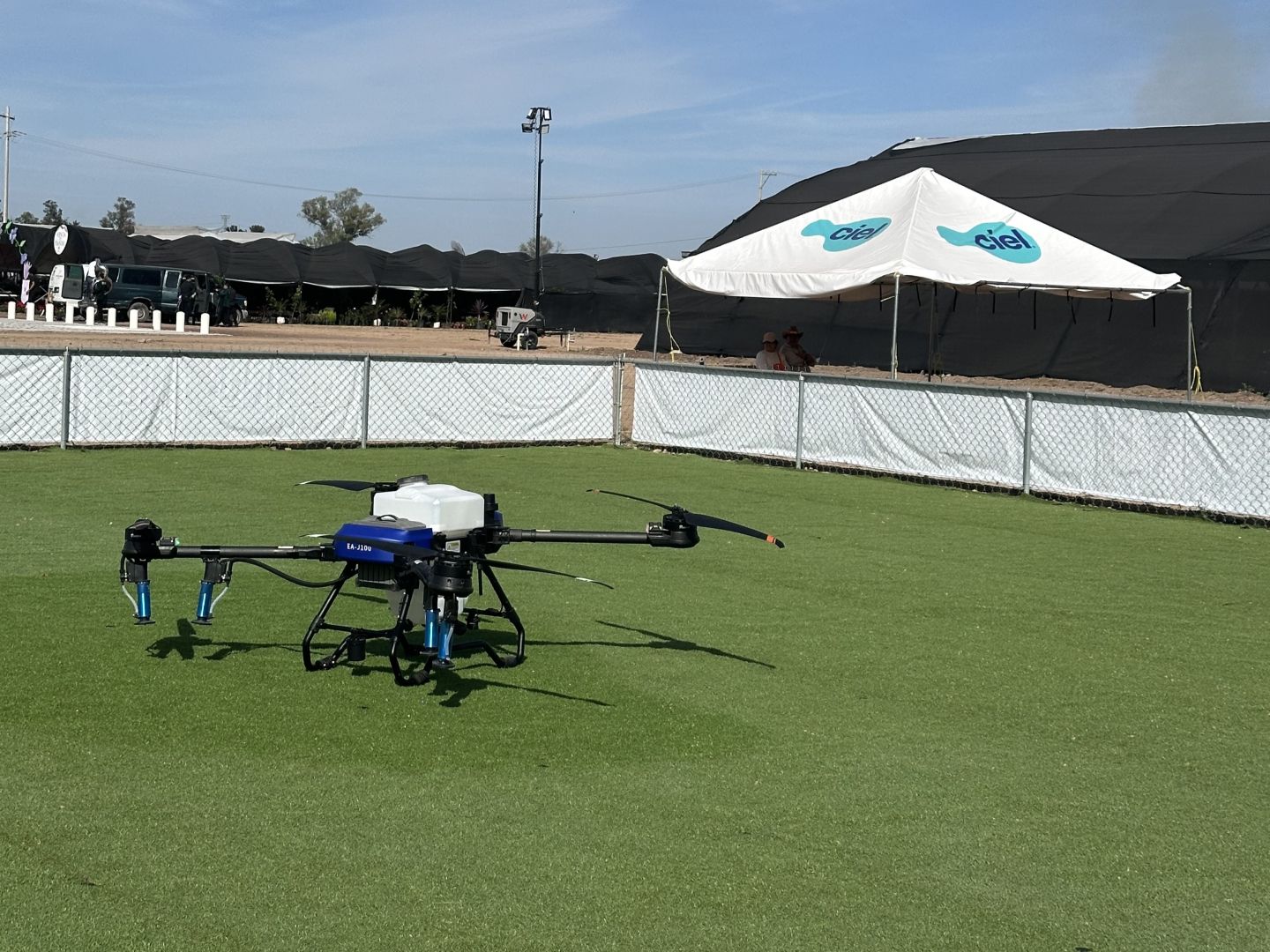
Go back to that paddock you keep putting off. If the problem is access, grass damage, patchy weeds, water hauling, small blocks, or follow-up, a drone may earn its place.
If you want to see how a drone handles that kind of job, take a look at our agricultural drone lineup. And if you are building a local contracting business, discuss pasture demonstrations, operator training, and service support through the EAVISION dealer application.
FAQ
What is the biggest pasture spraying advantage?
Access is often the strongest advantage on steep, rough, or soft pasture. The drone can reach treatment areas without driving a spray vehicle through them.
Is drone pasture spraying cheaper?
It can offer better value when targeted treatment reduces herbicide spending or difficult access makes ground spraying costly. Total job cost still includes mapping, mobilization, and any minimum charge.
How does drone spraying protect grass?
The aircraft creates no wheel tracks across the treatment area, so it avoids the rutting and flattening caused by the spray vehicle. Support vehicles can remain on firm access tracks.
Does a drone use less herbicide?
Treating weed patches can reduce total herbicide use by leaving clean areas untreated. Each treated hectare still receives the specified product dose; reducing carrier water alone does not reduce that dose.
Which pastures benefit most from drone spraying?
The strongest fit is often steep or soft ground, scattered small paddocks, or pasture with distinct weed patches. Those conditions make access, selective treatment, and flexible deployment particularly valuable.