FAA Regulations for Agricultural Drone Spraying: Part 137 Explained


If you're planning to spray crops with a drone in the United States, you can't just buy an agricultural drone, load it with pesticide, and take off. FAA agricultural drone regulations are strict, and skipping any step can ground your entire operation or lead to fines. Spray drones used for agriculture must follow FAA Part 137 rules to operate legally and safely, and these regulations cover licensing, certifications, exemptions, and compliance requirements for applying chemicals like pesticides and fertilizers by air.
Here's what you actually need to know before your first flight.

What Is FAA Part 137?
14 CFR Part 137 governs the use of aircraft, including drones, to dispense or spray substances. It was originally written for manned crop dusters and helicopters. But it now applies to UAS too.
Under Part 137, operations that count as "agricultural" include:
- Dispensing any substance that acts as a pesticide, plant regulator, or defoliant
- Dispensing substances intended for plant nourishment, soil treatment, propagation of plant life, or pest control
- Conducting any aerial dispensing that directly affects agriculture, horticulture, or forest preservation
Not all substances fall under this regulation, so you should first check whether your proposed operation is regulated by Part 137. For example, dispensing live insects by air does not fall under Part 137, even if it's part of an agricultural operation.
Worth checking before you file a mountain of paperwork.
Who Needs a Part 137 Certificate?
Short answer: anyone spraying chemicals from a drone commercially. Part 137 only applies to chemical dispensing operations, while crop monitoring, mapping, and scouting activities fall under Part 107 and do not require agricultural aircraft operator certification.
So if you're just flying an ag drone for field surveys, you're fine without Part 137. But the moment you start spraying pesticides, herbicides, fertilizers, or seeds? You need it.
Step-by-Step: Getting FAA Part 137 Certified
This is where most new operators get stuck. The process has multiple layers, but since late 2024, the FAA has introduced a streamlined process. Applicants are no longer required to submit documents to their local Flight Standards District Office. That alone saves a lot of headaches.
1. Get Your Part 107 Remote Pilot Certificate
The Part 107 Remote Pilot Certificate is the starting point for all commercial drone operations in the U.S., including agricultural spraying. You'll need to study for 8–15 hours, pass a $175 test, and renew every 24 months.
The exam (called the UAG) covers airspace classifications, weather patterns, and emergency protocols. Not incredibly difficult, but you do need to prepare.
2. Petition for an Exemption
Here's the thing: FAA regulations were originally created with manned aircraft in mind, so drone operators must request specific exemptions to legally perform agricultural spraying.
The rules split at 55 pounds:
|
Category |
Under 55 lbs (incl. payload) |
55 lbs and over |
|
Operating Rule |
14 CFR Part 107 requires exemption from Section 107.36 (Carriage of hazardous material), plus several Part 137 regulations |
14 CFR Part 91 and Part 137 require exemption from several regulations in Parts 61, 91, and 137 |
|
Registration |
FA-number via FAADroneZone |
N-number through the Civil Aviation Registry (CARES) or by mail |
|
Additional Requirement |
— |
Section 44807 exemption |
You must send a petition for exemption at least 120 days before it takes effect, so you should plan ahead because this is not a next-week kind of process.
3. Apply for Your AAOC
The requirement that all operators conducting agricultural operations hold an Agricultural Aircraft Operator Certificate (AAOC) remains in place. You can obtain an AAOC by completing FAA Form 8710-3 and submitting your exemption number to UAS137Certificates@faa.gov.
Prior to obtaining the Part 137 operating certificate, you can conduct training flights, proficiency flights, and maintenance test flights. However, you cannot conduct any actual spraying. You can practice as much as you want, as long as the tank remains empty until the paperwork is cleared.
Don't Forget Your State Pesticide License
This one catches people off guard. Before you spray with your drone, you need to be licensed by the FAA and the state in which you are spraying.
Federal law mandates that anyone who applies or oversees the use of restricted-use pesticides must be certified in compliance with EPA regulations and applicable state, territorial, or tribal laws. Most states require a pesticide license, and some may also require a separate aerial component (Aerial Applicator's License).
Requirements vary a lot by state. Some offer one-day university programs. Others require 125+ hours of documented flight experience. We'd recommend checking your state's Department of Agriculture website early in the process.
Why This Matters for Drone Buyers
If you're evaluating ag drones for a spraying business — or scaling an existing fleet — understanding FAA agricultural drone regulations before you buy saves real money and time. A drone that sits idle for 4+ months while you sort out Part 137 paperwork isn't generating revenue.
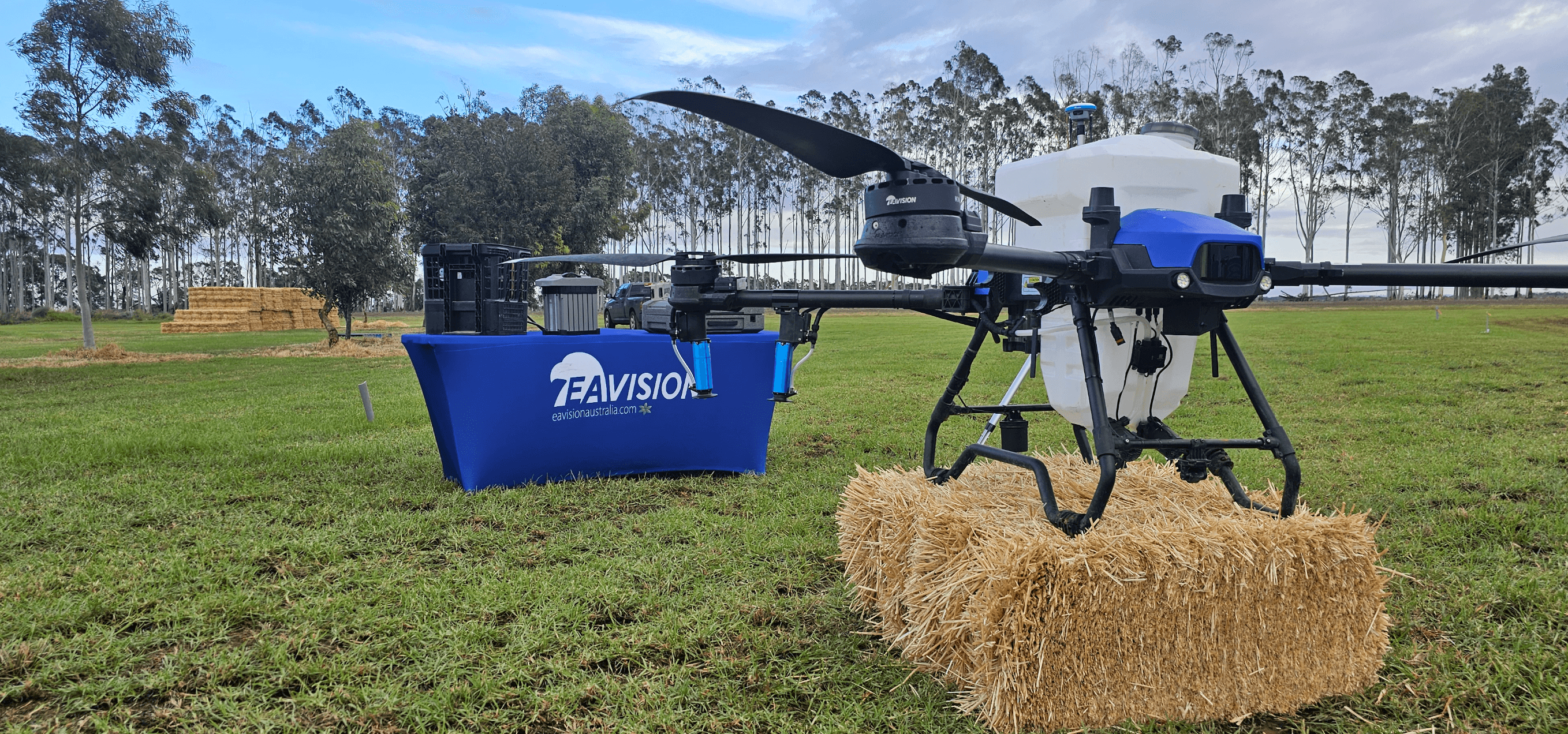
At EAVISION, we build agricultural drones like the EA-J150 and EA-J70 with real-world compliance in mind. Features like autonomous obstacle avoidance, adjustable droplet sizes from 10 to 500μm, and canopy-following flight aren't just nice-to-haves. They're the kind of operational capabilities the FAA wants to see documented in your exemption petition.
According to Fortune Business Insights, the global agriculture drone market is projected to grow from $6.10 billion in 2024 to $23.78 billion by 2032, at a CAGR of 18.5%. The opportunity is massive. But only for operators who get the regulatory side right.
Key Takeaways
- Part 137 applies to any drone dispensing chemicals — pesticides, fertilizers, herbicides, or seeds.
- Start with Part 107, then petition for exemptions (allow 120+ days), then apply for your AAOC.
- The 55-pound weight line changes your entire regulatory path. Know which side your drone falls on.
- State pesticide licensing is separate from FAA certification, and you need both.
- Plan your timeline. From first application to legal spraying, expect 3–6 months minimum.
FAQs
Do I need Part 137 if I'm only using a drone for crop scouting or mapping?
No. Part 137 only applies to chemical dispensing operations. Crop monitoring, mapping, and scouting fall under Part 107 and don't require an AAOC.
How long does it take to get FAA Part 137 approval?
The expected approval time is roughly 60–90 days if your documentation is complete. Factor in additional time for your Part 107 exam, exemption petition (120 days lead time), and state licensing. Realistically, budget 4–6 months from start to first legal spray flight.
Can I hire other pilots to spray under my Part 137 exemption?
Yes. You can hire pilots as employees and have them fly under your exemption. However, the exemption itself is non-transferable. You cannot lend it to a friend or a subcontractor. It's really important to work with an attorney to figure out the best entity structure from a tax and liability standpoint.
Does the FAA maintain a list of approved agricultural drones?
Yes. Operations are authorized for any UAS on the List of Approved Agricultural UAS under Section 44807. If your aircraft isn't on the list, or you want to operate at a different weight, you'll need a new petition or a petition to amend your exemption.
Do FAA regulations apply outside the United States?
No. Part 137 is strictly a U.S. federal regulation. If you're operating in Latin America, Southeast Asia, Southern Europe, or South Africa, your country will have its own civil aviation authority and ag drone rules. However, understanding the FAA framework is still valuable because many countries model their own drone spraying regulations on similar principles.