J150 Drone: 9 Specifications Buyers Should Check Before a Field Demo


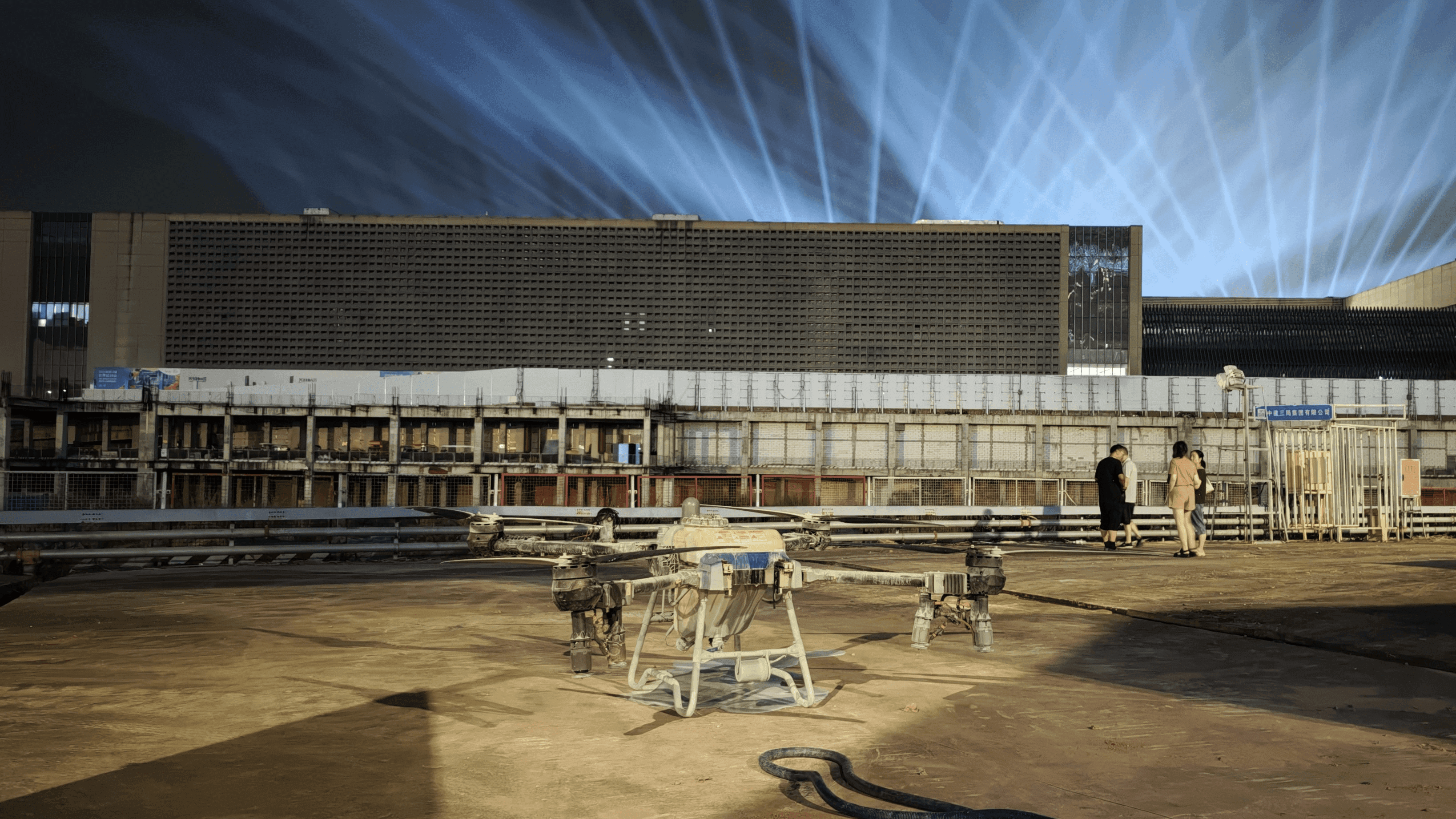
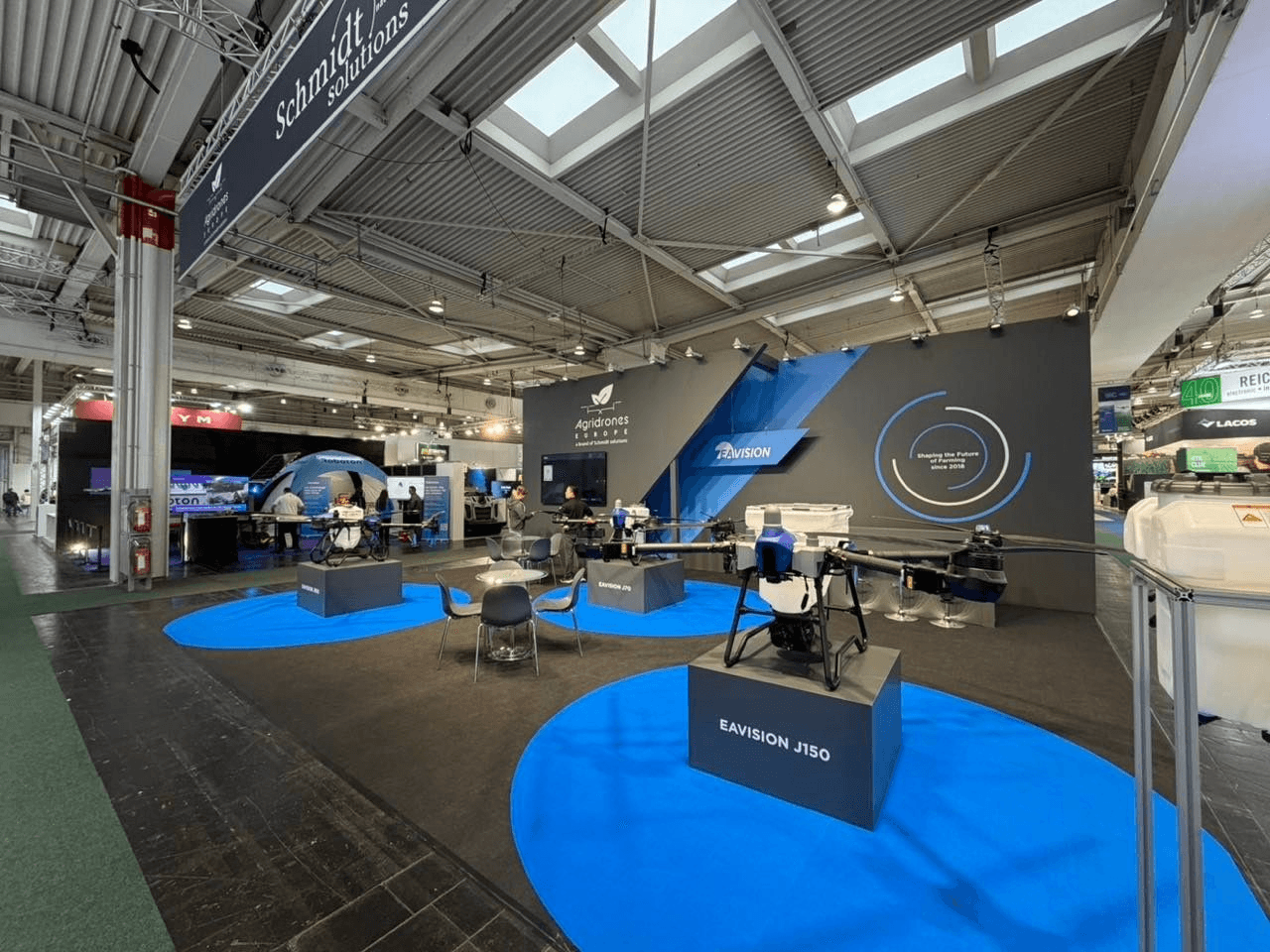
The J150 drone is a high-capacity agricultural platform designed for spraying, spreading, lifting, and field data-capturing. Its headline specifications include a 70 L rated spray tank, up to 40 L/min maximum flow, a 10-300 µm droplet range, a spray width of 4-15 m, a 45,000 mAh battery, and multi-directional obstacle sensing. Those numbers are a useful starting point, but a field demo should show how the aircraft performs with your crop, terrain, application volume, refill system, crew, and weather window.
This guide explains nine J150 drone specifications buyers should verify before placing an order. It also provides a practical demo protocol so farms, dealers, and spraying contractors can compare measured performance instead of relying only on a brochure.
J150 drone specifications at a glance
|
Specification area |
Published EA-J150 specification |
What to verify in the field |
|
Spray tank and aircraft weight |
70 L rated tank, 73 L full-load capacity, 75 kg empty weight with battery, and 145 kg maximum spraying takeoff weight |
Actual usable liquid load, balance, refill time, and takeoff behavior |
|
Flow and swath |
Up to 40 L/min (±5%) and 4-15 m spray width |
Measured output, effective swath, overlap, and coverage at your speed and height |
|
Nozzles and droplets |
Two or four EAV-CCMS60 nozzles with a 10-300 µm adjustable droplet range |
Droplet setting, deposition, canopy penetration, drift control, and cleanout |
|
Obstacle sensing |
Forward LiDAR plus upper and lower rotating 4D millimeter-wave radar |
Branches, wires, poles, slope changes, blind approaches, and fail-safe behavior |
|
Battery and charging |
45,000 mAh battery; approximately 9 minutes from 30% to 95% under specified charging conditions |
Loaded flight time, heat management, generator demand, and battery rotation |
|
Spreading and lifting |
100 L hopper option; spreading, lifting, and data-capturing configurations |
Material-specific feed rate, changeover time, lifting stability, and attachment availability |
|
Ingress protection and transport |
Aircraft IPX6K, modules IP67, 63-inch propellers, and folding arms and propellers |
Washdown procedure, connectors, corrosion points, folded footprint, and trailer handling |
|
Control and field data |
7.02-inch high-brightness controller, RTK support, route planning, and onboard data-capturing |
Screen visibility, link stability, field data workflow, route recovery, and reporting |
|
Support and operating readiness |
Hardware capability depends on configuration, software, dealer setup, and local rules |
Training, spare parts, firmware, service response, documentation, and compliance support |
The figures above are taken from EAVISION's detailed EA-J150 specifications and J150 product page. Specifications can vary by region, production configuration, attachment, software version, and operating conditions. Confirm the purchase configuration in writing.
Why a field demo matters more than a specification sheet
A specification describes capability under defined conditions. A farm buys a workflow. The useful question is not simply whether the J150 drone can carry a 70 L tank or produce 40 L/min. The useful question is whether your crew can fill it, launch it, maintain target coverage, recharge it, and return it to service quickly enough to complete the required acres inside a safe spray window.
Ask the dealer to demonstrate on a representative plot, not only a flat open field beside the dealership. Use clean water unless a legal and label-compliant application has been arranged. Bring water-sensitive paper, a stopwatch, measuring containers, a scale where appropriate, a notebook, and the application parameters you normally use. Record both flight time and non-flight time.
Specification 1–9: What to check before a J150 drone field demo
1. Verify the 70 L tank and payload assumptions
The EA-J150 specification lists a 70 L rated chemical tank and 73 L full-load capacity. The aircraft's empty weight is listed as 75 kg with the battery, while maximum spraying takeoff weight is 145 kg. These numbers should be interpreted together. Buyers need to know what is included in the quoted empty weight, how much liquid is operationally usable, and whether optional components change the legal or practical load.
During the demo, fill the aircraft using the same hose, pump, mixing station, and trailer layout intended for daily work. Time the complete cycle from landing to relaunch. Check tank access, cap handling, filter access, spill control, level indication, and whether the aircraft remains stable on uneven ground. A larger tank creates value only when the refill station and crew can support it.
• Confirm rated capacity, usable capacity, and residual volume after the mission.
• Ask which accessories are included in empty and takeoff weight figures.
• Test a representative payload instead of an empty demonstration flight.
• Measure landing-to-relaunch time for at least three consecutive cycles.
2. Test 40 L/min flow and the effective spray width
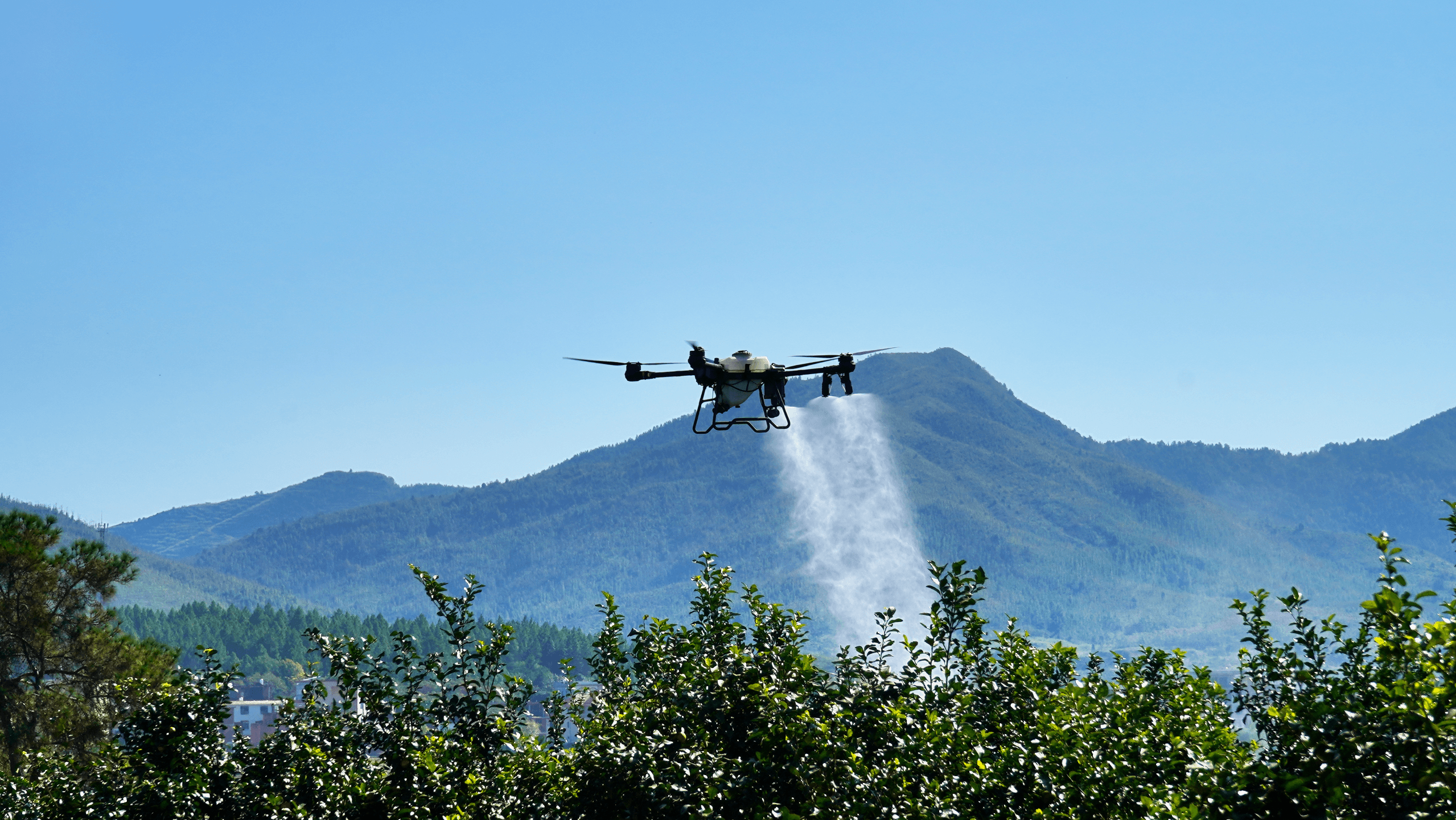
The J150 drone uses two impeller pumps and is rated for a maximum flow of 40 L/min with a stated tolerance of ±5%. Its published spray-width range is 4-15 m. Maximum figures do not automatically apply to every crop, droplet setting, speed, and application rate. An orchard route at low speed and high volume has a different effective swath from a broadacre pass over a uniform canopy.
Ask the dealer to run a timed output test and then validate deposition across the proposed swath with water-sensitive paper. Place cards at the center, intermediate points, and outer edges. Check both coverage and overlap between passes. A wide programmed swath is not useful if the outer cards show inconsistent deposition.
EAVISION's agricultural drone spraying solution explains how flow, droplet size, rotor wash, and canopy structure work together. The field demo should reproduce the intended application volume, height, and speed closely enough to make the result meaningful.
3. Check the 10-300 µm droplet range and nozzle control
The J150 drone is available with two or four EAV-CCMS60 nozzles and a published adjustable droplet range of 10-300 µm. EAVISION describes a hybrid-droplet approach in which nozzle pairs can use different droplet settings during one flight. This is relevant for dense canopies, where larger droplets can support surface deposition while finer droplets move deeper into the crop structure.
Do not select the smallest available droplet simply because it looks impressive. Droplet choice must match the product label, crop, target, weather, canopy, drift risk, and local rules. For the demo, ask the operator to change droplet settings, show where the setting is recorded, and explain how flow and atomization respond as flight speed changes.
• Inspect card coverage at more than one droplet setting.
• Check the underside and interior of the canopy where relevant.
• Ask how nozzle wear, contamination, and cleaning affect output.
• Confirm which settings are approved for the products you plan to apply.
4. Challenge the obstacle-sensing and terrain-following system
The EA-J150 combines forward LiDAR with upper and lower rotating 4D millimeter-wave radar. The detailed specification lists a forward LiDAR limit range of 150 m and an effective outdoor range of 80 m under its stated test conditions. The upper and lower radar units list effective outdoor ranges of 60 m under stated reflectivity conditions. Actual detection depends on obstacle size, material, angle, visibility, speed, environment, configuration, and software.
A field demo should include realistic but controlled challenges: tree rows, poles, slope transitions, field edges, and representative wires where the dealer's safety procedure permits. Do not create a dangerous surprise obstacle. Ask the operator to explain detection alerts, automatic avoidance, hover behavior, route recovery, manual override, and what happens when an obstacle cannot be bypassed.
The specification page lists a terrain-following slope capability of up to 90°. Treat this as a rated system specification, not a promise that every near-vertical environment is flyable. The demo should use your actual hills, terraces, canopy profile, and takeoff locations while remaining inside the operating manual and local regulations.
5. Measure battery endurance and the real charging cycle
The J150 drone uses a 45,000 mAh EAV-CTB45Ah battery. EAVISION lists a charge time of approximately nine minutes from 30% to 95% when the charging system has suitable input power and temperature conditions. The cooling charger is rated for up to 12,400 W on dual ports, and the product page positions the system for two-battery cycling.
For buyers, the important result is continuous operation. Run several loaded flights in sequence. Record starting state of charge, landing state of charge, airborne time, application volume, ambient temperature, battery temperature, time until charging begins, charge duration, and generator or grid input. Ask what happens when the day is hotter, the field is farther from the refill point, or the generator cannot maintain the required output.
Also review battery handling and safety. The published battery protection list includes short-circuit, overcharge, overcurrent, and fire protection, but operating procedures still matter. The crew needs a stable charging area, cable inspection, cooling airflow, transport protection, and a response plan for damage or abnormal temperature.
6. Confirm spreading and lifting performance by material and attachment
The J150 is marketed as a multi-purpose platform rather than a spraying-only aircraft. The spreader specification lists a 100 L hopper, screw-feed delivery, a 3-8 m spreading width, and feeder options for different granule sizes. EAVISION's detailed specification lists a maximum spreading flow rate of 240 kg/min for compound fertilizer, while another product presentation highlights up to 280 kg/min. This is exactly the kind of difference a buyer should resolve before purchase.
Ask the dealer to identify the attachment, feeder assembly, material, moisture condition, granule range, test method, and software version behind the quoted rate. Then run the material you expect to use and weigh the discharged quantity across a measured area. Uniformity is usually more important than a brief peak rate. Review EAVISION's drone spreading solution for the available material and application configurations.
For lifting, EAVISION's agricultural drone lifting solution describes loads up to 75 kg with auto-guided navigation and obstacle avoidance. Verify the actual lifting kit, hook lock, load shape, line behavior, hover stability, drop-off workflow, and operating restrictions. Never assume a compact test weight represents a bulky or swinging farm load.
7. Inspect IP ratings, washdown, propellers, and transport
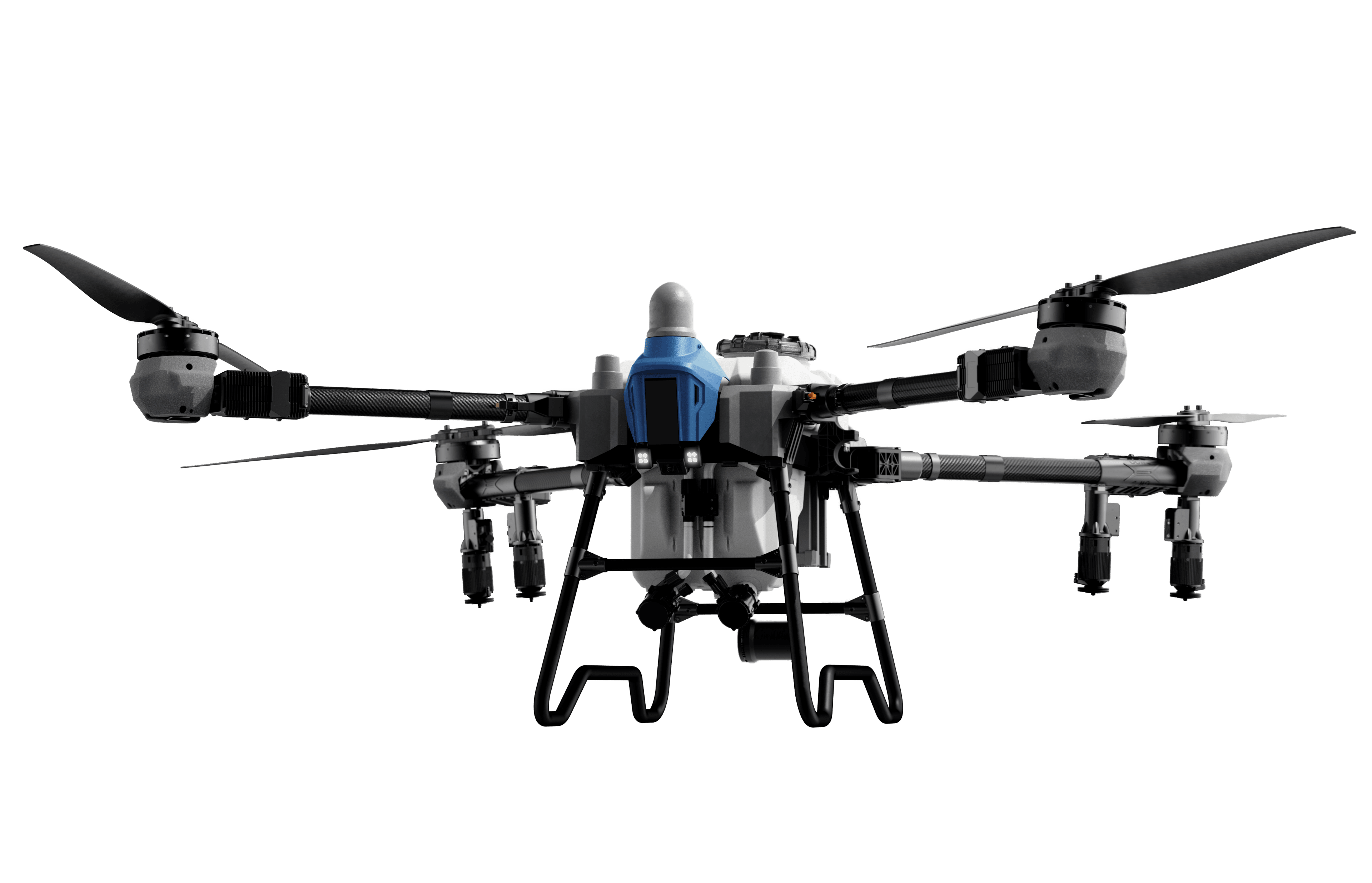
The official specification lists the complete aircraft at IPX6K and selected modules at IP67. The J150 also uses four 63-inch carbon-fiber-reinforced propellers and a dual-fold arm and propeller layout. These specifications matter because agricultural aircraft are exposed to liquid residue, dust, fertilizer, repeated folding, vibration, vehicle transport, and frequent cleaning.
Ask for a complete washdown demonstration and the written cleaning procedure. Identify connectors, seals, vents, pumps, nozzle parts, fasteners, propeller edges, arm hinges, and corrosion-prone areas that require inspection. IP ratings do not eliminate maintenance, chemical compatibility limits, or the need to dry and inspect equipment correctly.
Measure the aircraft in its folded transport configuration and test the planned trailer or vehicle. Confirm tie-down points, propeller protection, battery separation, chemical-area separation, loading height, and whether one crew can deploy the aircraft without unsafe lifting. Transport friction can erase part of the efficiency gained in flight.
8. Test the controller, RTK, route recovery, and data workflow
The J150 remote controller specification includes a 7.02-inch display, 1,500 cd/m² brightness, more than eight hours of controller runtime, and a listed maximum communication distance of 3,000 m under specified conditions. The platform also supports RTK positioning, route planning, multi-plot operations, mission resumption, and onboard image data-capturing.
During the demo, the future operator should build the field rather than watch the dealer do everything. Test boundary collection, obstacle marking, parameter entry, estimated return points, low-liquid return, low-battery return, breakpoint resume, switching between plots, and export of the job record. Check controller visibility in direct sun and connection behavior behind terrain or vegetation while staying within legal visual-line-of-sight and operational requirements.
If your business charges by the acre or needs application records, ask what data can be exported, which fields are included, who owns the data, how cloud synchronization works, and whether reports remain available after a software or account change.
9. Treat training, parts, software, and compliance as specifications
The final specification is operational readiness. A capable aircraft can still lose a spray window if the crew lacks training, a pump is unavailable, a damaged propeller is backordered, firmware is not supported locally, or the operator does not have the required approvals. Ask the dealer to document commissioning, operator training, maintenance intervals, included spares, regional inventory, warranty handling, escalation contacts, software updates, and expected service response.
Review EAVISION's after-sales service information and confirm the local support arrangement. Aviation and pesticide requirements vary by country and product. The aircraft's technical capability does not replace operator certification, aircraft registration, aerial-application approval, pesticide-label compliance, recordkeeping, insurance, or local flight restrictions.
A 7-step J150 drone field-demo protocol
1. Define the job. Choose the crop, field, target application volume, route, expected swath, payload, and weather limits before the aircraft arrives.
2. Record the configuration. Note the aircraft, tank or hopper, nozzle count, feeder, battery, charger, software, controller, RTK equipment, and optional attachments.
3. Measure setup and turnaround. Time unloading, unfolding, mapping, filling, battery changes, refills, cleaning, folding, and loading.
4. Validate the application. Use measured output and water-sensitive paper to evaluate the center, edges, overlap, and canopy penetration.
5. Run repeated loaded cycles. One short flight cannot demonstrate thermal behavior, battery rotation, crew rhythm, or daily productivity.
6. Trigger normal interruptions. Demonstrate low liquid, low battery, route resume, an expected obstacle, manual pause, and safe mission termination.
7. Review the evidence. Compare measured results with the quotation, specification sheet, operating manual, service plan, and the economics of your actual acreage.
Bottom line
The J150 drone has specifications suited to demanding commercial work: a 70 L spray tank, up to 40 L/min flow, adjustable 10-300 µm droplets, a broad swath range, multi-directional sensing, a high-capacity fast-charging battery system, and optional spreading, lifting, and data workflows. The strongest buying process connects each specification to a measured field result.
Use a representative field, repeat loaded cycles, measure deposition, time every turnaround, verify the attachments, and put support commitments in writing. To arrange a configuration review or field demonstration, visit the EAVISION dealer locator or review the complete EA-J150 product page. Buyers comparing platforms can also read EA-J150 vs DJI T50 after establishing the requirements that matter in their own operation.
FAQ
What is the J150 drone's spray tank capacity?
The EA-J150 specification lists a 70 L rated spray tank and a 73 L full-load capacity. Buyers should confirm usable liquid volume, residual volume, aircraft configuration, and maximum takeoff-weight limits during a loaded demonstration.
What is the maximum flow rate of the J150 drone?
The published maximum flow rate is 40 L/min with a stated tolerance of ±5%. Actual required flow and effective swath depend on application volume, speed, height, droplet setting, crop canopy, and product-label requirements.
How long does a J150 battery take to charge?
EAVISION lists approximately nine minutes to charge the 45,000 mAh battery from 30% to 95% under specified power and temperature conditions. The field demo should verify charge time, cooling, generator demand, and battery rotation across repeated loaded flights.
Can the J150 drone spread fertilizer and lift farm inputs?
Yes. The J150 platform supports spreading and lifting configurations in addition to spraying and data-capturing. Performance depends on the installed hopper, feeder, material, lifting kit, load geometry, software, and operating limits, so each intended use should be demonstrated separately.
What should buyers measure during a J150 drone field demo?
Measure usable payload, fill time, output, effective swath, deposition, canopy penetration, loaded flight time, charge time, landing-to-relaunch time, route recovery, obstacle response, attachment changeover, data export, and crew requirements. Compare the results with the written quotation and operating documentation.