J100 Precision Aerial Application Helps Increase High-Quality Alfalfa Yield


I. Overview
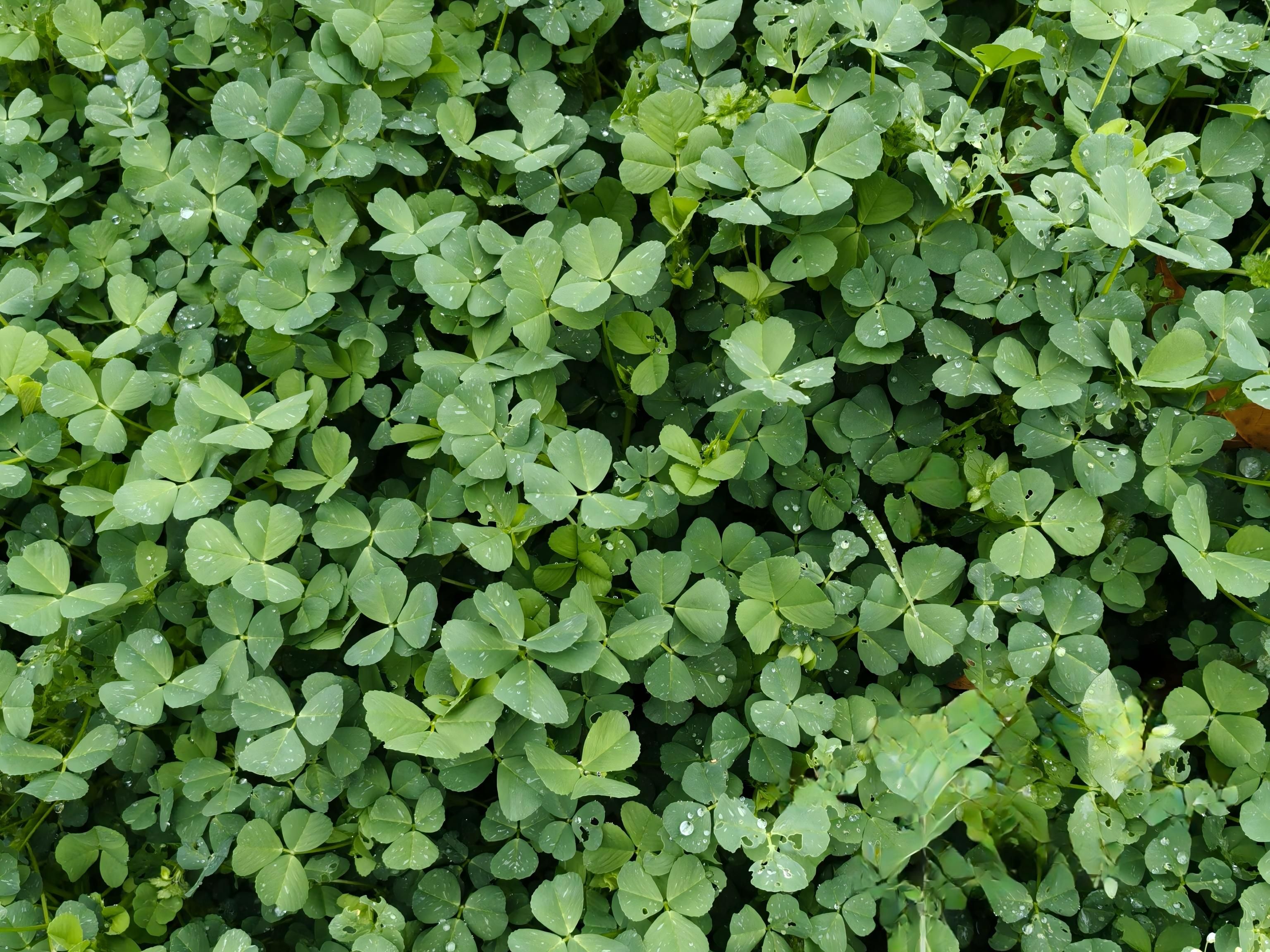
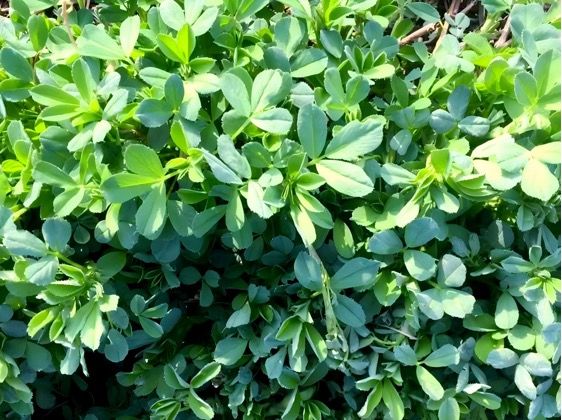
Alfalfa is a perennial herbaceous plant in the legume family and the Medicago genus. Known as the “king of forage,” it is one of the most widely cultivated and valuable high-quality leguminous forages in the world. Plants are usually 30-100 cm tall, with a well-developed root system and a taproot that can extend several meters underground, giving alfalfa strong nitrogen-fixing ability. Stems are upright or ascending and highly branched; leaves are trifoliate, with obovate or oblong leaflets and finely serrated margins; racemes are axillary, with purple or pale-purple butterfly-shaped flowers; pods are spiral and contain several yellowish-brown, kidney-shaped seeds. Alfalfa is highly adaptable, tolerant of cold, drought, and poor soils, and grows well in dry and semi-dry areas of northern China as well as parts of southern China. It is not only a premium forage crop but also an important crop for ecological improvement.
1. Origin and Spread
The recognized center of origin of alfalfa is the Fertile Crescent of West Asia, around present-day Iraq and Syria. Archaeological findings show that wild alfalfa has existed in this region for more than 10,000 years, while cultivated alfalfa can be traced back to around 2000 BCE. Early Mesopotamian civilizations planted it as forage, after which it spread through nomadic peoples and trade.
In terms of its spread, alfalfa first moved from West Asia to ancient Greece and Rome, becoming a core forage for early European animal husbandry. Around the first century CE, it entered China through the Silk Road, initially in the northwest for feeding warhorses and livestock, and by the Tang dynasty it had gradually been promoted nationwide. In the 16th century, with the opening of new sea routes, European colonists brought alfalfa to the Americas, Africa, and Oceania. Its strong adaptability allowed it to establish rapidly across tropical, temperate, and cold-temperate regions. Today, alfalfa is the world’s leading cultivated forage crop and plays a central role in livestock development in many countries.
2. Nutritional Value
Alfalfa has outstanding nutritional value among forage crops, with its core advantages being high protein content and balanced nutrients. Fresh alfalfa contains 15%-20% crude protein, while hay contains 18%-25%, far higher than gramineous forages such as corn and wheat. Its amino acid profile is well balanced and rich in essential amino acids for livestock and poultry, including lysine and methionine, allowing it to replace part of concentrated feed. Alfalfa is also rich in vitamins (vitamins A, E, and B-complex), minerals (calcium, phosphorus, iron, and magnesium), and dietary fiber. Its calcium content is more than ten times that of corn, effectively supporting bone development in livestock and poultry.
In addition, bioactive substances in alfalfa, such as flavonoids and saponins, can help strengthen livestock and poultry immunity and improve reproductive performance. As silage, it has high lactic acid content, good palatability, and is easy to digest and absorb. When made into hay or meal, it is convenient to store and transport, making it an ideal feed for pigs, cattle, sheep, poultry, and other livestock in scaled farming. For ruminants, the crude fiber in alfalfa promotes rumen motility, improves digestive efficiency, and reduces feeding costs.
3. Economic and Cultural Value
Economically, alfalfa is a core support crop for China’s forage and livestock sector, with a complete industrial chain covering planting, processing, and sales. In 2024, China’s alfalfa industry generated an annual output value of more than RMB 30 billion, with annual consumption of high-quality alfalfa hay reaching 12 million tons and more than 500,000 jobs supported across planting, processing, and transportation. Alfalfa cultivation not only supplies premium forage for animal husbandry and lowers feeding costs (saving RMB 800-1,200 in concentrate feed per cow per year), but also improves soil through nitrogen fixation, reduces fertilizer use, and lowers agricultural non-point source pollution. Alfalfa products such as hay bales, meal, and silage have also become important export agricultural products for China, sold to Japan, South Korea, and other East Asian countries, with annual export value exceeding RMB 1 billion.
Culturally, alfalfa has deep historical roots in China. After Zhang Qian introduced alfalfa from the Western Regions during the Han dynasty, it became closely linked with the development of animal husbandry. Historical texts often mention “alfalfa fattening horses,” making it an important symbol of ancient frontier agriculture. In the cultures of ethnic groups in northwest China, alfalfa is an indispensable forage resource woven into many aspects of nomadic life, forming a distinctive “alfalfa culture.” In modern society, as an ecological improvement crop, alfalfa plays an important role in converting farmland back to forest and grassland and in soil and water conservation, becoming one symbol of ecological agriculture.
II. Alfalfa Cultivation in China
1. Planting Area and Output
China is one of the world’s largest alfalfa-growing countries, ranking among the global leaders in both planting area and output, with steady growth. As of 2024, China’s alfalfa planting area reached 35 million mu, including more than 12 million mu of high-quality, high-yield alfalfa. In recent years, with variety improvement and better cultivation techniques, China’s alfalfa yield has increased from 200 kg of hay per mu to more than 350 kg per mu, with annual output reaching 12 million tons, including about 4.2 million tons of high-quality alfalfa hay. Despite the significant output increase, strong demand from scaled livestock farming means China still imports 3-4 million tons of premium alfalfa hay each year from countries such as the United States and Canada. The continued supply-demand gap has also driven rapid development of the domestic alfalfa industry.
2. Main Advantageous Production Areas
Alfalfa cultivation in China shows a pattern of more production in the north and less in the south. Four major advantageous production areas have formed: the northwest arid and semi-arid area, the North China area, the Northeast area, and the Huang-Huai area. The northwest arid and semi-arid area is China’s largest alfalfa region, covering Inner Mongolia, Gansu, Ningxia, Xinjiang, and other provinces and regions, and accounts for 55% of national acreage. Its dry climate, abundant sunlight, and large day-night temperature difference favor nutrient accumulation in alfalfa; hay produced there can reach crude protein levels above 22%, making it the core area for premium alfalfa.
The North China area includes Hebei, Shanxi, Shaanxi, and other provinces, accounting for 20% of national acreage. It mainly uses irrigated cultivation, with salt-alkali tolerant purple alfalfa varieties supplying scaled farms in the Beijing-Tianjin-Hebei region. The Northeast area covers Heilongjiang, Jilin, and Liaoning, accounting for 15% of national acreage. It follows a single-cropping system with a long alfalfa growth period and excellent hay quality. The Huang-Huai area includes Henan, Shandong, and northern Jiangsu, accounting for 10% of national acreage. It mainly uses summer or autumn sowing and serves both forage production and soil improvement as a rotation crop.
3. Industry Characteristics and Challenges
Industry Characteristics
China’s alfalfa industry has three notable characteristics. First, the trend toward high-quality varieties is clear: by introducing premium varieties such as the U.S. WL series and Canada’s Algonquin and combining them with local breeding, China has developed a group of high-yield, stress-resistant purple alfalfa varieties. The share of premium alfalfa planting rose from 15% in 2015 to 35% in 2024. Second, scaled and intensive planting has accelerated. With policy support, many alfalfa bases of more than 1,000 mu have emerged, using water-fertilizer integration, mechanized harvesting, and other technologies to improve efficiency. Third, the industrial chain continues to improve, expanding from early single-product hay sales to a diversified product system including silage, meal, pellets, and alfalfa tea, greatly increasing added value. Policies such as “grain-to-forage” and forage-livestock development continue to promote deeper integration between alfalfa and animal husbandry.
Industry Challenges
The core challenge facing China’s alfalfa industry lies in pest and disease control. Because alfalfa is perennial and widely planted, it is vulnerable to many pests and diseases, and the pest spectrum varies by regional climate, making control difficult. Traditional control relies mainly on manual pesticide spraying and has many drawbacks: alfalfa areas are large, manual control is inefficient, and costs can reach RMB 80-120 per mu; manual spraying cannot ensure uniform coverage, especially on leaf undersides and at the plant base, resulting in incomplete control; long-term unreasonable pesticide use has increased resistance, with alfalfa aphids now 3-5 times more resistant to imidacloprid-type products, creating a vicious cycle of higher dosage and lower efficacy. In addition, pest and disease monitoring and warning systems are incomplete in some regions, making timely response difficult after outbreaks and often causing 10%-30% yield loss and quality decline.
III. Major Pests and Diseases of Alfalfa
(1) Diseases
1. Alfalfa Rust
Alfalfa rust is a common fungal disease in alfalfa-producing regions across China. Caused by Uromyces striatus, it mainly damages leaves and stems and can cause yield losses of more than 40% in severe cases, while reducing crude protein content by 3-6 percentage points.
2. Alfalfa Brown Spot
Alfalfa brown spot, also known as common leaf spot, is caused by Pseudopeziza medicaginis. It is a major leaf disease of alfalfa and occurs in all production areas, causing premature leaf drop and yield losses of 20%-30%.
3. Alfalfa Root Rot
Alfalfa root rot is a soil-borne disease caused by multiple fungi, such as Fusarium and Pythium. It mainly damages the root system and is severe in northwest arid areas and low-lying fields in North China, causing plant wilting and death, with incidence reaching 15%-25%.
(2) Insect Pests
1. Alfalfa Aphids
Alfalfa aphids are major piercing-sucking pests of alfalfa, including Acyrthosiphon pisum and Therioaphis trifolii. They occur in all production areas, with adults and nymphs sucking sap from tender shoots and leaves.
2. Alfalfa Thrips
Alfalfa thrips are important pests of alfalfa flowers and young leaves. Adults and nymphs rasp and suck sap from flowers and young leaves, causing petals to fade, flowers to drop, and young leaves to develop gray-white spots, curl, and deform.
3. Alfalfa Leaf Weevil
The alfalfa leaf weevil is a chewing pest of alfalfa leaves. Larvae and adults feed on leaves; larvae chew notches and holes and, in severe cases, consume leaves completely, leaving only veins, blocking photosynthesis and sharply reducing yield.
|
Pest |
Dose/mu |
Droplet |
Height |
Speed |
Spacing |
|
Alfalfa weevil |
3-5 L/mu |
60 microns |
2-4 m |
5-10 m/s |
5-8 m |
IV. J100 Helps Stabilize Alfalfa Yield and Increase Income
In large-scale alfalfa production areas in Yunnan, the AGR J100 is providing efficient crop protection support for high-quality forage production. Rapid and uniform pest and disease control, together with comprehensive coverage of the plant base and leaf undersides, is essential for high forage yield and a higher share of premium hay. With flexible operating modes and an efficient atomization system, AGR drones can deliver spray liquid precisely to all parts of alfalfa plants, achieving full-field coverage. This effectively solves the pain points of traditional spraying, such as frequent missed areas and low efficiency, and shows strong results against aphids, thrips, and rust. Through technology, AGR is helping forage growers lower production costs, improve forage quality, and protect the yield and value of every field of “golden forage.”
*These parameters are for reference only. Specific operating parameters should be adjusted according to actual alfalfa growth and environmental conditions.
*These parameters are based on guidance from the National Agro-Tech Extension and Service Center and local practices. Pest and disease occurrence may vary by region; adjust pesticide use according to actual needs.