J100 Efficient Aerial Application Protects the Huang-Huai-Hai “Corn Belt”


I. Overview
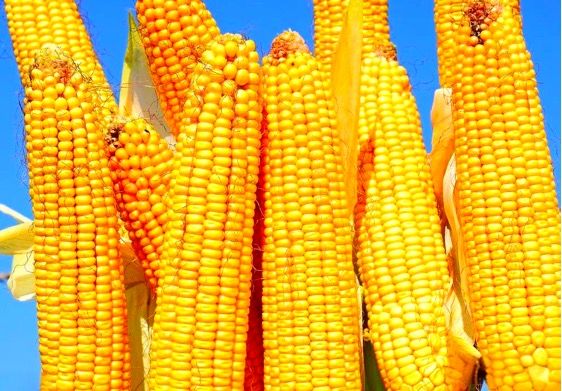
Corn is an annual herbaceous plant in the grass family and the Zea genus. Also known as maize, it is one of the world’s three major grain crops and an important grain, feed, and industrial raw-material crop in China. Plants are 1-4 m tall, with thick, upright stems, short basal internodes, longer middle and upper internodes, and clear nodes and internodes. Leaves are broad, flat, sword-shaped, and alternate. The male inflorescence is a terminal panicle, while the female inflorescence is an axillary ear wrapped in husks; after maturity, it forms a corn cob, with kernels in yellow, white, purple, and other colors, shaped flat-round or wedge-like. Corn is highly adaptable and tolerant of drought and poor soils. It can be grown across China’s varied climates from south to north and east to west, and is widely used for food, feed, and industrial processing.
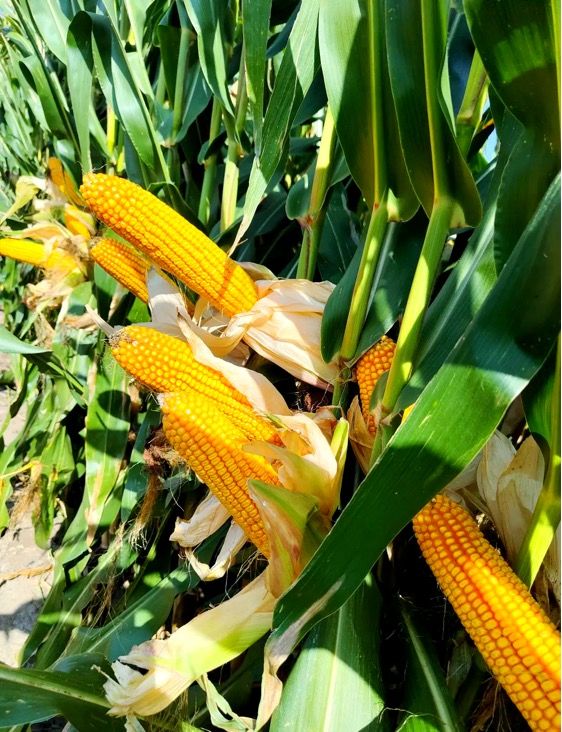
1. Origin and Spread
Corn originated in Mexico and Central America. Archaeological findings show that local Indigenous peoples began cultivating corn as early as 7,000 years ago, gradually domesticating wild corn into modern cultivated varieties. After Columbus reached the Americas in 1492, corn was brought back to Europe and then spread rapidly worldwide through trade and colonial activities.
Corn entered China around the mid-to-late Ming dynasty in the 16th century, mainly through three routes: from Spanish colonists through the Philippines to China’s southeast coast; from Portuguese colonists through India to southwest China; and from Russia to northeast China. After introduction, corn spread rapidly nationwide because of its strong adaptability and high yield, becoming an important grain crop in the Ming and Qing dynasties and greatly easing grain pressure at the time. Today, it is China’s grain crop with the largest planting area and highest total output.
2. Nutritional Value
Corn has rich and comprehensive nutritional value and is an important energy source. Every 100 g of dry corn contains 70%-75% carbohydrates, mainly starch, providing sufficient energy. It contains 8%-10% protein; although slightly lower than wheat and rice, it is rich in amino acids such as glutamic acid and leucine. It contains 4%-5% fat, with unsaturated fatty acids accounting for more than 85%, especially linoleic acid, which benefits cardiovascular health.
Corn is also rich in dietary fiber, with 2.7 g per 100 g, helping promote intestinal movement and prevent constipation. It contains B vitamins (B1, B2, and B6), vitamin E, beta-carotene, which can be converted into vitamin A in the body, and minerals such as potassium, magnesium, selenium, and zinc. Corn germ contains corn germ oil, rich in vitamin E and unsaturated fatty acids, making it a high-quality edible oil source. As feed, corn has high energy value and is the core energy feed for livestock and poultry, known as the “king of feed.”
3. Economic and Cultural Value
Economically, corn is an important pillar crop of China’s agricultural economy. In 2024, China’s corn industry generated more than RMB 800 billion in annual output value, with 650 million mu planted and total output above 280 million tons. The corn industry chain is long, covering planting, processing, and sales, and supports more than 10 million jobs. In addition to direct grain consumption, corn is an important industrial raw material that can be processed into starch, alcohol, syrup, modified starch, and other products widely used in food, medicine, chemicals, and energy. Corn ethanol can also serve as a biofuel and support new energy development. Corn straw, cobs, and other by-products can be used for feed processing, biomass power generation, edible mushroom cultivation, and other purposes, enabling comprehensive resource use.
Culturally, corn holds an important place in Chinese folk culture as a symbol of harvest. In many northern regions, the “autumn drying” scene during corn maturity has become a distinctive farming-culture symbol, and some ethnic groups hold folk activities related to corn to pray for a good harvest. Corn is also used as a subject in literature and folk art, reflecting the simplicity and depth of farming civilization. Its promotion and cultivation have been significant in China’s agricultural history, driving population growth and agricultural expansion.
II. Corn Cultivation in China
1. Planting Area and Output
China is the world’s largest corn producer and consumer, with planting area and output ranking first globally for many years. As of 2024, national corn acreage remained around 650 million mu, including about 320 million mu of spring corn and 330 million mu of summer corn. In recent years, with variety improvement and advances in cultivation technology, corn yield has increased from 200 kg per mu in the 1980s to more than 430 kg per mu today. Annual output remains above 280 million tons, safeguarding China’s food security and supplying sufficient raw materials for the feed industry and industrial processing.
2. Main Advantageous Production Areas
Corn cultivation in China shows a pattern of more production in the north and less in the south. Six major advantageous production areas have formed: the Northeast spring corn area, Huang-Huai-Hai summer corn area, Northwest spring corn area, Southwest mountain corn area, Southern hilly corn area, and Qinghai-Tibet Plateau corn area. The Northeast spring corn area is China’s largest corn region, covering Heilongjiang, Jilin, Liaoning, and eastern Inner Mongolia, and accounts for 35% of national acreage. Fertile soils, abundant sunlight, and large day-night temperature differences produce high yields and good quality, making it the core area for premium commodity corn.
The Huang-Huai-Hai summer corn area includes Henan, Shandong, Hebei, Anhui, Jiangsu, and other provinces, accounting for 38% of national acreage. It is China’s main summer corn region, with abundant light and heat resources and a wheat-corn rotation system, producing high and stable yields. The Northwest spring corn area covers Shaanxi, Gansu, Ningxia, Xinjiang, and other provinces and regions, accounting for 10% of national acreage. It mainly uses irrigated cultivation, with a long growth period and full kernels. The Southwest mountain corn area includes Sichuan, Yunnan, Guizhou, and other provinces, accounting for 12% of national acreage, mostly in mountain fields with diverse varieties.
3. Industry Characteristics and Challenges
Industry Characteristics
China’s corn industry has three notable characteristics. First, the trend toward high-quality and specialized varieties is clear. Through introduction and local breeding, China has developed a group of high-yield, stress-resistant hybrid corn varieties, while also developing specialty corn varieties for feed and industrial processing, such as high-oil, high-starch, and sweet corn. Specialty corn acreage now accounts for more than 20% of the total. Second, scaled and mechanized production is strong. In the Northeast and Huang-Huai-Hai regions, scaled planting bases account for more than 60%, and mechanization of sowing, fertilization, and harvesting exceeds 90%, greatly improving production efficiency. Third, the industrial chain is complete, covering planting, feed processing, food processing, industrial processing, and biomass use, with product added value rising. Policies such as food security and “storing grain in the land and in technology” provide strong support for corn industry development.
Industry Challenges
The core challenge facing China’s corn industry is pest and disease control. Corn is planted over a wide area and has a long growth period, making it vulnerable to many pests and diseases. The pest spectrum varies by regional climate and planting mode, increasing control difficulty. Traditional control relies mainly on manual pesticide spraying and has many drawbacks: corn plants are tall, and manual spraying cannot easily reach upper leaves and tassels, leading to incomplete control; large planting areas make manual control inefficient, with costs of RMB 50-80 per mu; long-term unreasonable pesticide use has increased resistance, such as clear resistance growth of corn borer to chlorantraniliprole-type products, creating a vicious cycle of higher dosage and lower efficacy. In addition, some regions have incomplete monitoring and warning systems, and delayed response after outbreaks often causes 10%-20% yield loss and quality decline.
III. Major Pests and Diseases of Corn
1. Diseases
(1) Northern Corn Leaf Blight
Northern corn leaf blight is a common fungal disease in China’s corn areas, caused by Exserohilum turcicum. It mainly damages leaves and, in severe cases, can also affect leaf sheaths and husks, causing 20%-30% yield loss.
(2) Southern Corn Leaf Blight
Southern corn leaf blight is caused by Bipolaris maydis. Its symptoms are similar to northern leaf blight, but lesions are smaller. It mainly damages leaves, occurs in all production areas, and can cause 15%-25% yield loss in severe cases.
(3) Corn Stalk Rot
Corn stalk rot is a soil-borne disease caused by multiple fungi and bacteria. It mainly damages the stalk base and roots and is severe in the Northeast and Huang-Huai-Hai regions, with incidence reaching 10%-20% and severe cases causing lodging and plant death.
2. Insect Pests
(1) Corn Borer
Corn borer, also known as the corn stem borer, is the main stem-boring pest of corn and occurs in all production areas. Larvae bore into corn stalks, tassels, and ears, causing stalk breakage, tassel wilting, poor ear development, and 10%-30% yield loss.
(2) Corn Aphid
Corn aphid, also known as Rhopalosiphum maidis, is a major piercing-sucking pest of corn. Adults and nymphs suck sap from leaves, tassels, and ears, causing leaf curling and yellowing, tassel wilting, and poor kernel development.
(3) Armyworm
Armyworm is a migratory, voracious pest. Larvae mainly feed on corn leaves and, in severe cases, consume leaves completely, leaving only veins and causing yield loss or even total crop failure.
|
Pest |
Dose/mu |
Droplet |
Height |
Speed |
Spacing |
|
Corn borer |
3-6 L/mu |
50 microns |
3-5 m |
5-7 m/s |
5-7 m |
IV. J100 Helps Stabilize Corn Yield and Increase Income
In the vast Huang-Huai-Hai main corn production area, where scaled planting creates demand for unified control of mid- and late-stage pests and diseases such as corn borer and rust, the AGR J100 demonstrates strong operational advantages. Precise, rapid pest and disease control and effective coverage of tall plant tops and ears are essential for full kernels and a higher share of premium grain. With its powerful propulsion system and intelligent variable spraying system, AGR drones can deliver spray liquid precisely to corn tassels, ears, and upper leaves, achieving full-field control. This effectively solves traditional spraying pain points such as “hard to reach” and uneven application, with strong results against corn borer, aphids, and northern leaf blight. Through technology, AGR is helping farmers reduce costs, improve efficiency, and protect the yield and value of every “golden ear.”
*These parameters are for reference only. Specific operating parameters should be adjusted according to actual corn growth and environmental conditions.
*These parameters are based on guidance from the National Agro-Tech Extension and Service Center and local practices. Pest and disease occurrence may vary by region; adjust pesticide use according to actual needs.