J150 Precision Protection Lights Up Yunnan Sorghum’s “Red Pearls”


I. Overview
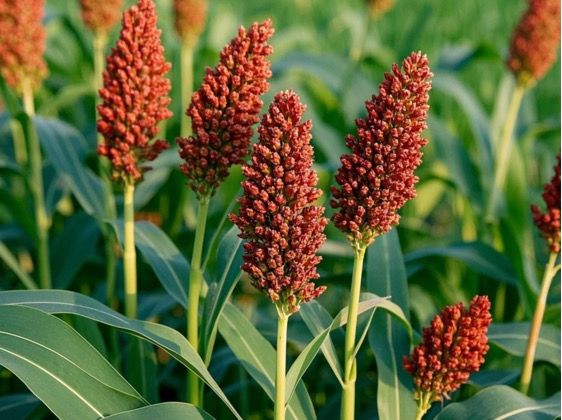
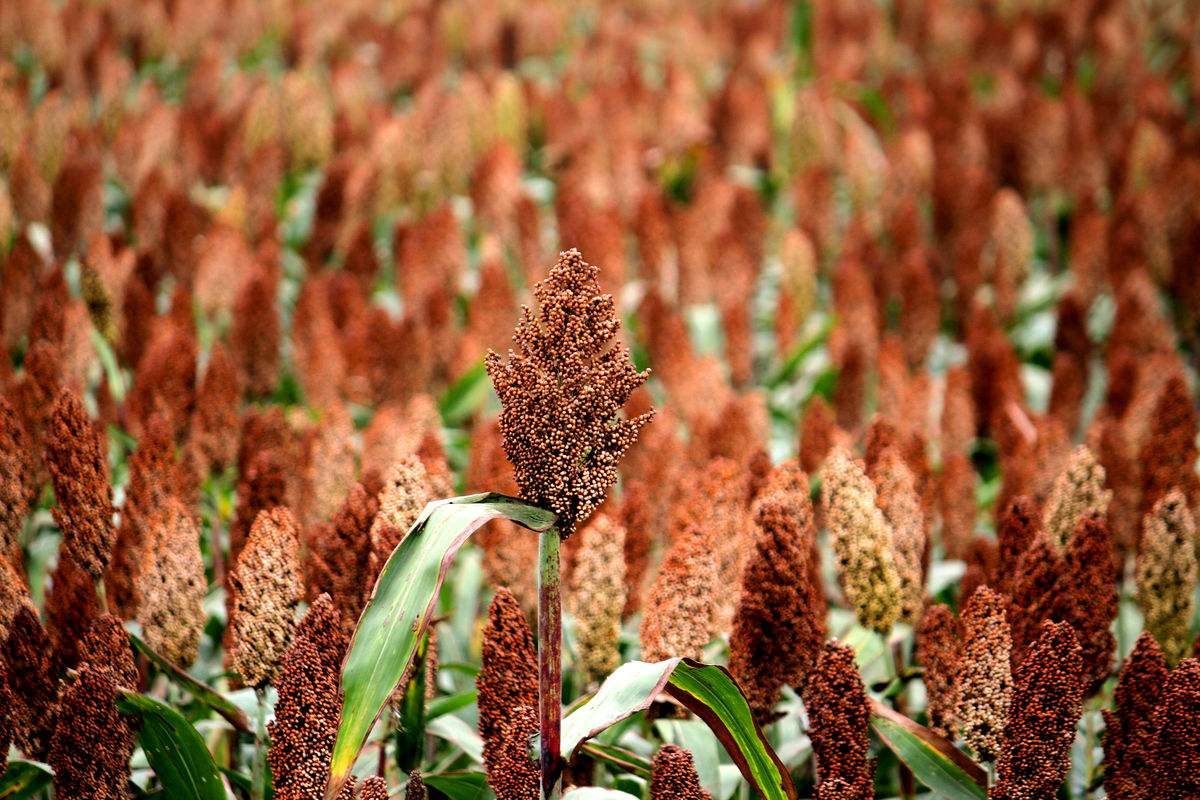
Sorghum is an annual herbaceous plant in the grass family and the Sorghum genus. Also known in Chinese as shushu, lusu, or jiaozi, it is an important global grain, feed, and energy crop and one of China’s traditional five grains. Plants are 1-4 m tall, with thick, upright, solid, jointed stems that are smooth or finely hairy. Leaves are long-lanceolate and alternate, with sheaths wrapping the stem and short, thick ligules. Panicles are terminal and consist of many spikelets, each with two flowers. After fertilization, caryopses form, with round or oval kernels in red, white, yellow, brown, and other colors. Sorghum is highly adaptable, tolerant of drought, waterlogging, salinity-alkalinity, and poor soils. It grows well in China’s arid and semi-arid areas and saline-alkali lands, and is widely used for food, feed, liquor brewing, sugar production, and biomass energy.
1. Origin and Spread
The center of origin of sorghum is the Ethiopian Plateau and Sudan region in northeastern Africa. Archaeological findings show that local people began cultivating sorghum around 5000 BCE, domesticating wild sorghum into cultivated varieties. Early sorghum spread widely across the African continent, forming rich variety resources.
Sorghum entered China as early as the late Neolithic period, mainly through two routes: from ancient Egypt through Persia and India to southwest China, and from Africa through the Arab region to northwest China. After the Han dynasty, sorghum cultivation techniques gradually matured and spread nationwide, making sorghum a main grain crop in northern dry areas. From the Tang to Song dynasties, sorghum acreage expanded further, serving not only as food but also for brewing and feed. After the 16th century, sorghum spread to the Americas, Southeast Asia, and other regions through European colonial activities. Today, it is one of the world’s five major grain crops and plays an important role in agriculture in arid and semi-arid regions.
2. Nutritional Value
Sorghum is rich in nutrients and is an important nutritional source for residents of dry areas. Every 100 g of sorghum grain contains 70%-75% carbohydrates, mainly starch, providing sufficient energy. It contains 8%-12% protein and is rich in essential amino acids such as lysine and leucine. Although its protein quality is slightly lower than wheat, amino acid complementarity can be achieved by eating it with legumes. It contains 2%-4% fat, mainly unsaturated fatty acids, which benefit cardiovascular health.
Sorghum is also rich in dietary fiber, with 3-4 g per 100 g, helping promote intestinal movement and prevent constipation. It contains B vitamins (B1, B2, and niacin), vitamin E, and minerals such as potassium, magnesium, phosphorus, iron, and zinc. Its niacin content is relatively high and helps prevent pellagra. The sorghum seed coat contains some tannins and pigments with antioxidant effects. As feed, sorghum has an energy value close to corn and is an important energy feed for livestock and poultry. As a brewing raw material, sorghum is rich in tannins, which give Chinese baijiu its distinctive flavor and make it a core raw material for high-quality baijiu.
3. Economic and Cultural Value
Economically, sorghum is a pillar crop in China’s arid and semi-arid areas. In 2024, China’s sorghum industry generated more than RMB 30 billion in annual output value, with 15 million mu planted and total output above 5 million tons. The sorghum industry chain is complete, covering planting, processing, and sales, and supports more than 500,000 jobs in seedling production, agricultural inputs, brewing, and feed processing. In addition to direct grain consumption, sorghum is an important industrial raw material that can be processed into baijiu, sorghum rice, sorghum flour, starch, ethanol, and other products. Sorghum-based baijiu, such as Moutai and Wuliangye, is a distinctive Chinese industry with annual output value exceeding RMB 100 billion. Sorghum stalks can also be used for papermaking, biomass power generation, and feed production, enabling comprehensive resource utilization.
Culturally, sorghum has deep historical roots in China and is an important symbol of farming civilization. In northern dry areas, sorghum was a “life-saving grain” for farmers, forming folk cultures related to sorghum such as sorghum harvest festivals and sorghum brewing customs. Sorghum is also often used as a creative subject in literature and film; for example, Mo Yan’s Red Sorghum Family uses sorghum fields as its setting to show strong local flavor and national spirit. Sorghum cultivation has also promoted agricultural technology progress in China’s dry areas, including drought-resistant cultivation and saline-alkali land improvement techniques.
II. Sorghum Cultivation in China
1. Planting Area and Output
China is an important global sorghum producer, with planting area and output among the world’s leaders. As of 2024, national sorghum acreage remained around 15 million mu, including about 10 million mu of spring sorghum and 5 million mu of summer sorghum. In recent years, with variety improvement and better cultivation techniques, sorghum yield has risen from 150 kg per mu in the 1980s to more than 350 kg per mu today. Annual output exceeds 5 million tons, including about 1.5 million tons of food sorghum, 2 million tons of feed sorghum, and 1.5 million tons of brewing-specific sorghum, effectively meeting domestic demand for grain consumption, feed production, and the brewing industry.
2. Main Advantageous Production Areas
Sorghum cultivation in China has formed a pattern of more production in the north than the south and more in the west than the east. It is mainly divided into five advantageous areas: Northeast sorghum area, North China sorghum area, Northwest sorghum area, Southwest sorghum area, and Huang-Huai sorghum area. The Northeast sorghum area is China’s largest, covering Heilongjiang, Jilin, Liaoning, and eastern Inner Mongolia, and accounts for 40% of national acreage. Fertile soils and abundant sunlight produce high yields and good quality, making it the core area for premium food and brewing sorghum.
The North China sorghum area includes Hebei, Shanxi, Beijing, Tianjin, and other provinces and municipalities, accounting for 25% of national acreage. It mainly grows summer sorghum, with wheat-sorghum rotation as the main system and stable yields. The Northwest sorghum area covers Shaanxi, Gansu, Ningxia, Xinjiang, and other provinces and regions, accounting for 20% of national acreage. It mainly grows spring sorghum, with many drought-tolerant varieties, and is a major feed sorghum area. The Southwest sorghum area includes Sichuan, Yunnan, and Guizhou, accounting for 10% of national acreage. It is mostly mountain cultivation and mainly uses brewing-specific sorghum, such as the sorghum areas of Luzhou in Sichuan and Zunyi in Guizhou, supplying ample raw materials for local baijiu industries.
3. Industry Characteristics and Challenges
Industry Characteristics
China’s sorghum industry has three notable characteristics. First, specialization of varieties is clear. Through introduction and local breeding, China has developed food-specific varieties, such as waxy sorghum and sweet sorghum, feed-specific varieties, such as tall high-yield types, and brewing-specific varieties, such as Hongyingzi and Jinza No. 22. Specialty varieties account for more than 60% of planted area and meet different processing needs. Second, scaled and mechanized production has improved. In the Northeast and North China regions, scaled planting bases account for more than 40%, and full mechanization of sowing, fertilization, and harvesting exceeds 80%, greatly improving efficiency. Third, the industrial chain is deeply integrated with characteristic industries. Brewing-specific sorghum has formed close upstream-downstream relationships with the baijiu industry, and companies such as Kweichow Moutai and Shanxi Fenjiu have established dedicated sorghum bases to ensure raw material supply and stable quality.
Industry Challenges
The core challenge facing China’s sorghum industry is pest and disease control. Sorghum is mostly grown in arid and semi-arid areas; although pest and disease types are fewer than in humid regions, damage can be concentrated and difficult to control. Traditional control relies mainly on manual pesticide spraying and has many drawbacks: sorghum plants are tall, so manual spraying struggles to reach upper leaves and panicles, leading to incomplete panicle pest and disease control; fields are scattered and manual control is inefficient, with costs of RMB 30-50 per mu; long-term unreasonable pesticide use has increased resistance, with sorghum aphids 3-5 times more resistant to imidacloprid-type products and sorghum head smut showing some resistance to carbendazim-type products. In addition, some regions have incomplete monitoring and warning systems, and delayed response after outbreaks often causes 10%-20% yield loss and quality decline, affecting brewing and food value.
III. Major Pests and Diseases of Sorghum
(1) Diseases
1. Sorghum Head Smut
Sorghum head smut is a soil- and seed-borne fungal disease caused by Sporisorium reilianum. It is a destructive disease in China’s sorghum areas, commonly known in Chinese as “black rice.” Incidence can reach 10%-30%, and in severe cases more than 50%, causing total crop failure.
2. Sorghum Rust
Sorghum rust is a fungal disease caused by Puccinia purpurea. It is serious in southern sorghum areas of China and humid areas of the Northeast and can cause 15%-20% yield loss.
(2) Insect Pests
1. Sorghum Aphid
Sorghum aphid is the main piercing-sucking pest of sorghum and occurs in all production areas. Adults and nymphs suck sap from sorghum leaves, stems, and panicles, causing leaves to curl and yellow, weakening photosynthesis, reducing panicle filling, and causing 10%-20% yield loss.
2. Sorghum Stem Borer
Sorghum stem borer, also known as sorghum borer, is the main stem-boring pest of sorghum. Larvae bore into sorghum stems and panicle stalks, causing stem breakage and panicle wilting, with yield loss of 15%-30%.
3. Sorghum Armyworm
Sorghum armyworm is a migratory, voracious pest. Larvae mainly feed on sorghum leaves and, in severe cases, consume leaves completely, leaving only veins and causing 20%-50% yield loss or even total crop failure.
4. Sorghum Shoot Fly
Sorghum shoot fly is a major seedling-stage pest of sorghum. Larvae bore into the stem base of young seedlings, causing seedlings to wilt and die, commonly known in Chinese as “dead heart seedlings.” Incidence can reach 10%-30%, and severe cases may require re-sowing.
|
Pest |
Dose/mu |
Droplet |
Height |
Speed |
Spacing |
|
Aphid |
3-6 L/mu |
50 microns |
3-5 m |
6-10 m/s |
5-8 m |
IV. J150 Helps Stabilize Sorghum Yield and Increase Income
In Yunnan’s distinctive sorghum production areas, the AGR J150 is providing technological support for high-quality production of this important brewing raw material. For key pests and diseases such as sorghum borers and aphids, J150 uses a strong downward airflow and precise atomization system to deliver pesticide effectively to the middle and lower stems and panicles. This is essential for full kernels and a higher share of specialty grain. It effectively solves the traditional spraying pain points of “hard to reach” and incomplete control, with strong results against stem borers, aphids, and head smut. Through technology, AGR is helping growers reduce production costs, improve sorghum quality, and protect the yield and value of every “red sorghum” plant.
*These parameters are for reference only. Specific operating parameters should be adjusted according to actual sorghum growth and environmental conditions.
*These parameters are based on trials in the Northeast and Shanxi. Pest and disease occurrence may vary by region; adjust pesticide use according to actual needs.