J150 Shows Strong Results in Tomato Disease Control


I. Overview
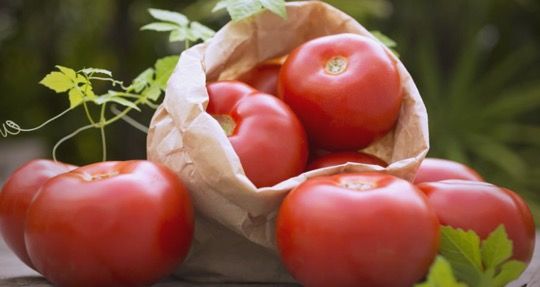
Tomato is an annual or perennial herbaceous plant in the Solanaceae family and the Solanum genus. Also known as tomato or “foreign persimmon” in Chinese, it is both a widely cultivated vegetable crop and an important fruit-type cash crop. Plant height varies by cultivation method: dwarf varieties are 30-60 cm tall, while vine types can reach 2-3 m and require trellising. Stems are soft, glandular-hairy, and readily produce adventitious roots. Leaves are pinnately compound, with ovate or oblong leaflets and irregular serrated margins. Cymes are axillary, with yellow, bell-shaped flowers. The fruit is a berry, with round, flattened-round, or long-oval shapes; skin color changes from green to red, pink, or yellow, and the flesh is thick and juicy. Tomatoes prefer warmth and light, grow best at 20-28 C, and adapt well to soils. They are widely grown across northern and southern China and have value for fresh consumption, processing, and ornamental use.
1. Origin and Spread
The center of origin of tomato is the Andes region of South America, around present-day Peru, Ecuador, and Bolivia. Archaeological findings show that local Indigenous peoples collected wild tomatoes for food as early as 500 BCE, with initial domestication around 1000 CE. Early tomato fruits were small and sour and were mainly grown as ornamental plants.
In the early 16th century, Spanish colonists brought tomatoes from South America back to Europe. At first, they were grown as ornamental plants in Italy, Spain, and other places, and after the 18th century they gradually became a food vegetable in Europe. Tomatoes entered China around the late Ming dynasty in the 17th century, mainly through two routes: by sea through European missionaries to the southeast coast, and by land through Central Asia to northwest China. At first, China also treated tomatoes mainly as ornamental plants. It was not until the late 19th and early 20th centuries, with improved cultivation techniques and changing dietary habits, that tomatoes gradually became an important vegetable crop in China. After the 1950s, large-scale promotion began, and tomatoes are now one of the core crops of China’s vegetable industry.
2. Nutritional Value
Tomatoes are highly nutritious, combining the nutritional characteristics of vegetables and fruits, and are often called a “vitamin warehouse.” Every 100 g of fresh tomato contains 10-25 mg of vitamin C, 0.3-0.5 mg of provitamin A (beta-carotene), and 0.5-1.0 mg of vitamin E, which provide antioxidant and immune-supporting benefits. Tomatoes are especially rich in lycopene, with 3-5 mg per 100 g of fresh fruit. Lycopene is a natural carotenoid with strong antioxidant activity and important health value.
Tomatoes also contain abundant minerals (150-200 mg potassium, 10-15 mg magnesium, and 10-15 mg calcium per 100 g), dietary fiber (1.5-2.0 g per 100 g), and organic acids such as citric acid and malic acid. Dietary fiber promotes intestinal movement, while organic acids increase appetite and aid digestion. Tomatoes are low in calories, at about 15 kcal per 100 g, and are suitable for many groups of consumers. Fresh consumption preserves vitamin C and lycopene to the greatest extent, while processing into tomato paste, lycopene capsules, and other products can significantly improve lycopene absorption.
3. Economic and Cultural Value
Economically, tomato is a pillar crop in China’s vegetable industry. In 2024, China’s tomato industry generated more than RMB 200 billion in annual output value, with 23 million mu planted and total output above 65 million tons, ranking first in the world. The tomato industry chain is complete, covering planting, post-harvest handling, processing, and sales, and supports more than 3 million jobs in seedling production, agricultural inputs, packaging, logistics, and food processing. In addition to fresh consumption, tomatoes can be processed into tomato paste, ketchup, juice, lycopene extract, and other products. Tomato paste is an important export agricultural product for China, with annual exports above 1 million tons to Europe, Africa, Southeast Asia, and other regions, and annual export value exceeding RMB 3 billion.
Culturally, tomato holds an important place in Chinese food culture as one of the core ingredients of home cooking. Dishes such as scrambled eggs with tomato and tomato beef brisket are familiar nationwide and have become iconic parts of everyday Chinese cuisine. In Western food culture, tomato is an important component of the Mediterranean diet and symbolizes health and vitality. In parts of China, the bright red fruit also implies prosperity and is used as an auspicious symbol in folk activities. It is also a common ornamental horticultural plant, combining practical and ornamental value.
II. Tomato Cultivation in China
1. Planting Area and Output
China is the world’s largest producer and consumer of tomatoes, with planting area and output ranking first globally for 20 consecutive years. As of 2024, national tomato acreage remained around 23 million mu, including 12 million mu under protected cultivation, more than 50% of the total, and 11 million mu in open fields. With the spread of protected cultivation technologies and variety improvement, yields have continued to rise. Average protected tomato yields reach 8,000-10,000 kg per mu, while open-field tomatoes average 4,000-5,000 kg per mu. Annual output exceeds 65 million tons, including about 40 million tons of fresh-market tomatoes and 25 million tons of processing tomatoes, meeting domestic demand and supporting large exports.
2. Main Advantageous Production Areas
Tomato cultivation in China has formed a pattern of “fresh-market tomatoes in the south and processing tomatoes in the north,” with two main types of advantageous areas: fresh-market tomato areas and processing tomato areas. Fresh-market tomato areas mainly include South China (Guangdong, Guangxi, Hainan), East China (Shandong, Jiangsu, Zhejiang), Southwest China (Sichuan, Yunnan), and North China (Hebei, Beijing, Tianjin). Shandong is China’s largest fresh-market tomato area, with 3.5 million mu planted, accounting for 25% of national fresh-market tomato acreage. Protected cultivation dominates there and enables year-round supply.
Processing tomato areas are mainly concentrated in northwest arid and semi-arid regions, including Xinjiang, Inner Mongolia, and Gansu. Xinjiang is China’s largest processing tomato area, with 5 million mu planted and 80% of the national processing tomato acreage. Its abundant sunlight, large day-night temperature difference, and low rainfall produce high lycopene content, up to 8-10 mg per 100 g, making it the core region for premium processing tomatoes. More than 85% of China’s tomato paste is produced in Xinjiang. Bayannur in Inner Mongolia and Jiuquan in Gansu are also important processing tomato areas.
3. Industry Characteristics and Challenges
Industry Characteristics
China’s tomato industry has three notable characteristics. First, varieties are increasingly diversified and specialized. Through introduction and local breeding, China has developed fresh-market specialty varieties, such as firm-fruit and high-sugar types, and processing specialty varieties, such as high-lycopene and high-solids types. Specialty varieties account for more than 70% of planted area and meet different market needs. Second, protected and intensive cultivation is highly developed. Protected cultivation exceeds 80% in fresh-market tomato areas, using advanced technologies such as water-fertilizer integration, environmental control, and soilless cultivation to achieve year-round production and high yields. Third, the industrial chain is complete, covering seedlings, planting, post-harvest grading, cold-chain logistics, fresh sales, processing, and exports, with leading enterprises such as Xinjiang Chalkis and Shandong Shouguang Vegetable Group playing a strong driving role.
Industry Challenges
The core challenge facing China’s tomato industry is pest and disease control, especially under protected cultivation where enclosed, hot, and humid environments lead to many pest and disease types, frequent occurrence, rapid spread, and high control difficulty. Traditional control relies mainly on manual pesticide spraying and has many drawbacks: dense protected tomato planting makes it difficult to cover leaf undersides and gaps around fruit uniformly, leading to incomplete control; multiple cropping cycles and continuous cropping are common, causing serious soil-borne diseases such as root-knot nematode and Fusarium wilt, with incidence in continuous-cropping fields reaching 30%-50%; long-term unreasonable pesticide use has increased resistance, with tomato aphids 5-8 times more resistant to imidacloprid-type products and late blight pathogens also showing resistance to metalaxyl-type products. In addition, some regions have incomplete monitoring and warning systems and irregular pesticide use, increasing residue risks and affecting product quality and exports.
III. Major Pests and Diseases of Tomato
(1) Diseases
1. Tomato Late Blight
Tomato late blight is a destructive fungal disease caused by Phytophthora, commonly known in Chinese as “black stem disease.” It can break out in both protected and open-field tomatoes, causing 30%-50% yield loss or even total crop failure.
2. Tomato Early Blight
Tomato early blight, also known as target spot, is a common fungal disease caused by Alternaria. It mainly damages leaves and fruit, occurs in all production areas, and can cause 10%-20% yield loss.
3. Tomato Viral Diseases
Tomato viral diseases are caused by multiple viruses, such as tobacco mosaic virus, cucumber mosaic virus, and tomato yellow leaf curl virus. They are a persistent problem in tomato production, causing 20%-80% yield loss and seriously affecting fruit quality.
4. Tomato Root-Knot Nematode Disease
Tomato root-knot nematode disease is a soil-borne disease caused by root-knot nematodes. It is especially serious in protected tomato production areas, with incidence reaching 30%-50% and yield loss of 20%-40%.
(2) Insect Pests
1. Tomato Aphids
Tomato aphids are major piercing-sucking pests of tomato, including green peach aphid and cotton aphid. They occur in all production areas; adults and nymphs suck sap from tender shoots, leaves, and fruit, causing leaf curling, plant dwarfing, and fruit deformity.
2. Tomato Bollworm
Tomato bollworm, also known as fruit borer, is a destructive pest of tomato fruit. Larvae bore into flower buds, flowers, and fruit, causing flower and fruit drop. Damaged fruit develops holes and is prone to rot, and in severe cases more than 50% of fruit may be affected.
3. Tomato Leaf Miner
The tomato leaf miner is a quarantine pest that has invaded China in recent years. Larvae mine beneath the tomato leaf epidermis and feed on mesophyll, forming winding tunnels filled with black frass. This blocks photosynthesis and can cause leaves to yellow, wither, and fall in severe cases.
|
Pest |
Dose/mu |
Droplet |
Height |
Speed |
Spacing |
|
Tomato virus |
5-8 L/mu |
40 microns |
3-5 m |
4-6 m/s |
4-5 m |
IV. J150 Helps Stabilize Tomato Yield and Increase Income
For the large-scale, protected tomato production model in Shandong, the AGR J150 provides a highly compatible crop protection solution. In special environments such as multi-span greenhouses, J150 uses stable autonomous flight and precise variable spraying to adapt flexibly to limited spaces and apply pesticide evenly to key disease-prone areas in the middle and lower parts of plants. It achieves full-field, no-dead-angle control, effectively solving the traditional spraying pain points of uneven application and missed spots, with strong results against bollworm, whitefly, and late blight. Through technology, AGR is helping vegetable growers reduce control costs, improve product quality, and protect the yield and value of every “red agate” tomato.
*These parameters are for reference only. Specific operating parameters should be adjusted according to actual tomato growth and environmental conditions.
*These parameters are based on trials in Shandong and Xinjiang. Pest and disease occurrence may vary by region; adjust pesticide use according to actual needs.