I. Overview
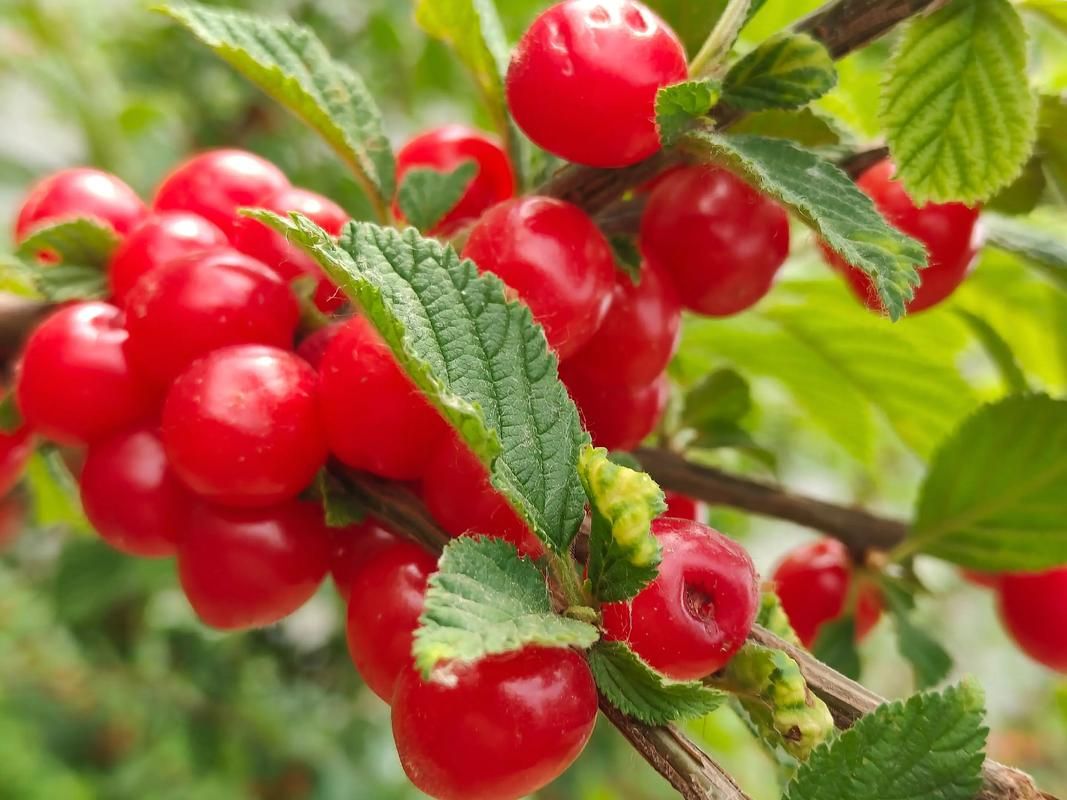
Cherry (Prunus), a deciduous tree in the Rosaceae family and Prunus genus, is globally recognized as the "King of Natural Vitamin C" and "Fruit of Life." In China, the main types cultivated are sweet cherries (also known as large cherries or European cherries) and Chinese cherries, with sweet cherries being the focus of current development.
Sweet cherries are large trees with robust growth and upright branches. The fruit is large, ranging from 1–3.5 cm in diameter, with individual fruits weighing 6–12 grams. The fruit’s skin is yellow, red, or purple, and it is round or heart-shaped with a sweet flavor. In contrast, Chinese cherries are typically small trees or shrubs with smaller fruit, weighing 1–2.5 grams, red, orange-yellow, or yellow, and are known for their juicy flesh but are less transportable due to the thin skin.
1. Origin & Spread
Origin
Cherries originated in China and have been cultivated for over 3,000 years. Archaeological evidence indicates cherry seeds were found in Warring States Period tombs in 1965. The Book of Rites: Monthly Commands mentions cherries as "Han Tao" during the Zhou Dynasty, signifying their use as sacrificial offerings.
Spread within China
Cherries are widely distributed in China, with primary regions in Bohai Bay, Beijing, and Shandong.
Global Spread
1871 marked the first introduction of sweet cherries, sour cherries, and hybrid cherries from the U.S. to Shandong by American missionaries. This was the start of Europe’s cherry introduction into China. Over time, varieties were introduced from Russia, Germany, France, and other regions, spreading throughout Qingdao, Dalian, and Weihai.
The 1980s was a period of rapid expansion for cherry varieties in China, with over 200 varieties imported and cultivated in regions like Henan, Shanxi, Shaanxi, and Gansu.
2. Nutrition & Wellness
Cherries are not only delicious but also packed with essential nutrients:
-
High in Vitamin C: Cherries are widely recognized as "the natural vitamin C king", helping boost immunity and protect cells from oxidative stress.
-
Iron Content: Cherries contain the highest iron content among fruits, with 59 mg of iron per 100 grams, which is 20 times more than apples or peaches.
-
Other Nutrients: Cherries are rich in anthocyanins, proteins, sugars, phosphorus, beta-carotene, and vitamin C.
From a Traditional Chinese Medicine (TCM) perspective, cherries are considered to have "warming" properties, beneficial for tonifying Qi, strengthening the spleen, harmonizing the stomach, and dispelling wind-dampness. They are also used to treat indigestion, poor appetite, and rheumatic pain in the lower back and legs.
3. Economic & Cultural Value
Economic Value
-
Industry Scale: According to the USDA’s 2025 Annual Report, China’s cherry production is expected to grow by 6%, reaching 900,000 tons by the 2025/26 season.
-
Import Market: Cherry imports into China continue to rise, with an estimated 600,000 tons expected in the 2025/26 season.
-
High-Return Crop: Cherries are high-value fruit, offering substantial profits for growers, especially compared to other fruits.
Cultural Value
-
Ancient Significance: Cherries were considered "the first fruit" among royalty. During the Tang Dynasty, emperors used cherries to reward officials, and poets like Wang Wei, Bai Juyi, and Han Yu wrote poems about cherries.
-
Literary Imagery: Cherries are widely celebrated for their sweet-and-sour taste, graceful shape, and vibrant color in Chinese literature. Poems like Wang Wei’s "The Empress’s Cherry Feast" describe the grandeur of cherry feasts.
-
Name Origins: The name "Cherry" derives from the sound of the "Ying" (the thrush) as it feeds on cherries. It was later transliterated as "Ying Tao", or “cherry”.
II. Cherry Production in China at a Glance
-
Planting Area & Output
China is the world’s largest cherry producer. The 2025 planting area is expected to reach 199,000 hectares, with a total output of 900,000 tons by the 2025/26 season. -
Key Production Areas
-
Shandong: The largest traditional cherry-producing area, known for stable production and mature techniques.
-
Sichuan: Expanding cultivation with new varieties like Shuzaomei and Shuzimei.
-
Xinjiang: Significant growth in greenhouse planting, promoting the local industry.
-
Shaanxi: The best-developed area in Northwestern China, with high-quality production of sweet cherries.
III. Industry Characteristics & Challenges
Industry Traits
-
Diverse Varieties: A range of early-maturing and high-yielding varieties are being developed, with greenhouse farming growing in popularity.
-
Technological Support: UAV crop protection, precision irrigation, and smart agriculture are being adopted to improve efficiency and quality.
Challenges
-
Pest & Disease Control: Cherry production faces complex pest and disease problems such as Black Spot, Shothole Disease, and Aphids, exacerbated by changing climate.
-
Traditional methods are less efficient, and high labor costs contribute to poor pest control in large orchards.
Major Diseases & Pests
A. Key Diseases
1) Cherry Gummosis
-
Damage profile. Primarily affects trunks and branches, weakening vigor; severe cases cause dieback.
-
Epidemiology. Occurs more often in the rainy season and on trees with wounds from insect attack, frost, late spring cold, sunscald, etc.
-
Control essentials.
-
Cultural. Strengthen orchard husbandry to improve vigor; prune properly and avoid mechanical injuries; control borer pests on scaffolds/trunks in time.
-
Chemical. At early onset, scrape diseased tissue and apply a protectant fungicide paste/paint to the wound.
-
2) Shothole (Leaf Perforation) of Cherry
-
Damage profile. Mainly hits leaves, but can infect shoots and fruit. Brown necrotic spots form and later drop out, leaving holes.
-
Epidemiology. Breaks out in rainy spring–summer, leading to premature defoliation and reduced vigor/yield.
-
Control essentials.
-
Cultural. Winter sanitation to reduce inoculum; pruning to improve airflow and light.
-
Chemical. Early protective sprays with appropriate fungicides.
-
3) Cherry Brown Leaf Spot
-
Damage profile. Brown lesions develop on leaves; severe infections cause early defoliation.
-
Control essentials.
-
Cultural. Completely remove fallen leaves in winter to lower overwintering inoculum.
-
Chemical. Timely fungicide sprays at initial infection.
-
B. Key Insect Pests
1) Red-Necked Longhorn Beetle (Aromia bungii)
-
Damage profile. Larvae bore beneath bark into xylem, weakening trees and potentially killing them.
-
Phenology. One generation in 2–3 years; larvae overwinter in galleries.
-
Control essentials.
-
Physical. Hand collection of adults during the flight period; wire-hook extraction of larvae from galleries.
-
Chemical. Target sprays during the egg hatch/young-larva window with suitable insecticides.
-
2) Green Mirid Bug
-
Damage profile. Adults/nymphs pierce-suck sap from tender leaves, flower buds, and young fruit, causing torn leaves, bud drop, and deformed fruit.
-
Phenology. Multiple generations per year; damage peaks in spring–summer.
-
Control essentials.
-
Cultural. Remove weeds inside and around orchards to reduce sources.
-
Chemical. Spray at the nymphal peak.
-
3) Pear/Oriental Fruit Moth Complex
-
Damage profile. Larvae bore fruit, causing malformation and drop, severely reducing yield and quality.
-
Phenology. Damage intensifies as fruit approaches maturity.
-
Control essentials.
-
Physical. Pheromone traps to capture males.
-
Chemical. Apply insecticides at oviposition and egg-hatch peaks.
-
Recommended Operation Parameters
|
Target pest/disease |
Application rate |
Droplet size |
Flight height |
Flight speed |
Route spacing |
|
Cherry Brown Spot |
6–12 L/mu (≈ 90–180 L/ha; ≈ 36–72 L/acre) |
≈ 40 µm |
≈ 4–5 m above canopy |
3.0–4.5 m/s |
≈ 3.5–4.5 m |
The parameters above are for reference only. Please adjust the operation settings to the actual crop growth stage, field conditions, and equipment model.
These parameters are derived from trials in major cherry-growing regions. Pest and disease incidence varies by region and season—select and apply pesticides as required.
Why J100 for Cherry — Ensuring High Yields
In Dalian, one of China’s key cherry-producing regions, the J150 drone is playing a vital role in disease control. The drone’s precise flight control and uniform spraying technology ensure effective coverage of large cherry trees, addressing traditional pesticide application issues like poor coverage and inefficient timing. By using advanced technology, J150 is helping farmers achieve higher yields and maintain fruit quality while minimizing pesticide use, supporting the sustainable growth of the cherry industry.