I. Overview
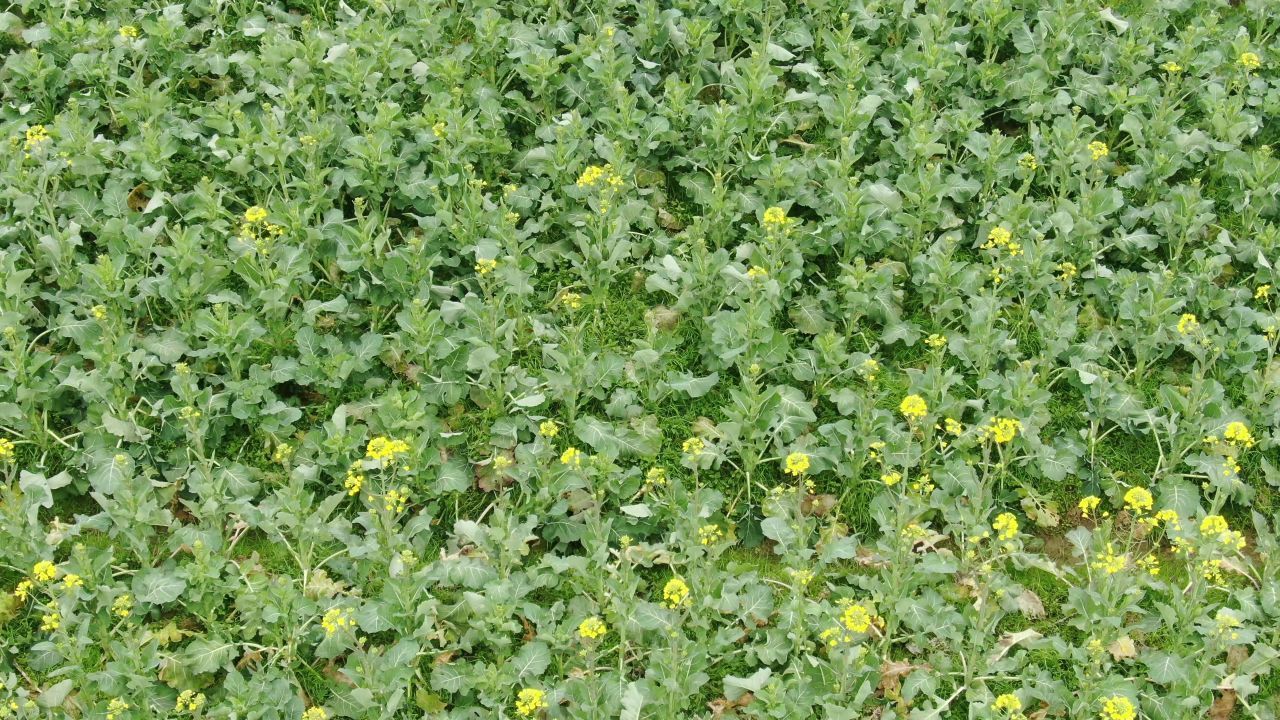
Rapeseed (Brassica spp.) is an annual or winter annual herb in the family Brassicaceae (genus Brassica). It is a key oilseed and nectar crop in China. Plants are upright with stout stems; leaves are ovate-lanceolate with serrated margins; inflorescences are terminal or axillary racemes; flowers are yellow with four petals arranged in a cross. Seeds are oil-rich (typically 35%–45%), making rapeseed a major raw material for edible oils. Rapeseed oil is characterized by a high proportion of unsaturated fatty acids and a distinctive flavor. Beyond oil use, tender stems and leaves are edible as a vegetable, and the mass bloom forms spectacular “rapeseed seas,” which are valuable for agro-tourism.
1) Origin and Spread
Origin. Rapeseed’s origins trace to the Mediterranean and West Asia. The ancestral forms of Chinese cabbage–type and mustard–type rapeseed were domesticated and cultivated early in China, where rapeseed has a long planting history and frequent mentions in historical texts. Cabbage-type rapeseed originated in Europe via natural hybridization within Brassica and subsequent evolution.
Spread.
-
Spread within China. Chinese cabbage–type rapeseed was widely grown in the Yellow River Basin as early as the Han dynasty and later spread to the Yangtze River Basin and southern regions. Mustard-type rapeseed became prevalent in the drier Northwest and Southwest. From the late 19th to early 20th century, cabbage-type rapeseed was introduced from Europe; owing to its high yield and stress tolerance, it rapidly expanded across the Yangtze Basin and the Huang–Huai region.
-
Global Spread. Rapeseed is now cultivated across Asia, Europe, the Americas, and Africa and ranks among the world’s four major oilseed crops. China, Canada, India, and Australia are leading producers.
2) Nutrition & Wellness
Rapeseed oil
Rich in essential fatty acids, notably linoleic acid and α-linolenic acid (both unsaturated). Linoleic acid is essential for cardiovascular health; α-linolenic acid supports brain development and vision. Rapeseed oil also contains vitamin E, vitamin K, and minerals (Ca, P, Fe); vitamin E provides antioxidant protection.
Edible greens
Tender stems and leaves are high in vitamin C (often exceeding common fruits), dietary fiber (promotes motility and digestive health), β-carotene (vitamin A precursor), folate, and potassium/magnesium.
3) Economic and Cultural Value
Economic value. As a strategic oil crop, rapeseed underpins edible oil security and supports a long value chain from planting to oil processing and feed utilization. Rapeseed meal (press cake) is protein-rich feedstock for livestock, enabling full-value utilization. Bloom-season landscapes drive rural tourism, and rapeseed is a major nectar source for apiculture.
Cultural value. In southern China, rapeseed is emblematic of spring; large flower fields are iconic destinations for outings and photography. Many localities host rapeseed-flower festivals integrating cultivation with regional culture and folk events, reinforcing agrarian heritage and place identity. Literature and folk arts often use rapeseed as a symbol of vitality and hope.
II. Rapeseed Production in China
1) Area and Output
China is the world’s largest rapeseed producer by area and output. In recent years, the sown area has hovered around 100 million mu (~6.7 M ha), with total output >14 million tons. With cropping-structure adjustments and improved varieties, average yield rose from tens of kg/mu in the 1980s to about 130 kg/mu today. Spatially, production has shown a “northward shift of winter rapeseed” and “westward expansion” beyond the traditional Yangtze belt into the Huang–Huai and Northwest regions, further stabilizing national output.
2) Major Advantage Regions
China’s rapeseed belt can be grouped into three zones:
-
Yangtze River winter-rapeseed zone (Jiangsu, Zhejiang, Anhui, Jiangxi, Hubei, Hunan, Sichuan, Chongqing): warm climate, ample rainfall, fertile soils; >70% of national area and output; dominated by cabbage-type rapeseed.
-
Huang–Huai winter-rapeseed zone (Henan, Shandong, Hebei): colder winters; winter-habit cultivars; ~15% of national area/output; the key northern base.
-
Northwest spring-rapeseed zone (Qinghai, Gansu, Xinjiang): long, cold winters preclude overwintering; spring cabbage-type is grown; ~10% of national area; seed has high oil content and excellent quality.
3) Industry Features and Challenges
Features.
-
Genetic improvement. Breeding has delivered high-yield, high-quality, stress-tolerant cabbage-type varieties and accelerated cultivar renewal.
-
Scale and mechanization. Land transfer and mechanization drive larger, more intensive operations and specialized cooperatives.
-
Integrated value chain. Planting → seed processing → oil sales → meal utilization → sightseeing agriculture forms a complete chain with rising value-add.
-
Policy support. Subsidies and targeted programs sustain sector stability.
Challenges.
-
Complex pest/disease pressure. A long growth cycle spanning multiple stages under diverse climates means numerous, sometimes migratory/epidemic pests and diseases that are hard to manage.
-
Conventional spraying limits. Manual spraying often lacks precision, wastes inputs, and under-controls pests; it raises costs and residue risks and can accelerate resistance development and environmental burdens.
-
Monitoring gaps. In some regions, weak surveillance/early warning delays response, leading to yield and quality losses.
III.Major Diseases and Pests
(A) Diseases
-
Sclerotinia stem rot (a.k.a. “rotted stem”) — caused by Sclerotinia sclerotiorum; widespread nationwide; severe outbreaks can cut yields by >30% or cause crop failure.
-
Downy mildew — caused by downy mildew pathogens (e.g., Hyaloperonospora brassicae); primarily attacks leaves, stems, flowers, and siliques.
-
Viral mosaics — chiefly turnip mosaic virus (TuMV), cucumber mosaic virus (CMV), etc.; vectored mainly by aphids; cabbage-type rapeseed is especially susceptible.
(B) Pests
-
Aphids — primarily cabbage aphid (Brevicoryne brassicae) and green peach aphid (Myzus persicae); adults and nymphs suck sap and vector viruses.
-
Cabbageworm — larvae of the small white butterfly (Pieris rapae); chew leaves causing notches/holes and, in heavy infestations, skeletonization that impairs photosynthesis and growth.
-
Flea beetles — chiefly striped flea beetle (Phyllotreta striolata). Adults feed on leaves, creating numerous pinholes; larvae feed on roots, causing rot and plant death. Adults jump readily, making control difficult.
Recommended Operation Parameters
|
Target pest/disease |
Application rate |
Droplet size |
Flight height |
Flight speed |
Route spacing |
|
Flea beetles in rapeseed |
2–5 L/mu |
60 μm |
2.5–4 m above canopy |
5–7 m/s |
4–6 m |
The parameters above are for reference only. Please adjust the operation settings to the actual crop growth stage, field conditions, and equipment model.
These parameters are derived from research datasets and field cases. Pest and disease incidence varies by region and season—select and apply pesticides as required.
IV. Why J100 for Rapeseed—— Stabilizing Yield and Increasing Income
In Hunan’s major rapeseed areas, the J100 precision agriculture drone provides critical protection for stable, high yields. Against key threats such as flea beetles and aphids, the J100’s high-efficiency operations and precision atomization deliver uniform deposition on lower/mid-canopy leaves and petals, effectively interrupting the Sclerotinia infection cycle. Its intelligent workflows markedly improve bloom-stage control efficiency, reducing pest/disease losses and supporting higher pod set and oil recovery, thereby helping growers increase both yield and income.