Overview
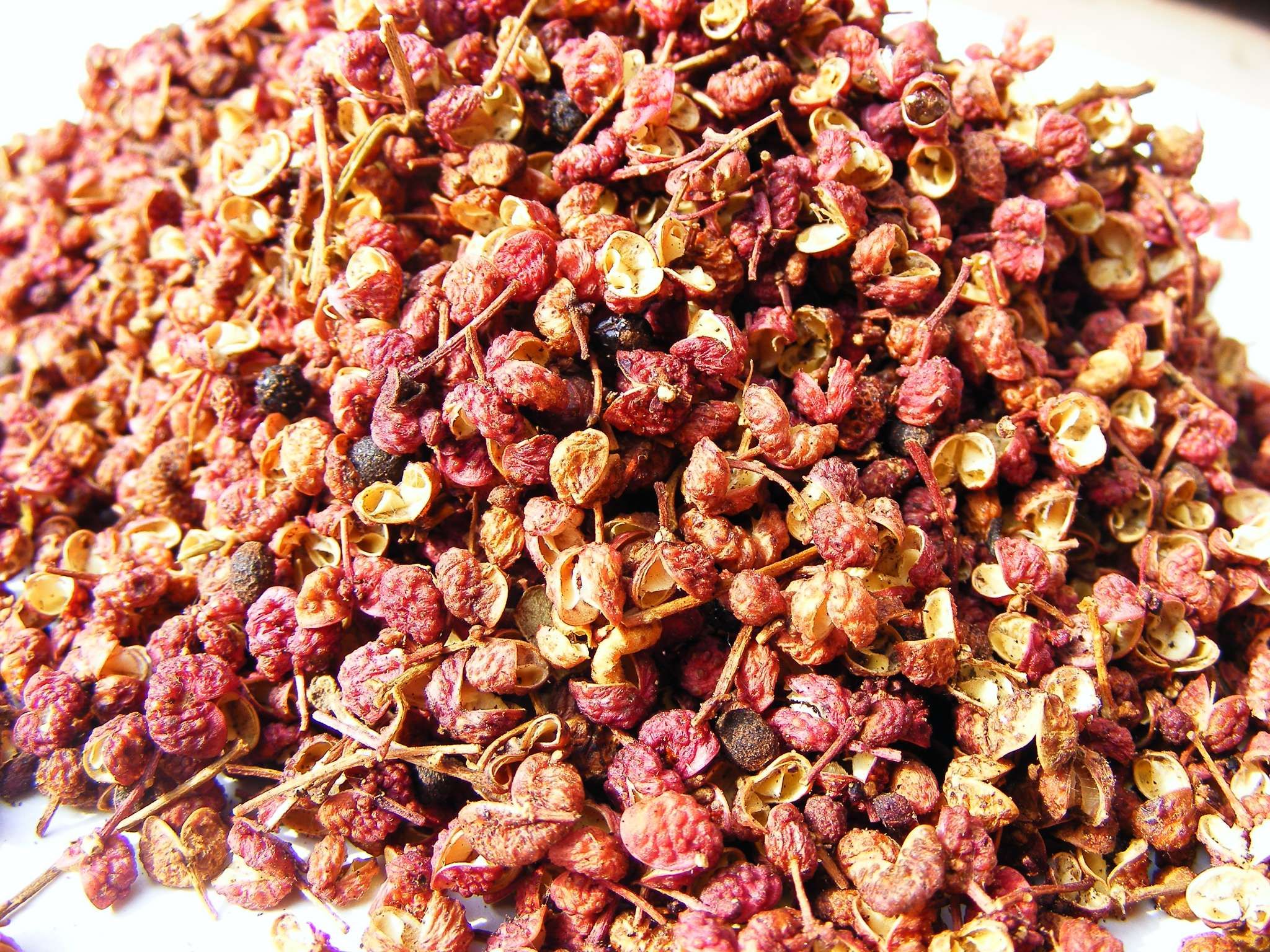
Sichuan pepper (Zanthoxylum spp.) is a deciduous shrub or small tree in the Rutaceae family and a classic Chinese spice—the “king of seasoning.” Its pericarp is studded with oil glands that store the volatile compounds behind the crop’s signature aroma and tingling “má” sensation.
Origin & Spread
Origin
Native to China, with wild origins around the Himalayan region; cultivation and use go back ~3,000 years.
Early records
The name “huā jiāo” appears in the Book of Songs.
Global Spread.
Now also found in countries such as Japan and Korea.
In China. Distributed in most provinces (except Taiwan, Hainan, and Guangdong), with key production in Gansu, Shaanxi, Sichuan, Shandong, Hebei, Jiangsu, and others.
Nutrition & Wellness
-
Volatile oils. Fruits are rich in essential oils and lipids; oil content ~25–30% with 50+ identified volatile components.
-
Tingling alkylamides. The unique “má” derives from fatty acid amides (alkylamides)—~27 natural compounds identified.
-
Traditional uses. Warm, pungent, and drying in traditional practice; supports the spleen/stomach and is used to dispel cold, relieve pain, stop vomiting/diarrhea.
Economic & Cultural Value
Economic Value
-
Seasoning & industry. Core to Chinese cuisine and ranked first among “thirteen spices.” Pericarps yield premium essential oils (linalool, anethole, citral, etc.) for food and fragrance industries.
-
Timber & craft. Pale yellow, fine-grained wood with aesthetic value.
Cultural Value
Historically believed to ward off evil; peppercorns symbolized fertility (e.g., the “Pepper Chamber” in Han palaces). The tree’s hardiness embodies resilience and vitality.
Sichuan Pepper Production in China at a Glance
-
Scale & Yield
-
Per-mu yield: Across major belts, average dry pericarp yield is ~200–400 jin/mu, reaching ≥500 jin/mu under high-yield management.
-
Regional example: Shanting District, Zaozhuang (Shandong)—146,000 mu planted; >10,000 t annual output; >RMB 200 million in value.
-
-
Key Regions
-
Hancheng, Shaanxi: Famous for Dahongpao pepper; advancing smart-orchard programs.
-
Shanting, Shandong: Building the “Shanting Pepper” regional public brand and specialized trading markets.
-
Hanyuan, Sichuan: Home of the renowned “Tribute Pepper.”
-
Longnan, Gansu: Historic heartland for Qin pepper.
-
-
Industry Traits & Challenges
Traits — Tech adoption is rising (e.g., UAV multispectral mapping for smart-growing decisions); the sector is a pillar of rural revitalization in advantage regions.
Core Challenge: Plant Protection —-
Complex pest/disease dynamics: Outbreaks (e.g., aphids) are tightly linked to weather.
-
Limits of traditional spraying: Low manual efficiency, difficult terrain, and frequent missed timing windows.
-
Direct losses from poor control: Aphids sap-feed leaves → curling and chlorosis, reduced photosynthesis, shoot dieback or plant death in severe cases; honeydew → sooty mold, further degrading quality and yield.
-
Major Diseases & Pests
Key Insect Pest — Aphids
-
Damage profile: Dense colonies sap-feed on leaves, causing curling, distortion, photosynthesis loss, shoot dieback, and even plant death; honeydew triggers sooty mold, leading to flower/fruit drop and quality loss.
-
Control essentials:
-
Chemical: Act early—from bud to early bloom; prioritize systemic, low-toxicity actives per label.
-
Biological: Conserve lady beetles, green lacewings, and other natural enemies; build an ecological IPM system.
-
Physical: Hang yellow sticky cards to trap winged adults.
-
Common Diseases
Anthracnose, gummosis, and others may impact growth and fruit quality; follow local diagnostics and labeled programs.
Recommended Operation Parameters
|
Target pest/disease |
Application rate |
Droplet size |
Flight height |
Flight speed |
Route spacing |
|
Aphid |
8–15 L/mu (≈ 120–225 L/ha; ≈ 49–91 L/acre) |
≈ 60 μm |
≈ 4.5–5.5 m above canopy |
3.0–4.0 m/s |
≈ 4.0–4.5 m |
The parameters above are for reference only. Please adjust the operation settings to the actual crop growth stage, field conditions, and equipment model.
These parameters are derived from trials in major Sichuan-pepper–growing regions. Pest and disease incidence varies by region and season—select and apply pesticides as required.
Why J100 for Sichuan Pepper — 3D Coverage for Thorny Canopies
In Chongqing’s pepper belts, the EAVISION J100 has become a trusted tool. Facing thorny branches and labor-intensive manual spraying, plus pressures from aphids, spider mites, and rust, the J100 excels. Its powerful downwash and precision spray system deliver uniform, 3D deposition across outer and inner canopy—solving uneven coverage and missed windows common with ground rigs—and achieving notable control on aphids and other targets. Technology-enabled operations help growers break through plant-protection bottlenecks, reduce costs and raise efficiency, and protect the value of every pepper berry.