Overview
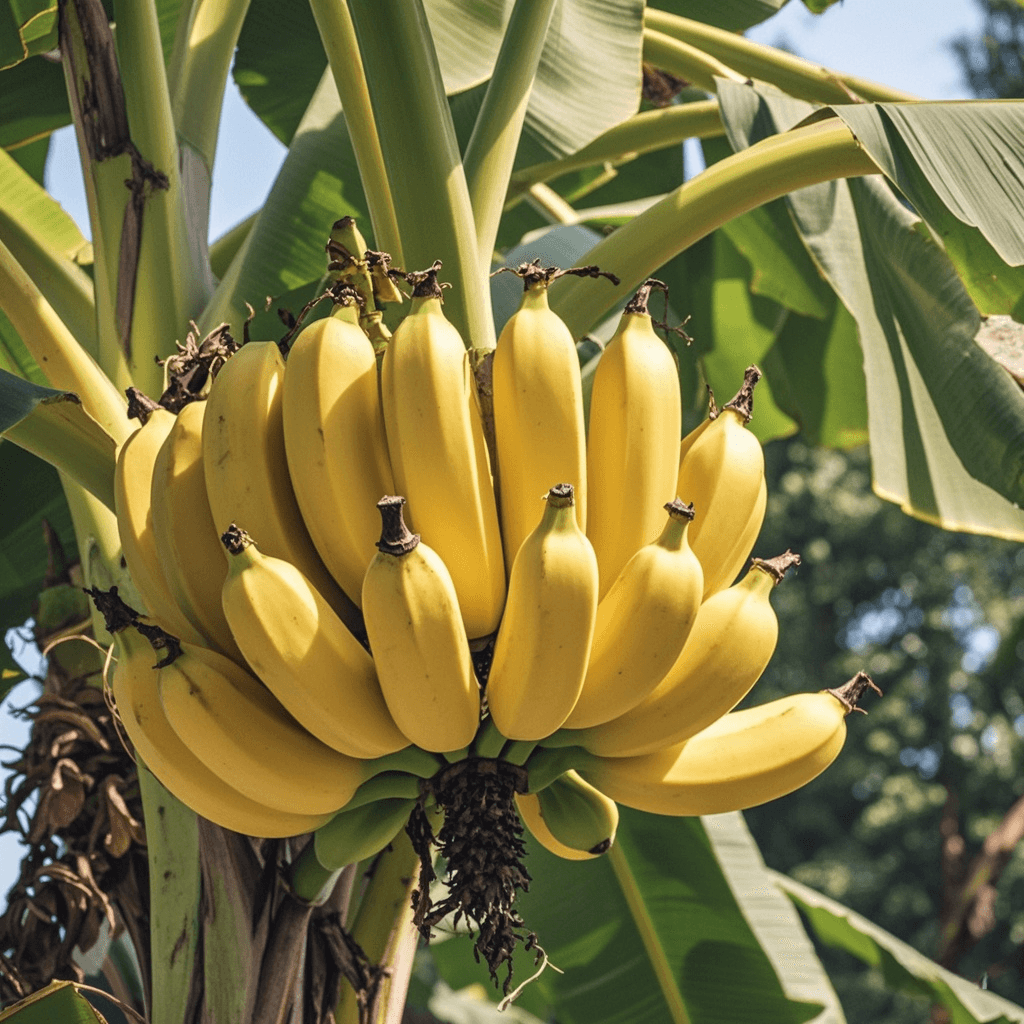
Banana (Musa spp.) is a perennial herbaceous plant in the Musaceae family. As one of the oldest cultivated fruit trees globally, it is widely grown in 136 countries and regions. In developing countries, bananas are the fourth-largest staple crop, after rice, wheat, and corn, serving multiple purposes as both a fruit and a staple crop. In China, as one of the largest banana-producing countries, the banana industry has developed rapidly over the past 20 years. It is now the largest tropical fruit in South Asia, with production ranking fourth in China, after apples, citrus fruits, and pears. The banana plant has distinctive characteristics, including large leaves, a false stem, and crescent-shaped fruit with yellow or green skin and sweet, soft flesh, beloved by consumers worldwide.
Origin & Spread
Origin
Bananas originated in Southeast Asia, including Southeast Asia, Malaysia, and China. The diversity center is likely in the Malay Peninsula and Indonesian islands. Wild ancestors of bananas, such as AA diploid cultivars, still exist in the forests of Malaysia. Wild bananas are found in Yunnan, Guangdong, Hainan, Fujian, and the southeast of Tibet in China. These wild bananas are classified into five main types based on fruit and flower bud colors: green fruit with red buds, green fruit with green buds, green fruit with yellow buds, red fruit with red buds, and yellow-red fruit with red buds.
Historical Records
Bananas have a long history of human use. Ancient India and Persia believed that the golden banana fruit was a “gift from the heavens” for health benefits. As early as 4,000 years ago, Greek texts referenced bananas, indicating they were already discovered and consumed by the Greeks. Egyptian archaeologists discovered banana images on pottery dating back 4,000 years, showing that banana cultivation in Africa predated China. Ancient Chinese texts, such as “Zhuangzi” from the Warring States Period and Qu Yuan’s “Nine Songs”, describe the use of banana pseudo-stems for weaving. Classic texts like “Sanfu Huangguo”, “Qimin Yaoshu(Important Means of Subsistence for Common People)”, and “Compendium of Materia Medica” document the plant’s characteristics, varieties, cultivation methods, uses, and medicinal properties.
Global Spread
Bananas have a complex spread path. In the 3rd century, Alexander the Great’s expedition to India discovered bananas. Afterward, bananas spread globally. In West Africa, bananas arrived in the 7th century, brought by Arab merchants. Bananas reached Western Europe and the Americas much later, with widespread availability in the 19th century.
China is one of the oldest countries cultivating bananas, and most of the banana varieties currently grown worldwide were spread from China.
Nutrition & Wellness
Bananas are a nutrient-dense fruit with several key health benefits:
-
Rich in vitamins: One medium-sized banana contains approximately 400 mg of potassium, essential for maintaining heart muscle contraction, helping stabilize blood pressure, and preventing cardiovascular diseases.
-
Dietary Fiber: Bananas are rich in dietary fiber and pectin, promoting gut health and alleviating chronic constipation.
-
5-Hydroxytryptamine: This chemical in bananas helps soothe gastric acid irritation and promotes mucosal growth, aiding in the prevention of gastric and duodenal ulcers.
-
Health Benefits: The potassium in bananas helps eliminate excess salt from the body, reducing the risk of swollen eyes from excessive salt intake. Notably, 5-Hydroxytryptamine in bananas has a mood-enhancing effect, helping prevent and treat depression.
Economic & Cultural Value
Economic Value
-
Industry Scale: The banana industry in China has an annual output value of over 40 billion RMB. Guangxi is the largest production area, with over 700,000 acres of banana plantations.
-
Full Industry Chain: Bananas are processed into banana chips, banana juice, banana powder, and banana-based products such as banana vinegar.
-
Export: Bananas are widely exported, especially from Guangxi, which is the largest banana-producing region in China, with the highest output of 4500–5000 kg/mu.
Cultural Value
Bananas are deeply ingrained in various cultures around the world. In Asia, countries like Japan and Korea have unique cultural associations with bananas. For example, Korea’s banana milk has become a national drink, while Japan’s Tokyo Banana is a popular souvenir.
-
Religious Symbolism: In Buddhist culture, bananas are considered a “fruit of wisdom”, with Buddha Shakyamuni believed to have gained enlightenment from eating bananas.
-
Traditional Chinese Medicine: Bananas have long been used in Chinese medicine for hemorrhoids and dry cough.
Banana Production in China at a Glance
-
Planting Area & Output
China is one of the world’s top banana producers. By 2025, the banana planting area is expected to be ~730,000 mu, with a total output of 365,000 tons. -
Key Production Areas
-
Guangxi: Known for large-scale production and the highest output in China.
-
Yunnan: Expanding production base with diverse varieties.
-
Hainan: Specializes in early-maturing varieties.
Industry Traits & Challenges
Traits
-
Technology-empowered: Precision agriculture techniques are widely used in Guangxi, Yunnan, and Hainan, including UAV crop protection and smart fertigation systems, improving yield and quality.
-
Seasonal Diversity: Different regions use specific varieties to extend banana availability from March to October.
Challenges
-
Pests & Diseases: Bananas face various diseases and pests, including Late Blight, Aphids, Banana Weevil, and Nematodes.
-
Traditional pesticide application is inefficient, especially in large plantations and difficult terrains.
Major Diseases and Pests
Diseases
-
Banana black spot: Caused by fungi of the “eight-section algae” group; the peel of affected fruit shows black and brown specks. In severe cases, fruit becomes deformed and larvae may even feed into the inner flesh.
-
Banana leaf spot: Includes black leaf spot (Black Sigatoka) (caused by the “Fiji fungus”) and Cordana leaf spot (caused by Cordana “Massa”). Both form characteristic lesions on leaves; severe infection can lead to leaf collapse and plant death.
-
Banana Fusarium wilt: A vascular fungal disease that causes leaf yellowing and wilting, and in severe cases kills the entire plant.
Insect pests
-
Banana aphid: Small insects that suck sap from banana plants, causing leaf deformation and discoloration; they are also the vector of banana bunchy top virus.
-
Banana weevil (also called pseudostem weevil): Tunnels into leaves, pseudostems, buds, and roots, leading to leaf discoloration and poor plant growth and development.
-
Banana skipper: Larvae attack banana plants and form distinctive rolled-leaf structures, reducing photosynthesis.
-
Root-knot nematodes: Tiny worms that damage banana roots, causing yellowing of above-ground leaves and withering of outer leaves.
Recommended Operation Parameters
|
Target pest/disease |
Application rate |
Droplet size |
Flight height |
Flight speed |
Route spacing |
|
Banana Leaf Spot |
5–12 L/mu (≈ 75–180 L/ha; ≈ 30–73 L/acre) |
≈ 40 µm |
≈ 3.5–5.0 m above canopy |
4–6 m/s |
≈ 4.0–5.0 m |
The parameters above are for reference only. Please adjust the operation settings to the actual crop growth stage, field conditions, and equipment model.
These parameters are derived from trials in major rapeseed-growing regions. Pest and disease incidence varies by region and season—select and apply pesticides as required.
Why J150 for Banana— Precision Protection for Stable Yields
In Guangxi, the EAVISION J150 drone is revolutionizing banana pest and disease control. The corp spraying drone’s downwash airflow and precision spraying system ensure uniform coverage of tall banana canopies, addressing traditional spraying challenges. This technology-powered solution helps banana farmers improve efficiency, reduce costs, and safeguard the quality and market value of every “golden banana”.