Overview
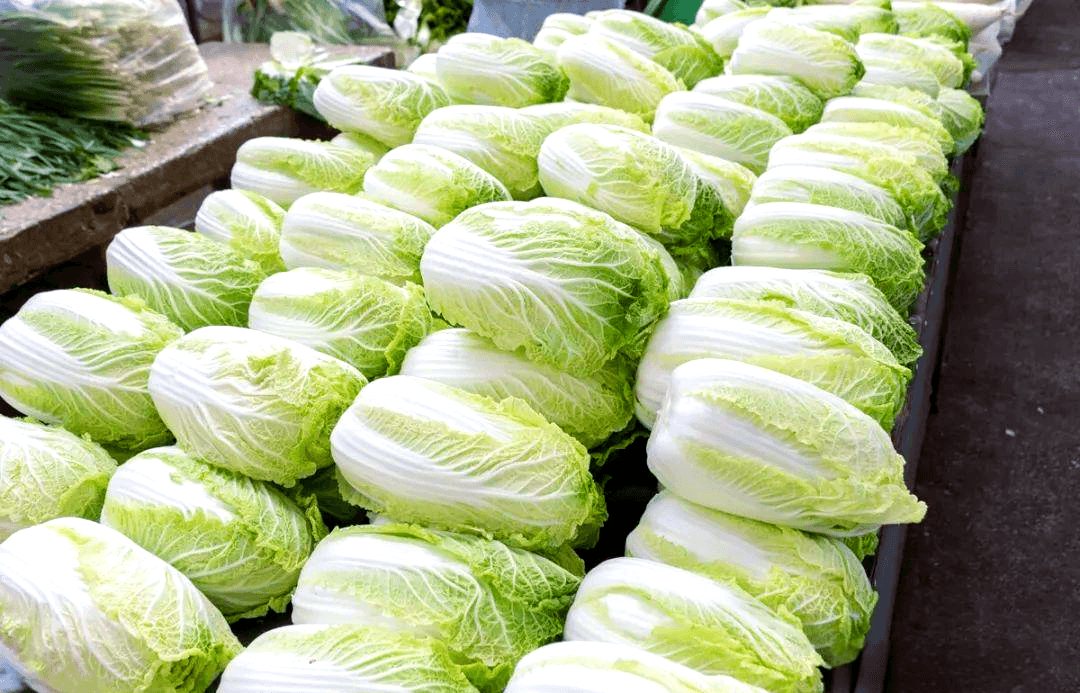
Chinese cabbage—one of China’s classic native vegetables—belongs to Brassica (Cruciferae/Brassicaceae) and is a herbaceous crop. In everyday usage, “cabbage” broadly covers heading Chinese cabbage and bok choy (non-heading types). Heading Chinese cabbage further includes four variant types: loose-leaf, semi-heading, rosette-heart, and compact heading.
With balanced nutrition, diverse culinary uses, and good storability—especially for heading types—Chinese cabbage has long been the winter staple for northern households and a mainstay of the “vegetable basket.”
Origin & Spread
Origin
-
China as the center of origin
Cultivation dates back ≈2,000 years or more. In early texts it was called “song (菘)”, likened to pine for its winter hardiness.
-
Early records
The Book of Songs mentions “feng (葑),” a broad ancient term covering wild ancestors within Brassica. By the Wei–Jin period, the name “song” stabilized and was distinguished from turnip and other greens.
-
Archaeology
Charred seeds from Neolithic sites (e.g., Banpo, Xi’an) likely include Chinese cabbage or mustard, hinting at even earlier use.
Spread
-
Spread within China.
-
Tang–Song and earlier: A saying went “song does not grow in the North”; cultivation centered in the south, especially the lower Yangtze/Taihu area, and by the Southern–Northern Dynasties it was already a common staple.
-
Yuan–Ming–Qing: Successful cultivation in Beijing and rapid nationwide expansion. Northern cabbage, prized for quality, was shipped south in quantity.
-
-
Globbal Spread.
Heading Chinese cabbage reached Japan in 1804, France in 1820, and the United States in 1890, all from northern China seed lots.
Nutrition & Wellness
-
Balanced profile. Rich in protein, fats, K, Na, Ca, Mg, Fe, Mn, Zn, Cu, P, Se, carotene, vitamins B1/B2/C, etc.
-
Traditional benefits. In TCM, cabbage is slightly cold and sweet, said to soothe the stomach and promote fluids, relieve thirst and restlessness, support urination and bowel movement, and “clear heat & toxins.”
-
Folk sayings. “In winter, cabbage rivals mutton,” and “cabbage and tofu keep you safe”—popular aphorisms reflecting its perceived health value.
Economic & Cultural Value
Scale
China’s largest vegetable by area—about 40 million mu, the true “king of vegetables.”
Rural economy
Drives income and revitalization; e.g., in Zhangjiakou, the vegetable industry (with cabbage as a key item) supports 20,000+ jobs.
International trade
Kimchi—Korea’s “national dish”—traditionally requires 30–40 heads of heading Chinese cabbage per household for winter storage.
Cultural symbolism
“Cabbage” (báicài) is a pun on “hundred fortunes” (báicái), connoting rectitude and prosperity. From lean historical periods to the jadeite cabbage masterpiece in the National Palace Museum (Taipei), its cultural footprint is deep.
Chinese Cabbage Production in China at a Glance
-
≈ 40 million mu, the largest of any vegetable.
-
Regional output
In Zhangjiakou alone, vegetables cover 13 million mu with >5.7 million tons annual output; heading Chinese cabbage is a leading crop.
Key Production Areas
-
Zhangjiakou, Hebei. Vegetables are the pillar sector; heading cabbage and head cabbage (round types) are both abundant.
-
Traditional strongholds. Hebei, Liaoning, and Yangzhou have long been known for large, firm heads; Jiaozhou Cabbage (Shandong) is renowned domestically and abroad.
Industry Traits & Challenges
Traits
-
Four-season supply. Transition from single-season to year-round production.
-
Full value chain. Integrated planting, storage, logistics, processing, and marketing.
Challenges
-
Complex pest & disease pressure. Multiple pathogens and insects throughout the life cycle cause quality loss and yield reduction.
-
Control difficulty. Irregular incidence patterns complicate timing; cosmetic damage risk is high—e.g., if aphids are not controlled pre-heading, they become trapped in the head, ruining market appearance.
-
Consequences. Severe outbreaks can depress yield or even cause crop failure.
Major Diseases and Pests
1) Downy Mildew
-
Key features. An airborne oomycete disease invading through stomata and wounds; highly aggressive with rapid spread (nicknamed “running-dry”).
-
Control essentials.
-
Cultural. Manage plant density; avoid excessive canopy humidity.
-
Chemical. Treat before or at very early onset; options include fluopicolide + propamocarb, oxathiapiprolin + fluoxapyroxad, etc., per label.
-
2) Soft Rot
-
Key features. A bacterial disease spread by rain/irrigation, entering via wounds.
-
Control essentials.
-
Cultural. Prevent waterlogging and minimize mechanical injury.
-
Chemical. Agents such as thiazole-zinc or chlorobromoisocyanuric acid as labeled.
-
3) Alternaria Leaf Spot (Black Spot)
-
Key features. Brown lesions on leaves; severe cases cause yellowing and necrosis.
-
Control essentials.
-
Cultural. Remove residues to reduce inoculum.
-
Chemical. Tebuconazole, prothioconazole, fenbuconazole, etc., per label.
-
(B) Key Insect Pests
1. Soil Pests
-
Complex. Mole crickets, white grubs, wireworms, cutworms, etc., often damage stands during the seedling stage.
-
Control essentials. During land prep, broadcast 3% phoxim granules at ≈3 kg/mu, mixed with fertilizer and incorporated (follow local labels).
2. Defoliators
-
Typical species. Diamondback moth, cabbage looper, beet armyworm, etc.
-
Damage note. Cabbage webworm bores and webs in the growing point of choy, causing “headless” seedlings.
-
Control essentials.
-
Timing. Spray before 3rd instar.
-
Chemical. High-efficacy, low-toxicity options such as emamectin + indoxacarb, chlorantraniliprole–emamectin, spinosyns, etc., per label.
-
3. Sap-Sucking Pests
-
Aphids (also flea beetles as occasional sap feeders).
-
Risks. Direct sap loss, honeydew → sooty mold, and—critically—virus transmission.
-
Control essentials.
-
Chemical. Imidacloprid, pymetrozine, etc., as labeled.
-
Critical tip. Aphids must be controlled before heading, otherwise colonies become enclosed in the head, ruining appearance and complicating washing.
-
Recommended Operation Parameters
|
Target pest/disease |
Application rate |
Droplet size |
Flight height |
Flight speed |
Route spacing |
|
Aphid in rapeseed |
3–6 L/mu (≈ 45–90 L/ha; ≈ 18–36 L/acre) |
≈ 40 µm |
≈ 2.5–4.0 m above canopy |
4–6 m/s |
≈ 4–6 m |
The parameters above are for reference only. Please adjust the operation settings to the actual crop growth stage, field conditions, and equipment model.
These parameters are derived from National Agro-Tech Extension and Service Center. Pest and disease incidence varies by region and season—select and apply pesticides as required.
Why J150 for Chinese Cabbage — Uniform Coverage, Rapid Response
In Hebei’s large-scale cabbage belts, the J150 drone delivers high-efficiency sorties and precise atomization to cover both adaxial and abaxial leaf surfaces quickly and uniformly. Its intelligent flight modes overcome the low efficiency and uneven coverage typical of ground spraying, enabling fast, precise suppression of pests such as caterpillars and aphids and diseases like soft rot—helping growers reduce costs and lift efficiency, stabilize yields and market quality, and safeguard the public’s winter “vegetable basket.”