Ⅰ. Overview
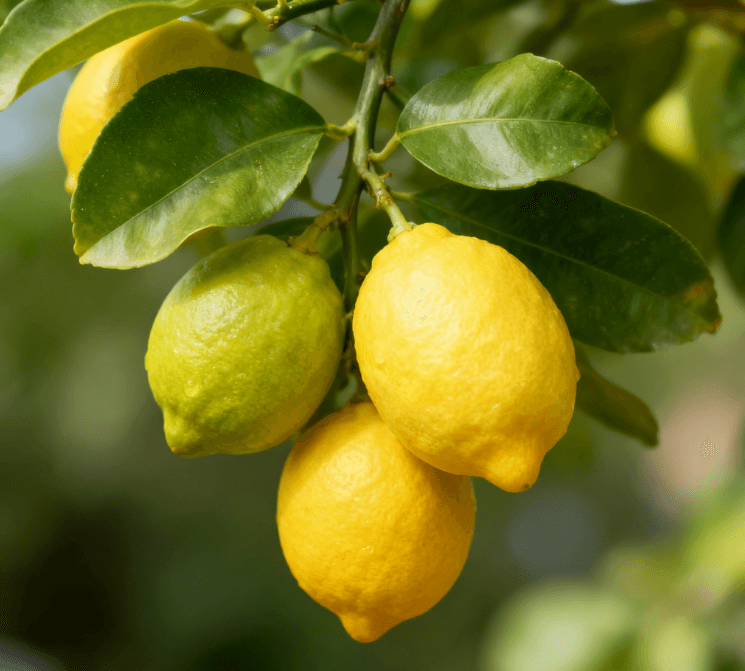
Lemon (Citrus limon) is an evergreen citrus with bright yellow, oval fruit noted for sharp acidity and aromatic oils. Trees reach 3–6 m, bloom in April–May, and harvest in September–November. Lemons are seldom eaten fresh; they are widely used in seasoning, beverages, flavor extraction, and traditional remedies.
Origin & Spread
Origin
Lemon is widely considered a stabilized hybrid of citron and bitter orange, originating around northern Myanmar and China.
Early Spread
By the 7th century, lemons had reached Persia, Iraq, and Egypt. Their first known textual appearance is in a 10th-century Arabic agronomic treatise, where lemons were often grown as ornamentals in Islamic gardens.
Into Europe & Worldwide
Lemons entered Europe in Roman times but did not establish well. From the mid-15th century, successful cultivation began in Genoa, Italy. In 1493, Christopher Columbus carried lemon seeds to the Americas, and Spanish expeditions helped disseminate the crop across the New World and beyond.
Into to China
In modern times, China imported commercial cultivars. In 1926, a Eureka lemon seedling from the United States was planted in Chengdu; in 1929, Anyue native Zou Haifan brought plant material back home, marking the start of Anyue’s lemon industry.
Nutrition & Wellness
Traditional applications
In traditional practice, lemon is used to relieve phlegm and cough, promote salivation and digestion, and is cited for conditions such as bronchitis, whooping cough, poor appetite, and vitamin deficiency.
Cardiovascular support
Rich in vitamin C and vitamin P (rutin/related bioflavonoids), lemons help support vascular elasticity and overall cardiovascular health.
Other noted properties
Commonly associated with antimicrobial/anti-inflammatory effects, digestive cleansing (citric acid supporting liver detox pathways), and cosmetic benefits such as reducing melanin deposition for brighter skin.
Note
Lemon peel contains 5–10× the vitamin C of the flesh. It is traditionally avoided with seafood in some cuisines, as the fruit acids can coagulate proteins and bind calcium, making digestion more difficult.
Economic & Cultural Value
Diversified processing
Lemon has been developed into 39 product categories with 208 products, including ready-to-eat slices, freeze-dried slices, lemon wine, toothpaste, facial masks, and more—forming a broad product line.
Cultural branding
Festivals (e.g., Lemon Blossom Festivals) and global industry conferences enhance brand identity. Anyue integrates lemon motifs into urban–rural design and created lemon-themed songs, reinforcing a brand image of health, style, and vitality.
Rural income & revitalization
In leading regions, lemon has become a pillar industry. Anyue counts ~110,000 lemon-growing households (~330,000 people), with per-capita net income ~RMB 12,000 from the sector. Tongnan District’s comprehensive annual lemon output value reaches ~RMB 9 billion.
Foreign trade
Chinese lemons are exported to 30+ countries and regions, including Russia, Singapore, and Thailand. From Jan–Sep 2025, Tongnan’s fresh lemon exports totaled RMB 176 million, up 58.6% YoY.
Ⅱ. Lemon Production in China at a Glance
-
Scale & Output:
-
Anyue, Sichuan: ~480,000 mu planted; ~0.6 Mt annual output—about 70% of national totals; known as “China’s Lemon Capital.”
-
Tongnan, Chongqing: ~320,000 mu; ~0.35 Mt projected 2025 output.
-
-
Key Regions:
a. Anyue, Sichuan: China’s only county-level commercial lemon production base; domestic market share >80%; brand value >RMB 19 billion.
b. Tongnan, Chongqing: A second major hub with a full chain from planting to processing. -
Industry Traits:
a. Tech-enabled: UAV operations and automated grading/packing improve efficiency and quality.
b. Full value chain: Planting, processing, sales, R&D, and agri-tourism integrated. -
Key Challenges:
Persistent diseases:
Citrus canker: fast spread; wind/rain and insects aid entry via stomata/wounds; directly downgrades fruit finish.
Anthracnose: outbreaks in hot, rainy seasons; leaf drop, twig dieback, fruit loss.
Rising insect resistance:
-
Spider mites (red/yellow): rapid reproduction, overlapping generations; long single-chemistry use selects resistance.
-
Citrus leafminer: damages tender flush and opens infection courts for canker.
-
Aphids: direct sap-sucking and virus transmission.
c. Limits of traditional spraying: uneven canopy coverage (upper/inner zones), hard-to-hit timing under weather pressure, and low utilization due to drift/runoff.
-
Ⅲ. Major Diseases & Pests
Citrus Scab
-
Symptoms: Corky, rough, dark lesions on fruit, leaves, and tender shoots—“sandpaper” feel; hail-scar-like marks.
-
Control essentials: Prevention is key. Sanitation after harvest and pre-budbreak; mineral oil + copper programs where permitted. Protect spring flush, 2/3 petal fall, and pea-size fruit; respray promptly after prolonged rain.
Anthracnose
-
Symptoms: Spots on leaves/fruit, shoot dieback; brown, sunken fruit lesions; risk of postharvest decay.
-
Control essentials: Strengthen vigor, winter sanitation, and timely fungicide programs at first signs.
Common Pests
Spider mites (red/yellow): stippling, leaf dulling/bronzing, defoliation → quality loss.
Citrus leafminer: serpentine mines on young leaves; curling/hardening; facilitates canker entry.
Aphids: curled shoots, honeydew/sooty mold; virus vectors.
Notes: Conserve natural enemies (predatory mites, lady beetles, lacewings); coordinate flush timing; rotate targeted chemistries early.
Ⅳ. Recommended Operation Parameters
|
Target pest/disease |
Application rate |
Droplet size |
Flight height |
Flight speed |
Route spacing |
|
Lemon Scab |
10–15 L/mu (≈ 150–225 L/ha; ≈ 60–90 L/acre) |
≈ 40 µm |
≈ 4.5–5.5 m above canopy |
2.7–3.5 m/s |
≈ 4.0–4.5 m |
The parameters above are for reference only. Please adjust the operation mode and settings to the actual growth environment and the aircraft model.
These parameters are derived from trials in major lemon-growing regions. Pest and disease incidence varies by region and season—select and apply pesticides as required.
UAVs have diverse applications beyond crop protection (e.g., logistics). Choose functions according to your operational needs.
IV. J150 Drone Downwash Penetration: Ensuring High Lemon Yields
Anyue—renowned worldwide as “China’s Lemon Capital”—depends on both fruit quality and output. Today, the JIXING J150 intelligent drone is taking to these golden orchards, bringing a technological upgrade to lemon pest and disease control. With AI-enabled identification, fully autonomous operations, and multi-purpose hoisting/airlift capability, crop-protection and transport drones not only deliver precise spraying, but also provide air-to-ground relays during harvest—moving freshly picked lemons quickly from mountain orchards down to collection points at the foot of the hills. This effectively addresses the pain points of low transport efficiency in hilly terrain and high labor costs, significantly boosting picking efficiency while reducing labor intensity. Empowered by technology, drone solutions are helping lemon growers overcome terrain constraints, reduce costs and increase efficiency, and safeguard the value of every “golden fruit” from orchard to market.