I. Introduction
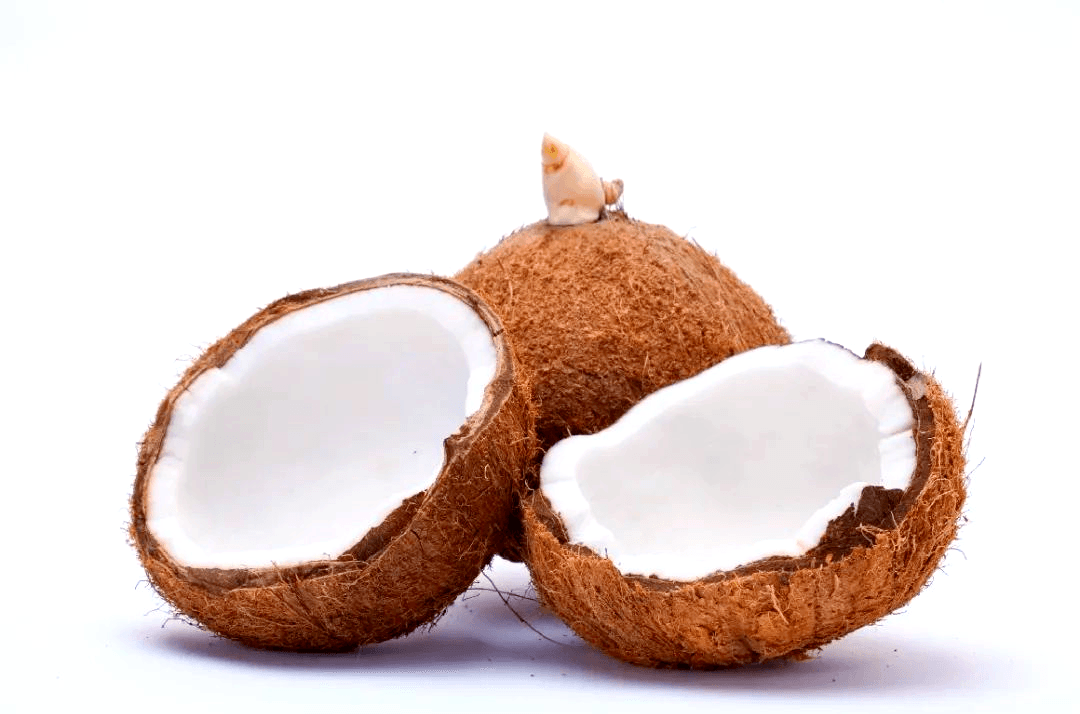
Coconuts (Cocos nucifera) are perennial evergreen trees from the palm family (Arecaceae), and a signature economic crop of the tropical regions. In China, they are widely cultivated in tropical and subtropical regions such as Hainan, Guangdong, and Yunnan. The coconut tree has a tall, upright trunk that can grow up to 15–30 meters. Its trunk is smooth and without branches, with large feather-like compound leaves clustered at the top. The leaves can be 3–7 meters long, with lanceolate leaflets. The coconut fruit is a drupe, round or oval in shape, with a fibrous green or yellow-brown outer husk. Inside, there is a hard woody shell (coconut shell) enclosing white coconut meat and sweet coconut water. The entire coconut is valuable — coconut water can be consumed directly or processed into beverages; the coconut meat can be made into coconut powder, coconut shreds, and coconut oil; the coconut shell can be processed into handicrafts and activated carbon, and the coconut leaves can be used for weaving, making it highly versatile in terms of utilization.
Origin and Spread Origin
Coconuts are believed to have originated in the Pacific Islands and Southeast Asia. This region’s tropical climate, abundant sunlight, and plentiful rainfall provide ideal conditions for the growth of coconuts, and archaeological evidence suggests the cultivation of coconuts has a history of over 4,000 years. Early human seafaring activities contributed to the spread of coconuts, making it one of the key “mediators” of oceanic civilizations.
Spread
Initially, coconuts spread from Southeast Asia to the surrounding regions, including South Asia and the Indochina Peninsula. By the first few centuries BC, they were widely cultivated in India, Sri Lanka, and other regions. Arab traders introduced coconuts to the East African coast, and later, European colonizers brought them to the Caribbean and South American tropical coasts. In China, coconuts were first introduced during the Han Dynasty, brought by Southeast Asian merchant ships via the Maritime Silk Road. The initial cultivation sites were in Hainan and the Leizhou Peninsula, gradually spreading to regions like Yunnan and Guangxi. Today, coconuts are distributed globally in tropical and subtropical regions, primarily along coastal areas between 23.5°N and 23.5°S, making them an important economic crop for tropical agriculture worldwide.
Nutrition & Wellness
Coconuts are nutritionally rich, especially in coconut water and coconut meat. Coconut water, often called “natural electrolyte drink,” is rich in minerals such as potassium, sodium, calcium, and magnesium. The potassium content in coconut water is as high as 250-350 mg per 100ml, which helps to rapidly replenish electrolytes lost through sweat and relieve fatigue. Coconut water also contains various amino acids (such as arginine and alanine), B-vitamins (B1, B2, B6), and small amounts of natural sugars. It is low in calories and easily absorbed, making it suitable for all types of people to drink.
Coconut meat is even more nutritionally dense, containing 30%-40% fat (mainly medium-chain triglycerides, which are easily metabolized by the body), 3%-4% protein, as well as dietary fiber, vitamin E, vitamin C, and various minerals. Medium-chain triglycerides provide quick energy and promote fat metabolism, making them an ideal fat source for athletes and special dietary groups. Coconut oil, pressed from the meat, is rich in lauric acid and other unsaturated fatty acids. It is not only used in cooking but also widely applied in cosmetics and health products. Additionally, coconut shell extract and coconut flower juice contain unique bioactive components with certain health benefits.
Economic and Cultural Value
Economic Value
Coconuts are an important economic staple crop in tropical regions, forming a complete industrial chain from cultivation to processing and sales. The global coconut industry has an annual transaction value of over 10 billion US dollars, while the coconut-related industries in China generate billions of yuan annually. These include food processing (coconut juice, coconut powder, coconut sugar), personal care products (coconut oil soap, shampoo), construction materials (coconut fiber products), and crafts (coconut shell carvings, coconut leaf weaving). In regions like Hainan, the development of agro-tourism leveraging coconut resources, such as coconut theme parks and pick-your-own gardens, has boosted rural tourism and increased farmers' income. Additionally, as an important export agricultural product, coconut products have strong competitiveness in the international market, contributing to foreign trade revenue in tropical regions of China.
Cultural Value
Coconuts hold significant cultural importance in various ethnic cultures of tropical regions. In China, particularly in Hainan, coconuts symbolize the culture of the Li, Miao, and other minority ethnic groups. Coconut shell carvings and coconut leaf weaving are representative of traditional handicrafts, and during folk festivals like the “Third Day of the Third Month,” coconut products are often used for sacrificial offerings or as gifts. In Southeast Asia, coconuts are referred to as the “Tree of Life,” integral to religious rituals, traditional festivals, and daily life. For example, during Thailand’s Songkran Festival, coconut water is used for blessings, and the Philippines includes the coconut in its national emblem. Coconut-related literature and folk tales are widely circulated, creating a unique tropical coconut culture.
II. Coconut Production in China at a Glance
-
Planting Area and Yield
China is a major coconut-producing country, ranking among the top producers globally, with a steadily increasing cultivation area and yield. By 2024, the national coconut planting area is approximately 1.2 million mu, mainly concentrated in tropical regions, with Hainan accounting for more than 90%, and the rest distributed in Guangdong, Yunnan, and Guangxi provinces. In recent years, with improvements in varieties and cultivation techniques, China’s coconut yield per mu has increased from about 100 coconuts per mu to over 150, with a total annual production of 1.8 billion coconuts (equivalent to around 1.2 million tons of coconut meat). To meet market demand, China also imports large quantities of coconuts and related products from countries like Thailand, Vietnam, and the Philippines, with the coconut industry market size continuing to expand.
-
Key Production Areas
The main coconut-producing areas in China are concentrated in tropical and subtropical coastal regions, with Hainan at the core, supplemented by Guangdong and Yunnan. Hainan Province is China’s largest coconut-producing region, with a planting area of 1.1 million mu. The main production areas are concentrated in Wenchang, Wanning, and Qionghai in the eastern coastal counties, where the tropical marine climate, average annual temperature of 23–25°C, annual precipitation of 1500–2000 mm, and sandy loam soil are ideal for coconut growth. Wenchang is known as “China’s Coconut Capital.” In Guangdong Province, coconut planting is mainly concentrated in Zhanjiang in the Leizhou Peninsula, with an area of about 50,000 mu. The dominant variety is the dwarf coconut, known for early fruiting and high yield. Yunnan Province’s coconut planting is concentrated in the tropical areas of Xishuangbanna and Dehong, with an area of about 30,000 mu. Due to climate influences, the coconut maturation period here is slightly longer, but the fruit’s sugar content is higher. In addition, there is experimental planting in Beihai, Guangxi, and Zhangzhou, Fujian, providing experience for the northernmost coconut planting.
-
Industry Characteristics and Challenges Industry Characteristics
China’s coconut industry has three major characteristics:
Diverse varieties: Through the introduction of high-quality dwarf coconuts (such as Malaya Dwarf and Thai Aromatic Dwarf) and hybridization with local tall coconuts, high-yield and stress-resistant new varieties have been developed, solving the problem of late fruiting in traditional tall coconuts.
Industrial chain extension: The industry has expanded from the initial single fresh coconut sales to a diversified system encompassing beverage processing, food manufacturing, daily chemical production, and agro-tourism. The added value of coconut products has significantly increased.
Technological empowerment: Technologies such as drone plant protection, integrated water and fertilizer systems, and intelligent irrigation are widely applied in cultivation; automated production lines are introduced in processing, improving industry efficiency. At the same time, the government has introduced various supporting policies, such as establishing special funds for coconut industry development in Hainan, to promote large-scale, standardized development.
Key Challenges
The core challenge faced by China’s coconut industry is in pest and disease control. The coconut’s long growth cycle, coupled with a year-round hot and humid environment, makes it susceptible to a variety of diseases and pests. Some pests and diseases spread rapidly, posing a significant threat to yield and quality. Traditional pest control methods rely mainly on manual pesticide spraying, which has several shortcomings:
Difficulty in coverage: Due to the height of coconut trees, it is difficult to spray the upper crown and underside of the leaves, resulting in incomplete control.
Pesticide overuse: Pesticide application is often based on experience, which may lead to under-spraying or over-spraying, increasing costs and potentially causing pesticide residue to exceed safety limits.
Pest resistance: Long-term irrational use of pesticides can lead to pest resistance, forming a vicious cycle of “more pesticide usage → stronger pests → less effective pest control,” which impacts ecological sustainability.
Lack of pest monitoring: Pest and disease early warning systems are imperfect, especially in remote areas, and pest outbreaks often go unnoticed until it’s too late for timely control, resulting in increased damage.
III. Major Diseases and Pests
Diseases
Coconut Gray Leaf Spot Disease A common fungal disease in coconut plantations caused by Pestalotiopsis palmarum, it primarily affects leaves. Severe cases can lead to leaf wilt, tree decline, and a yield loss of 20%-30%.
Coconut Dead Yellowing Disease This devastating bacterial disease caused by Phytoplasma is primarily spread by leafhoppers. It has been sporadically reported in Hainan’s coconut plantations. If an outbreak occurs, it can cause the death of entire coconut groves.
Pests
Coconut Heart Leaf Beetle A major quarantine pest, native to Indonesia, this beetle primarily attacks the heart leaves of coconut trees, causing leaf wilting and tree decline, and in severe cases, the death of the entire tree.
Red Palm Weevil Also known as the coconut weevil, this pest infests the trunk and leaf stalks of coconut trees, destroying the woody tissues and vascular systems, which leads to hollowed trunks and potential tree collapse.
Coconut Web Moth A recently invasive pest, this moth primarily affects coconut leaves. Its larvae consume the leaf epidermis and flesh, leaving behind leaf veins, creating a “web-like” appearance. Severe infestations can lead to complete leaf consumption, affecting the tree's ability to photosynthesize.
Recommended Operation Parameters
|
Target Pest/Disease |
Application Rate |
Droplet Size |
Flight Height |
Flight Speed |
Route Spacing |
|
Coconut Weevil |
5-12L/mu(≈74.96–179.91 L/ha; 30–72 L/acre) |
60 um |
3-5 m above canopy |
3-4.5 m/s |
4-5 m |
The parameters above are for reference only. Please adjust the operation settings to the actual crop growth stage, field conditions, and equipment model.
These parameters are derived from National Agro-Tech Extension and Service Center and local practices. Pest and disease incidence varies by region and season—select and apply pesticides as required.
IV. Why J70 for Coconut——Empowering Stable Yields and Increased Revenue
In the vast coconut plantations of Thailand, the J70 drone is providing innovative solutions for pest and disease control in tall coconut trees, leveraging its excellent flexibility and precision spraying capability. Faced with the challenge of towering coconut trees and the high costs and difficulty of traditional pest control methods, the J70, with its precise flight control and strong penetrative airflow, is able to deliver pesticides accurately to the tops of the tree crowns. This effectively controls key pests such as the coconut weevil and red palm weevil. The flexible operation mode of the J70 is particularly suitable for navigating through complex orchard environments, significantly improving the modernization of plantation management. It provides reliable technical support to ensure the yield and quality of Thai coconuts.