Drone Lifting


Moving fertilizer, seedlings, tools, and repair parts over steep or muddy routes can consume labor before fieldwork even begins. Eavision drone lifting with the EA-J150 is designed to carry known loads between planned pickup and drop-off points, helping farm teams work across orchards, hillsides, terraces, and remote blocks.
The EA-J150 lifting system supports loads up to 75 kg under suitable operating conditions. Explore the EA-J150 agricultural drone, or request a lifting project assessment for your route and cargo.
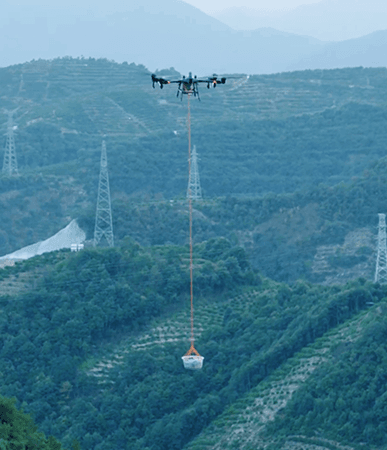
Drone Lifting Benefits for Difficult Farm Terrain
Replace demanding ground carries
Steep rows, wet soil, narrow terraces, and indirect roads can make a short point-to-point move into a long manual carry. A planned aerial route can help teams move suitable cargo without repeatedly walking the same slope or sending a vehicle through crop rows.
Support repeat delivery runs
Defined pickup and drop-off points make repetitive material movement easier to organize. This can support orchard input delivery, remote-block resupply, or maintenance work where several known loads must travel along the same route.
Use one aircraft for four farm jobs
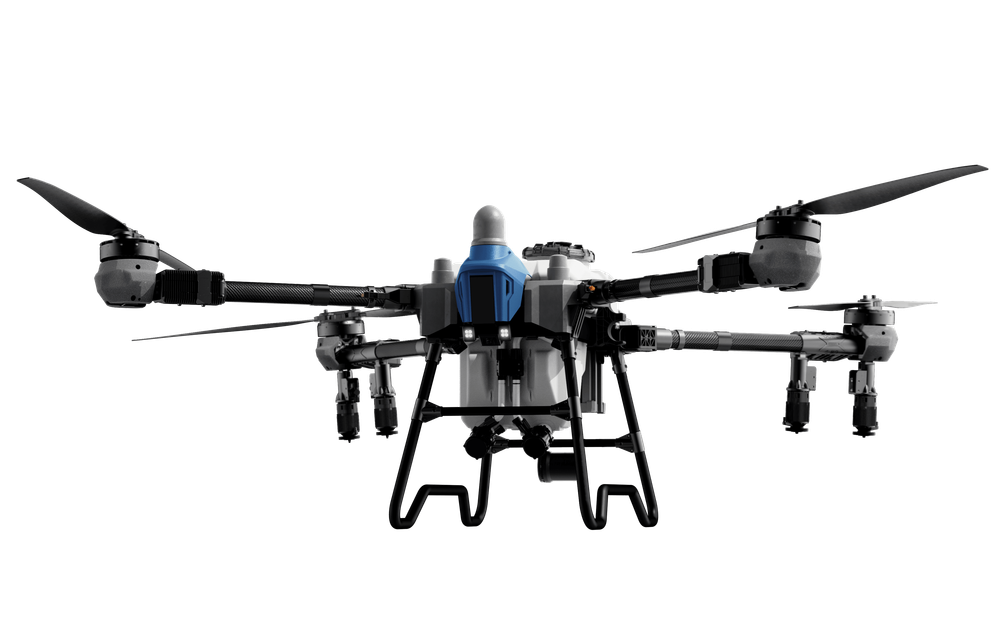
The EA-J150 combines spraying, spreading, lifting, and mapping functions in one aircraft platform. Dealers and large commercial farms can assess a single fleet platform for several seasonal tasks, subject to the correct module, operating procedure, and local requirements.
Bring field-ready hardware to the route
RTK centimeter-level positioning supports precise guidance, while the 7-inch remote controller gives operators a clear control interface. Dual-fold arms support ground transport between sites, and the aircraft is rated IPX6K with IP67-rated modules.
How Agricultural Drone Lifting Works
-
1. Assess the cargo
Confirm the load's measured weight, attachment method, dimensions, and wind-facing area. The stated 75 kg figure is a maximum lifting limit, not a default load for every altitude or weather condition.
-
2. Plan the route and zones
Define stable takeoff and drop-off areas, inspect the route, and identify trees, wires, buildings, or other hazards. Set an operating load and battery reserve for the site's altitude, temperature, wind, and route length.
-
3. Fly under active supervision
For suitable preplanned routes, the system supports one-tap guidance between takeoff and drop-off points. The lifting hook is designed to remain locked in flight, while the obstacle system can support automatic hovering when it detects a hazard during manual operation.
The operator remains responsible for the aircraft, suspended load, route, and release zone throughout the mission. Obstacle sensing is an aid; it does not remove the need for direct site inspection and route control.
Where Agricultural Drone Lifting Fits Farm Operations
Orchard input delivery
Move suitable bags, seedlings, tools, or replacement parts between staging areas and orchard blocks. Aerial transport can be useful where dense rows or soft ground limit direct vehicle access.
Mountain and hillside supply routes
Carry measured loads across elevation changes when the ground route is steep or indirect. Route planning must account for reduced payload capability at higher altitude, changing wind, and safe battery margins.
Remote maintenance support
Deliver compact equipment or parts to pumps, irrigation points, field shelters, and other remote work areas. Cargo shape and attachment matter as much as weight because a swinging or high-drag load can affect flight behavior.
Dealer and commercial service planning
Distributors can evaluate lifting as part of an EA-J150 service package for customers with repeatable farm routes. A useful assessment records cargo weight, route distance, elevation, obstacles, mission frequency, and operator requirements before equipment selection.
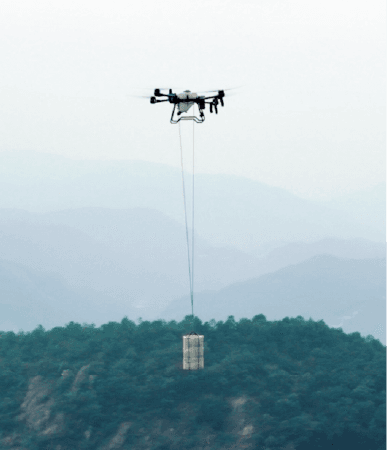
EA-J150 Engineering for Drone Cargo Transport
Eavision brings 10 years of independent agricultural drone R&D and more than 300 patents to the EA-J150 platform. These engineering signals support product evaluation, but each lifting project still requires a site-specific operating plan.
| Verified platform detail | Relevance to lifting work |
|---|---|
| Up to 75 kg lifting payload | Sets the manufacturer-stated upper limit for the lifting system; the operating load may need to be lower. |
| 149.9 kg maximum takeoff weight | Defines an aircraft-level limit that must be respected alongside the separate 75 kg cargo limit. |
| RTK centimeter-level positioning | Supports precise flight guidance between surveyed operating areas. |
| 45,000 mAh battery; 9-minute charge from 30% to 95% | Supports planned battery rotation; actual endurance depends on load and field conditions. |
| Night mode and power-line detection | Add situational data in difficult environments without replacing route inspection or power-line clearance. |
Plan Every Lift Around the Load and Site
Payload varies with conditions. Capacity decreases as altitude rises, and temperature or aircraft status can change the recommended load. Weigh each cargo item and follow the aircraft's current payload recommendation rather than assuming every mission can use the full 75 kg.
Suspended cargo changes flight behavior. Use a suitable rope and secure attachment, control load swing, and avoid unknown or high-drag cargo. For manual lifting, manufacturer guidance limits flight speed to 7 m/s and height to 30 m above ground level.
Detection has operating limits. Ambient light, rain or fog, object material, and obstacle shape can affect sensing. Plan routes to bypass power lines; crossing them during lifting is prohibited in Eavision's operating guidance.
The release zone must stay controlled. Keep people and livestock away from the area beneath or around the aircraft and cargo. Product capabilities do not replace trained operators or a site risk assessment, and every mission must follow applicable aviation and workplace rules.
Drone Lifting FAQ
What is drone lifting in agriculture?
Drone lifting uses an agricultural aircraft and suspended-load system to move suitable farm materials between defined points. It is most relevant where a ground route is steep, muddy, narrow, or indirect.
How much weight can the EA-J150 lift?
The EA-J150 lifting system has a stated maximum payload of 75 kg. The safe operating load may be lower based on altitude, weather, cargo shape, battery status, route demands, and the aircraft's recommendation.
What farm cargo can a lifting drone transport?
Suitable loads may include bagged inputs, seedlings, tools, and compact repair parts. Operators must verify weight, secure the attachment, consider the cargo's wind-facing area, and comply with local rules before flight.
Can drone cargo transport work in orchards and mountain farms?
It is designed to support difficult-terrain routes such as orchard blocks, terraces, and hillside staging points. Suitability depends on clear flight paths, controlled zones, altitude-adjusted payloads, acceptable weather, and trained operation.
Does obstacle detection make lifting fully autonomous?
No. The system can assist with hazard detection and hovering, but sensing performance varies with the environment and the obstacle. The operator must inspect the site, supervise the mission, keep clear of power lines, and maintain safe zones.
Assess Your Farm Cargo Route with Eavision
Share your cargo weight, route distance, elevation, site photos, and expected trip frequency with the Eavision team. We can help you assess whether EA-J150 drone lifting fits the route and identify the operating details your dealer or farm team should plan.