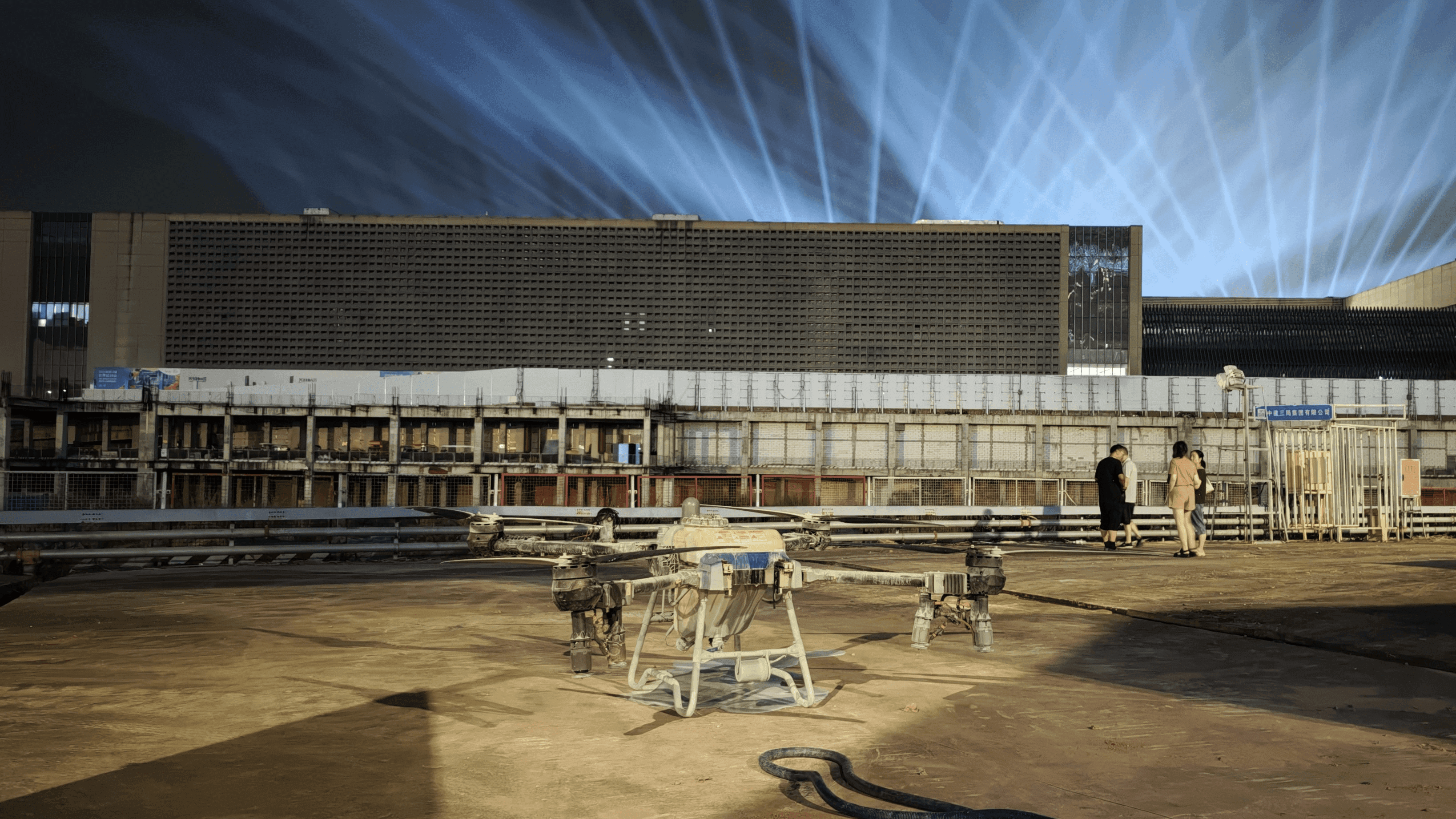
Agricultural Drone Lifting: Moving Inputs in Orchards, Hillsides, and Remote Farms


Agricultural drone lifting is becoming useful on farms where moving materials is slow, labor-intensive, or unsafe. Orchards, hillside farms, terraces, mountain plots, aquaculture sites, and remote fields often have one shared problem: the job is not only growing the crop, but getting inputs to the right place at the right time.
Traditional transport may require workers to carry fertilizer, seedlings, tools, water pipes, feed, harvest materials, or repair parts by hand. Small vehicles may not fit narrow orchard paths. Tractors may damage soil or crops. Mountain roads may be too steep, muddy, or indirect. In these situations, drone cargo transport agriculture can reduce walking time and help teams move useful loads between defined points.
This guide explains where agricultural drone lifting makes sense, how to plan payloads and routes, and what safety factors matter.
Why Agricultural Drone Lifting Matters
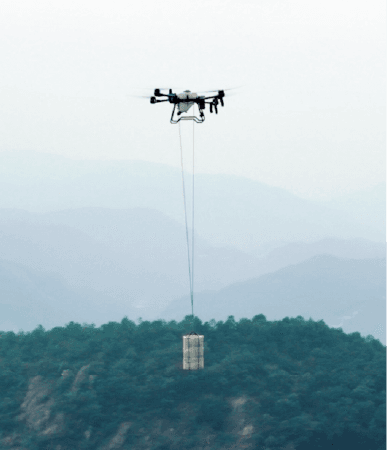
The main value of agricultural drone lifting is not novelty. It is access. A lifting drone can move material over rows, slopes, terraces, water channels, or rough terrain where workers would otherwise spend time walking, climbing, or carrying loads.
Common farm transport problems include:
- Carrying inputs uphill in orchards or mountain farms
- Moving small batches of fertilizer, seedlings, tools, or parts
- Supplying remote blocks where road access is poor
- Reducing worker fatigue during repetitive carrying tasks
- Moving materials over wet or muddy ground
- Supporting repair or maintenance work far from the loading point
- Improving speed when ground routes are indirect
The EA-J150 supports agricultural lifting and cargo transport with up to 75 kg lifting capacity, auto-guided navigation, 360-degree obstacle avoidance, and one-tap delivery. The J70 also supports lifting applications, including a 60 kg maximum lifting payload, guided transport between take-off and drop-off points, 100 m vertical transport height, 360-degree automatic obstacle hover, and efficiency support for operators.
Those capabilities make lifting useful, but only when the route and payload are planned correctly. A drone should not be treated as a flying wheelbarrow without controls. The strongest results come from repeatable routes, known load weight, safe drop zones, trained operators, and clear maintenance routines.
Use Cases: Orchards, Hillsides, and Remote Farms
Agricultural drone lifting is most valuable when the ground route is harder than the air route.
|
Use Case |
Example Loads |
Why a Drone Helps |
|
Orchards |
Tools, small inputs, sampling kits, repair parts, lightweight harvest support materials |
Narrow paths, dense rows, slopes, and long walking distances |
|
Hillside farms |
Fertilizer bags, seedlings, irrigation parts, maintenance tools |
Steep terrain and difficult manual carrying |
|
Remote plots |
Parts, supplies, seed, batteries, field equipment |
Poor road access or long transport time |
|
Aquaculture or water-edge work |
Feed samples, tools, small parts |
Wet ground or water barriers |
|
Mountain service routes |
Equipment, accessories, consumables |
Weak road access and high labor demand |
Orchards are a strong use case because they often combine narrow roads, terraces, uneven rows, and heavy seasonal labor. A drone can move items from a staging area to a work crew without sending someone back through the whole block.
Hillside farms are another strong fit. Carrying inputs uphill is physically demanding and often inefficient. Drone cargo transport agriculture can help move loads from a safe lower loading zone to a defined upper drop zone.
Remote farms may not need lifting every day, but when they do, time matters. If a pump part, battery, tool, or repair kit is needed far from the vehicle route, a drone can reduce delay.
Payload Planning: Weight, Route, and Drop Zone
Payload planning is the center of agricultural drone lifting. The question is not only "How much can the drone lift?" The better question is "What load can it move safely, repeatedly, and economically on this route?"
Plan each job around five factors.
1. Load weight: Weigh the item before flight. Include packaging, straps, hooks, and any container.
2. Load shape: A compact load is easier to stabilize than an awkward or swinging load.
3. Route distance: Longer routes require more battery margin and more planning.
4. Vertical change: Hillside routes use power differently from flat routes.
5. Drop zone: The delivery point must be clear, visible, stable, and away from people.
Load security matters. A shifting or swinging load can affect flight stability. Operators should use proper rigging, check hook security, avoid loose packaging, and keep loads within manufacturer guidance.
For repeat operations, create route cards. A route card should include loading point, drop point, payload type, max planned weight, route distance, elevation change, obstacle notes, emergency landing area, battery requirement, pilot name, and weather limits.
Route Safety: Auto-Guided Lifting, Obstacle Hover, and Weak-Signal Areas
Cargo routes must be safer than manual shortcuts. A lifting drone may fly over terrain that workers avoid, but the route still needs a formal risk check.
Before every route, check:
- People, animals, workers, vehicles, and public areas
- Power lines, poles, trees, wires, nets, and structures
- Slope, landing area, wind exposure, and visibility
- Battery level and reserve margin
- Communication quality and weak-signal areas
- Emergency landing or drop procedures
- Weather limits, especially wind gusts
J70 lifting scenario describes lifting guidance that enables one-tap navigation between take-off and drop-off points, reducing operator workload and transport costs. It also highlights automatic obstacle hover. J150 adds Super-Link Communication Station and handheld surveying functions, including high-precision mapping, offline base station, signal relay, and lifting guidance for offline, weak-signal, or mountain-obstructed environments.
Those features are especially relevant in orchards and mountains. A route may look short on a map but include wires, steep slopes, trees, and signal shadows. Auto-guided lifting helps make repeat routes more consistent, while obstacle hover and communication support help reduce risk in complex terrain.
Operators should still follow local aviation rules. In the United States, commercial drone work is generally governed by FAA Part 107, and carrying property or external loads should be reviewed against current FAA rules, waivers, and operational limits. This article is not legal advice. Farms and service providers should confirm current regulations, insurance, worker-safety rules, and manufacturer instructions before operating.
ROI Checklist for Drone Cargo Transport in Agriculture
ROI for drone cargo transport agriculture depends on how often the lifting route saves time, reduces labor, or improves safety.
Ask these questions:
1. What materials are moved repeatedly?
2. How much does each load weigh?
3. How far do workers currently walk or drive?
4. How much time is lost per trip?
5. How many trips occur per day or season?
6. Does the route involve slopes, mud, water, narrow paths, or safety risks?
7. Can one operator manage the route safely?
8. How many batteries, chargers, hooks, containers, and spare parts are needed?
9. What training and maintenance are required?
10. What would downtime cost during peak season?
Also include non-financial value. Reducing worker fatigue, avoiding repeated uphill carrying, keeping vehicles out of sensitive ground, and speeding up urgent repairs can matter even when the cost saving is not obvious from one trip.
Conclusion
Agricultural drone lifting can solve a practical farm problem: moving useful materials through orchards, hillsides, and remote areas where ground transport is slow or physically demanding. The best applications are repeatable routes with known payloads, safe loading and drop zones, clear obstacle planning, and trained operators.
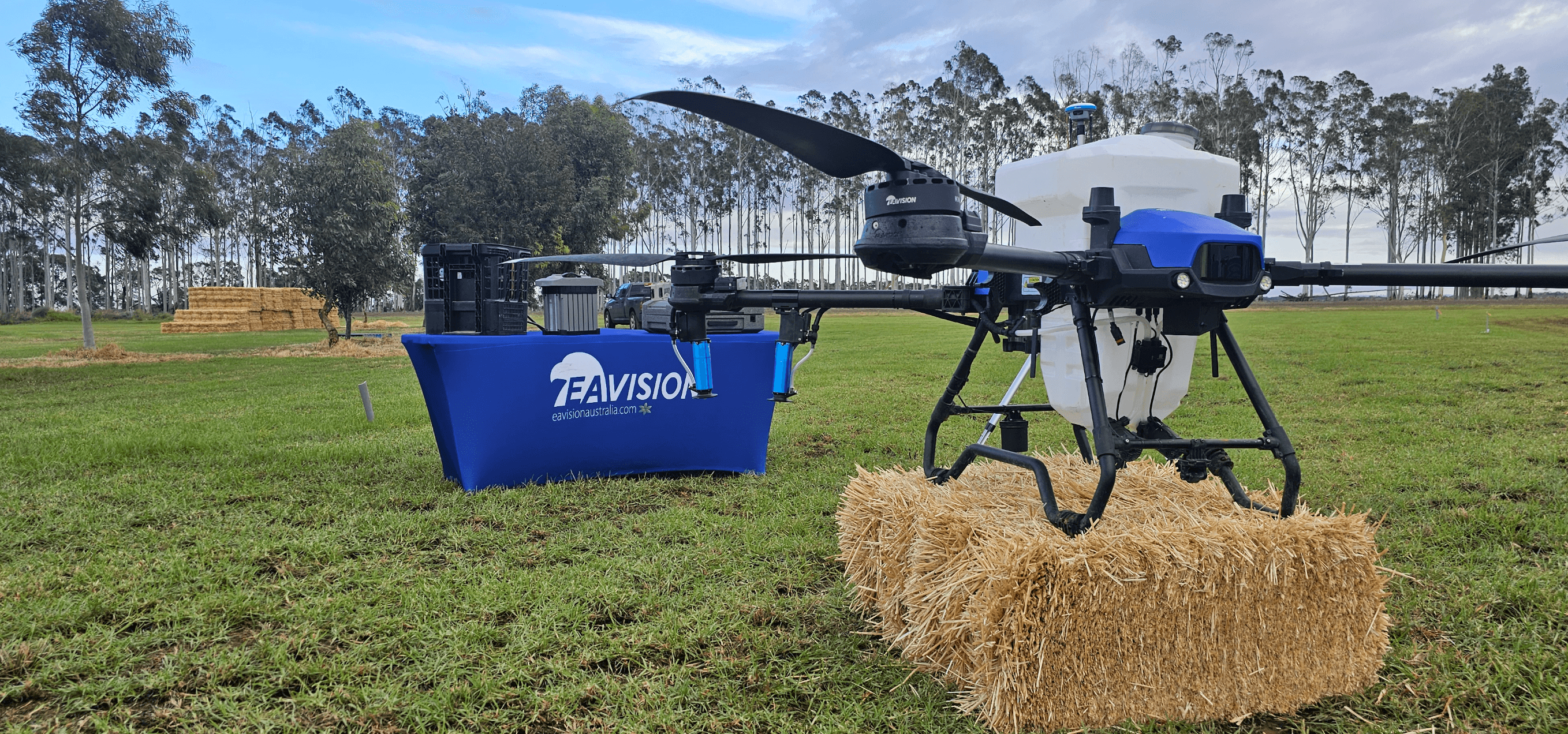
J150 lifting and J70 lifting give farms and dealers two different starting points. J150 supports higher-capacity lifting and broader commercial service models, while J70 can serve lighter routes and smaller operations. In both cases, success depends on planning, safety, training, original parts, maintenance, and after-sales support.
FAQ
What is agricultural drone lifting?
Agricultural drone lifting means using a drone to carry farm materials between defined points, such as tools, inputs, repair parts, seedling materials, or lightweight cargo in orchards, hillsides, and remote farms.
What is drone cargo transport agriculture used for?
It is used to reduce manual carrying, shorten difficult ground routes, support hillside or mountain farms, move supplies in orchards, and deliver small materials to remote plots where vehicles are slow or impractical.
How much can EAVISION lifting drones carry?
EAVISION's lifting solution page describes EA-J150 carrying up to 75 kg. The J70 product page lists a 60 kg max lifting payload. Actual safe use depends on route, weather, load shape, battery margin, and manufacturer guidance.
Is J150 lifting better than J70 lifting?
J150 lifting is better for higher-capacity service work and larger operations. J70 lifting may fit smaller farms, lighter routes, demos, or compact transport needs. The right model depends on payload, route, terrain, and workload.
What safety steps matter most for lifting drones?
Weigh the payload, secure the load, check the route, keep people clear, map obstacles, maintain battery reserve, choose safe drop zones, train operators, and follow aviation and worker-safety rules.