Agricultural Drone vs. Traditional Sprayer: Which Is Better for Modern Farming?


If you're running a commercial farm or managing crop protection services, you've probably asked the same question everyone in ag is asking right now: Should I stick with my ground sprayer, or go with an agricultural drone? It's not a simple either-or. But the data is starting to paint a pretty clear picture.
Here's an honest, side-by-side look at drone spraying vs. ground sprayer methods so you can decide what actually makes sense for your operation.
The Real Problem with Traditional Sprayers
Tractor-mounted boom sprayers and backpack units have been the backbone of crop protection for decades. They work. But they come with trade-offs that are getting harder to ignore.
- Terrain restrictions: Muddy fields, steep slopes, and standing water delay treatments, and you miss critical application windows.
- Soil compaction: Heavy machinery also compacts soil, harming root systems, reducing water absorption, and cutting yields by up to 20%.
- Chemical waste: Poor targeting and drift can waste up to 30% of chemical inputs through runoff and evaporation.
- Labor shortages and health risks: Traditional spraying can also become difficult to manage. And let's be honest. Asking workers to walk through fields with backpack sprayers isn't great for anyone's health. Studies show that compared to handheld spray equipment, the use of drones for pesticide application reduces operator exposure by 90–99%.
Where Agricultural Drones Pull Ahead
The agricultural drone vs. traditional sprayer debate tips toward drones on a few fronts: precision, access, and crop protection.
- One of the biggest advantages of drone spraying vs. traditional spraying is precision. Drones reduce overlap and limit chemical waste by applying products with exact placement and consistent rates.
- Drone spraying also allows treatment of fields that ground equipment can't reach, such as wet soils, standing crops, and steep terrain.
- And because drones operate above the canopy, crops stay untouched during application. No soil compaction. No trampled rows. That matters a lot during late-season sprays when crop damage from machinery can directly eat into yield.
At EAVISION, we've built our precision spraying and spreading solutions around exactly these challenges. Our 4th-generation CCMS® bimodal mist nozzles produce continuously adjustable droplet sizes from 10–300μm, paired with vortex airflow for deep canopy penetration. That's not a spec sheet talking point, but the difference between spray that sits on top of the leaf and spray that actually reaches the underside where pests live.
Related article: Agriculture UAV in Precision Agriculture: How Drone Technology Is Transforming Farming
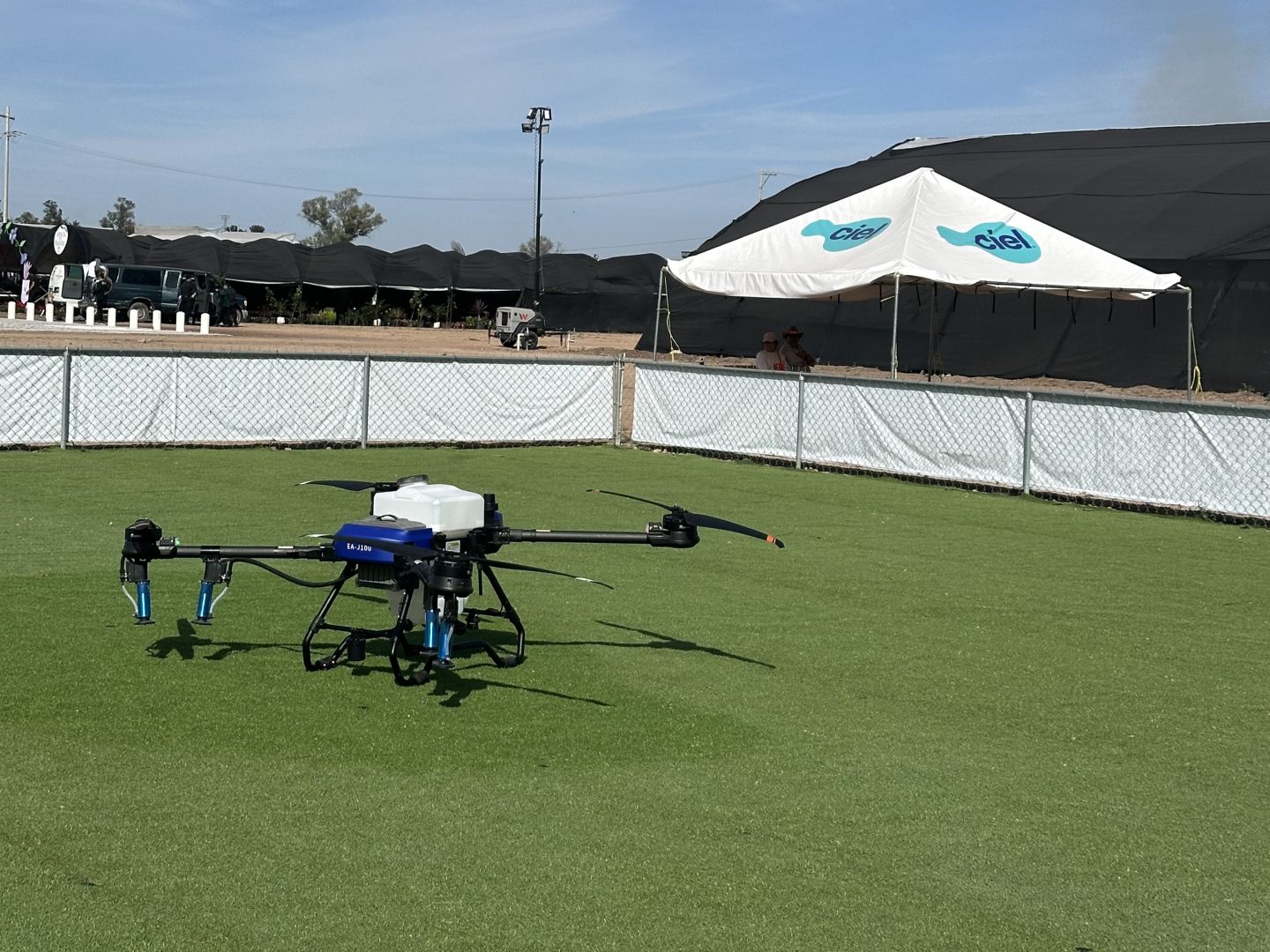
Side-by-Side: Drone Spraying vs. Ground Sprayer
Here's a quick snapshot of how drone spraying vs. ground sprayer methods stack up:
|
Factor |
Traditional Sprayer |
Agricultural Drone |
|
Coverage Speed |
15–30 hectares/day (tractor) |
80–200 hectares/day |
|
Pesticide Savings |
Baseline |
Up to 30% reduction |
|
Operator Chemical Exposure |
High (direct contact) |
Reduced by 90–99% |
|
Soil Compaction |
Yes |
None |
|
Terrain Flexibility |
Limited on slopes/wet ground |
Flies over any terrain |
|
Labor Required |
3–6+ workers |
1–2 operators |
Depending on drone size and battery availability, a professional agricultural spraying drone can cover 80 to 200 hectares per day. Drones have also proven to reduce water and chemical usage, maintaining efficacy even with a 30% reduction in pesticide dosage.
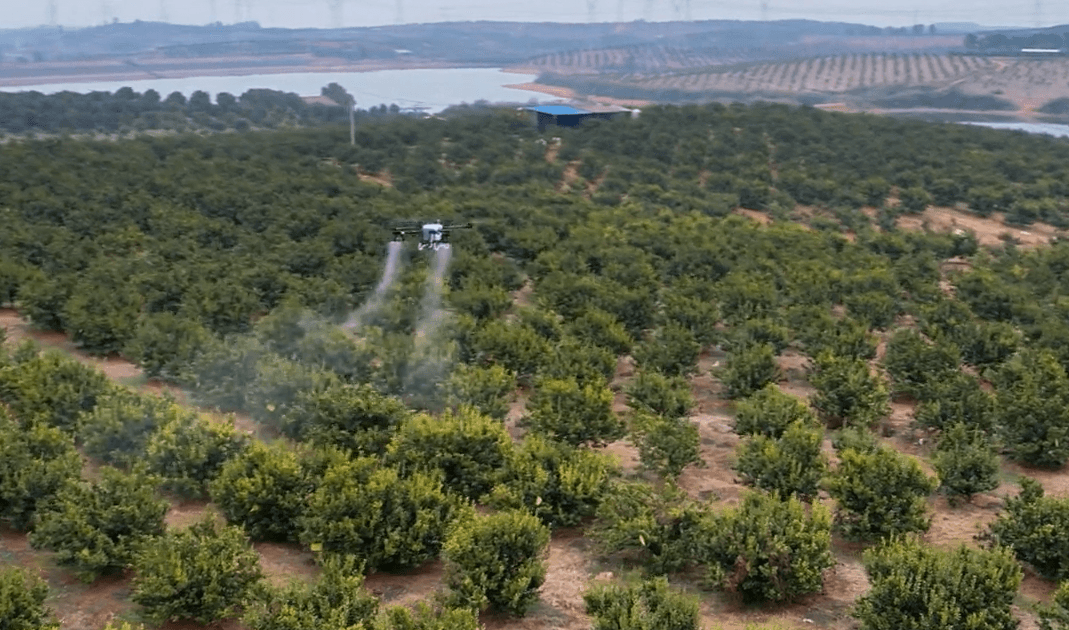
When Does a Traditional Sprayer Still Make Sense?
We're not going to tell you that drones replace everything. Drone spraying excels in precision, flexibility, and targeted applications, while traditional spraying remains valuable for large-scale, flat-field coverage. If you're running 10,000 flat acres of wheat with zero obstacles, a high-clearance ground rig will still do the job.
But for orchards, hillside farms, mixed-terrain operations, or any scenario where precision and safety matter? The math tips toward drones. Studies indicate that for farms larger than approximately 2.27 hectares, the cost-benefit ratio favors drone adoption.
Key Takeaways
The agricultural drone vs. traditional sprayer question doesn't have a one-size answer. But the trend line is clear: drones deliver better precision, lower chemical use, safer working conditions, and strong ROI, especially on hilly, fragmented, or hard-to-access land. Traditional sprayers still earn their place on flat, large-scale operations. In our experience, the smartest operators are combining both.
FAQs
Can an agricultural drone fully replace a traditional sprayer?
Not always. Drones are strongest on hilly terrain, orchards, and mid-sized fields. Choosing between drone spraying vs. traditional spraying depends on your crops, acreage, terrain, and long-term goals. Drone spraying excels in precision and flexibility, while traditional spraying remains valuable for large-scale coverage. Many farms benefit most by integrating both methods.
How much pesticide can drones save compared to ground sprayers?
Research has found that drone spraying reduced chemical waste by 30% and saved 25% on water usage compared to traditional methods. The exact savings depend on crop type and field conditions, but 20–30% reductions are common across studies.
Are agricultural drones safe for operators?
Yes. Agricultural drones significantly improve worker safety. Operators can control drones remotely without entering chemical spray zones. Peer-reviewed research shows operator pesticide exposure drops by over 90% with drone application.
What crops work best with drone spraying?
Agri spray drones are highly flexible and suited for row crops (e.g., wheat, maize), orchards, vineyards, and even forest plantations. Drones are especially useful where traditional sprayers face limitations due to hilly, waterlogged, or irregularly shaped fields.
Is the upfront cost of a spray drone worth it?
While the initial investment may be higher than manual sprayers, drones often reduce labor, fuel, and chemical costs, allowing farms to recover the investment within a few seasons. For service providers spraying multiple farms, payback can be even faster.