Agriculture UAV in Precision Agriculture: How Drone Technology Is Transforming Farming


If you’ve been following modern farming trends, you’ve probably noticed one thing: drones are everywhere. From crop spraying to field mapping, an agricultural UAV is no longer a futuristic idea. It’s quickly becoming a standard tool on farms of all sizes.
But what’s really driving this shift is something bigger: precision agriculture. And at the center of it all is the precision agriculture drone, helping farmers make smarter, faster, and more cost-effective decisions.
Here is what you should know about precision agriculture drones and why they matter for your farm right now.
What Is Precision Agriculture and Why It Matters
Traditional farming often treats an entire field the same way. But in reality, not every part of a field has the same needs.
That’s where precision agriculture comes in.
Precision agriculture is a farming approach that uses data and technology to manage crops more accurately. Instead of applying the same amount of water, fertilizer, or chemicals everywhere, farmers can adjust inputs based on actual field conditions.
This is where a precision agriculture drone becomes essential. It helps farmers:
- Identify problem areas early
- Apply inputs only where needed
- Reduce waste and costs
- Improve crop consistency
In simple terms, precision agriculture is about doing more with less—and doing it smarter.
How Agriculture UAVs Enable Precision Agriculture
An agriculture UAV is more than just a flying machine. It is a combination of a data tool and an execution tool.
Here’s how it supports precision agriculture step by step:
Data Collection
Drones capture high-resolution images and field data in real time. This helps identify:
- Crop stress
- Pest or disease outbreaks
- Uneven growth patterns
Data-Driven Decisions
Once the data is collected, farmers can analyze it (or use software tools) to decide what action is needed.
Targeted Action
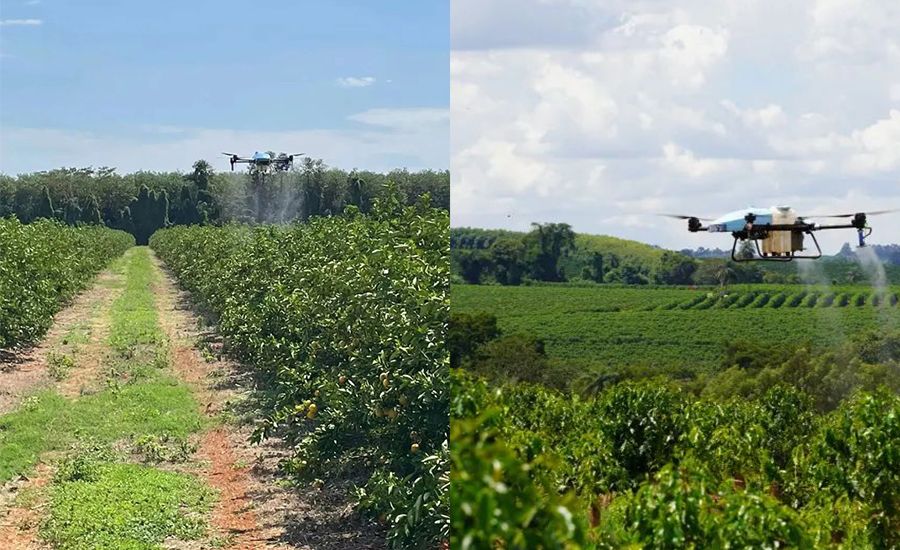
This is where drones really shine. A precision agriculture drone can:
- Spray only affected areas
- Adjust flow rates
- Maintain consistent coverage
This full cycle of data, decision, and action defines UAV precision agriculture in practice.
What Can a Precision Agriculture Drone Actually Do?
More than you'd expect. Here's a quick breakdown:
|
Application |
Why It Matters |
|
|
Crop Spraying |
Applies pesticides, herbicides, and fertilizers from the air |
Faster application, more uniform coverage, and less chemical waste |
|
Field Mapping |
Creates detailed 2D and 3D maps of farmland |
Helps identify problem areas before they become costly |
|
Crop Health Monitoring |
Uses multispectral sensors to detect plant stress |
Enables early detection of disease and pest issues |
|
Soil Analysis |
Measures moisture levels, nutrients, and terrain |
Supports better planting and irrigation decisions |
|
Seeding & Spreading |
Distributes seeds or granular inputs aerially |
Reaches wet, uneven, or hard-to-access ground |
Benefits of Using Agriculture UAVs in Precision Farming
So why are more farmers adopting this technology?
Here are the biggest advantages:
- Higher efficiency: Cover more acres in less time
- Lower costs: Reduce chemical and labor expenses
- Better crop health: Apply inputs where they’re actually needed
- Improved safety: Less exposure to chemicals
- Faster decisions: Real-time data leads to quicker action
For many operations, the combination of these benefits makes an agricultural UAV a worthwhile investment.
What to Look for in an Agriculture UAV
If you're shopping for a precision agriculture drone, here are the things we think matter most:
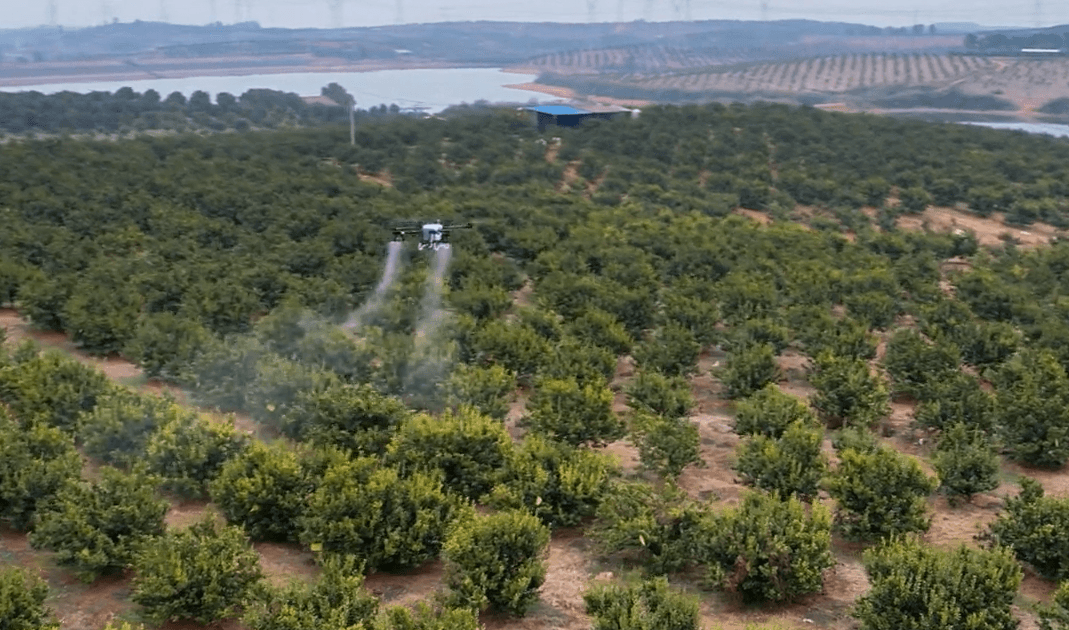
- Terrain adaptability: Can it handle hills, trees, and obstacles? Or just flat ground?
- Spray precision: Variable-rate spraying with adjustable droplet sizes is a must.
- Autonomy: Real-time obstacle avoidance and route planning save hours.
- Payload capacity: Bigger tanks mean fewer refills and more coverage per flight.
- After-sales support: A drone is only as good as the service network behind it.
EAVISION checks all five. Our drones have covered over 29.35 million acres of economic crops, spanning 34 provinces and 150+ crop varieties. We are expanding globally. We have partnerships in the United States through Agri Spray Drones and a growing presence in Latin America, Southeast Asia, and beyond.
Related article: Crop Spraying Drones: How to Pick the Right One for Your Farm
Conclusion
Agriculture UAV technology is already here. The farms that adopt precision agriculture drones now will spend less, waste less, and produce more. Whether you're managing grain fields, orchards, or commercial crops in any climate, drone-based spraying and monitoring is the most practical upgrade you can make today.
And honestly? It only gets better from here.
FAQs
What crops can an agricultural UAV spray?
Just about anything. At EAVISION, applicable crop species include rice, cotton, maize, wheat, grape, cherry, orange, eggplant, peanut, sunflower, and more. Our drones work on 150+ crop varieties, from flat grain fields to steep hillside orchards.
How does a precision agriculture drone work?
A precision agriculture drone works by collecting field data, analyzing crop conditions, and then applying inputs like sprays only where needed. It turns farming into a data-driven process that improves accuracy and reduces waste.
Do I need a license to fly a precision agriculture drone?
It depends on your country. In the U.S., you need an FAA Part 107 Remote Pilot Certificate for any commercial drone operation, including on private farmland. If applying chemicals, you also need to comply with Part 137 regulations governing agricultural aircraft operations. Check your local aviation authority for region-specific rules.
How much does an agriculture UAV cost?
Agricultural drones vary widely in price. Entry-level mapping drones may cost $2,000–$5,000, while advanced spraying drones can exceed $15,000–$20,000 depending on payload and features. For a fully equipped EAVISION system with batteries and a charger, reach out to an authorized dealer for a custom quote.
How is a drone different from traditional spraying methods?
Drones are faster, more precise, and waste far less chemical. Studies show they can reduce labor needs by 50%, pesticide use by 30%, and overall input costs by 25% while maintaining or increasing crop productivity. They also reach areas that ground equipment cannot.