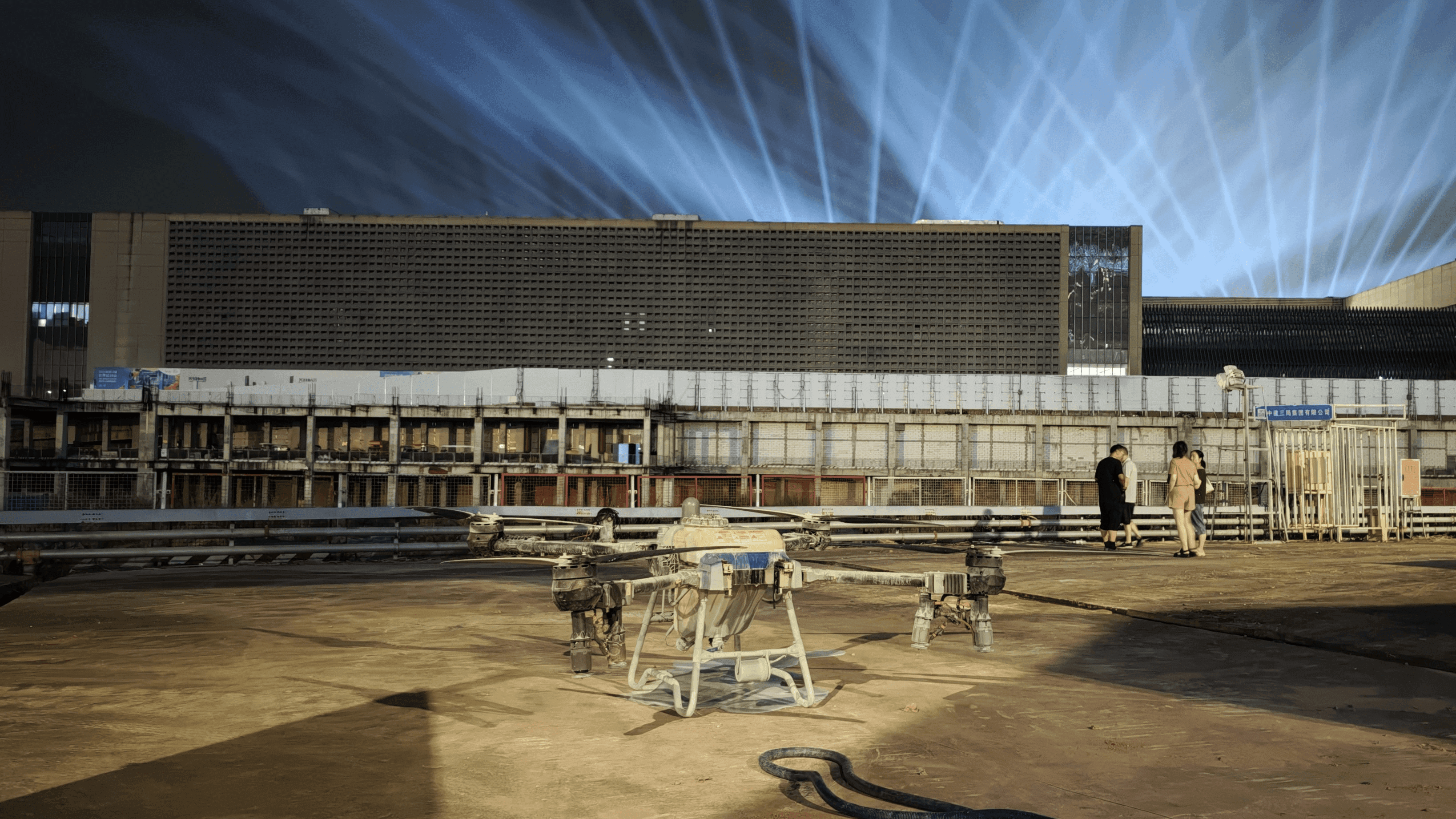
Drone Herbicide Application: Labels, Drift, and Crop Safety


Drone herbicide application can be a strong fit when timing matters, fields are wet, terrain is uneven, or ground sprayers risk crop damage. But herbicide work is also one of the least forgiving types of drone pesticide application. A small setup error can cause poor weed control, off-target drift, crop injury, residue problems, or a compliance issue.
This guide explains how farmers and service operators should think about labels, drift, calibration, and crop safety before putting herbicide into a drone tank. It is a planning guide, not legal or agronomic advice. Always confirm the product label, local pesticide rules, aviation rules, crop plan, and applicator requirements in the market where the work will happen.
When Drone Herbicide Application Works Best
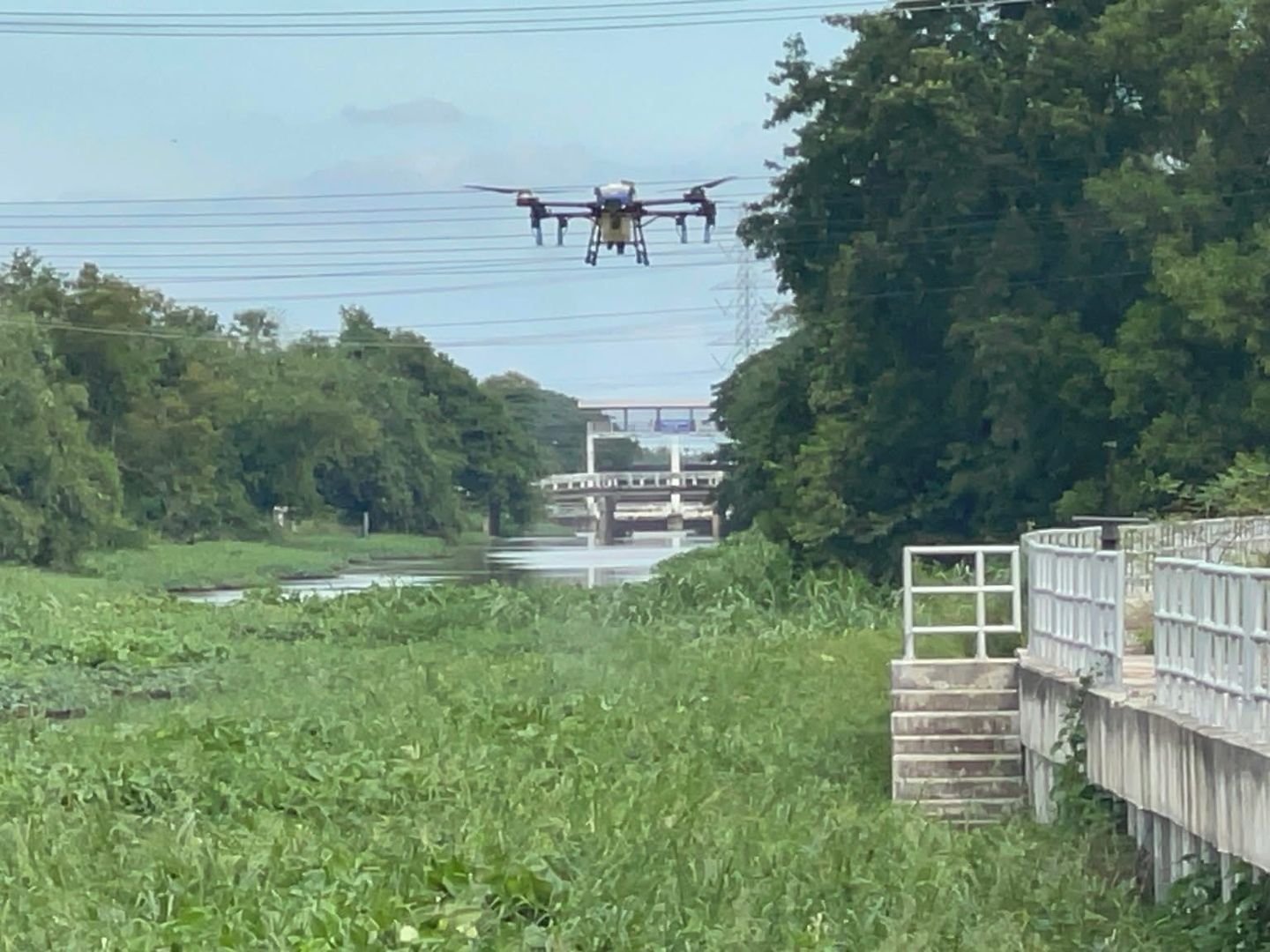
Drone herbicide application usually works best when the job benefits from access, speed, precision, or reduced ground contact. Common use cases include spot treatment, wet fields, fragmented plots, slopes, narrow access areas, tall crops, or urgent weed-control windows after rain.
A drone may be useful when:
- Ground equipment would rut the field or damage crop rows
- Manual spraying is too slow or exposes workers to unnecessary risk
- The field is small, irregular, terraced, or difficult to reach
- Weed pressure is localized and does not require full-field treatment
- A custom operator needs to respond quickly across many farms
However, drones are not a universal replacement for every herbicide pass. Some herbicides require carrier volumes, droplet categories, nozzles, buffers, boom heights, or application methods that may not fit a drone platform. Others may be too risky around sensitive neighboring crops. A good operator begins with the product label and the target weed, then decides whether a drone is the right tool.
Read the Label Before You Plan the Flight
The pesticide label is the first technical document for any herbicide job. In the United States, EPA guidance reminds applicators that the label is the law and that directions for use explain where and how a product may be used. Other countries have their own authorities and label systems, but the same principle applies: the label controls the job.
Before planning a flight, check whether the label supports the intended use:
|
Label item |
What to verify |
|
Crop and weed |
The crop, growth stage, weed target, and product use pattern match the field |
|
Application method |
Aerial, UAV, drone, or low-volume application is allowed or locally accepted |
|
Rate and carrier volume |
The drone can deliver the required dose and water volume uniformly |
|
Droplet and nozzle requirement |
The droplet category can be achieved without unacceptable drift |
|
Weather limits |
Wind speed, temperature, humidity, and inversion restrictions can be followed |
|
Buffers |
Sensitive crops, waterways, homes, roads, and boundaries can be protected |
|
PPE and re-entry |
Worker protection, restricted-entry interval, and recordkeeping are clear |
Do not assume that "aerial application" automatically means every drone job is acceptable. If the label language is unclear, confirm with the registrant, local regulator, extension specialist, or qualified agronomist before spraying.
Drift Control: Droplets, Wind, Height, and Buffers
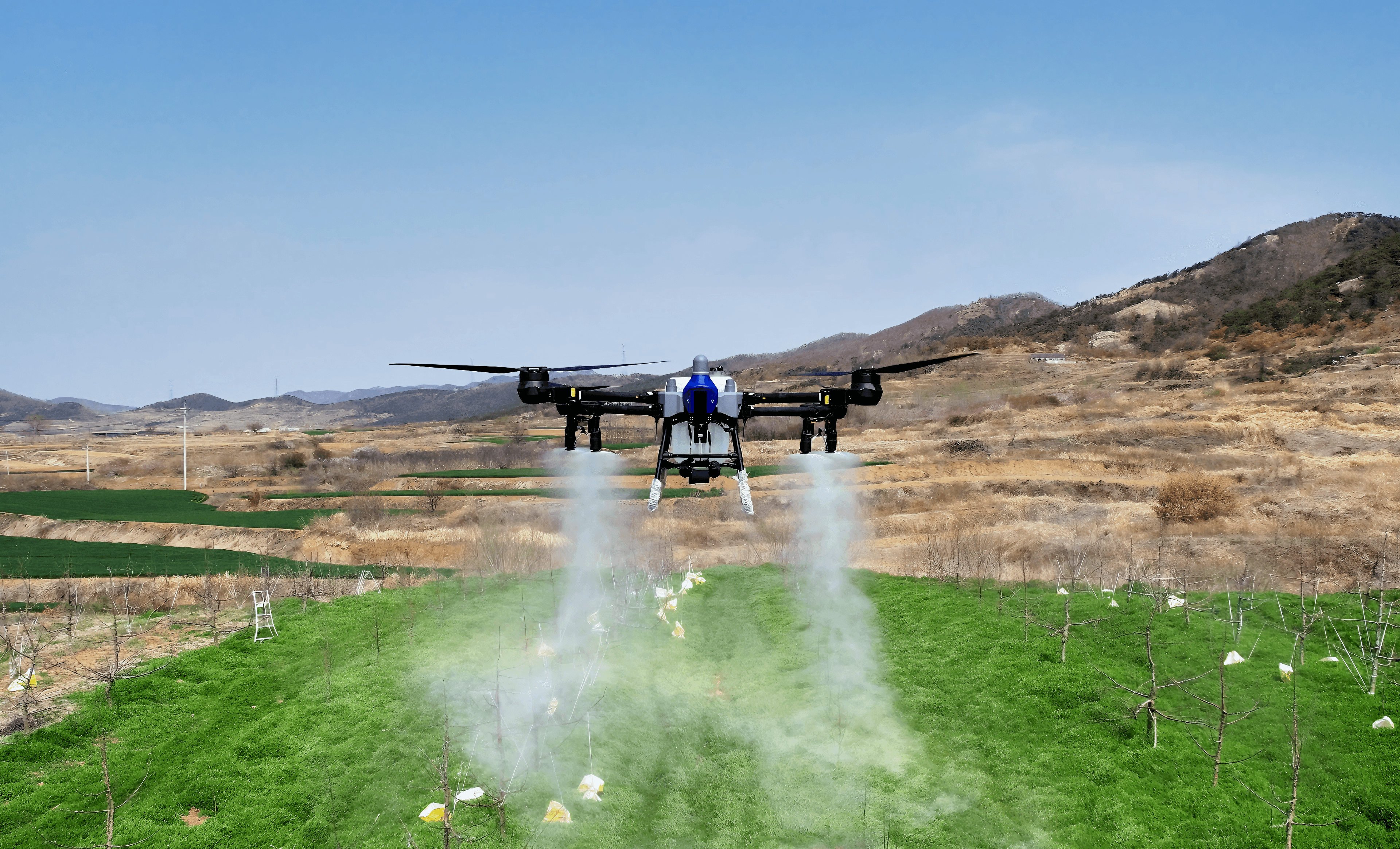
Herbicide drift is not only a waste of product. It can injure sensitive crops, damage trees, affect neighboring fields, and create disputes. Drift risk rises when droplets are too fine, wind is unstable, flight height is excessive, the route is too close to a boundary, or the product is used during temperature inversions.
A practical drift-control plan should include:
- Correct droplet setting for the product and target
- Conservative flight height and speed
- Buffer zones around sensitive sites
- Wind-speed and wind-direction checks before and during the job
- Avoidance of temperature inversions and gusty conditions
- Route planning that keeps turns and start-stop points away from boundaries
- Coverage checks after calibration
EAVISION's spraying solution emphasizes droplet control, airflow utilization, and canopy coverage. The J150 supports 10-300 micron droplet adjustment and intelligent route planning, while the J70 combines compact operation, obstacle awareness, and 10-300 micron droplets. These features help operators tune the setup, but they do not replace label limits. If the label calls for a coarser droplet category, a specific carrier volume, or a wider buffer, follow the label.
Calibration Checklist for Drone Pesticide Application
Calibration connects the label to the field. A drone that flies the planned route but delivers the wrong flow rate is still a failed application.
Before full-field spraying, document these settings:
- Product rate per acre or hectare
- Carrier volume per acre or hectare
- Tank mix concentration
- Nozzle or atomizer setting
- Droplet target
- Flow rate
- Flight speed
- Effective swath width
- Route overlap
- Refill and agitation plan
- Field boundary and buffer map
The basic flow relationship is:
Required flow = application volume x speed x swath width
Use consistent units and verify the result against the drone's actual output. The J150's maximum flow rate of 40 L/min and the J70's maximum flow rate of 24 L/min provide capacity for many crop-protection tasks, but herbicide labels and field calibration decide the final setup.
After calibration, spray a test area or use water-sensitive paper where appropriate. Check whether coverage appears uniform, whether the swath is too wide, whether turns create overlap, and whether droplets are moving outside the target zone. Adjust before treating the full field.
Crop Safety: Sensitive Fields, Growth Stage, and Tank Cleanout
Crop safety is more than avoiding visible drift. Herbicide injury can come from wrong product selection, wrong crop stage, poor tank cleanout, wrong adjuvant, contaminated equipment, excessive overlap, or residues carried from a previous job.
Before a drone herbicide application, identify:
- The crop stage in the target field
- Sensitive crops or orchards nearby
- Downwind homes, gardens, greenhouses, waterways, and apiaries
- Rotation restrictions and plant-back intervals
- Spray-adjuvant requirements
- Tank mix compatibility
- Cleanout instructions
- Recordkeeping requirements
Cleanout is especially important for service operators who move from herbicide to fungicide, insecticide, foliar nutrition, or vegetable work. A residue that is invisible in the tank can still injure the next crop. If the label requires a specific cleanout procedure, follow it completely and document it.
For high-value orchards, vegetables, nurseries, vineyards, and specialty crops, operators should be more conservative. If there is uncertainty about product fit, neighboring crop sensitivity, or weather stability, delay the job or choose another application method.
What to Ask a Drone Herbicide Service Provider
Farmers searching for "drone herbicide application near me" should compare providers by process, not only by price per acre. A cheap job can become expensive if drift, poor weed control, or documentation gaps create problems later.
Ask the provider:
- Are you licensed or certified for this type of pesticide application in this location?
- Do you have the required aviation approvals for commercial dispensing where applicable?
- How do you confirm that the herbicide label allows the planned drone use?
- What droplet size, carrier volume, and swath width will you use?
- How do you check wind, inversion risk, and buffer zones?
- Do you provide calibration records and application records?
- How do you clean the tank and spray system between products?
- What training, spare parts, and after-sales support back your operation?
In the United States, FAA Part 137 governs aircraft operations that dispense or spray certain agricultural substances, including many pest-control products. EPA rules also require certification for people who apply or supervise restricted-use pesticide applications. Other markets have different frameworks, so operators should verify the local rules before offering paid herbicide services.
EAVISION's after-sales support, authorized service stations, training resources, parts support, and online service are relevant here because herbicide service depends on uptime and repeatable procedures. A professional operator should be able to explain both the aircraft setup and the agronomic safety process.
Practical Pre-Flight Checklist
Use this quick checklist before the drone leaves the ground:
|
Step |
Confirm |
|
Label |
Crop, weed, rate, carrier volume, droplet, buffer, weather, PPE, and records |
|
Field |
Boundaries, obstacles, sensitive neighbors, water, roads, and exclusion zones |
|
Weather |
Wind speed, wind direction, temperature, humidity, and inversion risk |
|
Drone |
Battery, tank, nozzles, flow system, route, failsafe, and return points |
|
Calibration |
Speed, swath, flow, overlap, droplet setting, and test coverage |
|
Records |
Product, rate, field, operator, time, weather, and customer approval |
If any item is uncertain, pause the job. Herbicide mistakes are easier to prevent than to repair.
Conclusion
Drone herbicide application is most effective when technology and discipline work together. The drone provides access, speed, route control, droplet adjustment, and repeatable field execution. The operator provides label review, calibration, drift management, crop-safety judgment, and records.
FAQ
Can drones apply herbicide?
Yes, drones can apply herbicide when the product label, local pesticide rules, aviation rules, equipment capability, weather, and crop-safety requirements all support the application. Do not spray if the label or local authority does not allow the planned use.
Is drone herbicide application safe for nearby crops?
It can be managed, but it is not automatic. Safety depends on product selection, droplet size, wind, buffers, flight height, route planning, sensitive-crop distance, and operator discipline. Herbicides require extra caution because some crops are highly sensitive to small off-target movement.
What should I ask before hiring drone herbicide application near me?
Ask about applicator certification, aviation approval, product-label review, calibration records, droplet size, weather limits, buffer planning, tank cleanout, insurance, and after-sales support. A professional provider should have clear answers before quoting the job.