Drone Spraying Regulations in Southeast Asia: Country-by-Country Breakdown


If you're planning to operate an agricultural drone anywhere in Southeast Asia, here's the reality: there's no single set of rules. Every country has its own civil aviation authority, its own registration process, and its own stance on whether a drone can legally spray pesticides over farmland. And those rules? They're changing fast.
This breakdown covers the five biggest markets for ag drone spraying in the region. It's not legal advice (always confirm with local authorities), but it'll save you hours of digging.
Related article: Agricultural Drones in Southeast Asia: Which Crops Drive the Fastest ROI
Thailand: New Rules Just Landed
Thailand's regulatory landscape shifted dramatically. Starting May 17, 2026, the Thai government rolled out a comprehensive overhaul of its unmanned aircraft regulations, covering all unmanned aircraft weighing up to 25 kilograms. This replaced a framework from 2015 that experts had long criticized as outdated.
Here's what you need to know for ag spraying:
- CAAT (Civil Aviation Authority of Thailand) has relaxed restrictions on agricultural drone use, but operators must submit planned flight areas and details at least 12 hours in advance via the CAAT UAS Portal app.
- Usage is limited to spraying agricultural chemicals, water, or fertiliser only, with no photography or surveying allowed. Flights are restricted to daytime hours (6 am–6 pm), and drone insurance is required.
- Extra-large drones over 25 kg require additional written permission from the Minister of Transport.
- Insurance coverage must be no less than 1,000,000 Baht per occurrence.
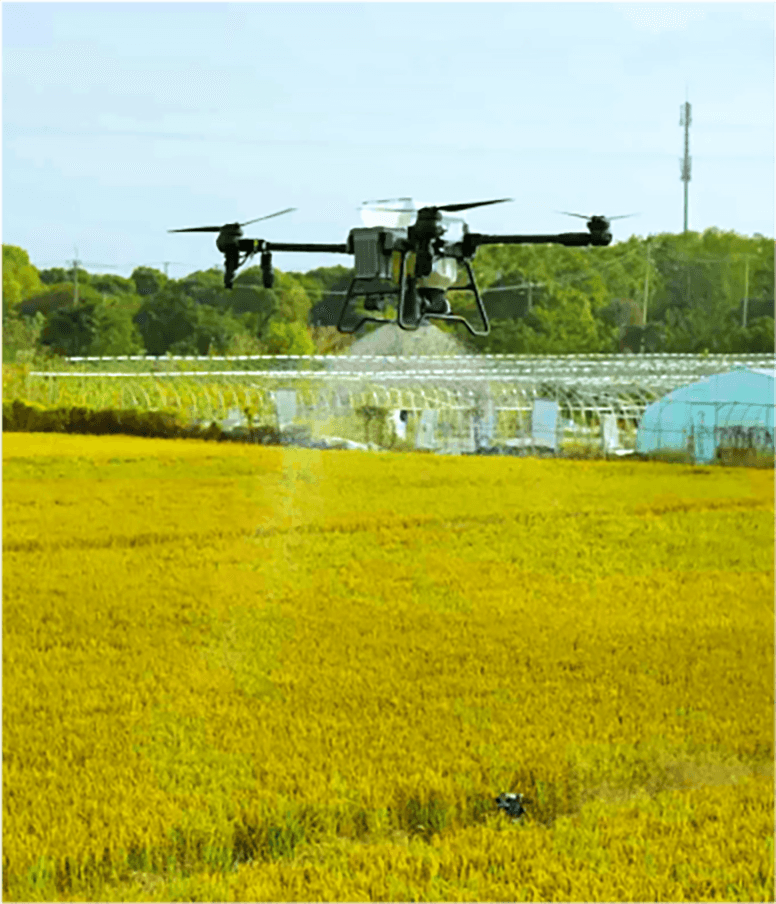
Thailand has been heavily promoting "Agriculture 4.0," and heavy-lift drones are now a common sight over the rice paddies of Isan, where they are used to spray fertilizers and map crop health. The opportunity is real, but so is the paperwork.
Vietnam: Fast Growth, Tighter Controls
Vietnam might be the most exciting ag drone market in Southeast Asia right now. Agricultural drones have moved rapidly from novelty to necessity across rice paddies, fruit orchards, and coffee plantations. Drone spraying uses up to 70% less water and 50% less pesticide than conventional methods, and drones cover ground 30 times faster than manual sprayers.
But the regulatory side caught up fast. Government Decree 288, which took effect in November 2025, established the most comprehensive legal framework for civilian drone operations. All drones must now be registered and assigned an identification code.
A few more details worth noting:
- The Ministry of Defence grants flight permits for drones operating in Vietnam's airspace, with agricultural flights eligible for permits lasting up to 180 days.
- In January 2023, Vietnam's Ministry of Agriculture and Rural Development announced standards for pesticide-spraying drones, marking the country’s first official guidance on the registration and deployment of drones in plant protection activities.
- The Ministry of National Defense launched an online no-fly zone portal (cambay.mod.gov.vn) on June 15, 2025, allowing operators to view restricted airspace.
The market is scaling rapidly. One firm alone is running 6,000 drone spraying teams across multiple regions. If you want to operate here, getting your permits sorted early isn't just smart — it's required. Our after-sales service network supports operators across global markets with exactly this kind of ongoing compliance and technical guidance.
Malaysia: Broad Framework, Ag-Specific Gaps
You can fly a drone in Malaysia, subject to CAAM (Civil Aviation Authority of Malaysia) regulations. The rules are relatively straightforward compared to some neighbors.
- Registration of small unmanned aircraft is NOT required. But drones weighing more than 20 kg must be registered.
- For aerial work, which includes agriculture, you need authorization from the Director-General.
- The use of drones is regulated under the Civil Aviation Act, and Malaysia has published a list of pesticides approved for drone spraying.
That last point matters. Most Southeast Asian countries don't yet maintain a formal list of pesticide formulations registered for drone application. Malaysia is ahead of the curve there.
Philippines: Evolving Fast
Drone regulation in the Philippines is primarily overseen by the Civil Aviation Authority of the Philippines (CAAP), which is mandated to regulate all civil aviation activities, including drones, to ensure safety.
What's happening specifically with ag spraying?
- The Philippines' Fertilizer and Pesticide Authority (FPA) has approved several pesticide products for spraying drones.
- CAAP issued Advisory Circular AC 02-2025 covering special permits for agricultural spraying drones.
- Drones over 250 grams must be registered, and this requirement applies to both local residents and international tourists.
- In March 2023, CAAP held a consultation meeting with the Department of Agriculture to harmonize regulations on agricultural drones.
The Philippines is still ironing out specifics, but it's clearly moving toward a more formalized ag drone framework. If you're considering entering this market as a distributor, explore our dealer partnership program. We’re actively building our network across the region.
Indonesia: Local Content Rules Change the Game
The Directorate General of Civil Aviation (DGCA) under the Ministry of Transportation is the primary authority overseeing drone operations in Indonesia.
The basics:
- Drones under 2 kg need no prior permission. Above 2 kg, you'll need a permit from the DGCA.
- Spraying drones may be operated within 500 m from the nearest residential area.
- Penalties for violations can include fines up to IDR 5,000,000 and up to three years in prison.
But here's what really sets Indonesia apart: Terra Drone Indonesia recently secured local content (TKDN) certification for its agricultural drone, exceeding the 30% threshold required for access to government contracts in a country that produces 60% of the world's palm oil. This creates a two-tier market where foreign manufacturers must invest in local assembly and sourcing to compete for government contracts.
If you're a drone manufacturer eyeing Indonesia, local production partnerships aren't optional anymore.
The Market Is Moving Fast
Drones used for pesticide application are rapidly growing in popularity in Asia, for their advantages in efficiency, spray precision, reduced water consumption, and labor savings. They can also operate in terrain that is difficult or impossible to access with traditional equipment.
We're seeing progress. Countries like Thailand, Vietnam, Malaysia, and the Philippines are developing guidelines for drone-based pesticide application. The regulatory patchwork is messy right now, sure. But it's moving in the right direction.
Our advice? Don't wait for perfect clarity. Start building relationships with local aviation authorities now, get your operator certifications in order, and choose equipment that's built for real-world compliance across multiple markets.
FAQs
Do I need a pilot license to spray crops with a drone in Southeast Asia?
It depends on the country. Thailand requires CAAT pilot registration plus insurance. Vietnam mandates permits through the Ministry of Defence. The Philippines requires CAAP certification for commercial use. In most cases, you will need some form of license or authorization before you can legally spray.
Can a foreign company legally operate agricultural drones in Southeast Asia?
Generally, yes, but foreign operators must comply with local rules. In the Philippines, foreign companies must work with a locally registered business or obtain special permits from CAAP. Indonesia's TKDN requirements may also push foreign manufacturers toward local assembly partnerships. Each country is different, so budget time for local compliance work.
How is EAVISION supporting operators in Southeast Asia?
EAVISION is focused on the development and manufacturing of fully autonomous drone systems, delivering integrated solutions for agriculture and industrial applications worldwide. We provide global after-sales support, authorized service stations, and 24/7 online customer service to help operators stay productive and compliant, no matter where they are flying.