EA-J150 vs DJI T50: Which Agricultural Spraying Drone Is Better for Your Farm?


If you're comparing high-capacity agricultural spraying drones, the EAVISION EA-J150 and the DJI Agras T50 are two models that often come up. Both offer precision, speed, and autonomous operation, but they’re designed for different types of farms and workloads.
For operators looking beyond the DJI T50, the EA-J150 has quickly become one of the most talked-about alternatives thanks to its higher capacity and strong performance in large-scale spraying operations.
We put together this head-to-head comparison so you can make a confident decision before writing a check.
The Specs That Actually Matter
Let's start with the numbers. Here's a quick-reference table so you can scan the differences at a glance:
|
Spec |
DJI Agras T50 |
|
|
Spray Tank |
70 L |
40 L |
|
Spreader Payload |
180 lbs (80 kg) |
110 lbs (50 kg) |
|
Max Takeoff Weight |
149.9 kg |
92 kg |
|
Max Speed |
30 MPH |
~22 MPH (10 m/s) |
|
Flow Rate |
10.5 gal/min |
Up to 6.3 gal/min (24 L/min with 4 nozzles) |
|
Droplet Range |
10-300 μm |
50–500 μm |
|
Obstacle Avoidance |
360° Laser Compound Eye + ALS + Phased Array Radar |
Dual Phased Array Radar + Binocular Vision |
|
Battery Capacity |
45000 mAh, recharges in under 9 min |
30000 mAh |
|
Propeller Size |
63 inches |
54 inches |
The standout difference? The EA-J150 carries a 70L tank, nearly double the T50's capacity. The T50 uses a 40 L spray tank with an operating payload of 40 kg. In practical terms, that means fewer refill trips with the J150. For operations running hundreds of acres per day, fewer stops add up fast.
Tank Size and Payload: Where Time Equals Money
Here's the thing about refills: they kill your hourly output. Every landing, tank refill, and relaunch eats 5–10 minutes. Over a full day of spraying, those minutes stack into hours.
With a maximum take-off weight of 149.9 kg, the J150 carries a 70L spray capacity or 100L spreader capacity, providing a cost-effective option to broadacre requirements. That's a pretty big deal if you're managing 500+ acre operations across row crops or commercial farmland. The J150 also supports a 180-pound spreader capacity, compared to the T50's 110-pound maximum for dry material.
For farm service providers billing by the acre, less downtime directly means more revenue per day. Pretty simple math.
Sensor Technology: Two Very Different Approaches
Both drones fly autonomously and avoid obstacles. But the tech under the hood differs quite a bit.
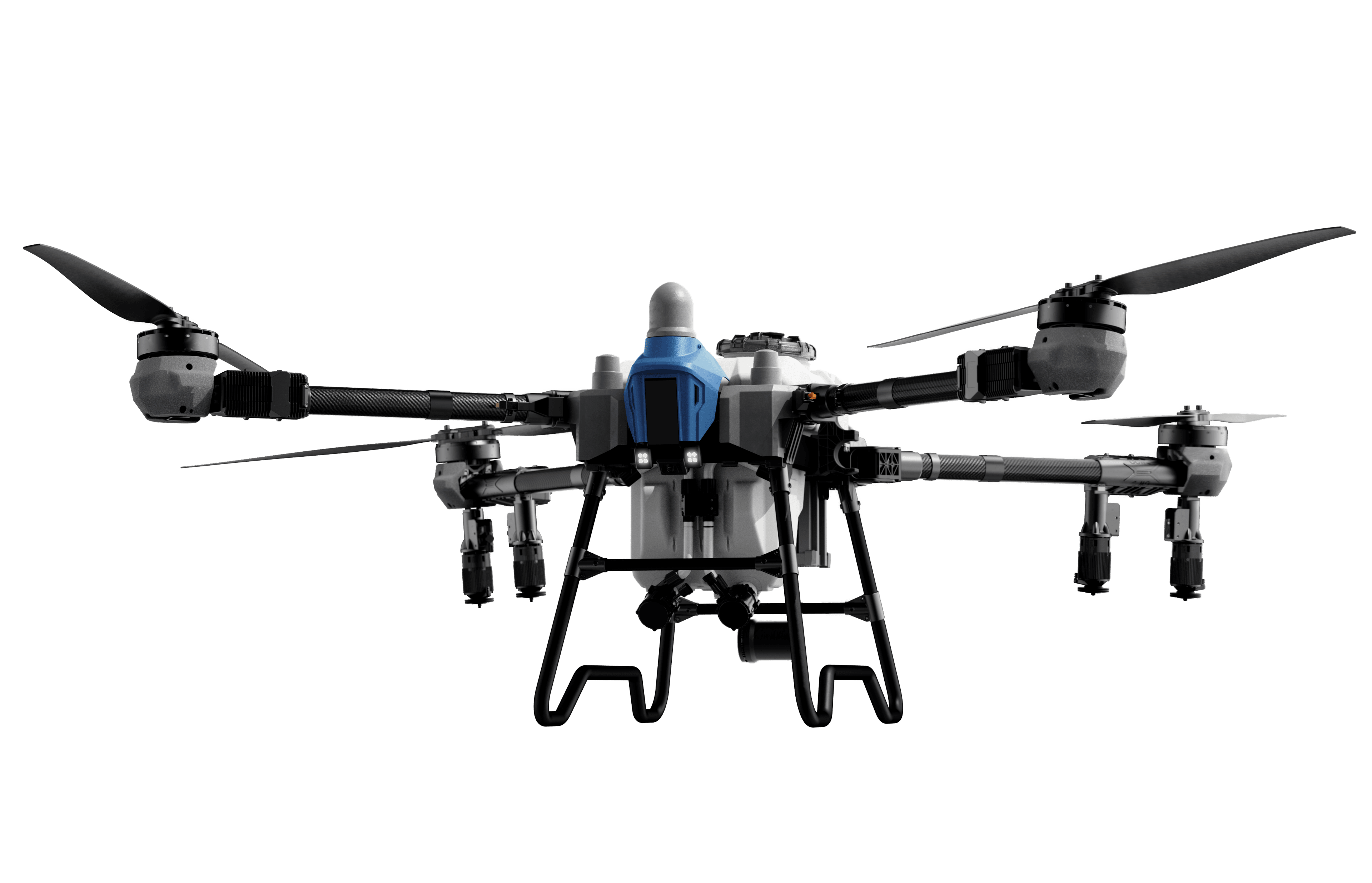
The J150 features EAVISION's 360° Laser Compound Eye Perception System, which integrates ALS compound eye technology and active directional radar to provide full 360° × 180° obstacle detection across a 150-meter range. The Phased radar array also provides detection capability during dusty and/or foggy conditions.
The DJI T50 takes a different route. It's equipped with front and rear Active Phased Array Radars with double the number of RF channels for higher detection precision. Together, they enable Multidirectional Obstacle Sensing. Two sets of Binocular Vision sensors allow it to accurately sense terrain and depict obstacles for automatic obstacle bypassing and Terrain Following over steep slopes.
Both systems work. But if you're flying in dusty harvest conditions or early-morning fog, the J150's radar-based system gives you an edge.
Terrain Handling: Hills, Orchards, and Tough Ground
This is where real-world performance splits the two drones apart.
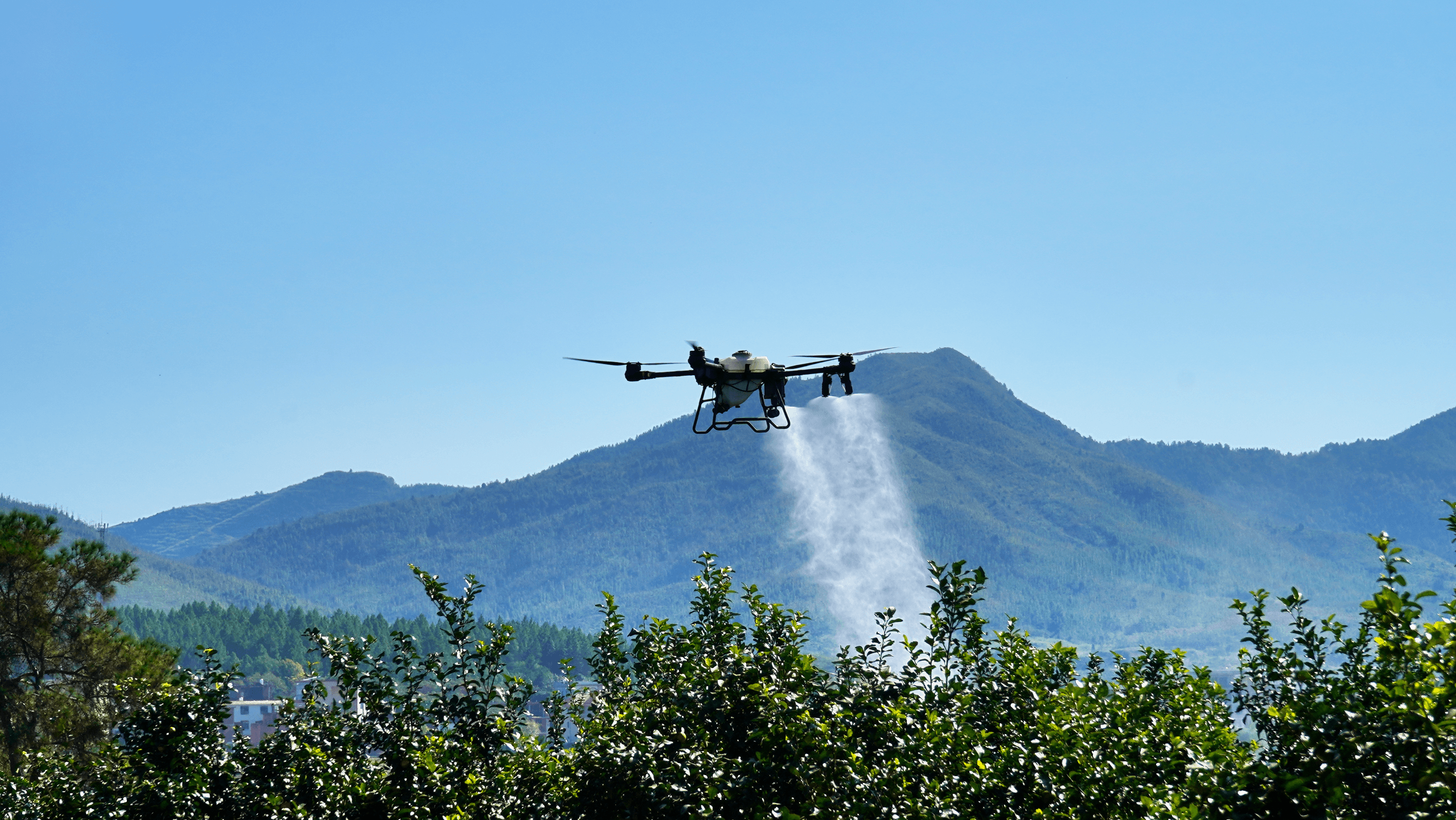
Field tests by Agri Spray Drones highlight the J150's terrain-following capability. The drone successfully navigated challenging grass-covered terraces with steep earthen steps used for erosion control. It maintained consistent altitude and spray coverage. For growers in hilly regions of Southeast Asia, Latin America, or Southern Europe, that kind of performance isn't optional. It's the baseline.
The DJI T50 supports obstacle bypassing and Terrain Following for surveying of orchards on slopes up to 20°. That's decent, but 20° won't cover every hillside vineyard or terraced citrus grove.
The EA-J150 agricultural spraying drone offers a unique feature. It allows different droplet sizes for each nozzle pair, designed for orchard applications. This improves canopy penetration by combining misting and larger droplets in a single pass. That's a genuine time-saver for fruit crop operations.
Maintenance and Uptime
Drone downtime during spraying season is expensive. The J150's modular components allow for quick, easy repairs, reducing maintenance time. Its 45,000 mAh rear-mounted battery powers full-capacity spraying at 2 gal/ac with quick swaps, and a 13,000-watt charger recharges from 20% in under 9 minutes.
The DJI T50 offers a solid battery system as well, but its 30,000 mAh capacity and slower recharge mean you'll need a larger battery rotation to match the J150's daily output.
Which Drone Should You Choose?
- Choose the EA-J150 if you need maximum tank capacity, run large-acreage operations, work on hilly or terraced terrain, or want the flexibility of mixed-droplet orchard spraying. It's built for operators who want fewer refills and more acres per hour.
- Choose the DJI T50 if you're already invested in DJI's ecosystem, you operate on flatter terrain under 20° slopes, or your spray needs stay within 10-gallon tank loads.
Both are capable machines. But for growing operations that need to scale across diverse terrain, the J150 stands out. Its larger payload, LiDAR-grade sensors, and rapid-charge battery system make the difference.
FAQs
How much bigger is the EA-J150's tank compared to the DJI T50's?
The EA-J150 carries 70L, while the T50 carries 40L. This is nearly double. That translates to roughly half the number of refill stops per day on large operations, which can save hours across a full spraying season.
Is EAVISION a reliable brand?
EAVISION was founded in 2015 by engineers from Tesla and Intuitive Surgical. The company is backed by investors including Temasek, BASF, and CITIC. With over a million acres sprayed in the U.S. alone in 2025, the brand has a growing track record among professional operators.
Is the EA-J150 a good alternative to the DJI T50?
Yes. The EA-J150 is widely considered a strong DJI T50 alternative, especially for large-scale farming operations. Its larger tank capacity, higher payload, and faster spraying speed allow operators to cover more acres per day with fewer refills.
What crops are best suited for the EA-J150?
The J150 works across row crops like corn, wheat, and rice, as well as specialty crops including citrus, apples, and sugarcane. Its mixed-droplet nozzle system is specifically designed for orchard-type canopy penetration, making it a strong fit for fruit crop operations.