How to Start an Agricultural Drone Spraying Business in 2026


Agricultural drone spraying is no longer a side experiment. For many farms, cooperatives, dealers, and custom applicators, it is becoming a practical way to reach fields faster, reduce labor pressure, enter wet or difficult terrain, and offer more precise crop protection services.
That opportunity creates a new question for entrepreneurs: How do you start a drone spraying business that is legal, profitable, and reliable enough for real farm customers?
The short answer: do not start with the drone. Start with the service model, the local crop demand, the legal requirements, and the operating workflow. Then choose equipment that fits the work.
This guide walks through the major steps to start an agricultural drone spraying business in 2026, including business models, licenses, equipment, pricing, insurance, training, marketing, and scaling.
Important note: regulatory requirements vary by country, state, territory, and chemical type. This article is a business planning guide, not legal advice. Always confirm current requirements with aviation, pesticide, insurance, and agricultural authorities in the region where you operate.
1. Choose Your Drone Spraying Business Model
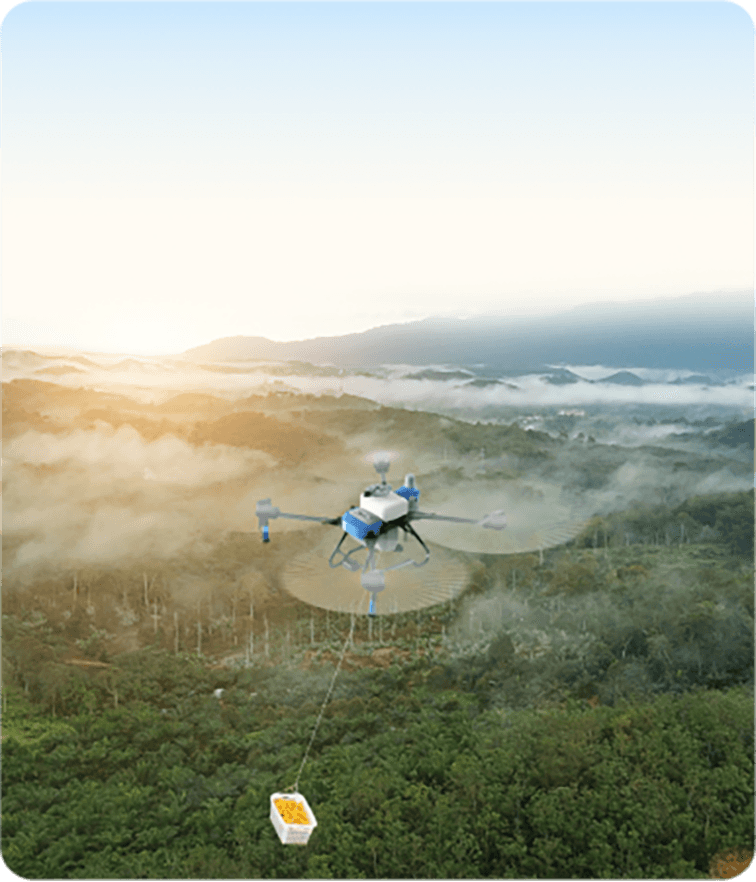
Flexible drone platforms can help new service operators build specialized farm workflows.
Before buying equipment, decide what kind of business you are building.
Owner-Operator Spray Service
This is the simplest entry model. One trained operator owns one drone and serves local farms. It works best when:
- Farms are close together.
- Crops have predictable spray windows.
- The operator already has local farm relationships.
- The service area does not require a large fleet.
For this model, a flexible drone such as the EAVISION J70 can fit solo operators and smaller service areas. The J70 product page positions it for one-person operations and supports spraying, spreading, lifting, and mapping.
Custom Applicator Add-On
An existing custom spraying, fertilizer, seed, or farm service company can add drones to its current service menu. This model has advantages:
- Existing customer base
- Existing chemical handling knowledge
- Existing billing and insurance systems
- Better seasonal scheduling
The challenge is workflow. Drones may not replace ground rigs or aircraft, but they can serve fields where traditional machines are slow, risky, or unavailable.
Dealer-Service Hybrid
Some agricultural drone dealers also provide demonstration spraying, training, and local service. This model can generate equipment sales and service revenue, but it requires strong technical support.
If your company wants to sell and support drones, connect service operations with training, parts, repairs, and customer education. A service business that cannot support machines after purchase will struggle to build trust.
Crop-Specialist Service
Another option is to specialize in crops where drone spraying has a clear operational advantage:
- Orchards
- Rice paddies
- Vegetables
- Cotton
- Tea
- Steep or fragmented fields
- Wet ground where tractors cannot enter
Crop specialists can charge for expertise, not only flying time. They understand spray volume, droplet size, canopy structure, timing, and application quality.
2. Validate Local Demand Before Buying a Drone
A drone spraying business needs more than interest. It needs repeatable local demand.
Start by interviewing:
- Farm owners
- Crop consultants
- Agronomists
- Agricultural retailers
- Seed and chemical dealers
- Cooperatives
- Existing aerial applicators
- Irrigation and farm service providers
Ask practical questions:
- Which crops have short spray windows?
- Which fields are hard to reach with tractors?
- Which pests or diseases require fast response?
- Which farms already hire custom applicators?
- What do growers pay for current spraying services?
- Are there local concerns about drift, records, or chemical handling?
- Is the demand seasonal or year-round?
Then map the service area. A business with 20 nearby farms may be easier to operate than a business with 100 farms spread across a large region. Travel time is real cost.
3. Understand the Regulatory Stack
In many markets, agricultural drone spraying is regulated by more than one authority. In the United States, for example, a spray drone operator may need to consider aviation rules, agricultural aircraft rules, pesticide applicator certification, state rules, chemical labels, business registration, and insurance requirements.
FAA Remote Pilot Certificate
For U.S. small UAS operations under Part 107, the FAA says operators must obtain a Remote Pilot Certificate. The FAA lists eligibility requirements, the knowledge test process, IACRA application steps, and recurrent training requirements for maintaining knowledge recency.
For a spray business, Part 107 is usually only the beginning. Applying substances from an aircraft can trigger additional requirements.
Part 137 Drone Spraying
The FAA's Part 137 UAS page explains that 14 CFR Part 137 governs the use of aircraft, including drones, to dispense or spray certain substances. It also notes that applicants should check whether the substance they plan to dispense falls within Part 137 definitions.
For U.S. drone spraying, the FAA describes requirements such as UAS registration, Remote Pilot Certificate, and the Part 137 UAS certification process. The FAA page also distinguishes between drones below 55 pounds, including payload, and drones weighing 55 pounds or more.
For heavy agricultural drones, the regulatory path can involve exemptions and additional documentation. The FAA's Section 44807 page explains that Part 107 applies only to drones under 55 pounds at takeoff, and that operators seeking to fly heavier drones or missions outside Part 107 may apply for an exemption under 49 U.S.C. Section 44807.
Pesticide Applicator Certification
Aviation permission does not automatically authorize pesticide application.
The EPA states that anyone who applies or supervises the use of restricted use pesticides must be certified according to EPA regulations and state, territorial, and tribal laws. EPA also notes that many states require all commercial applicators, not only restricted-use pesticide applicators, to be certified.
For a business, that means you must check pesticide licensing requirements in every state, territory, tribal area, province, or country where you operate.
Labels and Local Rules
Pesticide labels, local drift rules, crop restrictions, buffer zones, worker protection rules, and recordkeeping requirements can all affect service planning.
Your business should build a compliance checklist before taking paid work. The checklist should cover:
- Aircraft registration
- Pilot certification
- Agricultural aircraft or aerial application requirements
- Pesticide applicator certification
- Chemical label review
- Insurance approval
- Customer authorization
- Field records
- Weather and drift checks
- Emergency procedures
Do not treat compliance as paperwork. It is part of the product you sell.
4. Build the Right Equipment Package
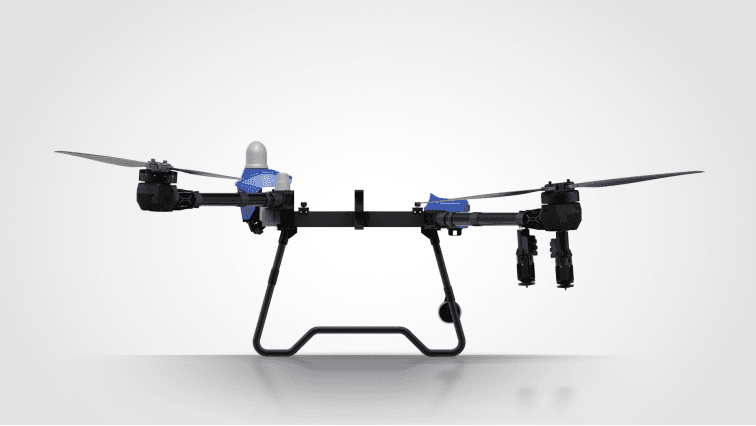
Equipment planning should include the drone platform, batteries, charger, refill system, PPE, spare parts, and transport setup.
Starting a drone spraying business is not just buying a drone. It is building a field-ready system.
Your equipment package may include:
- Agricultural spray drone
- Controller
- Spray tank
- Nozzles or atomization system
- Pumps and filters
- Batteries
- Charger
- Generator or field power setup
- Water tank
- Chemical mixing tools
- PPE
- Landing pad
- Transport vehicle or trailer
- Spare nozzles, seals, hoses, and propellers
- Cleaning supplies
- Fire-safe battery storage
- Tablet, mapping tools, or RTK accessories
- Maintenance records
For solo operators or smaller service areas, the EAVISION J70 can be a practical starting point because it supports spraying, spreading, lifting, and mapping in a more flexible platform. For larger operations and high-capacity routes, the EAVISION J150 offers a 70 L spray tank, up to 40 L/min maximum flow rate, and a platform designed for spraying, spreading, lifting, and mapping.
The best equipment choice depends on:
- Target crops
- Average field size
- Terrain
- Application volume
- Daily acreage target
- Transport capacity
- Crew size
- Charging setup
- Local service support
- Budget and financing
Avoid choosing equipment by tank size alone. A reliable drone spraying business needs uptime, support, charging workflow, training, and parts availability.
5. Plan Insurance and Risk Management
Insurance is not optional for a serious spray service business.
Discuss coverage with an insurance professional who understands agriculture, aviation, pesticides, and commercial drone operations. Depending on your region and service type, you may need:
- General liability insurance
- Aviation or UAS liability insurance
- Chemical drift or crop-damage coverage
- Hull coverage for the drone
- Vehicle and trailer coverage
- Workers' compensation
- Professional liability or errors and omissions coverage
- Coverage for subcontracted pilots or seasonal crew
Risk management also includes procedures:
- Pre-job customer signoff
- Field boundary confirmation
- Weather limit policy
- Drift-sensitive area review
- Chemical label review
- Calibration records
- Emergency landing zones
- Incident reporting
- Maintenance logs
Customers are trusting you with their crops. Insurance protects the business, but procedures protect the customer relationship.
6. Create Standard Operating Procedures
A professional drone spraying business should not rely on improvisation.
Create SOPs for every job stage:
Before the Job
- Confirm crop, field, target pest, and timing.
- Review pesticide label and application rate.
- Confirm operator certification and customer authorization.
- Map field boundaries and obstacles.
- Check weather, wind, temperature, and rain risk.
- Confirm water source and refill location.
- Prepare batteries, charger, generator, and PPE.
During the Job
- Mark takeoff and landing zone.
- Calibrate spray volume and droplet setting.
- Confirm flight route and spray width.
- Monitor wind and field conditions.
- Keep people and animals away from the application area.
- Record tank mixes, acres treated, time, and conditions.
After the Job
- Provide customer records.
- Clean drone, tank, nozzles, filters, and pumps.
- Inspect propellers and sensors.
- Store batteries properly.
- Log maintenance notes.
- Schedule follow-up or next application.
Well-written SOPs make training easier. They also help your business look professional when talking with farms, insurers, regulators, and partners.
7. Train Pilots and Ground Crew
Agricultural drone training is different from basic drone flight training.
Operators must understand:
- Flight planning
- Spray calibration
- Droplet behavior
- Drift risk
- Crop sensitivity
- Obstacle avoidance
- Battery safety
- Chemical handling
- Emergency procedures
- Customer communication
- Job records
The FAA requires Part 107 remote pilots to keep their knowledge current through recurrent training every 24 calendar months. But a spray business should go beyond minimum aviation knowledge. Model-specific training and agricultural application training are essential.
EAVISION's after-sales resources include EAVISION Academy, training resources, remote technical guidance, authorized service stations, and parts support. For a new business, training and support can reduce mistakes, downtime, and customer complaints.
If you plan to scale beyond one operator, build a training ladder:
1. Ground crew trainee
2. Refill and battery support
3. Route planning assistant
4. supervised pilot
5. lead operator
6. crew manager
This makes the business easier to grow without losing quality control.
8. Set Pricing and Minimum Job Sizes
Pricing depends on market, crop, terrain, regulation, chemical handling, acreage, travel time, and service quality.
Common pricing models include:
- Price per acre
- Price per hectare
- Minimum job fee
- Travel fee
- Hourly standby fee
- Crop-specific package
- Seasonal contract
- Emergency spray premium
- Mapping plus spraying bundle
Do not price only by flight time. A paid spray job includes:
- Customer consultation
- Field mapping
- Chemical label review
- Travel
- Setup
- Mixing
- Spraying
- Refilling
- Battery charging
- Cleaning
- Records
- Maintenance
- Insurance
- Downtime risk
To estimate your minimum profitable price, calculate:
Job Profit = Customer Price − Total Operating Costs
Total Operating Costs include labor, travel, chemical handling, batteries, maintenance, insurance, equipment depreciation, and administrative expenses.
Then compare that number with your daily capacity. A business can be busy and still unprofitable if it underprices travel, setup, and maintenance.
9. Find Your First Customers
Your first customers may come from relationships, not advertising.
Start with:
- Farms you already know
- Crop consultants
- Agricultural retailers
- Cooperatives
- Seed and chemical dealers
- Local farm bureaus
- Irrigation companies
- Orchard managers
- Existing custom applicators
Offer demonstrations carefully. A demo should be structured, safe, and agronomically meaningful. Do not simply fly over a field and call it proof. Show:
- Application plan
- Spray width
- Droplet setting
- Route map
- Refill process
- Safety controls
- Post-job record format
Create simple sales materials:
- Service area map
- Crop list
- Licensing and insurance summary
- Equipment list
- Before/after photos
- Example job report
- FAQ for growers
- Seasonal spray calendar
The best first sale is not always the largest farm. It may be the farm that gives you a clear use case, good feedback, and a local reference.
10. Expand Beyond Spraying
A drone spraying business can become more resilient if it offers services beyond one spray window.
Depending on equipment and local demand, additional services may include:
- Fertilizer spreading
- Seed spreading
- Cover crop seeding
- Mapping
- Stand assessment
- Orchard canopy work
- Lifting small loads in difficult terrain
- Aquaculture feeding
- Livestock or facility disinfection where permitted
EAVISION's J70 and J150 platforms support multiple agricultural scenarios, including spraying, spreading, lifting, and mapping. For a business owner, multi-use equipment can help create revenue across more months of the year.
Do not add services randomly. Add services that share customers, equipment, training, and seasonal timing.
Which EAVISION Drone Fits a New Spray Business?
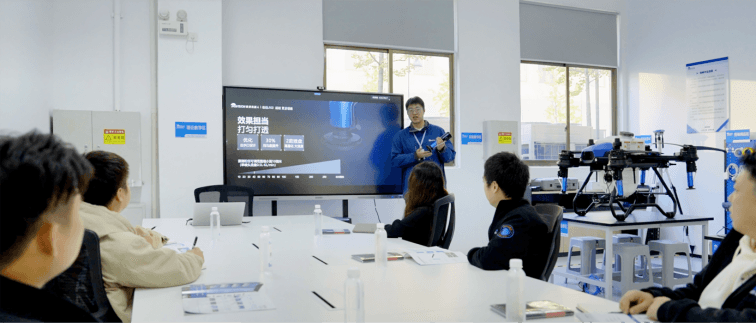
A scalable spray business needs product choice, training, parts, and after-sales support. Image source: EAVISION after-sales service page.
For solo operators and smaller service routes, the EAVISION J70 can be a practical entry platform. It is designed for flexible agricultural work and supports spraying, spreading, lifting, and mapping.
For larger farms, high-capacity routes, and service providers who need more daily output, the EAVISION J150 provides a 70 L spray tank, up to 40 L/min maximum flow rate, fast charging, and multi-scenario capability.
The EAVISION J100 can serve buyers who want a balanced platform with spraying, spreading, lifting, and mapping functions.
The best choice depends on your business model:
|
Business Goal |
Better Fit |
Why |
|
Solo operator, smaller fields, flexible service |
J70 |
Lower operational complexity and multi-task capability |
|
Larger farms and high-capacity spraying |
J150 |
Larger tank, higher flow rate, broader work capacity |
|
Mixed agricultural service platform |
J100 or J150 |
Spraying, spreading, lifting, and mapping in one system |
|
Dealer demonstration and training |
J70 plus J150 |
Show customers both entry and high-capacity workflows |
Choose the drone that fits your customers, not only your brochure.
Bottom Line
Starting a drone spraying business in 2026 is a real opportunity, but it is not just a drone purchase.
You need a business model, a legal operating path, pesticide certification awareness, insurance, trained operators, field-ready equipment, pricing discipline, customer trust, and support.
The strongest businesses will be the ones that combine professional spray quality with reliable operations. They will know their crops, document their jobs, maintain their equipment, and serve customers during the narrow windows when agriculture cannot wait.
Start small, build a repeatable workflow, and scale only when your compliance, training, pricing, and service quality can keep up.
FAQs
Is a drone spraying business profitable?
It can be profitable when there is strong local demand, proper licensing, efficient operations, realistic pricing, and good customer relationships. Profit depends on acreage, crop type, travel time, equipment cost, insurance, labor, maintenance, and seasonal utilization.
What licenses do I need to start a drone spraying business?
Requirements vary by location. In the United States, operators may need a Remote Pilot Certificate, drone registration, Part 137-related authorization or exemptions, pesticide applicator certification, business licensing, and insurance. Always verify requirements with aviation and pesticide authorities in the area where you operate.
Is Part 107 enough for drone spraying?
Usually not by itself. Part 107 covers small UAS operations, but dispensing or spraying substances from an aircraft may trigger Part 137 and other requirements. If the drone weighs 55 pounds or more at takeoff, the FAA's Section 44807 process may also be relevant.
What is the best drone for starting an agricultural spraying service?
The best drone depends on crop, acreage, terrain, budget, and crew size. Solo operators may prefer a flexible platform such as the EAVISION J70, while larger service routes may require a higher-capacity drone such as the EAVISION J150.
Can a drone spraying business offer services beyond spraying?
Yes. Depending on local demand and equipment, operators may also offer fertilizer spreading, seeding, mapping, lifting, aquaculture feeding, or disinfection services where permitted. Multi-use equipment can help increase seasonal revenue.