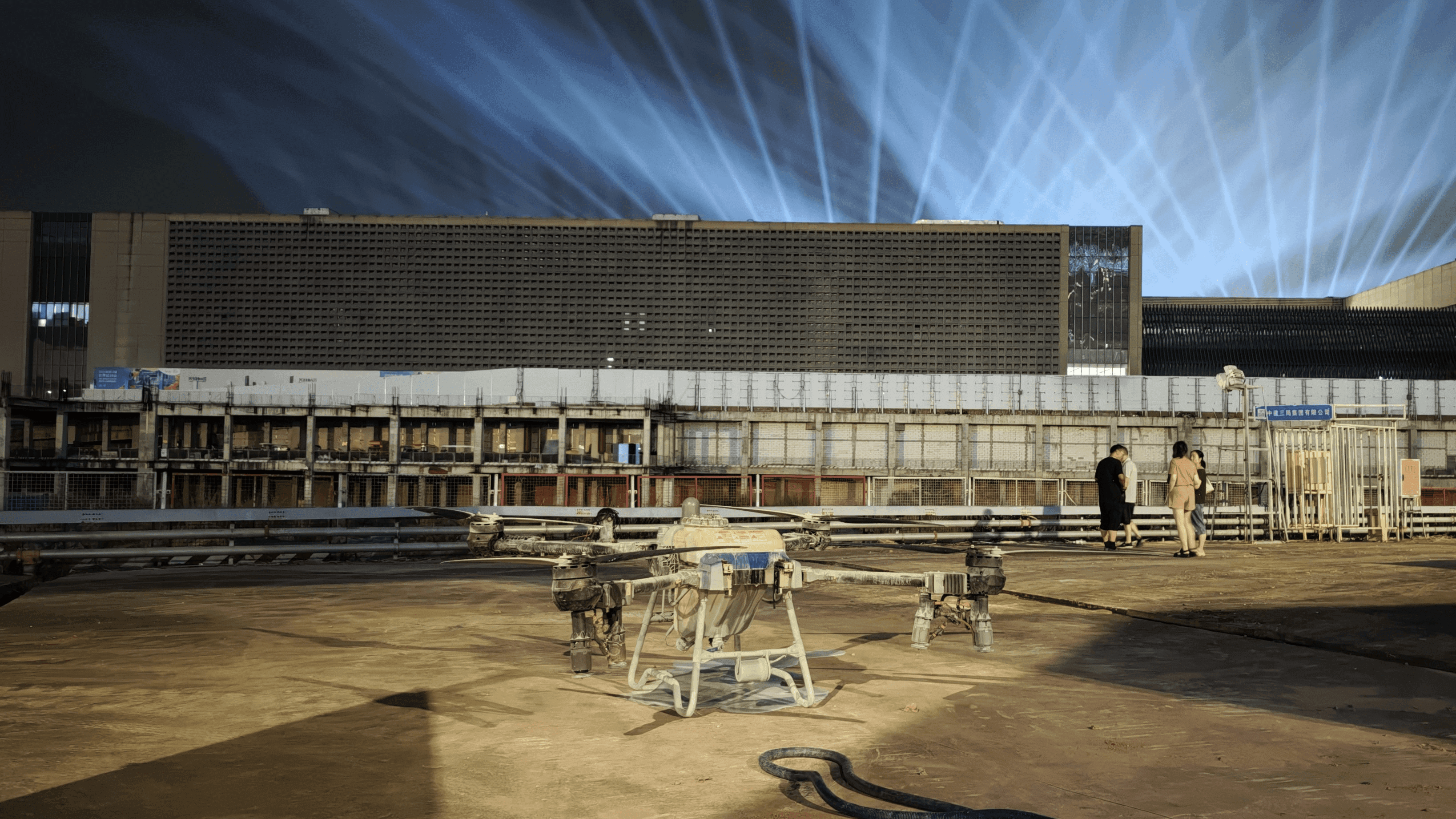
Waterproof Agricultural Drones: What IPX6K and IP67 Ratings Mean


A waterproof agricultural drone is not just a drone that can fly after a little rain. In real farm work, water exposure comes from many directions: spray liquid, tank residue, mud, humidity, crop moisture, field dust mixed with water, and daily wash-down after pesticide application.
That is why buyers often ask about IP ratings before choosing a spray drone. They want to know whether the aircraft can be cleaned safely, whether electronic modules are protected from dust and moisture, and whether the design can handle the harsh routine of agricultural spraying.
The terms can be confusing. IP67 sounds stronger than IPX6K because it has two numbers. IPX6K sounds specialized because of the "K." Some suppliers use the word waterproof loosely, while others list different ratings for modules, motors, sensors, batteries, and the entire aircraft.
This guide explains what IPX6K and IP67 mean, why both matter for agricultural drone maintenance, and how to evaluate a waterproof agricultural drone before purchase. It also explains how EAVISION applies this idea on the EAVISION J150, where the official specifications list module-level IP67 protection and aircraft-level IPX6K protection.
What an IP Rating Actually Tells You
An IP rating is an ingress protection rating. The IEC describes IP ratings as a system for grading how well an enclosure resists intrusion from dust and liquids. In simple terms, the rating tells buyers what kind of exposure a product was designed and tested to withstand.
Most IP ratings use two positions after the letters "IP":
|
Code Position |
What It Describes |
Example |
|
First digit |
Protection against solid objects and dust |
The "6" in IP67 |
|
Second digit |
Protection against liquids |
The "7" in IP67 |
|
X |
No rating or no data specified for that position |
The "X" in IPX6K |
|
K |
A higher-pressure variant used in some ISO 20653 water tests |
The "K" in IPX6K |
This matters because "waterproof" is not a single technical state. A device may resist rain but not immersion. Another device may resist temporary immersion but not high-pressure wash-down. A third may be protected against dust but not chemical residues. Buyers need to read the rating, the test context, and the manufacturer's maintenance instructions together.
For agricultural drones, the rating also has to be interpreted at the correct level. A supplier may rate the entire drone, only the control module, only the battery, or only a sensor enclosure. A serious buyer should ask exactly which parts are rated, how they were tested, and what cleaning practices are allowed.
Why Water Resistance Matters in Agriculture
Agricultural drones operate in conditions that are harsher than many consumer drone environments.
Spray drones carry liquid. They handle pesticides, fertilizers, biological products, adjuvants, water, dust, and crop residue. They may fly in rice fields, orchards, humid greenhouses, tropical crops, wet grass, muddy roads, and hot weather. After the job, operators need to remove residue before it dries around nozzles, pumps, sensors, landing gear, folding joints, connectors, and spray lines.
Water resistance affects the buyer in several ways:
- Cleaning efficiency: Operators can clean residue faster when the aircraft is designed for wash-down.
- Corrosion control: Residue and moisture can accelerate corrosion if cleaning is delayed or incomplete.
- Uptime: A drone that is easier to clean and inspect can return to work faster.
- Maintenance cost: Less residue buildup can reduce wear around pumps, nozzles, filters, and exposed hardware.
- Service life: Protected modules and a clean aircraft can support longer seasonal reliability.
- Safety: Better cleaning habits reduce chemical residue exposure for operators, transport crews, and service technicians.
The point is not to spray water anywhere without care. The point is to buy a drone whose protection level matches the real cleaning and maintenance workflow of farm operations.
IPX6K vs IP67: The Practical Difference
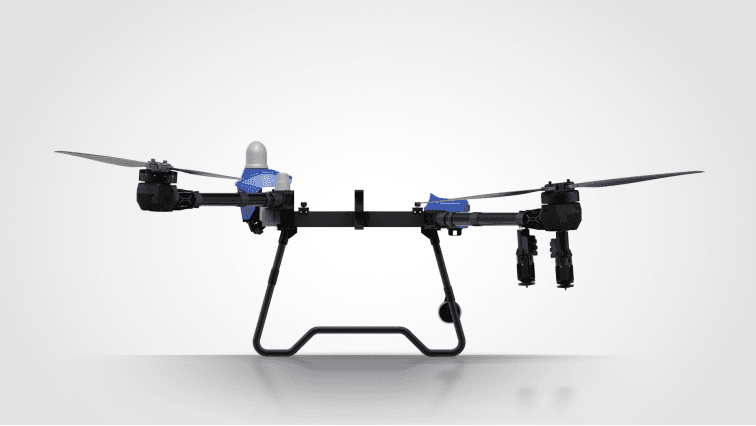
IPX6K and IP67 describe different protection concerns. They should not be treated as interchangeable.
|
Rating |
Plain-English Meaning |
Why It Matters for Spray Drones |
What It Does Not Automatically Mean |
|
IP67 |
Dust-tight plus temporary water immersion protection under defined test conditions |
Useful for modules that need protection from dust, residue, moisture, and accidental wet exposure |
Not proof of unlimited pressure washing, chemical resistance, or continuous underwater operation |
|
IPX6K |
Protection against strong high-velocity water jets with increased pressure under ISO 20653-style testing |
Relevant to wash-down, heavy water exposure, and cleaning routines |
The "X" means the solid-particle rating is not specified in that exact code; it does not describe every module unless stated |
Keystone Compliance's ISO 20653 summary describes 6K water protection as strong high-velocity water with increased pressure, and describes 7 as temporary immersion. This distinction is useful for agricultural drone buyers because cleaning is more often a jet or rinse scenario than a submersion scenario.
IP67 is still valuable. A module-level IP67 rating means the module is designed for dust-tight protection and temporary immersion conditions. In agriculture, dust is everywhere: dry soil, fertilizer particles, crop debris, pollen, and road dust. Dust protection is not cosmetic. It can affect cooling, connector health, sensors, and long-term reliability.
IPX6K, on the other hand, is especially relevant to wash-down. A drone may not need to be submerged, but it does need to survive repeated cleaning after spraying. That is why aircraft-level IPX6K can be a practical durability signal for agricultural work.
For the EAVISION J150, the official J150 specifications list "Modules IP67; Aircraft IPX6K." The J150 product page also highlights "IPX6K rated for full wash-down" and connects that design to minimizing corrosion and residue. That is the right way to frame the feature: not as magic waterproofing, but as a design choice that supports cleaning and seasonal maintenance.
What Waterproof Does Not Mean
The word waterproof can create false confidence if it is not explained carefully. A waterproof agricultural drone is still a precision machine. It has batteries, connectors, sensors, motors, pumps, nozzles, seals, fans, folding arms, and software-controlled electronics.
An IP rating does not mean:
- The drone can be submerged unless the relevant part is rated for that condition.
- Any chemical can be sprayed onto the aircraft without cleaning consequences.
- High-pressure cleaning is safe at any distance, angle, or nozzle type.
- Batteries, chargers, controllers, and accessories share the same rating as the aircraft.
- Seals never wear out.
- Damaged parts remain protected after a crash, hard landing, or improper repair.
- Operators can skip drying, inspection, or maintenance.
Water resistance is a protection layer, not a replacement for maintenance. Buyers should ask for the manufacturer's cleaning guidance and service schedule before building a field workflow.
Why IP Ratings Affect Total Cost of Ownership
Durability is not only a spec-sheet feature. It changes the economics of ownership.
Spray windows are short. If disease pressure, pest timing, or weather creates a narrow application window, downtime is expensive. A drone that takes too long to clean, has poor residue resistance, or needs frequent service may cost more over a season than its purchase price suggests.
This is why IP ratings connect directly to total cost of ownership. A durable design can support:
- Faster cleanup between jobs
- Lower corrosion risk
- Better service access
- More consistent flow and spray quality
- Fewer emergency repairs during peak season
- Better resale value if maintenance records are strong
EAVISION's existing total cost of ownership article already discusses maintenance, parts, service, and downtime. This article goes deeper into one specific part of that cost equation: water exposure and wash-down durability.
Maintenance After Spraying: A Practical Wash-Down Workflow
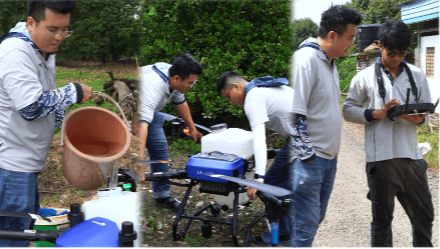
Always follow the product label, local pesticide rules, and the manufacturer's manual first. The workflow below is a practical maintenance framework for an IP-rated spray drone, not a replacement for official instructions.
1. Finish the Job With a Clean Shutdown
After landing, stop spraying, power down according to the manual, secure the aircraft, and remove or isolate power as instructed. Do not rush into cleaning while the aircraft is still armed, hot, or carrying electrical load.
2. Empty and Rinse the Spray System
Drain remaining liquid according to the product label and local regulations. Rinse the tank, hoses, filters, pumps, and nozzles using approved water volume and cleaning agents. Never dump pesticide residue into soil, drains, ponds, or public waterways.
3. Clean External Residue
Use the manufacturer's recommended wash-down method. For an IPX6K drone, the aircraft is designed for strong water-jet exposure under defined conditions, but that still does not mean unlimited pressure, harsh solvents, or careless cleaning. Keep the cleaning method controlled and avoid forcing water into openings beyond the intended design.
4. Inspect High-Residue Areas
Check areas where liquid and dust tend to collect:
- Nozzle bodies and atomizers
- Pump and flow-meter area
- Filter housings
- Landing gear
- Folding joints
- Motor mounts
- Sensor windows
- Battery bay and connector area
- Screws, seals, and exposed hardware
5. Dry Before Storage
Allow the aircraft to drain and dry before storage. Wipe key areas, inspect connectors, and keep batteries and chargers in a clean, dry environment. Do not trap moisture inside cases or vehicles.
6. Record Maintenance
Create a job record that includes crop, product, field conditions, cleaning performed, parts inspected, issues found, and any replacements. This helps operators spot recurring problems before they become downtime.
7. Replace Consumables on Schedule
Nozzles, filters, hoses, seals, propellers, and other consumables should be inspected and replaced before failure. IP protection helps, but it does not stop normal wear.
Buyer Checklist for Waterproof Agricultural Drones
Before purchasing a waterproof agricultural drone, ask these questions:
1. What is the IP rating of the whole aircraft?
2. What is the IP rating of the key modules?
3. Are the battery, controller, charger, sensors, pump system, and nozzles rated separately?
4. Which standard or test method was used for the rating?
5. Does the supplier explain the difference between IPX6K and IP67?
6. Is wash-down allowed after pesticide spraying?
7. What cleaning pressure, distance, nozzle type, and detergent are recommended?
8. What should not be sprayed directly?
9. Which parts must be dried before storage?
10. Which seals, filters, nozzles, and connectors are consumables?
11. How often should the aircraft be inspected during peak season?
12. Are original parts available locally?
13. Is there an authorized service station nearby?
14. Does training include post-spray cleaning and chemical residue handling?
15. How are warranty claims handled if water damage is suspected?
The strongest answer is not just "yes, it is waterproof." The strongest answer is a clear rating, a clear maintenance process, and a service system that can support the drone after purchase.
Conclusion
A waterproof agricultural drone should be evaluated by more than a marketing word. Buyers need to know which parts are protected, what the IP rating means, how the aircraft should be cleaned, and what support is available when parts wear out.
IP67 and IPX6K are both useful, but they answer different durability questions. IP67 helps explain dust-tight and temporary immersion protection for modules. IPX6K helps explain resistance to strong water jets with increased pressure, which is highly relevant for wash-down after spraying.
For agricultural drone buyers, the practical goal is uptime. The right drone should tolerate the field environment, support disciplined cleaning, reduce residue and corrosion risk, and fit into a realistic maintenance program.
That is why the EAVISION J150's combination of module IP67, aircraft IPX6K, full wash-down design, original parts, service support, and operator training is worth evaluating as part of the buying decision. A reliable spray drone is not only the one that flies well on day one. It is the one that can be cleaned, maintained, and kept working through the season.
FAQ
What does waterproof agricultural drone mean?
It usually means the drone has some level of water-resistance or ingress protection suitable for field exposure and cleaning. Buyers should look for specific IP ratings rather than relying on the word waterproof alone.
Is IPX6K better than IP67?
Not exactly. They describe different tests. IP67 includes dust-tight protection and temporary immersion conditions. IPX6K focuses on strong high-velocity water jets with increased pressure. For spray drone cleaning, IPX6K is especially relevant; for dust and module protection, IP67 is also important.
Why does wash-down matter after pesticide spraying?
Wash-down removes chemical residue, dust, mud, and crop debris. Good cleaning can reduce corrosion risk, clogging, cross-contamination, and service problems.
What IP rating does the EAVISION J150 have?
The official J150 specifications list Modules IP67 and Aircraft IPX6K. The J150 product page also highlights IPX6K-rated full wash-down for reducing corrosion and residue.
Does IP protection reduce maintenance?
It can reduce some maintenance risk, but it does not remove the need for inspection, cleaning, drying, consumable replacement, and service records.