Agricultural Drones in Mexico: Market Entry, Regulations, and Dealer Opportunity


The agricultural drone market in Mexico is exploding. The market hit USD 40.6 million in 2024 and is projected to reach USD 374 million by 2033, at a CAGR of 27.98%. For ag-tech brands, drone service providers, and prospective dealers, Mexico is one of the highest-potential entry points in all of Latin America right now.
This post breaks down the market opportunity, the regulatory landscape, and how you can get involved as a dealer partner.
Why Mexico Is a Top Market for Agricultural Drones
Mexico’s Agriculture Faces Labor Challenges
Mexico’s rural workforce is aging, and there’s a shortage of workers willing to spend long hours in the field exposed to agrochemicals. This labor gap is a key driver for drone adoption.
Rapid Growth of Drone Use
Drone use in Mexican agriculture is growing at an annual rate of 35%, aiming to increase productivity while reducing labor, water use, and chemical exposure. The market is projected to reach US$650 million within a decade.
Early Adoption and Market Potential
Adoption of drones in rural areas remains relatively low, meaning there’s a huge opportunity for growth. Mexico was the first Latin American country to adopt drones for agriculture, ahead of Argentina, Chile, and Colombia.
Infrastructure Is Ready, Hardware Access Is the Bottleneck
While awareness and infrastructure exist, broader access to the right drones and local dealer networks is still needed to scale adoption.
Key Crops and Regions Where Ag Drones Thrive
Mexico's farming map is diverse, and the drone opportunity touches almost every zone.
Crop production is concentrated in the states of Jalisco, Sinaloa, Michoacán, Guanajuato, Veracruz, and Sonora. Drones are currently used for corn, potatoes, sugarcane, berries, and agave, as well as orchards such as avocado, citrus, mango, and bananas, among others.
|
Region |
Top Crops |
Drone Use Case |
|
Sinaloa & Jalisco |
Corn, grains, and vegetables |
Field spraying, crop scouting |
|
Michoacán & Jalisco |
Avocados, berries |
Canopy-following spray, pest detection |
|
Sonora & Baja California |
Wheat, vegetables |
Precision spraying, mapping |
|
Veracruz & Chiapas |
Coffee, citrus, sugarcane |
Terrain-aware spraying on slopes |
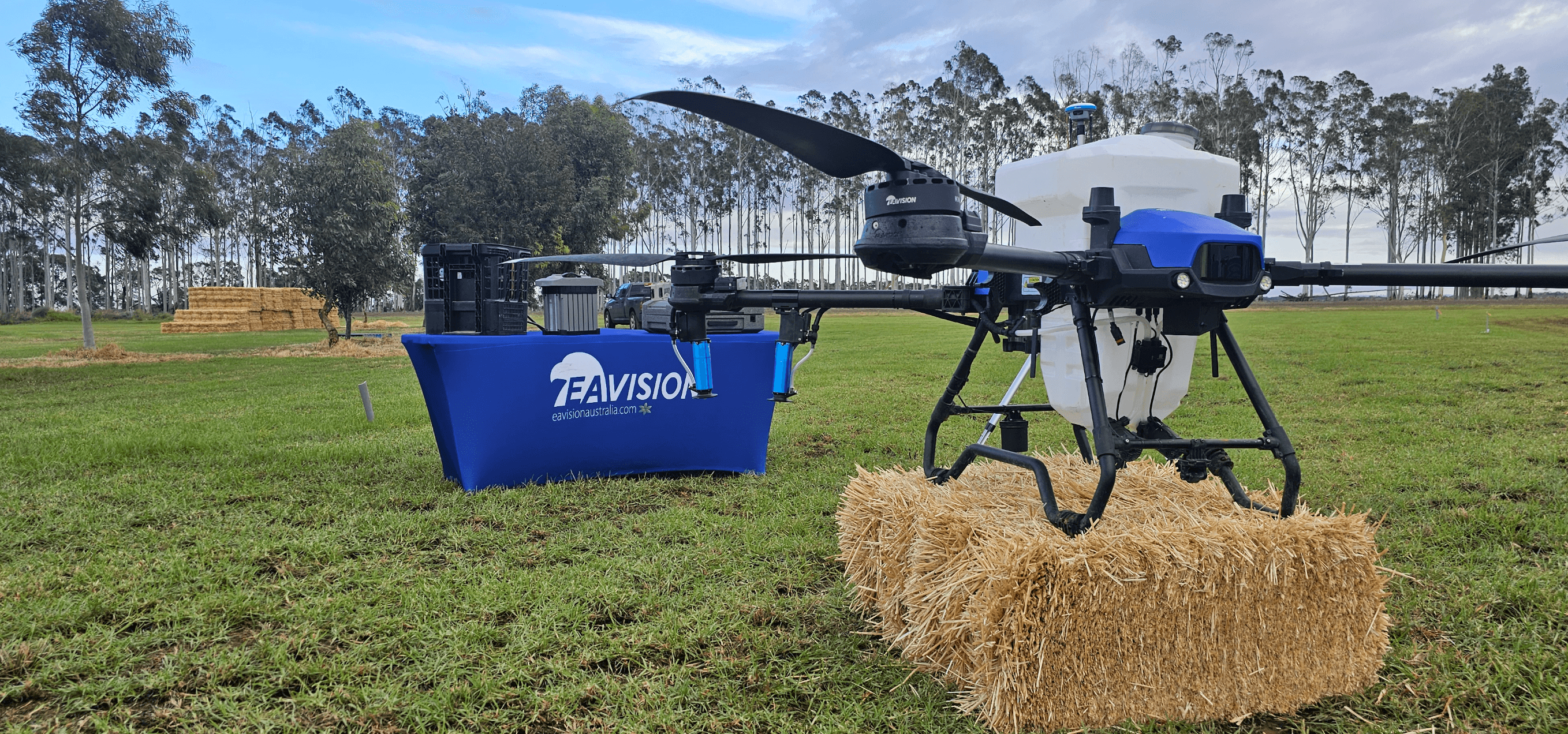
EAVISION drones are designed for exactly these scenarios. The EA-J150 covers everything from small hillside orchards to large flatland grain operations. The EA-J70, our latest single-operator model, is built for solo operation, which is a real advantage in a market where trained operators are still limited.
Mexico's Drone Regulations: What You Need to Know
Before you fly or sell, you need to understand the rules. Mexico's drone laws are regulated by the Agencia Federal de Aviación Civil (AFAC), with the main rules coming from the Mexican Official Standard NOM-107-SCT3-2019 and the mandatory circular CO AV-23/10 R4.
Here's a quick-reference breakdown:
- Registration: All drones with a maximum takeoff weight above 250g must be registered with AFAC before being flown.
- Licensing: Small and large RPAS operators must obtain a remote pilot certification and licence valid for three years.
- Agricultural spraying: Agricultural spraying or other specialised commercial activity typically needs additional authorization beyond basic registration.
- Over 25kg: Use of drones over 25kg requires both a pilot licence and a specific permit.
- Insurance: Commercial operators of small drones must have liability insurance.
A note for international companies: In practice, regulations are stricter for foreign visitors. Because registration and licensing procedures are designed for Mexican citizens, most non-residents are effectively limited to flying sub-250g drones for recreational purposes. This is exactly why having a local dealer or legal entity is so important for market entry. You can't just ship drones across the border and expect to operate — you need feet on the ground.
Mexico's updated drone laws create a more structured and competitive environment, encouraging responsible innovation while opening new opportunities for commercial operators and technology providers.
How to Become an EAVISION Dealer in Mexico
If you're an ag-tech distributor, farm equipment dealer, or drone service provider looking to expand into precision agriculture in Mexico, we're actively building our dealer network across Latin America. Becoming a partner just starts with a simple dealer application.
Key Takeaways
- Mexico's agricultural drone market is projected to grow roughly 28–35% annually, with massive headroom in underserved rural regions.
- Crops like corn, avocado, citrus, agave, and sugarcane across states like Jalisco, Sinaloa, and Michoacán are prime drone spraying territory.
- AFAC regulations require registration, licensing, and insurance for commercial ag drone operations, making local partnerships non-negotiable for foreign brands.
- EAVISION's terrain-aware, precision spraying drones are built for the exact crops and conditions found across Mexico.
- Dealer opportunities are open now for qualified partners across Latin America.
FAQs
Are agricultural drones legal in Mexico?
Yes. Civil drone operations are legal in Mexico as long as pilots comply with NOM-107-SCT3-2019, register with AFAC when required, respect altitude and distance limits, and stay clear of restricted areas. Commercial agricultural spraying does require additional authorization and a valid pilot certification.
What crops benefit most from drone spraying in Mexico?
With different types of drones, more than 300 types of crops can be treated. In Mexico, drones are currently used for corn, potatoes, sugarcane, berries, and agave, as well as orchards such as avocado, citrus, mango, and bananas. Hillside orchards and dense-canopy crops see the biggest efficiency gains.
Can a foreign company sell agricultural drones in Mexico?
Yes, but you'll need local infrastructure. Only a Mexican citizen can register or request flight permits in Mexican airspace. This means foreign brands should work through authorized local dealers or establish a Mexican business entity to operate legally.
How do I become an EAVISION dealer in Mexico or Latin America?
Visit the EAVISION dealer application page to start the process. Fill in your information, and our team will follow up with you directly.