Agricultural Drones in North America: Where Drone Spraying Is Growing Fastest


The agricultural drone market in North America is accelerating rapidly, far beyond what was predicted even three years ago. The global agriculture drones market was valued at USD 3.37 billion in 2025 and is projected to reach USD 21.59 billion by 2033, growing at a CAGR of 26.5%. And North America is right at the center of it.
Growers who once dismissed drone spraying as a novelty are now asking when they should add it to their operations, not if. Here's where the momentum is strongest, what's driving it, and how to stay ahead.
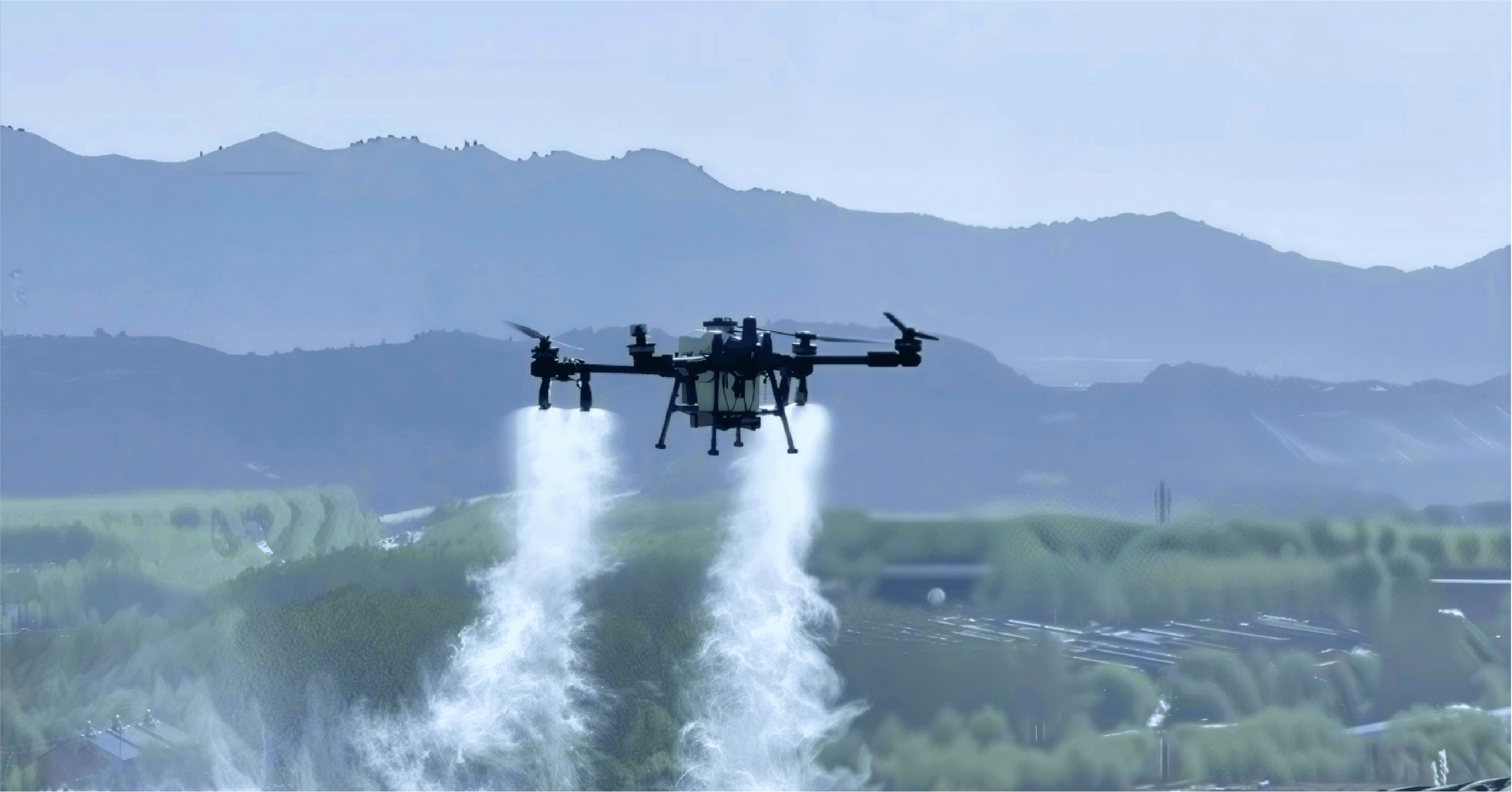
North America Now Owns a Third of the Global Market
Let's start with the numbers, because they tell a clear story. North America's agriculture drone market dominated with the largest revenue share of 33.5% in 2025. The United States holds a substantial share of the North American agricultural drone market, accounting for 76.80% in 2025.
Why such a lead?
A few things are working in tandem:
- Advanced drone technology adoption
- Rapid growth of precision agriculture
- Supportive regulatory frameworks (e.g., FAA approvals)
The region also benefits from scale. With a large number of farms, demand is fueled by large commercial operations that rely on data-driven farming to improve yields and efficiency.
Growth Beyond the U.S.
And it's not just the U.S. As drone technology becomes more affordable and accessible, other countries in the region, such as Canada and Mexico, are also seeing increasing adoption of agricultural drones.
If you're evaluating agricultural spraying drones for your fleet, the timing couldn't be better. Market infrastructure, from dealer networks and FAA pathways to trained pilots, is finally catching up with the technology.
What's Actually Driving the Boom
Three forces keep showing up in the data:
- Labor shortages aren't going away: Labor shortages in the agricultural sector are becoming a pressing issue. A single spray drone can cover 10–25 acres per hour, roughly matching the output of 30 to 100 workers spraying manually. That math is hard to ignore when you can't fill seasonal positions.
- Precision spraying saves real money: Agriculture drones enable farmers to monitor crops more closely, reduce synthetic inputs, and employ targeted spraying methods that minimize chemical usage. We see this with our own EA-J150 spray and spread drone, which handles both liquid and granular applications across large-scale operations. Growers using it report less product waste and more even coverage, especially on uneven terrain.
- Regulations are opening up, not closing down: The FAA's Part 107 regulation, along with incremental beyond visual line of sight (BVLOS) waivers, facilitates the deployment of multi-drone fleets on large-scale commercial farms. With approvals for BVLOS operations, nighttime flights, and higher altitude clearances, large-scale farming becomes more efficient.
What Smart Operators Are Choosing Right Now
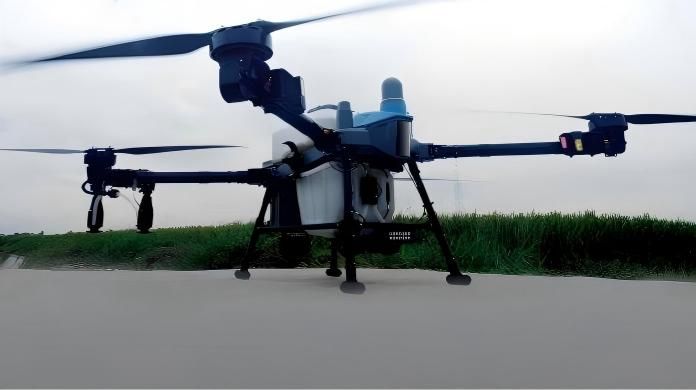
For operators working across fruit orchards, rice paddies, or cotton fields, the right fit depends on acreage and crop type. Our EA-J70 agricultural drone is built for solo operators managing smaller blocks, such as orchards, hillside plots, and specialty crops, where maneuverability matters more than raw tank size. For larger grain and row-crop operations, the EA-J150 handles heavier payloads with autonomous route planning.
Both models use EAVISION's 3D terrain mapping and canopy-following technology, with adjustable droplet sizes from 10 to 300μm. That kind of precision is what separates targeted pest control from just dumping product.
Where We Go From Here
Improvements in battery life, payload capacity, and artificial intelligence could make agricultural drones even more versatile in the coming years. The increasing adoption of DaaS (Drone-as-a-Service) models is helping small and mid-sized farms access high-tech solutions without heavy upfront investments.
Honestly, the biggest risk right now isn't adopting too early. It's waiting too long and watching competitors or neighboring farms pull ahead.
If you're ready to explore what an agricultural drone partnership could look like in your region, apply to become an EAVISION dealer. We're actively building distribution across North America, Latin America, Southeast Asia, and Southern Europe.
Key Takeaways
- North America commands roughly a third of the global agricultural drone market and is growing at over 26% CAGR.
- The U.S. leads regionally, but Canada, Mexico, Brazil, and Southeast Asian markets are right behind.
- FAA regulations are complex but increasingly navigable as BVLOS and nighttime operations expand access.
- Labor shortages and precision-spraying ROI are the two biggest drivers.
- Choosing the right drone platform for your crop type and scale matters more than ever.
FAQs
Is North America the biggest market for agricultural drones?
Yes. North America dominated the global agriculture drones market with the largest revenue share of over 33.5% in 2025. The U.S. alone accounts for more than three-quarters of the regional market.
Are agricultural drones legal for spraying crops in the U.S.?
Yes. Agricultural drones are legal in the U.S. when operated under FAA regulations. Operators must follow Part 107 rules, and spray-specific operations must also comply with Part 137 requirements.
Where is drone spraying adoption growing fastest outside North America?
There's been widespread adoption in China, Latin America, and Southeast Asia. Brazil, Thailand, and India are especially active, driven by labor shortages, government subsidies, and expanding dealer networks.