American-Made vs Imported Spray Drones: What Buyers Should Compare


Introduction
Buyers searching for american made spray drones are usually asking a bigger question than country of origin. They want to know whether a drone will be legal to operate, easy to support, available during spray season, secure enough for their organization, and productive enough to justify the investment.
That is a reasonable concern. Spray drones are not hobby aircraft. They carry liquid or granular material, work near crops and people, rely on batteries and software, and may need aviation approvals, pesticide licensing, insurance, maintenance, and trained operators. A drone that looks affordable on the quote can become expensive if parts are slow, documentation is weak, or local support is missing.
The American-made vs imported question is important, but it should not be the only question. A domestic platform may be the best fit for some government, public-sector, or procurement-sensitive buyers. An imported agricultural drone may be the better fit for some farm operators if it offers stronger field performance, mature spraying technology, dealer support, and lower operating cost.
This guide gives North America buyers a neutral comparison framework. Instead of asking only where the drone is made, compare compliance documentation, spray performance, parts, training, service response, and total cost of ownership.
What American-Made Can Mean
"American-made" can mean several different things. Buyers should not assume every supplier uses the phrase the same way.
It may mean:
- Final assembly in the United States
- Major components sourced from the United States
- U.S.-owned company
- U.S.-designed aircraft
- NDAA-compliant supply chain
- Blue UAS cleared platform
- Buy American or domestic end product status
- Local dealer support in the United States
Those are not the same. A drone could be assembled in the United States with imported components. Another drone could be designed in the United States but manufactured elsewhere. Another could be compliant for a certain government procurement pathway without being the highest-performing agricultural sprayer.
If origin matters to your purchase, ask for documentation rather than a slogan.
Useful questions include:
1. Where is final assembly performed?
2. Where are the flight controller, camera, radio, batteries, charger, and propulsion components sourced?
3. Is the platform eligible for your procurement program?
4. Is it listed on any government-approved or cleared list relevant to your purchase?
5. Does the supplier provide country-of-origin documents?
6. Does the supplier provide cybersecurity, data, and component documentation?
7. Are replacement parts subject to the same origin requirements?
The phrase "American-made" can be useful, but only when it is supported by the documents your buyer type actually needs.
What Imported Agricultural Drones Can Offer
Imported agricultural drones should not be judged only by origin either. Many imported platforms come from companies with years of agricultural spraying experience, large installed bases, mature nozzle systems, fast charging, high payloads, and field-tested software.
Imported agricultural drones may offer:
- Larger spray tanks or higher payload options
- Mature application workflows in rice, orchards, cotton, tea, and other crops
- Proven terrain-following and canopy-following technology
- Competitive package pricing
- Strong battery and charger systems
- Specialized nozzles and droplet control
- Global service experience
- Broad dealer training programs
The risk is not "imported" by itself. The risk is buying an imported drone without local documentation, parts, training, and service. A strong imported platform can be a serious choice when the supplier has a clear support plan. A weak imported platform can become downtime with wings.
The same is true for domestic options. A domestic company with limited agricultural spraying experience, poor parts stocking, or weak field support may not outperform a better-supported imported option.
Compliance: The First Gate for North America Buyers
Before comparing payload, tank size, or price, North America buyers should confirm whether the drone can legally do the intended work.
In the United States, commercial drone operations generally involve FAA rules. Spray operations also raise additional issues because the drone is dispensing material. The FAA's UAS agricultural dispensing page explains that 14 CFR Part 137 governs the use of aircraft, including drones, to dispense or spray substances. The FAA Remote ID page states that pilots required to register must operate according to the Remote ID rule.
For agricultural spraying, buyers should ask:
- Does the drone support Remote ID requirements?
- What FAA operating path is needed for the aircraft weight and mission?
- Does the operation require Part 107, Part 137, Section 44807, or other approvals?
- Does the product label allow aerial application by drone?
- What state pesticide applicator licenses are required?
- What insurance documentation will be needed?
- Does the supplier provide technical documents for applications, inspections, or exemptions?
Country of origin does not replace these operational requirements. An American-made spray drone still needs the right operating approvals. An imported agricultural drone also needs documentation and a legal pathway.
For government or federally funded buyers, procurement rules may add another layer. The Blue UAS Cleared List is a government-focused pathway for vetted platforms, and the Defense Innovation Unit notes that the Blue UAS list is transitioning to the Defense Contract Management Agency. FAR 52.240-1 addresses restrictions involving unmanned aircraft systems manufactured or assembled by American Security Drone Act-covered foreign entities.
That does not mean every private farm must buy from the Blue UAS list. It means public-sector buyers, federal contractors, and grant-funded projects need to check their specific procurement obligations before evaluating imported or domestic platforms.
Compare Performance Before You Compare Labels
Once the drone can legally fit the buyer's use case, compare field performance.
Spray drones are agricultural machines. The best drone is the one that can apply the right material at the right time with acceptable coverage, drift control, route accuracy, and uptime.
Compare these performance factors:
|
Performance Factor |
Why It Matters |
|
Spray tank capacity |
Controls refill frequency and route length |
|
Flow rate |
Determines whether the drone can meet application volume at operating speed |
|
Spray width |
Influences acres per hour, but only if coverage remains acceptable |
|
Droplet size control |
Affects coverage, penetration, and drift management |
|
Nozzle design |
Impacts reliability, droplet spectrum, and maintenance |
|
Terrain following |
Critical for orchards, hillsides, uneven ground, and complex fields |
|
Obstacle avoidance |
Reduces risk around trees, wires, poles, terraces, and farm structures |
|
Battery and charger system |
Controls real daily productivity, not just flight minutes |
|
Route planning |
Reduces misses, overlaps, and operator workload |
|
Mapping workflow |
Helps create field boundaries and repeatable operations |
|
Wash-down durability |
Supports post-spray cleaning and corrosion control |
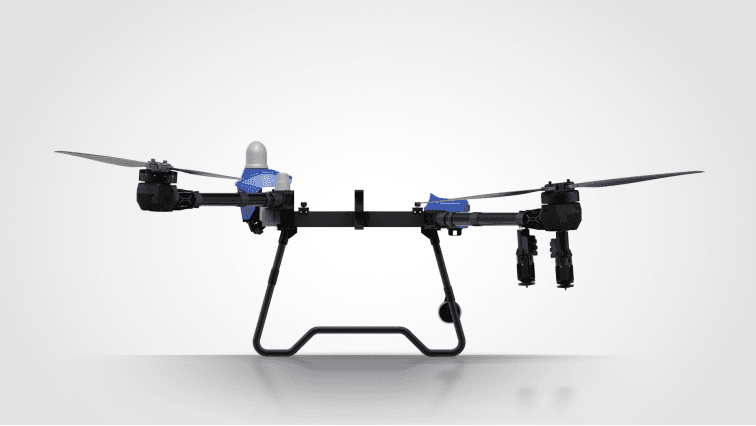
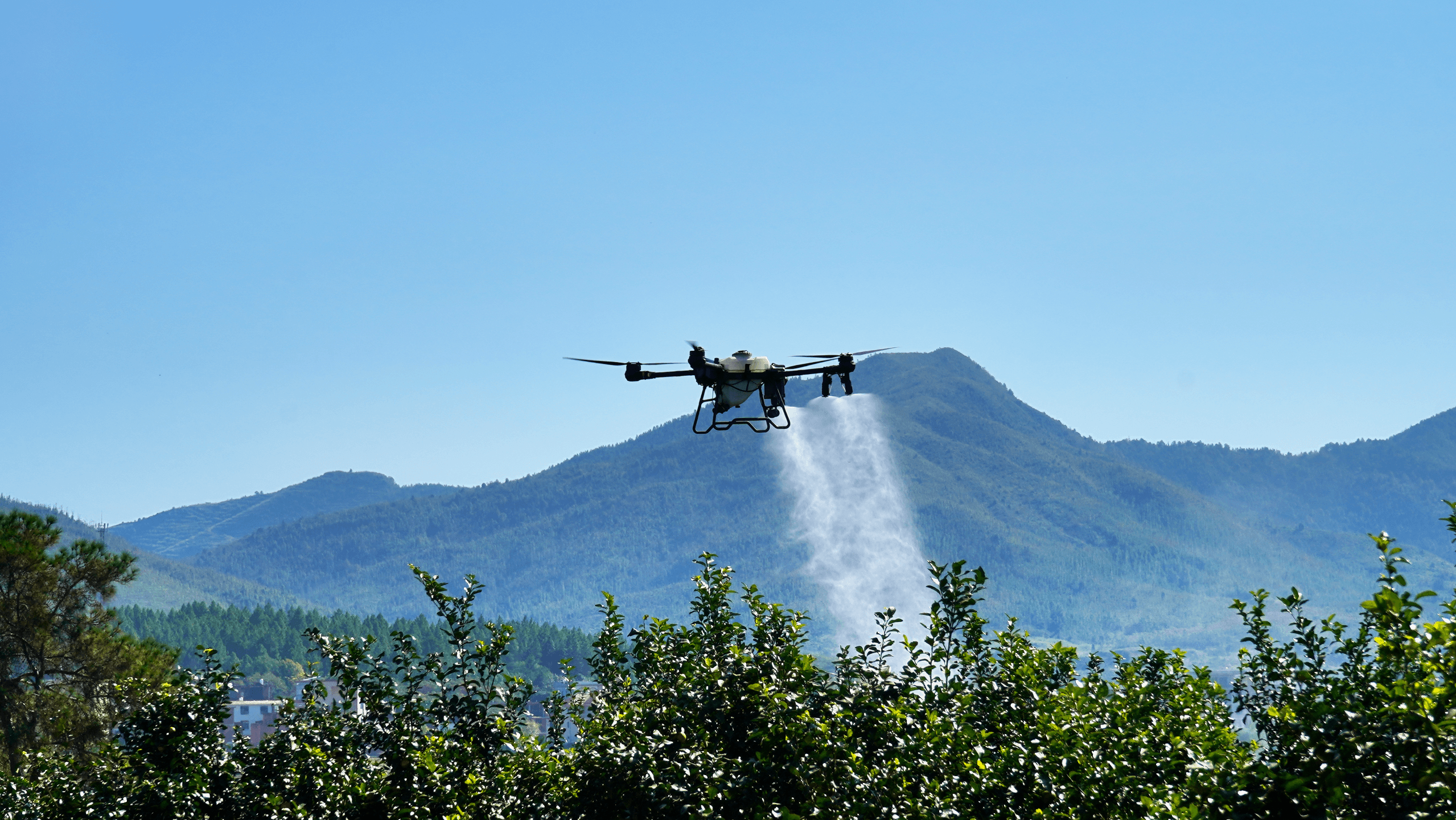
EAVISION's J150 gives buyers a useful example of what to look for in a performance review. Its product page lists a 70 L spray tank, 40 L/min maximum flow rate, up to 15 m effective spray width, 10-300 um droplet size, and multiple crop scenarios. The same page highlights intelligent route planning, built-in aerial mapping, obstacle avoidance, hybrid droplet technology, and full-day battery rotation.
Those features matter because the drone has to work in actual fields, not only in a spec table.
Support and Parts: The Deciding Factor During Spray Season
Spray drone support is often the deciding factor after the first season.
A buyer may compare american made spray drones and imported agricultural drones by price, payload, or brand. But when a pump fails, a nozzle clogs, a propeller breaks, or a charger error stops the operation, the winning supplier is the one that can get the machine working again.
Strong spray drone support includes:
- Local or regional parts availability
- Authorized service stations
- Original parts
- Clear warranty process
- Technical support channels
- Repair turnaround expectations
- Operator training
- Maintenance documents
- Battery and charger support
- Seasonal readiness checks
EAVISION’s after-sales system includes a global service network with authorized service stations, original parts, online parts support, training resources, remote technical guidance, and 24/7 online customer service. For North America buyers, the practical question is how those resources are delivered in the buyer's region. Ask who stocks parts, who trains operators, and who answers during the spray window.
Imported does not have to mean unsupported. American-made does not automatically mean well supported. The buyer has to verify the service network.
Training, Documentation, and Dealer Readiness
Training is where many drone purchases succeed or fail.
Agricultural drone spraying is not just flying. Operators must understand:
- Field mapping
- Route setup
- Application volume
- Flow rate
- Droplet size
- Drift conditions
- Battery rotation
- Nozzle cleaning
- Calibration
- Emergency procedures
- Pesticide label restrictions
- Job records
A good dealer or manufacturer should provide training that covers both the aircraft and the agricultural workflow. This is especially important for imported agricultural drones because language, documentation quality, service expectations, and regional compliance support can vary widely by brand.
Ask for:
1. English technical manuals
2. Maintenance schedules
3. Calibration guides
4. Parts catalogs
5. Safety documentation
6. Warranty terms
7. Training materials
8. Compliance support documents
9. Recommended spare parts list
10. Field setup checklist
If a supplier cannot provide clear documentation before purchase, support may not improve after purchase.
Total Cost of Ownership: Price Is Not the Whole Story
A cheaper quote is not always a cheaper drone. A more expensive domestic package is not always safer. Total cost of ownership depends on how the drone performs and how quickly it can be supported.
Compare TCO categories:
|
TCO Category |
What to Ask |
|
Drone package |
What is included: aircraft, controller, batteries, charger, generator, RTK, nozzles? |
|
Batteries |
How many are needed for full-day work, and what is replacement cost? |
|
Charger and power |
Is a generator required, and what charging speed is realistic? |
|
Consumables |
Nozzles, filters, hoses, seals, propellers, pumps, landing gear |
|
Service |
Labor cost, travel cost, authorized service availability |
|
Downtime |
What is the cost if the drone misses a spray window? |
|
Training |
Initial training, refresher training, dealer training |
|
Compliance |
FAA, pesticide licensing, insurance, documentation |
|
Software |
Mapping, route planning, data, subscriptions |
|
Resale value |
Parts availability, brand reputation, service records |
EAVISION's total cost of ownership article frames this well: the most expensive drone may be the one that sits idle when the crop needs spraying. This is especially true in North America, where spray timing can be narrow and custom applicators are judged by reliability.
Conclusion
The American-made vs imported spray drone question is real, but it is only the beginning of the buying process.
For some buyers, American-made status, Blue UAS status, or federal procurement compliance may be mandatory. For others, the decisive issue may be crop coverage, flow rate, battery rotation, service response, parts availability, or total cost per acre.
The strongest buying process is evidence-based. Ask for compliance documents. Confirm the operating path. Test the drone in your crop. Verify the parts network. Review the training program. Compare three-year ownership cost. Then decide which platform gives your operation the best combination of legal fit, field performance, uptime, and support.
That is how North America buyers should compare american made spray drones, imported agricultural drones, and the agricultural drone companies behind them.
FAQ
Are American-made spray drones always better?
No. American-made spray drones may be the right choice for certain government, public-sector, or procurement-sensitive buyers, but private farm buyers should also compare performance, parts, support, training, and total cost.
Are imported agricultural drones legal in the United States?
Imported agricultural drones can be legal when operated under the correct FAA, pesticide, registration, Remote ID, and state requirements. Buyers should confirm current rules, aircraft documentation, and any procurement restrictions before purchase.
Why does spray drone support matter so much?
Spray windows can be short. If a drone is down during a disease or pest-control window, the cost can exceed the repair bill. Parts, service, training, and technical support directly affect uptime.
How should dealers compare agricultural drone companies?
Dealers should compare product range, support response, parts margins, training quality, warranty process, crop coverage, compliance documents, and brand demand in their region.
Where does EAVISION fit in this comparison?
EAVISION fits as a global agricultural drone supplier focused on high-capacity spraying, canopy coverage, autonomous operation, battery workflow, wash-down durability, training, parts, and after-sales support. Buyers should compare EAVISION against domestic and imported alternatives using the same decision matrix.