Drone Battery Management System: Why It Matters


A drone battery management system (BMS) is the one component most operators don‘t think about. That changes fast when an aircraft drops out of the sky mid-spray. Battery failure is one of the most common causes of agricultural drone downtime. In agriculture, where drones carry 20–40 L payloads at low altitude over crops worth thousands per hectare, the stakes are high. A failed pack doesn’t just end a flight. It can mean lost spray coverage, a damaged aircraft, or a chemical spill that nobody planned for.
Here's why the drone battery management system inside your aircraft matters more than almost any other spec on the sheet. We'll also walk through what to look for when you're evaluating your next fleet purchase.
What a Drone Battery Management System Does
A BMS isn't a single part. It's an embedded intelligence layer that sits between your lithium polymer cells and the flight controller, doing several things at once:
- Per-cell voltage monitoring that tracks each cell individually, not just the pack average
- Active cell balancing that moves energy from stronger cells to weaker ones in real time
- Thermal protection that shuts down or throttles charge/discharge when temperatures spike
- Abnormal-use logging that records events like overcurrent, high-temperature charging, or long-term storage at high charge levels
Without it, a 6S or 12S battery pack is basically a ticking clock. Voltage drift between cells is inevitable, and it gets worse every cycle. One weak cell drops to 3.2 V while the others sit at 3.7 V, and the whole pack either cuts out mid-mission or that weak cell gets permanently damaged. Either way, you lose money.
Why Agriculture Is the Hardest Use Case for Drone Batteries
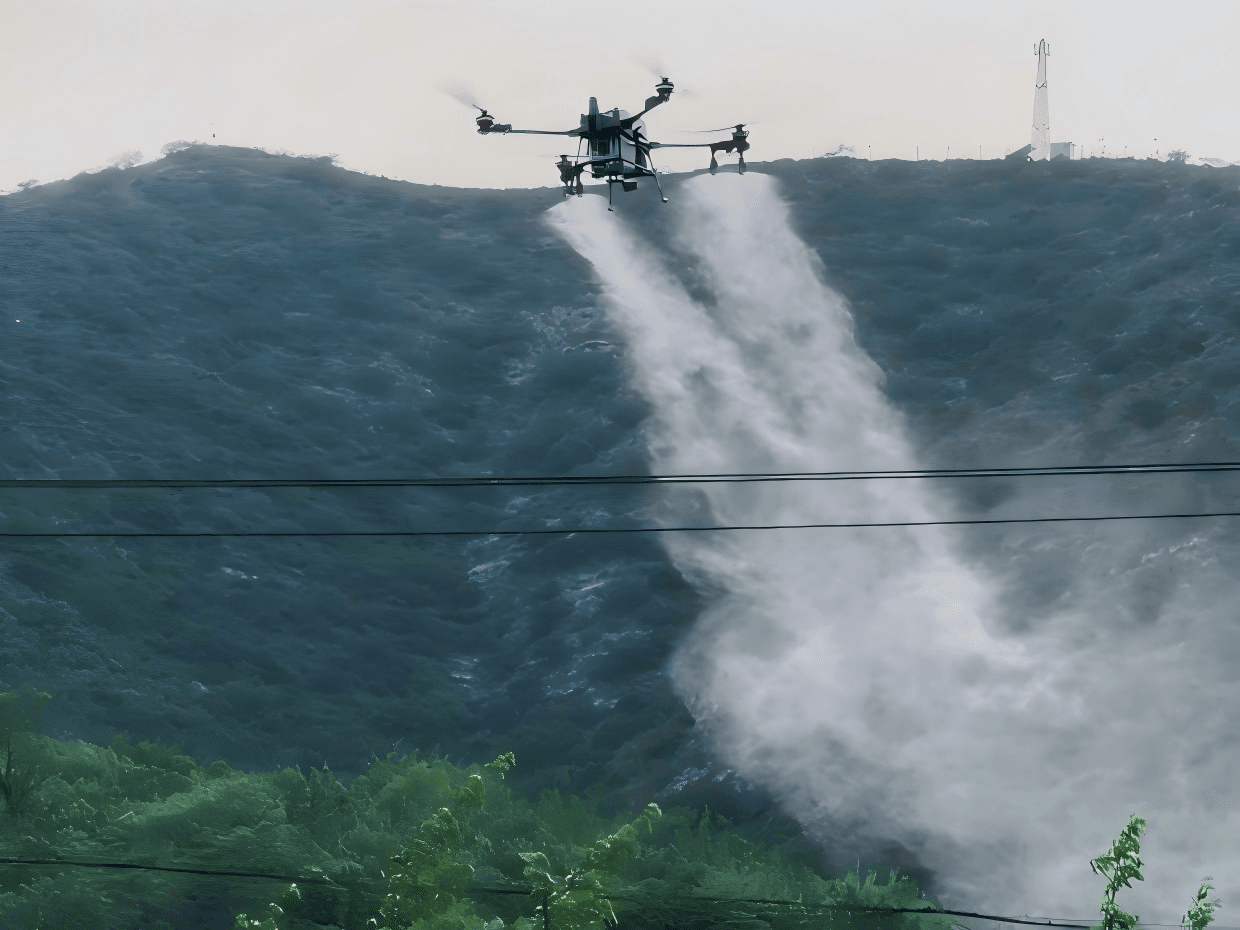
Crop spraying drones don't fly like survey or inspection drones. They fly low, slow, and heavy. A fully loaded EA-J150 agricultural drone can carry up to 70 L of liquid or 80 kg of granular material, and it needs to hold a consistent spray pattern across uneven terrain for 12–15 minutes per sortie.
That creates a flat discharge curve. Here's the thing: a flat discharge curve makes it really hard to tell the difference between a healthy pack at 30% state-of-charge and a degraded pack that's about to sag. Without active balancing built into the BMS, agricultural operators routinely over-discharge the weakest cell without knowing it. The result? Packs that die in under 100 cycles instead of lasting 400+.
Add environmental stress on top of that. Cold mornings in the highlands of Southeast Asia or Southern Europe can cut battery capacity by up to 25%. Hot afternoons in Latin America or South Africa push cell temperatures past safe limits. A good BMS for drones handles both extremes by adjusting charge rates, flagging thermal anomalies, and giving the operator real data instead of guesswork.
How EAVISION Approaches Battery Management
We didn't want to bolt on a third-party BMS and call it a day. Our approach across models like the J150, J100, and J70 starts at the cell level with what we call CTB (Cell-to-Body) integrated shell-core super-charging architecture.
Here's what that means in practice:
|
Feature |
What It Does |
Why It Matters |
|
Blade-style cell layout |
Each cell has independent heat dissipation |
7× more cooling surface area vs. traditional packs |
|
Dual-interface design |
Separate ports for charging and discharging |
Prevents connector overheating in 40 °C (104 °F) operations |
|
Abnormal-use recording |
Logs overcurrent, temp spikes, storage issues |
Lets you catch degradation before it causes a failure |
|
Remote battery telemetry |
Real-time status on the controller screen |
Monitor charging of your second battery while flying the first |
|
Backup battery module |
Powers avionics during main battery swap |
No reboot and no self-check delay. Just swap and go. |
That last point is worth pausing on. Most ag drone operators rotate 2–3 batteries per aircraft. Every time you swap a battery on a conventional drone, you wait 60–90 seconds for a system reboot. Over a 10-hour spray day with 40+ swaps, that's over an hour of dead time. Our backup battery keeps the entire flight system live during the swap, so you're back in the air in seconds.
And with our 9,000 W cooling charger pushing a full charge in under 9 minutes, a two-battery rotation is enough to keep operations continuous even in extreme heat. That's a meaningful difference when you're racing against a pest-control window or trying to get fertilizer down before rain.
The Real Cost of Ignoring Battery Health
Battery replacement is one of the biggest recurring costs in any drone operation. A single agricultural drone battery pack can run $800–$1,500 depending on capacity. If your BMS isn't balancing cells properly, you might burn through packs 3–4× faster than you should.
But the hidden cost is downtime. A battery failure mid-flight doesn't just risk the aircraft. It halts the entire operation. For commercial agricultural drone solutions like spraying, spreading, and lifting, that can mean missed application windows, crop damage, and unhappy clients.
Quick math: If a well-managed BMS extends pack life from 100 cycles to 400 cycles, and you're running 3 packs per drone at $1,200 each, that's $10,800 saved per aircraft over two seasons. Across a 5-drone fleet, you're looking at $54,000 in avoided battery costs alone.
What to Look for When Evaluating a Drone BMS
Not all battery management systems are equal. If you're comparing agricultural drone platforms, or if you're considering becoming an dealer partner, here are the specs that actually matter:
- Per-cell monitoring, not just pack-level voltage
- Active balancing during discharge, not only during charging
- At least 3 thermal sensors for packs over 10 Ah
- Abnormal event logging accessible through the app or controller
- Modular, repairable battery design, because field repairs save weeks of downtime
- Charger compatibility with both mains power and generators (important for remote farm locations)
If the manufacturer can't tell you exactly what their BMS does at the cell level, that's a red flag.
FAQs
What is a drone battery management system?
A BMS is an onboard electronic system that monitors and protects each cell in your drone's lithium polymer battery pack during flight. It tracks voltage, temperature, and current in real time, prevents overcharging or over-discharging, and balances energy between cells. Unlike a balance charger (which only works on the ground), a BMS protects the pack while you're actually flying.
How long do agricultural drone batteries last with proper BMS management?
With active cell balancing and proper thermal management, most LiPo packs in ag drones last 400–560 cycles. Without a good BMS, that number can drop below 100 cycles. EAVISION's J150 batteries, for example, are rated for up to 560 cycles or 12 months of service, whichever comes first.
Can extreme temperatures affect drone battery performance?
Yes. Cold conditions (below 10 °C) can reduce usable capacity by up to 25%, while heat above 40 °C accelerates cell degradation. A good BMS adjusts charge and discharge behavior based on real-time temperature data. EAVISION's CTB battery design includes 7× more heat dissipation surface and dual charge/discharge ports to handle high-temperature operations.
Why does EAVISION use a backup battery in its drones?
The backup battery powers the drone's avionics and flight controller while you swap the main battery. This removes the 60–90-second reboot wait that most drones need after a battery change. Over a full spray day with 40+ battery swaps, this saves over an hour of downtime.