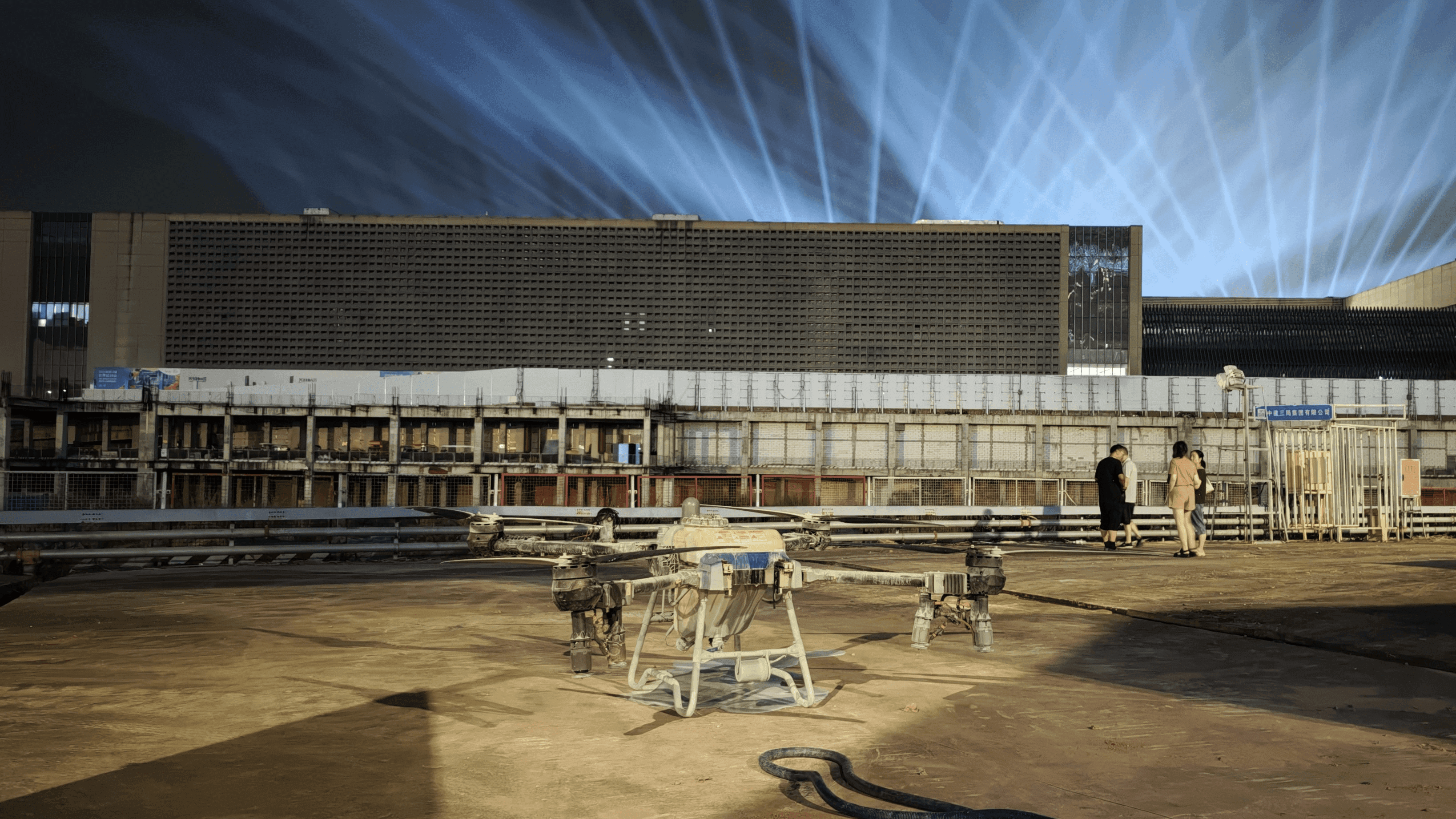
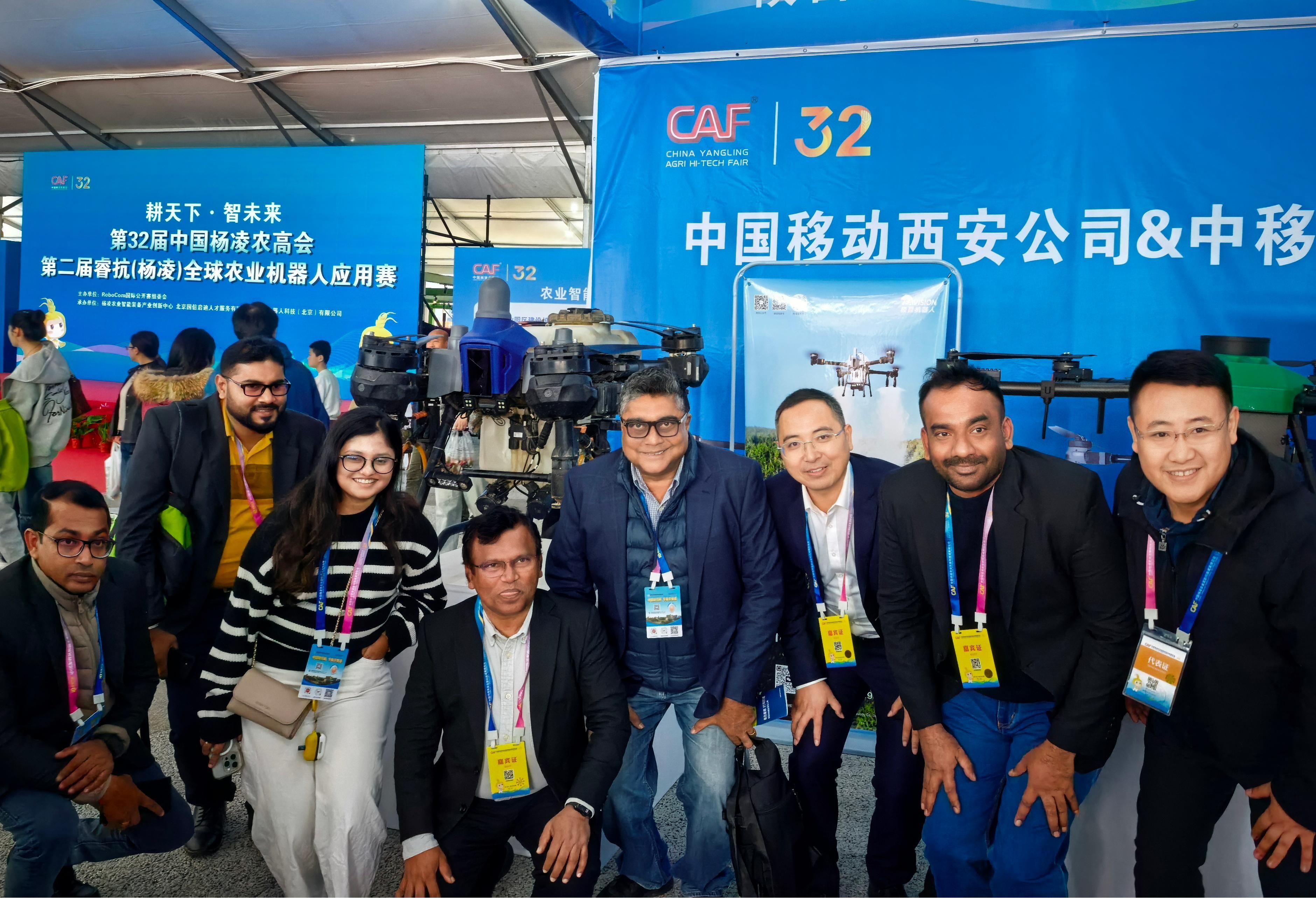
Is a Drone for Spreading Fertilizer Worth It?


Thinking about buying a drone for spreading fertilizer? It can be a smart investment, but only if you use it enough.
A drone makes sense when farm labor is expensive, fields are hard to reach, or wet ground keeps traditional equipment out. It can help you apply fertilizer at the right time and cover enough acres to justify the cost.
But if you only have a few simple jobs each year, buying one may not pay off. A reliable local contractor could be cheaper and easier.
The drone itself can spread granules just fine. The bigger question is whether the full setup saves you money or helps protect your yield. Be sure to count all the costs, including batteries, charging, transport, training, maintenance, loading time, permits, and possible weather delays.
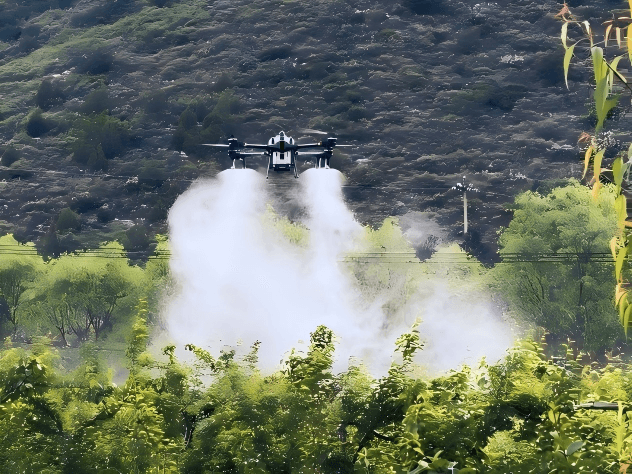
Drone for Spreading Fertilizer ROI
Yes, when annual use is high and field access has real value. A fertilizer-spreading drone earns its place by lowering application labor, meeting narrow topdressing windows, avoiding crop or soil damage, and supporting paid custom work. Ownership becomes harder to justify when utilization is low, loading is slow, or material flow is unreliable.
Start with a simple annual comparison:
Annual drone advantage = avoided application cost + timing value + avoided crop damage + outside service income - annual ownership and operating cost.
Do not count the fertilizer itself as a saving unless rate records and tray tests show less overlap or waste. The crop still needs the agronomically correct nutrient rate. A drone changes how fertilizer reaches the field; it does not change the crop's nutrient requirement.
|
Decision signal |
Value improves when... |
Value weakens when... |
|
Annual use |
The same drone handles repeated fertilizer, seed, or other approved granular jobs. |
It flies only a few days per year. |
|
Field access |
Wet soil, steep ground, tall crops, or small blocks delay ground equipment. |
Fields are flat, dry, open, and easy for existing machinery. |
|
Labor |
Manual broadcasting is slow, scarce, or physically demanding. |
Reliable low-cost labor is already available. |
|
Operations |
Refilling, batteries, transport, and route planning are organized as one system. |
The drone waits for fertilizer, power, or crew between flights. |
When a Drone for Spreading Fertilizer Makes Financial Sense
Annual Acres and Repeat Jobs
Fixed cost falls as treated acres rise. A 2025 University of Missouri Extension model for spray applications estimated a $56,000 farmer setup that included a drone, charging equipment, generator, trailer allocation, transfer equipment, and three batteries. Under its assumptions, cost was $12.27 per acre at 1,000 acres per year, with ownership becoming competitive against $16-per-acre custom hire at about 980 acres.
That is a spray model, not a universal fertilizer-spreading benchmark. Dry application changes payload cycles, loading time, material rate, and acreage per flight. Its useful lesson is broader: depreciation, interest, batteries, and support equipment dominate when a machine sits idle. A farm that also spreads seed or other approved granules can allocate those fixed costs across more work.
Timing, Access, and Crop Damage
A tractor may have a lower hourly cost and still be the expensive choice if wet soil keeps it out during a short topdressing window. Likewise, walking fertilizer through a mature crop can damage plants and consume days of labor. Those losses belong in the comparison, even if they never appear on an equipment invoice.
A 2025 Embry-Riddle field study examined fertilizer and granular weed-control application on a 7.35-acre cranberry farm. The drone operation took less than four hours, while the traditional manual method required one worker for three to five days per event. The study also found that loading and turnaround limited total operational efficiency, which ranged from 34% to 44%. Flight speed alone did not decide the result.
Drone for Spreading Fertilizer Costs
Dealer quotes are only the first line of the budget. Build a three-year or five-year cost model before choosing a drone for spreading fertilizer.
|
Cost group |
Include |
Common omission |
|
Ownership |
Drone, spreader, batteries, charger, generator, financing, insurance, depreciation |
Interest and battery replacement |
|
Field support |
Truck or trailer, scales, loading tools, spare parts, weather meter, safety equipment |
Transport and loading setup |
|
Operations |
Pilot and loader time, energy or fuel, maintenance, cleaning, software, recordkeeping |
Non-flying labor |
|
Compliance |
Registration, operator training, application permissions, local agricultural rules |
Renewals and lost workdays |
Then divide the annual total by realistic treated acres, not the maximum acreage advertised for perfect conditions. Use your planned fertilizer rate, expected payload, average flight cycle, refill time, travel between fields, weather limits, and the number of workable days. Run a low-use case too. If the investment works only at full utilization, the margin is too thin.
Stress-test the budget before accepting its payback period. Recalculate with 20% fewer treated acres, an earlier battery replacement, one extra loader, and several weather cancellations. Also increase the cost of capital if the purchase is financed. A drone that remains competitive in the downside case is easier to defend than one that pays back only under a dealer's best-case acreage.
Keep cash savings separate from timing value. Avoided contractor fees can be measured directly. The value of applying fertilizer two days earlier depends on crop stage, rainfall, and the loss the delay would have caused. Record that value as a scenario, not guaranteed income.
How to Test a Drone for Spreading Fertilizer Before Buying
Capacity matters, but throughput is a chain. The EAVISION J150 lists an 80 kg maximum spreading payload. Its SPD100 spreading system has a 100 L hopper, a 3-8 m listed spreading width, and a maximum 240 kg/min flow rate for compound fertilizer. These are equipment limits, not a promise of daily field output.
Before buying, ask the dealer to run your actual fertilizer at your target kg/ha or lb/ac. Record the stable spread width, discharge rate, refill time, battery turnaround, and pattern uniformity. EAVISION's existing guide to fertilizer granule size and rate calibration explains the material and tray checks. That technical test should come before any payback claim.
Reject a demonstration that uses an easier material, a lighter rate, or only a single hopper. A useful trial covers a representative block and includes every stop from loading to cleaning. Dry, free-flowing granules may behave well; damp fertilizer, dust, mixed particle sizes, and clumping can slow the feeder or distort the pattern.
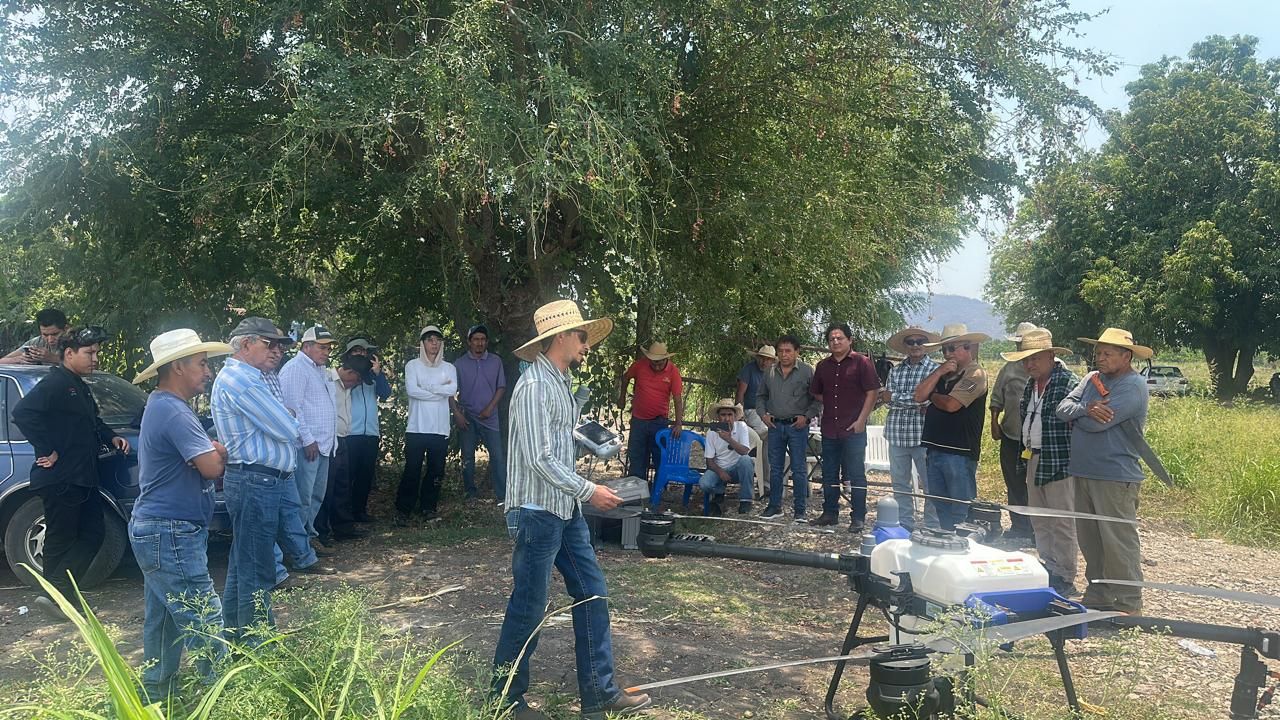
Buy, Hire, or Wait?
|
Choice |
Best fit |
Decision rule |
|
Buy |
High annual use, urgent timing, difficult access, trained crew, dependable dealer support |
Your conservative cost per acre beats hire or manual cost, with room for downtime. |
|
Hire |
Moderate acreage, seasonal use, uncertain regulations, or no in-house pilot |
A contractor can meet the application window and document rate and coverage. |
|
Wait |
Low use, easy fields, weak local support, untested fertilizer, or unclear permissions |
A field demo cannot prove material flow, uniformity, and a credible payback. |
For many first-time users, custom hiring is the cleanest pilot. Measure the contractor's total time, labor avoided, crop access, uniformity, and cost per treated acre. One season of records can replace assumptions with a purchase case grounded in your own fields.
So, Is a Drone for Spreading Fertilizer Worth It?
For small hobby gardens? Probably not. But for commercial farms, cooperatives, or ag-service operators covering hundreds of acres per season—yes. A drone for spreading fertilizer pays for itself through labor savings, input reduction, faster operations, and the ability to work terrain that ground rigs can't touch.
FAQ
Does a fertilizer drone save fertilizer?
It can reduce overlap or missed strips when calibration and route spacing are correct. Do not assume a lower nutrient rate; follow the agronomic recommendation and verify the field pattern.
How many acres justify ownership?
There is no universal acreage threshold. Divide full annual cost by expected treated acres, then compare that figure with contractor, manual, and ground-machine costs.
Can I use the same drone for spraying and spreading?
Yes. The EAVISION J150 platform supports both spraying and spreading functions. You can switch between a spray tank and the SPD100 spreading system depending on the job, making it a multi-purpose tool for year-round farm operations.
Is a drone for spreading fertilizer legal in my country?
In the U.S., operators must hold an FAA Part 107 Remote Pilot Certificate and comply with state pesticide applicator licensing. Additional FAA waivers may be required for drones over 55 lbs or for night operations. Regulations vary by country, so always check local aviation and agricultural authority rules before flying.