Drone Sprayer Tank Capacity: How to Choose the Right Size


A 35 L tank might get you through a small field in one trip. On a longer block, it could send you back to the trailer several times before lunch. That’s why two growers can look at the same drone and come away with very different ideas about the right tank size.
If you’re comparing quotes, the useful number is how much spray you need to carry per load on a normal job. From there, it’s easier to see whether extra drone sprayer tank capacity would save a refill or give you room you’d rarely use.
What Does Drone Sprayer Tank Capacity Mean?
Drone sprayer tank capacity is the volume of finished spray the aircraft’s liquid tank is designed to hold, usually listed in liters or gallons.
- The rated figure is the starting point for comparing models.
- The working fill is what you can load for a particular flight.
- The usable spray volume is what you can actually apply before the next refill.
The difference matters because the aircraft carries weight. Suppose your setup can carry 55 kg of liquid on a particular job. If the spray mix weighs 1.10 kg per liter, that gives you a working fill of 50 L, even if the tank itself can hold 60 L. Any spray left in the system that you can’t apply would bring the usable volume down a little more.
When a spec sheet gives two figures, the rated capacity is the better starting point for comparing models. The higher maximum describes how much liquid the tank can physically hold.
Common Drone Sprayer Tank Sizes
Commercial spray drone specs include compact 20 L models and much larger 100 L models. Three size ranges make a useful starting point.
|
Tank size |
Typical fit |
|
Around 20 L |
Short jobs and small plots near a refill point |
|
35–50 L |
Larger blocks with easy access to refills |
|
60–100 L |
Long blocks that use the same spray mix |
Those groups narrow the shortlist. The final choice depends on how many liters your own jobs use and what a refill costs you in time.
Key Factors to Consider When Choosing a Tank Size
- Treated area and application volume. The volume you need depends on how much of the field you’ll spray and how many liters you apply per hectare. That second number comes from the product label and the coverage the job calls for. A 6 ha block at 40 L/ha uses as much spray as a 12 ha block at 20 L/ha. Acreage alone can send you shopping in the wrong size range.
- Field layout and water access. A long field with one refill point can make each return expensive in time. With several small plots and water close to the landing spot, a smaller tank may keep up just fine. Three plots that need three separate mixes also mean three separate fills, even when one big tank could hold the total volume.
- The aircraft’s working load. The useful comparison is how many liters each drone can carry with your mix and the configuration you’ll fly. The allowed takeoff weight, the weight of the ready-to-fly aircraft, and any lower payload limit for the conditions determine what’s available for liquid. That’s where a larger tank can end up working at the same fill as a smaller one.
How to Estimate the Tank Capacity You Need
The number you need is the total spray volume for a typical block divided by the number of loads you’re happy to run. A load includes the first fill before takeoff. If you want four loads for the whole block, you’re planning for three refills.
- Total spray volume = treated area × application volume.
- Usable capacity needed per load = total spray volume ÷ planned loads.
Say a 12 ha field needs 25 L/ha. That’s 300 L of finished spray.
- With five refills, you need six loads of 50 L each.
- With four refills, the target rises to 60 L per load.
- For three refills, it’s 75 L per load.
- Getting down to two refills would take 100 L of usable spray in each load.
A move from 60 to 70 L still takes five loads on this job. At 75 L usable, the job fits into four. If a nominal 75 L tank delivers only 72 L per load, those four loads cover 288 L. The remaining 12 L still takes a fifth load.
It’s worth doing the same math for the larger jobs you see often. If a big block only comes up twice a season, the extra refills may be cheaper than paying for a larger setup year-round.
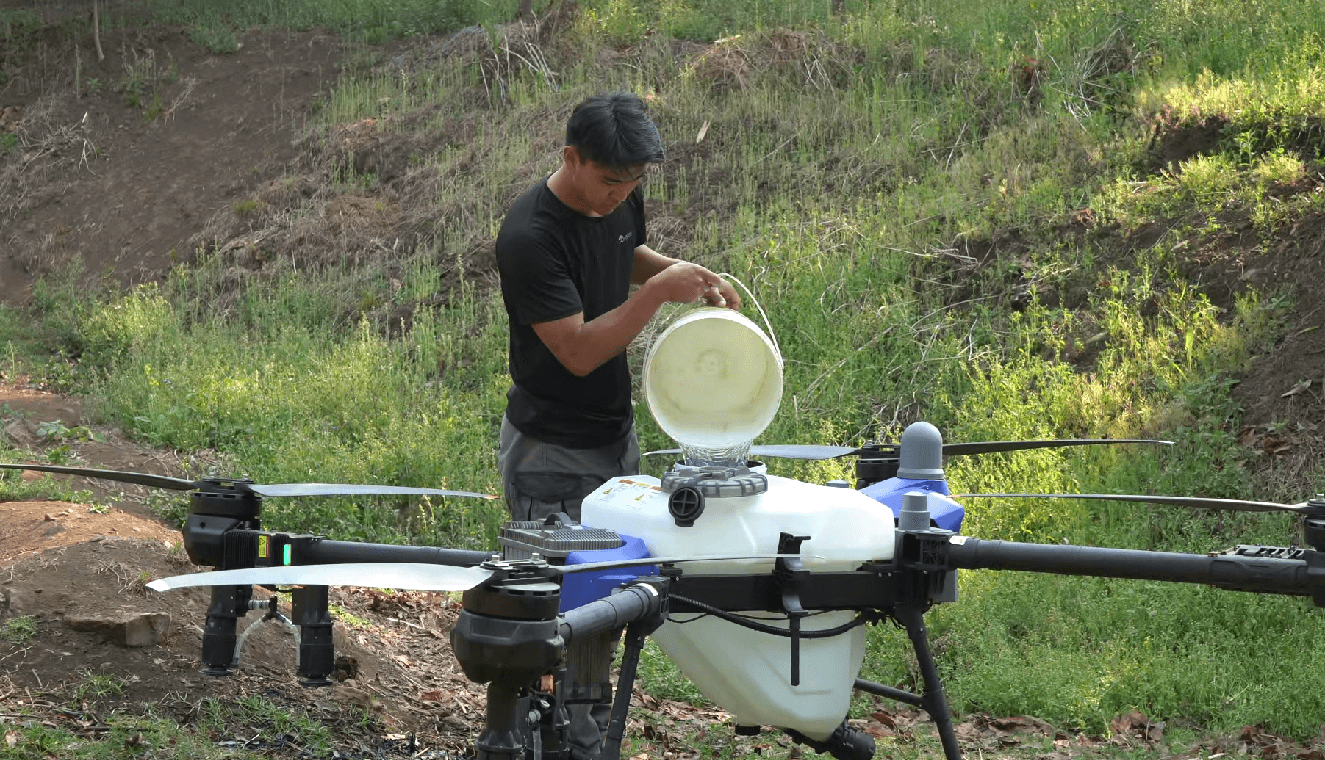
A clean-water demo gives you a way to measure usable volume. Purdue Extension’s calibration guide describes refilling the tank to the same level after a measured test pass. The water added back tells you how much the drone sprayed. On a representative run between refills, that’s the number you can compare with your per-load target.
Will a Bigger Tank Help You Finish Faster?
A bigger tank can save time when it drops a refill and lets you stay out long enough to use the extra liquid. On the 300 L job, going from four refills to three saves four minutes if each takes four minutes. If the larger loads take longer to fill, or the drone lands for a battery swap while there’s still spray on board, the difference can shrink.
The quickest way to see where the time goes is to compare a few loaded cycles on the same field with the same crew. The time from landing to relaunch captures filling and battery swaps when they happen together. The effective spray width and the time spent spraying tell you how much of any gain came from covering the field faster.
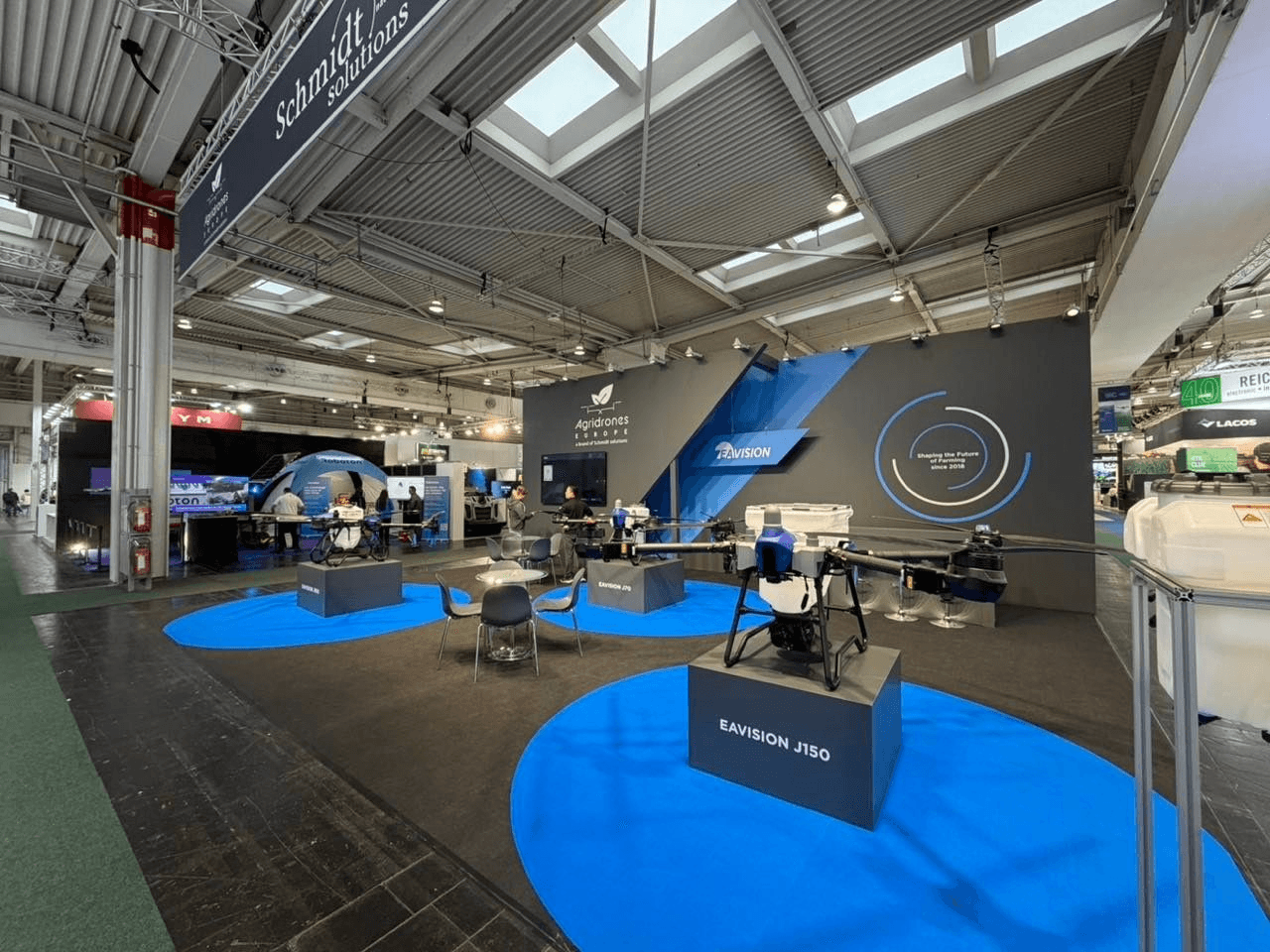
Once you know the usable volume you’re after, the model choices get easier. The EAVISION EA-J70 has a 35 L standard tank. The EA-J100 comes with 45 L as standard and offers a 60 L option. Larger-job options include the EA-J150 at 70 L rated and the EA-J150 EVO at 75 L rated, with 80 L maximum tank capacity listed in its detailed specs.
Still unsure which tank capacity is right for your operation? Browse the EAVISION agricultural drone collection to compare models and specifications.
FAQ
How much ground can a 40 L tank cover?
With 40 L of usable spray, one load covers 2 ha at 20 L/ha or about 1.3 ha at 30 L/ha. The same tank covers less ground when the job needs more liquid per hectare.
Can a spray drone carry a partial tank?
Yes, within the manufacturer’s operating limits. A partial fill can suit a small block, a heavier mix, or the last few passes of a job.
Does the calculation work in gallons?
Yes. In U.S. units, 30 acres at 2 gallons per acre takes 60 U.S. gallons of finished spray. With 15 usable gallons per load, that’s four loads and three refills.
Does a battery swap count as a refill?
Only if the crew also tops up the tank. If the drone lands for a fresh battery and resumes with the liquid already on board, it adds a stop without adding a refill.
How much spray does the last load need?
It depends on how much area is still untreated. If 1 ha remains on a job at 25 L/ha, the drone needs to deliver 25 L on that last load.