Drone Spraying vs Helicopter: Which Performs Better in Real Field Conditions?


The drone spraying vs helicopter debate isn't theoretical anymore. Farmers across the Americas, Southeast Asia, and Southern Europe are making real purchasing decisions right now. In real-world conditions, the “better” option is not absolute and depends on field size, crop type, terrain, and application goals.
Below is a practical, field-focused breakdown based on operational performance, not theory.
Coverage Speed: Helicopters Still Dominate Large Acreage
Helicopters are built for scale. They can cover very large fields in a short time, making them effective for:
- Broad-acre crops (e.g., wheat, corn, soy)
- Emergency disease outbreaks over large zones
- Large commercial farms with flat terrain
In terms of raw throughput, helicopters generally outperform drones in hectares per hour, especially when logistics are optimized (fuel, flight paths, refilling).
Drones, by contrast, are improving but still operate with:
- Smaller payloads
- Battery swap cycles
- More frequent refilling breaks
Precision & Spray Accuracy: Drones Have a Clear Advantage
Where drones outperform helicopters decisively is precision application.
Helicopters operate at higher speeds and altitudes, which increases:
- Spray drift
- Uneven droplet distribution
- Loss of chemicals in wind turbulence
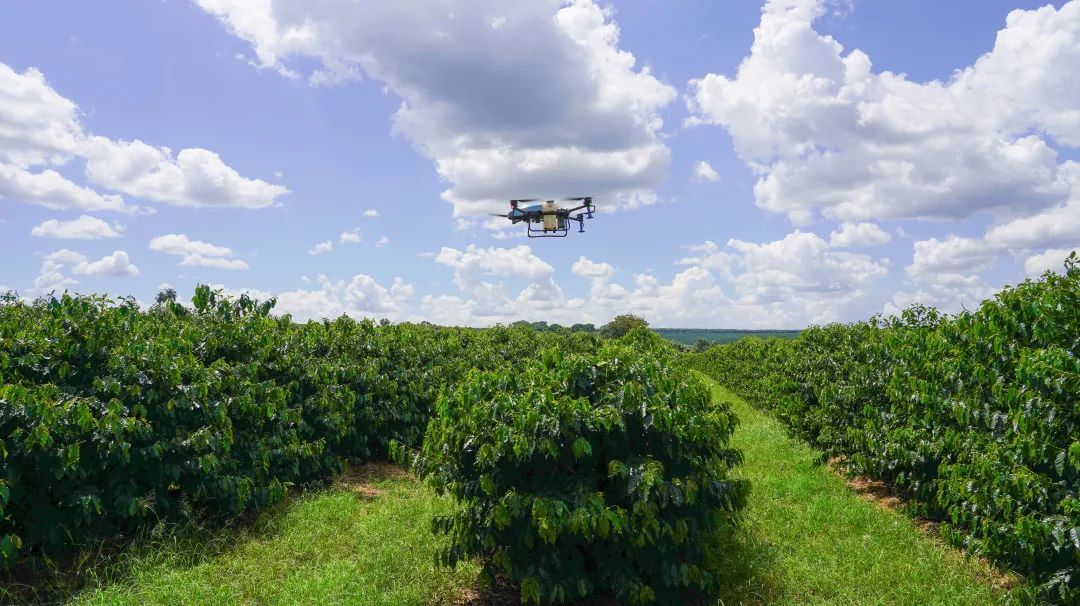
In contrast, agricultural drones fly lower and slower, enabling:
- More targeted spraying
- Better canopy penetration control
- Reduced overlap and waste
Research shows drone spraying can achieve more uniform spray quality, even though deposition efficiency may vary depending on conditions.
Helicopters generate stronger rotor downwash, which can also cause drift in sensitive crops or nearby fields.
Field Accessibility: Drones Win in Complex Terrain
This is one of the biggest real-world differentiators.
Drones perform better in:
- Rice paddies
- Mountainous terrain
- Orchards and vineyards
- Small or fragmented fields
- Wet or muddy ground conditions
Helicopters can access these areas too, but at a much higher operational cost.
Drones also avoid crop damage entirely because they do not touch the field surface, unlike ground or low-altitude heavy machinery systems.
Our EA-J150 agricultural drone takes this a step further. It follows terrain in real time, maintaining a consistent distance from crops and ensuring uniform spray performance, even on hilly or uneven fields where helicopters cannot adjust altitude fast enough.
Cost Efficiency: Drones Are More Flexible, Helicopters More Expensive
Helicopter spraying involves:
- High fuel consumption
- Licensed pilots
- Maintenance-heavy aviation systems
- Higher hourly operating costs
Drone spraying:
- Requires fewer personnel (often 1 operator)
- Lower energy cost per hectare
- Scales gradually for small-to-medium farms
However, helicopters can become more cost-efficient at extremely large scale because of their speed.
Safety & Environmental Impact: Drones Have the Edge
Drones offer several safety advantages:
- No pilot onboard (risk reduction)
- Lower chemical exposure risk for workers
- Reduced drift and overspray potential
Helicopters carry:
- Higher operational risk (aviation)
- Greater environmental drift potential in windy conditions
- Higher fuel footprint
Operational Flexibility: Drones Win for On-Demand Spraying
Drones are increasingly used for:
- Rapid pest outbreak response
- Spot spraying
- Variable-rate application
- Small-field operations that require quick turnaround
Helicopters are less flexible because they require:
- Flight planning
- Aviation logistics
- Larger mobilization setup
Quick Comparison: Drone vs. Helicopter Spraying
|
Factor |
Agricultural Drone |
Helicopter |
|
Equipment Cost |
$30,000–$40,000 |
$1M–$3.6M+ |
|
Cost Per Acre |
~$7–$16 |
~$18+ |
|
Operating Altitude |
5–15 ft above canopy |
30–100 ft |
|
Crew Required |
1 operator |
2 pilots + 4 ground crew |
|
Drift Risk |
Low (65–90% reduction) |
High |
|
Terrain Adaptability |
Follows hills & canopy |
Limited |
|
Deployment Time |
Minutes |
Hours (airstrip/logistics) |
The Real Question: What Does Your Farm Actually Need?
Field-scale trials have shown that drones were the most effective method in fungicide application on corn, though ground rigs performed better for soybeans. No single tool wins everywhere.
But the trend is clear. The global agricultural drone market is projected to grow from $4.98 billion in 2023 to $18.22 billion by 2030, at a compound annual growth rate of 20.3%. Farmers aren't just experimenting. They're switching.
We've watched this shift happen up close. And we think precision aerial application with drones makes sense for most growers — not all, but most. Ready to see if it makes sense for your operation? Contact us.
FAQs
Is drone spraying as effective as helicopter spraying for large farms?
For farms with mixed terrain, dense canopies, or irregular field shapes, drones typically outperform helicopters in spray accuracy and cost per acre. Helicopters still cover flat, uniform acreage faster, but drones continue to close the gap every year, where precision often outweighs raw speed.
Do drones cause less spray drift than helicopters?
Yes. Studies show optimized drone settings can reduce drift by 65–70% compared to conventional sprayers. Low-altitude flight (5–15 feet above crops) is the main reason. Helicopters operate much higher, which increases off-target chemical movement.
Can one person operate an agricultural spray drone?
Absolutely. Most modern agricultural drones, including EAVISION’s EA-J70 and EA-J150, are designed for solo operation. By contrast, a helicopter typically requires two pilots and at least four ground crew members.
What crops work best with drone spraying?
Drone spraying works well across grain crops like rice, wheat, and corn, and it's especially strong on fruit and commercial crops like citrus, sugarcane, and cotton, where terrain-following and canopy penetration matter most. Systems like EAVISION's enable autonomous recognition of complex terrain and precise canopy-following flight with adjustable droplet sizes from 10 to 300μm.