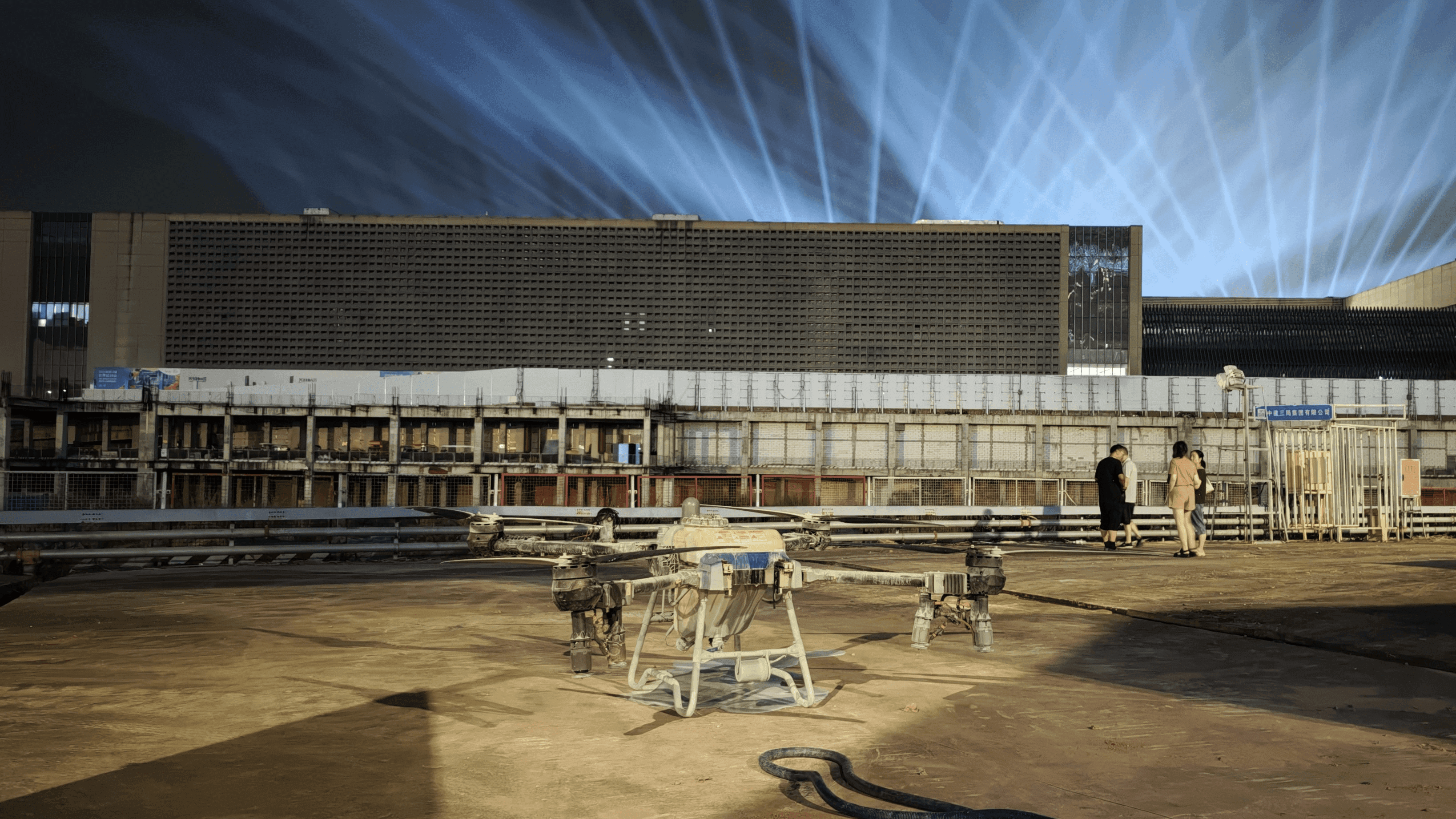
Night Drone Spraying: Safety, Visibility, and Operational Checklist


Night drone spraying can be attractive for farm managers and spray operators. Night work may help avoid daytime heat, extend short spray windows, reduce disruption to field traffic, and give operators more scheduling flexibility during peak season.
But night spraying is not simply daytime spraying with the lights turned on.
At night, visibility changes, obstacle risk increases, crew coordination becomes more important, and weather conditions can create drift risks that may not be obvious from the ground. Operators must also confirm aviation, pesticide, and local agricultural rules before scheduling any night application.
This guide explains when night drone spraying can help, when it should be avoided, and what operators should check before flying.
Important note: This article is an operational planning guide, not legal advice or label guidance. Always follow pesticide labels, aviation regulations, local rules, customer requirements, and manufacturer instructions in the region where you operate.
Quick Answer: Is Night Drone Spraying Allowed?
In many regions, night drone spraying may be allowed if the operator meets applicable aviation, pesticide, airspace, and chemical label requirements.
In the United States, FAA Part 107 permits certain night drone operations when required lighting and pilot qualifications are in place. Agricultural spraying operations may also be subject to Part 137 requirements, pesticide applicator certification, and state regulations.
Before conducting any night spraying operation, operators should verify all local aviation, pesticide, and airspace requirements.
When Night Drone Spraying Can Help
Night spraying may be useful when it solves a real farm operation problem.
Common reasons include:
- Avoiding high daytime heat that can stress crops or reduce operator endurance
- Extending work into a narrow treatment window
- Serving farms when ground equipment is unavailable during the day
- Reducing conflict with field labor, harvest traffic, or irrigation activity
- Operating in crops where daytime wind is consistently too strong
- Completing urgent pest or disease control before conditions change
For orchards and complex crops, night work can also help operators schedule around daytime farm tasks. However, the operational benefit only matters if spray quality, safety, and compliance remain under control.
Night spraying should never be used as a shortcut around good application practice.
When Night Spraying Should Be Avoided
Night drone spraying may be the wrong choice when visibility, weather, label restrictions, or field conditions create unacceptable risk.
Avoid or postpone night spraying when:
- The pesticide label does not allow the timing or conditions.
- The required pilot training, lights, authorizations, or certificates are not in place.
- Wind is too strong, too variable, or below the label's safe range.
- A temperature inversion is present or likely.
- Fog, dew, or poor visibility affects visual observation.
- Obstacles are not mapped or cannot be detected reliably.
- Power lines cross the field or orchard without a safety plan.
- The crew cannot maintain communication.
- The takeoff, landing, and refill zones are not lit and controlled.
- People, livestock, vehicles, or homes are close to the application area.
Night may feel calmer, but calm air can also mean poor atmospheric mixing. That is why operators must check for inversion risk instead of assuming that low wind is always good.
The Temperature Inversion Problem
Temperature inversions are one of the biggest reasons night spraying needs extra caution.
North Dakota State University Extension explains that during an inversion, air near the ground is cooler and denser than air above it. Under these conditions, small droplets can move long distances before settling. Iowa State University Extension also warns that pesticide applications during inversions are not recommended and that many labels include restrictions or guidance for avoiding them.
For drone spraying, inversion risk matters because drones can generate fine droplets for canopy coverage and low-volume application. If droplets remain suspended in stable night air, drift risk may increase.
Operators should watch for inversion indicators:
- Calm or nearly calm wind
- Clear evening skies
- Rapid cooling near the ground
- Ground fog or low-lying mist
- Dew or frost formation
- Smoke, dust, or mist hanging in layers
- Odor or spray cloud moving horizontally near the surface
The safest approach is simple:
If inversion risk is present, do not spray until conditions are suitable and label-compliant.
Night Visibility: What Operators Must Control
Night visibility is not only about seeing the drone. It is about seeing the worksite.
Before flying, operators should confirm:
- Aircraft anti-collision lighting
- Pilot and visual observer positions
- Line of sight
- Takeoff and landing zone lighting
- Refill zone lighting
- Field boundary visibility
- Obstacle marking
- Emergency landing areas
- Crew communication
- Vehicle and worker exclusion zones
Anti-collision lights help other airspace users see the drone, but they do not replace field awareness. The pilot still needs a clear operational picture of the aircraft, the route, the obstacles, and the crew.
In orchards, hillsides, and fragmented fields, night visibility becomes more complex. Tree rows, wires, poles, branches, terrain changes, irrigation equipment, and field roads can all be harder to judge in darkness.
Obstacle Risk: Power Lines, Trees, and Terrain
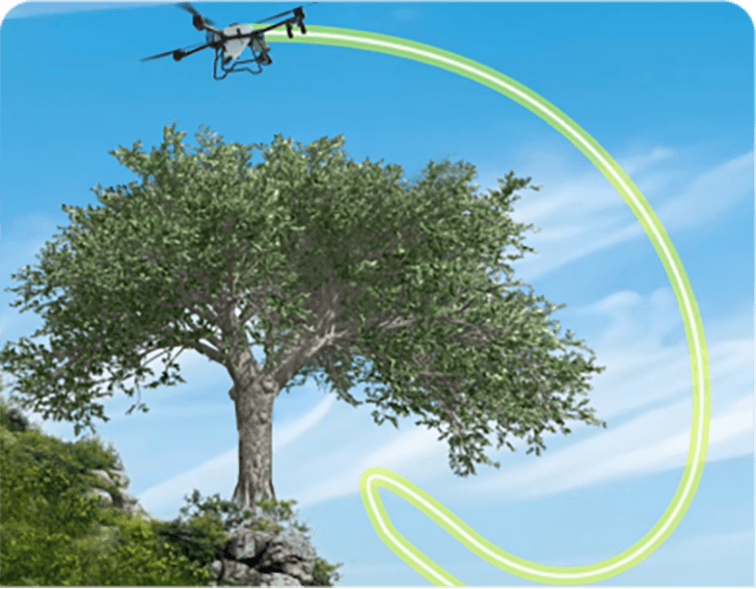
Obstacle avoidance and conservative route planning are especially important in orchards, hillsides, and fields with power lines.
Power lines are one of the most serious risks in night drone spraying.
They are often thin, dark, and hard to see from the ground. In orchards and mountain fields, lines may cross between tree canopies, road edges, pumping stations, houses, and utility poles. Manually marking every obstacle may be difficult or impossible.
This is why obstacle detection and route planning matter.
EAVISION's J150 product page describes Night-Flight Mode with night-time obstacle detection designed to support day-and-night operations. The page specifically highlights power-line detection in mountainous or orchard environments with intersecting power lines, reducing reliance on manual marking. EAVISION has also published a related article, "Seeing the Invisible," about how the J150 detects 1 cm wires at high speed.
Technology can reduce risk, but it does not remove the operator's responsibility. Operators should still:
- Walk or survey the field before night work.
- Ask the farm owner about hidden lines and irrigation infrastructure.
- Map obstacles in daylight when possible.
- Set safe boundaries and no-fly zones.
- Avoid aggressive flight speeds near unknown obstacles.
- Keep emergency stop and return procedures ready.
- Use a visual observer where needed.
The safest night operation is built before sunset.
Pre-Flight Checklist for Night Drone Spraying
Use this checklist before the drone leaves the ground.
Compliance
- Confirm whether night operation is allowed for the job.
- Confirm pilot certification and recurrent training status.
- Confirm airspace authorization if operating in controlled airspace.
- Confirm Part 137 or local aerial application requirements.
- Confirm pesticide applicator certification.
- Confirm the product label allows the application timing and conditions.
- Confirm customer authorization and required records.
Weather and Drift
- Check wind speed and direction at the field.
- Check temperature, humidity, dew point, and forecast.
- Check for inversion indicators.
- Check fog, dew, mist, or frost risk.
- Confirm buffer zones and sensitive sites.
- Recheck conditions during the job, not only before takeoff.
Field and Obstacles
- Confirm field boundaries.
- Identify power lines, poles, wires, trees, buildings, irrigation systems, and roads.
- Mark takeoff, landing, refill, and emergency landing zones.
- Review terrain and slope changes.
- Check for people, animals, vehicles, and nearby homes.
Aircraft and Equipment
- Inspect propellers, frame, tank, hoses, nozzles, pumps, filters, and sensors.
- Confirm anti-collision lights and any work lights.
- Confirm battery health and charge level.
- Confirm controller brightness and screen visibility.
- Confirm GNSS/RTK, communication link, and route data.
- Confirm spray volume, droplet setting, flow rate, and route parameters.
Crew
- Assign pilot, refill crew, visual observer, and ground safety roles.
- Confirm radio or phone communication.
- Confirm emergency stop, return-to-home, and lost-link procedures.
- Keep nonessential people away from the field.
- Review chemical handling and PPE.
In-Flight Checklist
During night spraying, the operator should keep the job conservative and controlled.
Monitor:
- Aircraft position and altitude
- Route progress
- Spray on/off status
- Tank level
- Battery level
- Wind changes
- Drift behavior
- Obstacle warnings
- Crew movement
- Nearby traffic or lights
- Communication quality
If visibility, wind, inversion, obstacle, or communication conditions become uncertain, pause the job. A paused job is cheaper than a crash, drift incident, or crop-damage complaint.
Post-Flight Checklist
Night work should end with documentation.
Record:
- Field name and location
- Crop and target pest or disease
- Product and rate
- Application volume
- Droplet setting
- Start and end time
- Weather conditions
- Wind speed and direction
- Pilot and crew names
- Acres or hectares treated
- Route file or map
- Any incident, pause, or abnormal condition
- Cleaning and maintenance notes
Post-flight cleaning is also important. Rinse the tank, nozzles, filters, and pump system according to product and equipment instructions. Inspect the aircraft under good lighting before storage.
How EAVISION Supports Safer Night Operations
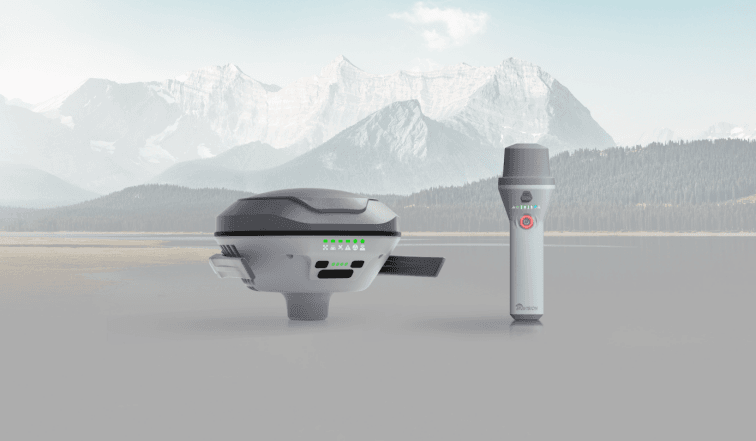
Communication, positioning, and route planning tools help support complex-field operations.
Night drone spraying requires a combination of aircraft sensing, route planning, operator discipline, and support.
Relevant EAVISION features include:
- J150 Night-Flight Mode for night-time obstacle detection
- Power-line detection for orchard and mountain environments
- Omnidirectional perception and obstacle avoidance
- Intelligent route planning and field mapping
- Remote controller route visibility
- RTK and communication support for complex fields
- Product training and after-sales support
For operators, these features are most valuable when combined with a clear SOP. Technology should support the pilot's decision-making, not replace it.
Bottom Line
Night drone spraying can be useful, but it must be planned carefully.
It may help operators extend work windows, avoid daytime heat, and serve crops when timing is tight. But it also introduces visibility, obstacle, compliance, drift, and crew coordination risks.
The safest night spraying operations start before sunset:
- Confirm regulations.
- Read the label.
- Check weather and inversion risk.
- Map obstacles.
- Prepare lighting and crew communication.
- Use conservative routes.
- Document the job.
Night spraying is not about flying in the dark. It is about bringing enough planning, sensing, training, and discipline into the dark to keep the operation controlled.
FAQs
Can drones spray crops at night?
In some regions and situations, yes. But the operator must confirm aviation rules, pesticide applicator rules, chemical label requirements, airspace authorization, lighting, visibility, and local restrictions. In the United States, Part 107 night operations are allowed if requirements are met, but aerial application may also involve Part 137 and pesticide certification requirements.
What lights are required for night drone operations under Part 107?
Under 14 CFR 107.29, a small unmanned aircraft operating at night must have lighted anti-collision lighting visible for at least 3 statute miles with a flash rate sufficient to avoid a collision. Operators should verify current FAA requirements for their specific operation.
Is night spraying safer because wind is lower?
Not always. Lower wind may reduce some drift risk, but calm night conditions can also be associated with temperature inversions. During inversions, small droplets can remain suspended and move long distances. Operators should check for inversion risk and follow pesticide labels.
Why are power lines more dangerous at night?
Power lines are thin and difficult to see, especially in orchards, hillsides, and fragmented fields. At night, visual judgment is reduced. Operators should survey fields, map obstacles, use conservative routes, and rely on appropriate obstacle-detection systems where available.
Can EAVISION drones detect power lines at night?
EAVISION's J150 product page describes Night-Flight Mode with night-time obstacle detection and power-line detection for mountain and orchard environments. Operators should still survey the field and follow safe operating procedures.