Orchard Drone Spraying Guide: Citrus, Apple, Mango, and Durian Canopy Coverage


Orchards are one of the most demanding environments for agricultural drones. A flat field may only require even top coverage, but fruit trees are three-dimensional targets. Citrus, apple, mango, and durian blocks all have different canopy height, row spacing, leaf density, pest locations, and terrain challenges. That is why orchard drone spraying should be planned as a canopy coverage workflow, not just a flight over trees.
This guide is a pillar overview for orchard growers and dealers. It explains why orchards are different, how spray setup changes by crop, what canopy penetration really means, and how EAVISION J150 and EAVISION J70 fit different orchard operations.
Why Orchard Drone Spraying Is Different From Field Spraying
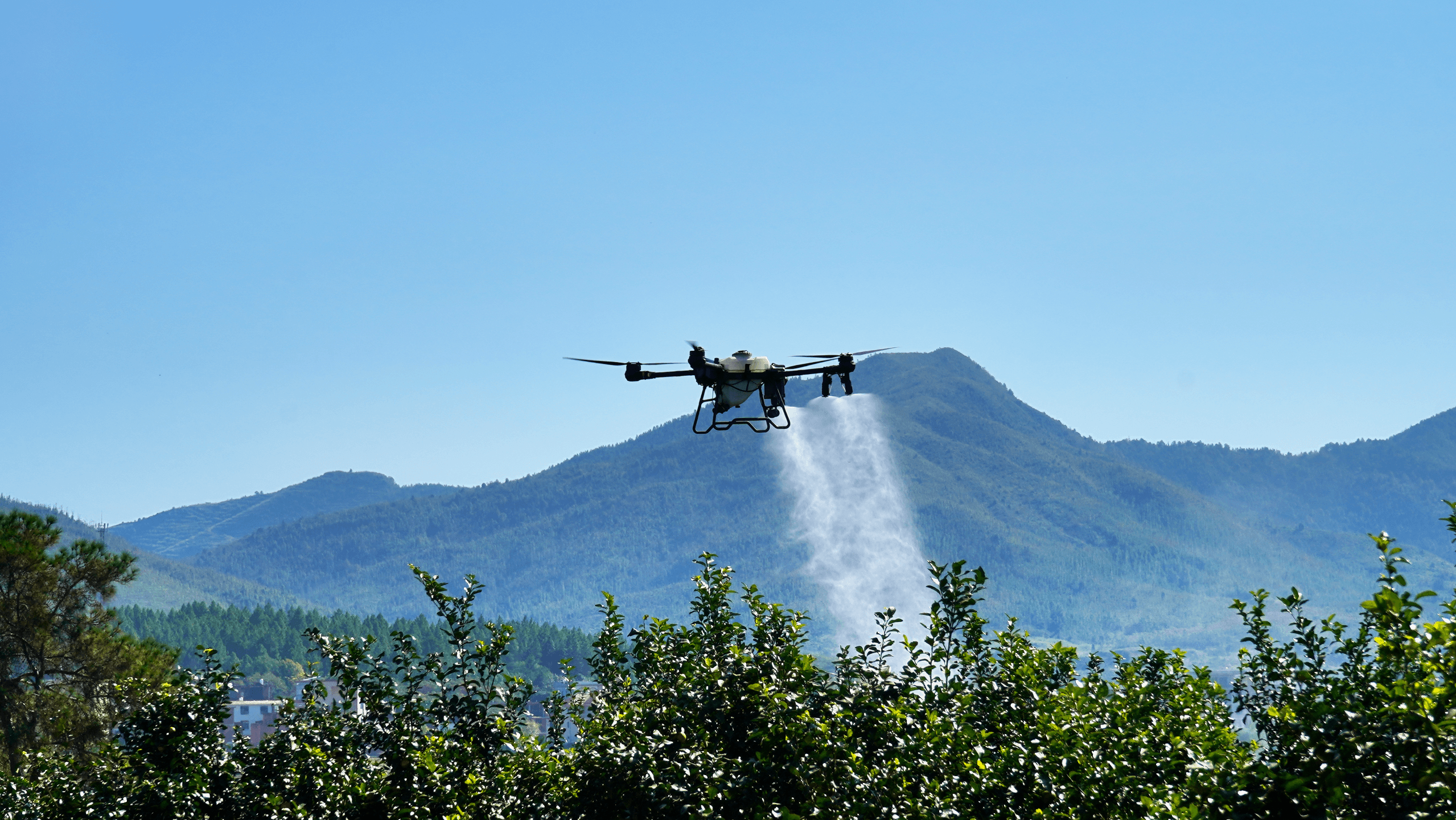
Orchard spraying is difficult because the target is not a flat surface. Spray must reach outer leaves, inner canopy zones, fruit clusters, new flush, lower skirts, and sometimes the underside of leaves. In dense fruit trees, the outer canopy can intercept spray before it reaches the target area.
Ground sprayers often use air assistance to push spray into a tree row. Drones use rotor airflow, route planning, droplet setup, and flight position to influence deposition. If the drone is too high, mist may drift over the canopy. If it is too fast, the spray may not spend enough time interacting with the leaf layer. If the droplet size is wrong, the job may create drift, runoff, or poor penetration.
Good orchard drone spraying should account for:
- Tree height and canopy width
- Row spacing and row direction
- Canopy density and pruning condition
- Pest or disease target location
- Product label and application volume
- Droplet size and airflow behavior
- Wind direction and sensitive neighboring areas
- Obstacles such as wires, poles, slopes, nets, and terraces
- Battery, refill, cleaning, and maintenance workflow
The goal is not simply to wet the visible outer leaves. The goal is to deliver useful coverage to the target zone while controlling drift, crop safety, and operator risk.
Canopy Coverage by Crop: Citrus, Apple, Mango, and Durian
Different orchard crops need different setup priorities.
|
Crop |
Main Spray Challenge |
What to Prioritize |
|
Citrus |
Dense evergreen canopy, mites, scale, disease pressure, fruit surface coverage |
Under-leaf coverage, inner canopy checks, drift control |
|
Apple |
Layered canopy, seasonal disease timing, tall or trained tree structures |
Route consistency, canopy stage, coverage verification |
|
Mango |
Irregular tree shape, flowering/fruiting timing, tall canopy in some regions |
Flight height, penetration, crop-stage sensitivity |
|
Durian |
Tall trees, complex terrain, high-value fruit, Southeast Asia service demand |
Obstacle avoidance, canopy penetration, safety, service support |
Citrus
Citrus is a strong fit for orchard drone evaluation because it has dense foliage and high-value pest control needs. Spider mites, scale, and fungal targets may be located on leaf undersides, fruit surfaces, or inside the canopy. A top-only spray pattern is not enough for many citrus jobs.
EAVISION has already covered citrus use cases, from pest control to crop-science topics such as citrus red mites and Botrytis. For growers, the practical lesson is clear: check whether spray reaches the inner canopy, and confirm that the product label allows the intended drone application.
Apple
Apple blocks can vary from dense traditional orchards to more open, trained systems. The drone setup should match tree structure, canopy stage, and spray timing. Early-season applications may face a different canopy than late-season work. Disease timing, fruit surface coverage, and residue requirements can also affect the decision.
For apple growers, water-sensitive paper or leaf checks are useful because a smooth flight does not guarantee deposition. EAVISION’s apple orchard guidance offers a deeper reference for apple-specific programs.
Mango
Mango canopies are often irregular, and flowering or fruiting stages may require careful product selection and timing. Spray teams should consider tree height, canopy density, drift, heat, and whether the target is on new flush, flowers, fruit, or inner leaves.
A fruit tree drone spray program for mango should begin with a demo block. Measure coverage at several canopy positions before scaling to the full orchard.
Durian
Durian is one of the clearest high-value orchard opportunities in Southeast Asia. Tall canopies, complex terrain, and high fruit value make manual or ground-based access difficult.
For durian, obstacle avoidance is critical. Tall trees, poles, wires, steep ground, and uneven orchard layouts create risk. A drone platform should be evaluated not only by spray capacity, but also by perception, route planning, terrain handling, training, and after-sales support.
Spray Setup: Droplets, Airflow, Speed, and Height
Canopy penetration depends on system setup. Droplet size, airflow, speed, and height work together.
EAVISION J150 lists a 10-300 um droplet range, 40 L/min maximum flow rate, and up to 15 m effective spray width. EAVISION J70 also lists a 10-300 um droplet range and supports orchard spraying scenarios. J70's page describes hybrid droplet technology, where larger droplets coat leaf surfaces while smaller droplets help cover underside surfaces, and MCRFF airflow creates a multi-directional vortex for dense canopies.
Use this setup logic:
|
Setup Factor |
What to Adjust |
Why It Matters |
|
Droplet size |
Match label, pest target, drift risk, and canopy depth |
Balances coverage and drift |
|
Flight height |
Keep mist interacting with the canopy |
Avoids spraying above the target |
|
Flight speed |
Manage dwell time over tree rows |
Helps deposition without over-application |
|
Swath and overlap |
Confirm real effective width in the orchard |
Reduces skips and dry zones |
|
Route direction |
Consider wind, slope, row orientation, and obstacles |
Improves consistency and safety |
|
Coverage checks |
Use paper, leaf checks, or test zones |
Confirms target-zone deposition |
For any orchard drone spraying program, the label is still the first authority. Product rate, water volume, pre-harvest interval, re-entry interval, PPE, weather limits, and application method must be verified before spraying.
Obstacle Avoidance and Terrain Following in Orchards
Obstacle avoidance is not optional in orchards. Fruit blocks often include power lines, support wires, poles, nets, uneven terrain, terraces, slopes, farm roads, workers, and irregular tree rows. A drone that performs well in open rice fields may not be suitable for complex orchard work.
EAVISION J150 emphasizes orchard and complex-terrain operation, including obstacle detection and route planning. J70 also highlights real-time obstacle avoidance and canopy-following operation. For growers and dealers, these features matter because safety and consistency directly affect commercial adoption.
Product Fit: J150 vs J70 for Orchards
- EAVISION J150 is a strong fit for larger orchards, custom spray providers, and dealers who need a premium demonstration platform. Its 70 L spray tank, high flow rate, route planning, orchard scenarios, and multi-function design make it suitable for high-value fruit blocks where capacity and canopy coverage matter.
- EAVISION J70 is a more compact option for smaller orchards, tighter blocks, and entry-level dealer programs. It offers a 35 L spray tank, up to 10 m spray width, 10-300 um droplet range, hybrid droplet technology, and real-time obstacle avoidance.
The best model depends on tree height, canopy density, block size, service route, transport, battery workflow, and local support. In orchards, the right drone is not simply the largest drone. It is the drone that can safely and repeatably reach the target canopy zone.
Conclusion
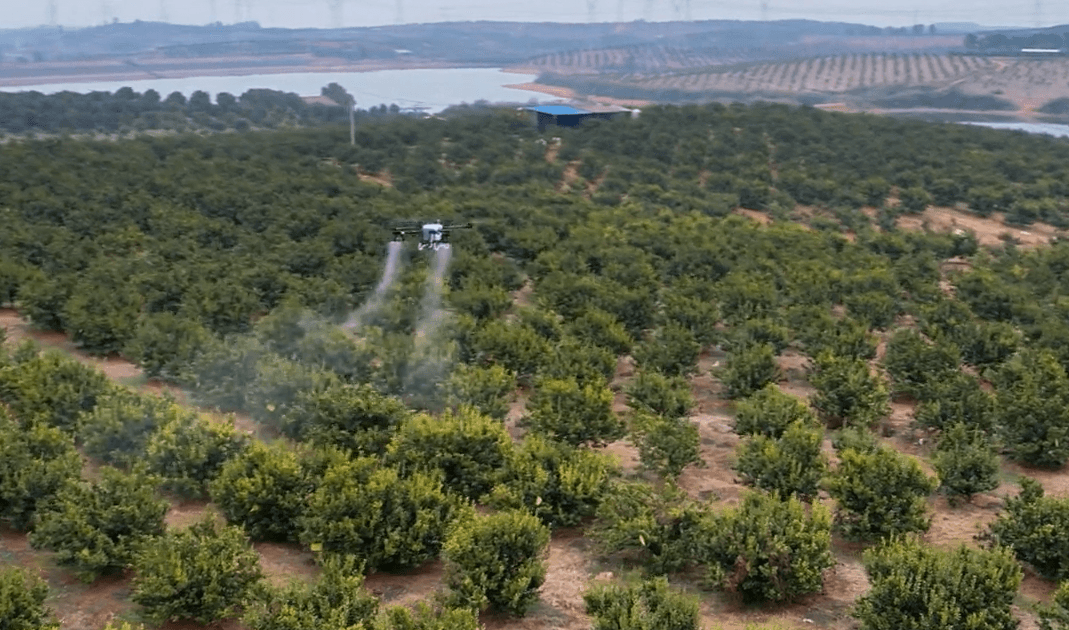
Orchard drone spraying is not just field spraying above trees. Citrus, apple, mango, and durian all require a canopy-first approach: define the target, verify the label, select droplet settings, manage airflow, test coverage, and build a support plan.
FAQ
Can drones spray orchards effectively?
Yes, but orchard drone spraying requires crop-specific setup. The operator must consider canopy density, tree height, target location, droplet size, airflow, weather, obstacle avoidance, and label requirements.
Which crops are good fits for orchard drones?
Citrus, apple, mango, durian, lychee, lemon, avocado, macadamia, and other fruit trees can be evaluated. Suitability depends on the target pest or disease, canopy structure, label, terrain, and service economics.
What is canopy penetration?
Canopy penetration means spray reaches beyond the outer leaf layer into the target zone inside the tree canopy. It depends on droplet size, airflow, speed, height, row structure, and canopy density.
Why is obstacle avoidance important in orchards?
Orchards often contain wires, poles, nets, slopes, terraces, uneven trees, and tight turning areas. Obstacle avoidance helps reduce risk and supports more repeatable spray routes.
Is J150 or J70 better for orchard drone spraying?
J150 is better for larger orchards and higher-capacity service work. J70 may fit smaller blocks, compact orchards, and entry-level dealer demos. The right choice depends on canopy, workload, terrain, and support needs.