Paddy Field Drone Applications: Spraying, Seeding, and Fertilizer Spreading


Paddy fields are not easy places to work. The soil is wet. The paths are narrow. There is standing water everywhere. And when the spray window is short, timing really matters.
That is why more growers and service teams are using drones for rice fields. A paddy field drone is not just for spraying. It can also help with rice seed broadcasting and fertilizer spreading.
In this guide, we’ll look at the full paddy workflow in a simple way. When should you spray? When is the right time to spread rice seed? When should you apply fertilizer? And what should dealers or service providers prepare before offering paddy drone services?
This is especially useful in Southeast Asia. In countries like Thailand, Vietnam, Indonesia, the Philippines, and Cambodia, rice is not a one-time drone job. One service team may cover many small and medium fields in a single season.
So the real opportunity is not just selling a spray drone. It is helping growers manage the whole season, from planting to crop protection to topdressing.
Why Paddy Fields Are a Natural Fit for Drones
Paddy fields create an access problem. When fields are wet, soft, or flooded, ground equipment can damage soil structure, disturb young plants, or simply fail to enter at the right time. Manual crews can work in paddies, but labor is increasingly expensive and inconsistent in many rice regions.
Drones solve the access problem by flying above the field. They do not need a dry wheel track, and they can move quickly between small blocks. That makes them useful when timing is tight, especially during pest pressure, disease pressure, direct seeding windows, or fertilizer topdressing.
The main benefits include:
- Less field entry in wet or flooded conditions
- Faster response during pest and disease windows
- Lower dependence on manual walking in muddy fields
- More consistent route planning across irregular blocks
- Potential to combine spraying and spreading services
- Better service coverage for smallholder rice regions
A drone is not automatically the best answer for every rice task. Labels, product rates, seed rate, fertilizer type, water depth, wind, field size, and local rules still matter. But paddies are a strong starting point because the operational problem is obvious: the field is difficult to enter, but easy to fly over.
Related article: Rice Drone Spraying: Why Paddies Are the Ideal Use Case for Agricultural Drones
1. Rice Drone Spraying: Crop Protection Without Entering Wet Fields
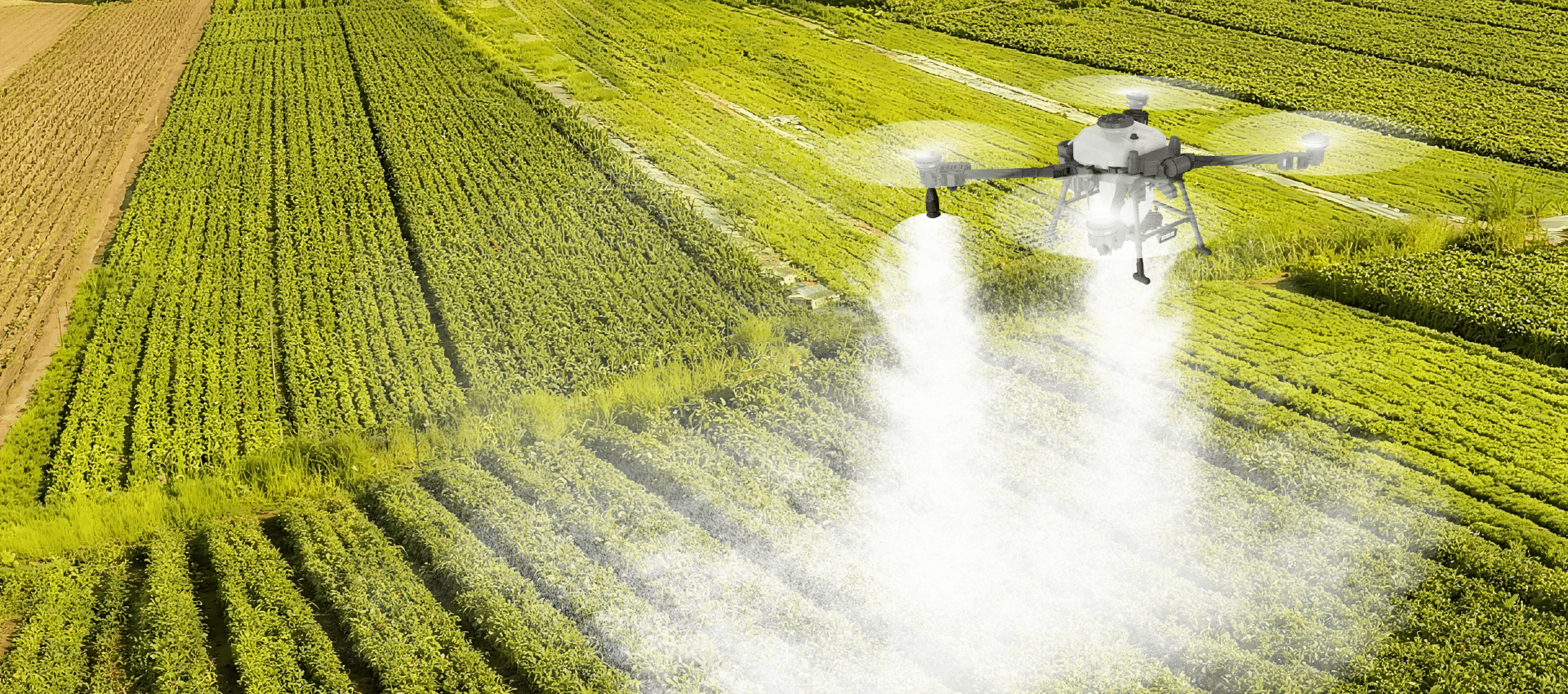
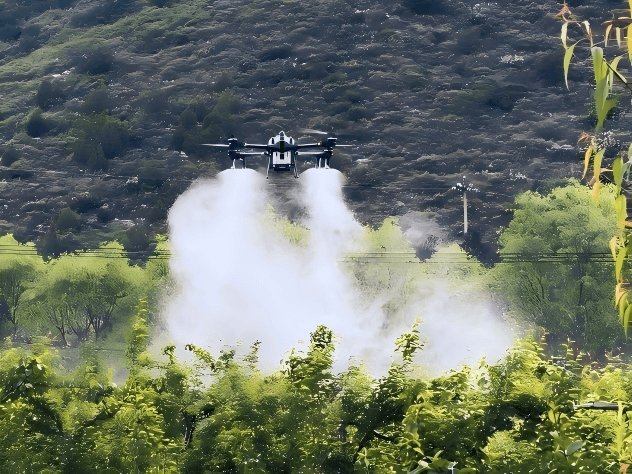
Rice drone spraying is the first paddy application most buyers consider. It can be used for approved crop protection work when the product label, local rules, weather, droplet setup, and field conditions allow aerial or drone application.
The practical value is timing. Rice diseases and insects may need treatment within a narrow window. If the field is too wet for ground equipment, the grower may lose time. A drone can be transported to the field edge, map the block, and spray without walking through the crop.
For a rice spraying demo, dealers should show:
- Field boundary mapping
- Route planning and obstacle awareness
- Spray volume, flow rate, and droplet setup
- Refill and battery workflow
- Coverage checks with water-sensitive paper where appropriate
- Cleaning and maintenance after chemical work
- Job records for the grower
For rice drone spraying Thailand inquiries, the same principle applies: do not sell only speed. Sell a complete, documented workflow that fits local crops, product labels, and service economics.
2. Rice Seed Broadcasting: Faster Establishment for Direct-Seeded Paddy
Direct seeding is widely discussed in rice systems because it can reduce labor and transplanting requirements. IRRI describes direct seeding as planting rice seed directly in the field rather than raising seedlings and transplanting them. In the right conditions, drone seed broadcasting can help service providers cover paddy blocks quickly and reduce manual work.
The key is uniform distribution. A poor seeding job can create gaps, over-seeded zones, uneven crop stands, and later weed pressure. Dealers should avoid presenting seed broadcasting as a simple "throw seed from the air" feature. It needs the right seed condition, rate, hopper setup, spreading width, flight height, wind limit, and field preparation.
Before using a drone for rice seed broadcasting, confirm:
- Whether the rice system is suitable for direct seeding
- Seed rate, seed treatment, and seed moisture condition
- Field leveling, water depth, and surface preparation
- Spreading width and overlap
- Wind conditions during broadcasting
- Post-seeding water and weed management plan
For dealers, rice seed demos should be measured. Show seed distribution, not just flight. A clear tray test, field strip test, or sample-counting method can help buyers trust the workflow.
3. Drone Spreading Fertilizer: More Timely Topdressing in Wet Fields
Drone spreading fertilizer is the third major paddy application. Rice needs timely nutrient management, but fertilizer topdressing often happens when fields are wet and access is inconvenient. A drone spreading system can help apply granular material from above, reducing the need for workers to walk through waterlogged fields.
Fertilizer accuracy depends on the material. Urea, compound fertilizer, rice seed, rapeseed, and aquaculture feed do not flow the same way. Granule size, density, moisture, clumping, and wind all affect distribution.
Before a fertilizer job, confirm:
- Fertilizer material and granule condition
- Target rate per hectare
- Hopper configuration and calibration
- Spreading width and overlap
- Wind limits and drift risk
- Field boundary and buffer zones
- Cleaning after corrosive fertilizer work
For paddy service providers, fertilizer spreading can be a powerful add-on because it creates repeat work beyond spraying. A dealer can package spraying, seed broadcasting, and fertilizer topdressing as one seasonal service plan.
Product Fit: J150 and J70 for Paddy Work
EAVISION J150 is the stronger fit for higher-volume paddy service providers. It offers a 70 L spray tank, 40 L/min maximum flow rate, 15 m effective spray width, 10-300 um droplet range, 80 kg maximum spreading payload, and multi-scenario capability for spraying, spreading, and lifting. For rice contractors, that means one platform can support several paddy operations.
EAVISION J70 may fit smaller farms, tighter service routes, or entry-level dealers. The J70 page lists a 35 L spray tank, 24 L/min maximum flow rate, 10 m maximum spray width, 10-300 um droplet range, and 50 kg maximum spreading payload. It also shows rice fields spraying as an application scenario.
The right choice depends on block size, daily workload, transport, battery workflow, local service capability, and whether the buyer wants only spraying or a broader paddy operations package.
What Dealers and Service Providers Should Package
Paddy growers rarely need only a drone. They need a working system. Dealers should package equipment with training, parts, crop-specific demos, and after-sales support.
A paddy package should include:
1. Drone model selection for J150 or J70
2. Spray tank and spreading system options
3. Battery and charger workflow
4. Seed and fertilizer calibration guidance
5. Nozzle, filter, pump, and spreading-part consumables
6. Operator training for mapping, spraying, spreading, cleaning, and records
7. Local compliance guidance for chemical application and drone operation
8. After-sales support and original parts
For Southeast Asia dealers, the strongest message is seasonal value. Rice customers may need direct seeding, pest control, disease control, foliar nutrition, and fertilizer spreading. A dealer application should show how the business supports those repeat needs.
Conclusion
Paddy fields are one of the best crop environments for drone adoption because the field is hard to enter but easy to fly over. The opportunity is larger than rice drone spraying alone. A complete paddy field drone application can include spraying, rice seed broadcasting, fertilizer spreading, mapping, training, parts, and service support.
For growers, the key is choosing the right workflow for the crop stage. For service providers, the opportunity is building repeat seasonal revenue. For dealers, the strongest offer is a complete paddy package built around EAVISION J150, EAVISION J70, spreading solution, training, parts, and after-sales support.
FAQ
What is paddy field drone application?
It means using agricultural drones for rice paddy operations such as crop spraying, rice seed broadcasting, fertilizer spreading, mapping, and field service support.
Is rice drone spraying the same as fertilizer spreading?
No. Rice drone spraying uses liquid spray systems for crop protection or foliar applications. Fertilizer spreading uses a hopper and spreading system for granular material. The setup, calibration, and cleaning process are different.
Can drones broadcast rice seed?
Yes, when the rice system, seed condition, field preparation, wind, rate, and spreading setup are suitable. Dealers should demonstrate seed distribution before recommending full-scale use.
Why is drone spreading fertilizer useful in paddies?
It can help apply granular fertilizer when fields are wet, soft, or difficult to enter. It may also create repeat service demand for contractors during topdressing windows.
Which EAVISION drone fits paddy work better, J150 or J70?
J150 is better for higher-volume service providers and broader paddy operation packages. J70 may suit smaller farms, entry-level dealers, and compact paddy blocks.