Precision Agriculture Drone vs Tractor: Which Is Better?


A precision agriculture drone can treat 30–40 acres per hour. A tractor-mounted sprayer covers about 15–20. Drones can treat 30-40 acres per hour, compared to 15-20 acres for traditional equipment, allowing for more timely application during critical growth stages.
That alone should make you pause. But speed is just one piece of the puzzle. If you're running a serious commercial operation, such as row crops, orchards, or hillside plantations, the real question isn't "drone or tractor." It's "where does each tool make the most sense for your operation?"
Based on current agricultural drone applications and field experience from growers worldwide, here's what we know about how drones and tractors actually compare.
What a Precision Agriculture Drone Actually Does
A lot of people still think drones are just flying cameras. That is simply not the case anymore.
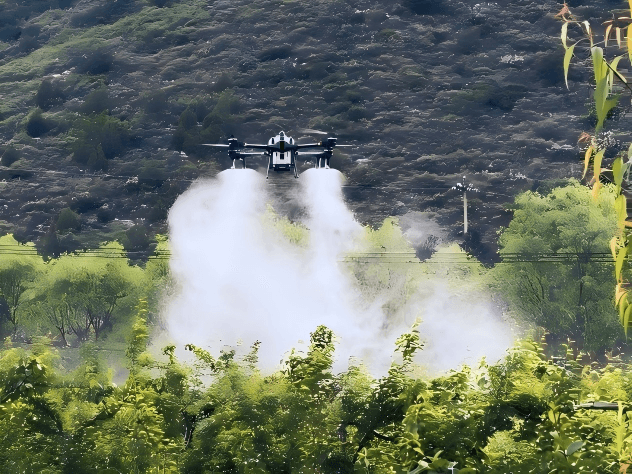
A modern agriculture UAV is both a data tool and an execution tool. It collects field data, identifies crop stress or pest outbreaks, and then takes targeted action. It sprays only the areas that need it, at the right rate.
Here's a quick look at the range of tasks:
|
Application |
What the Drone Does |
Why It Matters |
|
Crop Spraying |
Applies pesticides, herbicides, and fertilizers from the air |
Faster coverage, less chemical waste |
|
Data Collection |
Uses a field data tool to mark boundaries, obstacles, and water points before auto-routing. |
Spots problems before they cost you money |
|
Crop Health Monitoring |
Uses multispectral sensors to detect plant stress |
Early disease and pest detection |
|
Seeding & Spreading |
Distributes seeds or granular inputs aerially |
Reaches wet, uneven, or inaccessible ground |
And here is the thing: this is not future talk. The U.S. agricultural spray drone industry continued its aggressive expansion in 2025, with total treated acreage reaching over 16.4 million acres (a 58.7 percent increase over the previous year). The adoption curve is steep, and it is happening now.
Where Tractors Still Hold Their Ground
Let's be honest: tractors aren't going anywhere. And we're not here to pretend otherwise.
In addition to fieldwork, tractors are vital in transporting crops and equipment around the farm. Their ability to tow heavy loads makes them indispensable for logistics within a farm operation. Tractors are also used for mowing, hay baling, and post-harvest processing.
Tractors handle tillage, plowing, hauling, and heavy mechanical work that drones simply can't touch. Existing tractor fleets reduce new capital costs. Fuel and maintenance are predictable and easier to manage than drone battery cycles.
For large, flat acreage with established ground infrastructure, a well-equipped tractor sprayer still works. Nobody's arguing that.
But for spraying, spreading, and precision input management? That's where the comparison gets interesting.
Precision Agriculture Drone vs Tractor: The Real Comparison
Here's where we lay it out side by side using what actually matters in the field.
|
Factor |
Precision Agriculture Drone |
Tractor Sprayer |
|
Speed |
30–40 acres/hour |
15–20 acres/hour |
|
Chemical Use |
20–30% less |
Standard application rates |
|
Labor |
75–90% reduction |
Requires full operator + support |
|
Soil Compaction |
Zero |
3–15% crop loss from trampling |
|
Terrain Access |
Slopes, terraces, wet ground, orchards |
Flat, dry, open fields |
|
Startup Cost |
$15,000–$25,000+ for spraying systems |
$50,000–$200,000+ with implements |
|
Best For |
Targeted spraying, monitoring, spreading |
Tillage, hauling, bulk field work |
A couple of points worth calling out:
- Soil compaction is a bigger deal than most people admit. Unlike tractors, drones cause no soil compaction, which the University of Nebraska-Lincoln estimates can improve yields by 5-10% in heavily trafficked fields. Over a full season on a 1,000-acre operation, that yield improvement alone can pay for a drone.
- Chemical savings add up fast. Using a spray drone can save money by reducing chemical use by 30–50%, thanks to its precision application. Adjustable droplet sizes and GPS-guided flight paths cut overlap and drift, which adds up fast across a full season.
Why Terrain Changes Everything
Here's where precision agriculture drones pull away from tractors entirely.
Drones avoid the soil compaction and safety risks that tractors face on slopes, marshy fields, and narrow terraces. If you're managing orchards in Southern Europe, hillside plantations in Latin America, or terraced plots in Southeast Asia, a tractor simply can't get to where you need it.
Our agricultural drone solutions were built for exactly these scenarios. The EA-J150, for example, features autonomous obstacle avoidance and a 180° escape maneuver for mountain and orchard operations. Its CCMS® bimodal mist nozzles produce droplets as fine as 10μm, which are small enough to penetrate dense canopies that ground sprayers miss entirely.
When we talk about trampling, we refer to the damage these colossal machines cause to the crops they treat. Especially in scenarios when the land is moist post-rains, the heavy weight of the tractor can lead to significant crop losses. Depending on the tractor's size and the tyres used, crop loss can range between 3%-15%. On a farm with high-value fruit crops, that loss is money straight out of your pocket.
The Cost Question: Is a Precision Agriculture Drone Worth the Investment?
This is what everyone really wants to know.
The cost-effectiveness of owning a drone for spray applications is closely tied to the scale of the operation. Based on the assumptions in this study, farm operations spraying at least 980 acres per year are more cost-effective owning their own drones compared to custom hiring at the current rate of $16 per acre. That's from the University of Missouri Extension, not a drone company's marketing page.
And if you're not ready to buy? The biggest shift happening right now is the move toward Drone as a Service (DaaS) model, instead of buying expensive equipment, training pilots, and dealing with maintenance. Many farmers are choosing to simply hire professional drone teams when they need them.
Either way, the per-acre economics of drone spraying have dropped significantly. The average price per acre sprayed sharply declined from $21 in 2024 to $13 in 2025. That's a 38% drop in one year.
5 Features to Look For in a Precision Agriculture Drone
If you're seriously evaluating a precision agriculture drone for your operation, here's what we think matters most:
- Terrain adaptability: Can it handle hills, trees, and obstacles? Not just flat ground.
- Spray precision: Variable-rate spraying with adjustable droplet sizes (10–300μm) is a must.
- Payload capacity: Bigger tanks mean fewer refills. The EA-J150 carries 70L spray and 80 kg of spreading payload.
- Autonomy: Real-time obstacle avoidance and route planning save hours per day.
- After-sales support: A drone is only as useful as the service network behind it.
EAVISION checks all five. We're already partnered with Agri Spray Drones in the United States and expanding across Latin America, Southeast Asia, and Southern Europe.
So Which Is Better?
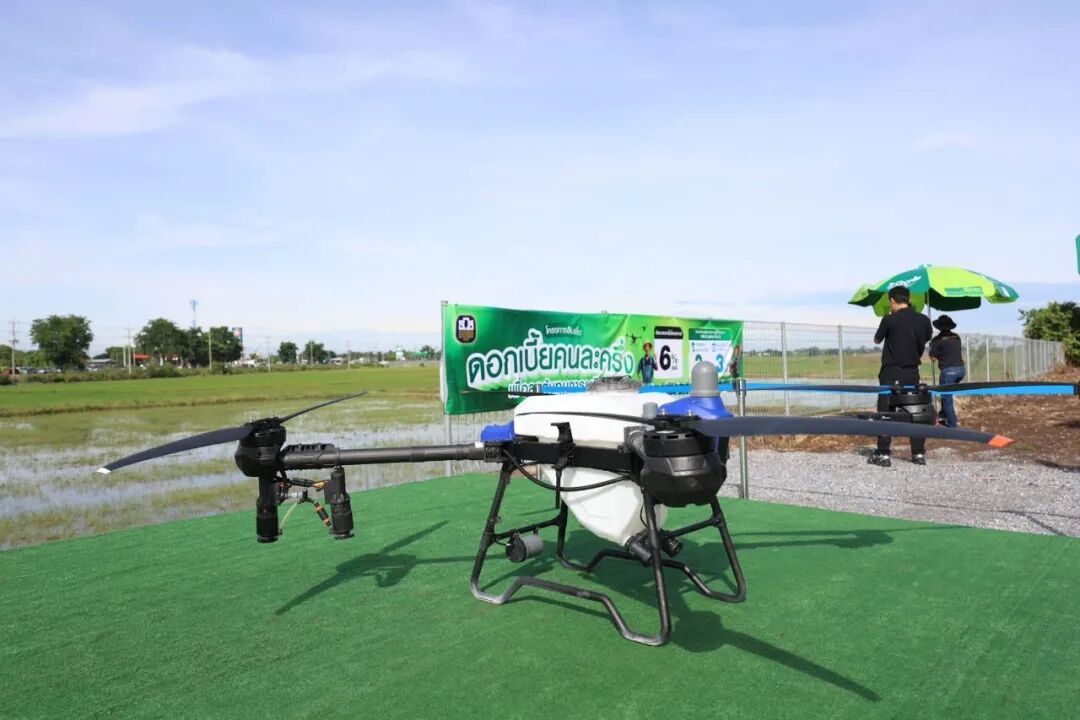
Honestly? It's not either-or. Tractors and drones in agriculture can complement each other by combining their strengths. This combination can lead to increased efficiency and productivity on the farm.
Tractors do the heavy mechanical work. Meanwhile, precision agriculture drones handle the smart, targeted work such as spraying, spreading, monitoring, and data collection. The farms that figure out how to pair both will spend less on inputs, lose fewer crops, and make better decisions faster.
But if you had to pick one upgrade to make right now for spraying and crop protection? The drone wins. And it's not close.
FAQs
Can a precision agriculture drone really replace my tractor sprayer?
For spraying and spreading, yes—in many situations. Drones cover more acres per hour, use 20–30% less chemical, and don't compact your soil. But tractors are still needed for tillage, hauling, and heavy mechanical work. Most operations benefit from both.
How many acres do I need to justify buying a drone?
According to the University of Missouri Extension, operations spraying at least 980 acres per year reach cost-effectiveness compared to hiring a custom applicator. If you spray less, a Drone-as-a-Service provider may be a better fit.
What about licensing and regulations?
In the U.S., you'll need an FAA Part 107 Remote Pilot Certificate for any commercial drone operation. If you're applying chemicals, you also need to comply with Part 137 regulations. Check your local aviation authority if you're outside the U.S. Rules vary by country.
Are drones effective on hilly or uneven terrain?
This is actually where drones shine most. The EAVISION EA-J150 features autonomous obstacle avoidance, canopy-following flight, and a night-flight mode that detects power lines, which makes it ideal for orchards, hillsides, and terraced farms where tractors cannot safely operate.