Agricultural Drones Market in 2026: Size, Growth & Trends


Have you been keeping an eye on the agricultural drones recently? Farms everywhere are adopting flight technology to cut down on labor costs and speed up daily operations.
In fact, current industry reports put the global agricultural drones market at roughly 3.45 billion to 5.19 billion US dollars in 2026. That is a wide range. It does not mean one forecast must be wrong. It means the reports count different products, services, applications, and regions.
The more useful message is easier to see. Agricultural drones are moving from trial projects to everyday farm work. Spraying, spreading, crop imaging, and field mapping now share one growing ecosystem. Hardware is still central, but software, training, maintenance, and contract services matter more each year.
So, how big is the market, how fast could it grow, and what should buyers watch? Let us separate the signal from the headline numbers.

How Big Is the Agricultural Drones Market in 2026?
Three reports published for the 2026 market put the global total in the mid-single-digit billions. Their forecasts do not line up exactly, yet all point to strong expansion through the early 2030s.
|
Research publisher |
2026 estimate |
Forecast |
Published CAGR |
|
USD 3.45 billion |
USD 14.42 billion by 2031 |
33.1% |
|
|
USD 3.9 billion |
USD 13.2 billion by 2033 |
18.8% |
|
|
USD 5.19 billion |
USD 18.03 billion by 2034 |
16.8% |
These are forecasts, not audited sales totals. Still, the range is useful. It says the 2026 agricultural drones market is already commercially meaningful, while the spread between estimates warns us not to quote one number without its source.
Why Market Estimates Differ?
Start with scope. One report may count aircraft, sensors, software, and Drone-as-a-Service. Another may focus more heavily on hardware. Some include training and maintenance. Others split those services into separate markets.
Application definitions also change the total. “Agriculture drones” can include small mapping aircraft, heavy spray drones, crop analytics, fertilizer spreading, irrigation planning, seeding, and livestock monitoring. Base years and currency assumptions differ too.
That is why a practical 2026 market review should use a range. Compare forecasts with similar definitions before building a sales plan or investor model.
What Is Driving Market Growth?
Labor Shortages Make Speed More Valuable
Farm work is seasonal. A treatment delayed by a few days may lose much of its value. Drones can launch near the field, avoid wheel traffic, and reach wet, steep, or fragmented ground. That flexibility is useful where crews are thin and weather windows are short.
This does not make every drone job faster. Refilling, charging, transport, cleaning, and permits all affect daily output. The growth driver is not flight speed alone. It is the ability to finish the whole job when the crop needs it.
Precision Work Has a Clearer Payback
Farmers are under pressure to get more value from water, fertilizer, and crop-protection products. The USDA National Institute of Food and Agriculture notes that precision tools can target specific areas instead of treating a full field uniformly. Drones fit that model well. They can collect field images, flag unusual zones, and apply inputs where the label and local rules allow.
Buyers now ask harder questions about cost per completed hectare, application quality, downtime, and data value. That is healthy. Better measurement turns interest into repeat purchases only when the numbers work in real fields.
Service Networks Lower the Entry Barrier
Not every farm wants to own an aircraft. Contract spraying, seasonal rental, training, financing, and local maintenance open the market to smaller users. They also create recurring revenue beyond the first hardware sale.
Fortune Business Insights says drone service providers and custom applicators held the largest end-user share in 2025. That suggests a maturing market. Farmers can buy an outcome instead of building an aviation operation from scratch.
Agricultural Drone Trends to Watch
Multi-Use Platforms Gain Ground
A single aircraft that sprays, spreads, and handles approved lifting jobs can stay useful across more of the season. For example, the EAVISION J150 supports spraying, spreading, lifting, and field data capture. That does not guarantee a return. It does give operators more ways to share the cost across productive work.
Payload is only part of the trend. Buyers also care about folding size, battery cycling, wash-down protection, parts availability, and the time needed to change between jobs.
Automation Moves from Flight to Workflow
Automatic routes are now expected. The next gains come from better terrain following, obstacle sensing, field data capture, job records, and repeatable application settings. Operators want fewer manual steps between surveying a field and completing the task.
Connectivity remains a practical limit. A 2026 European Commission study found that rural connectivity gaps still restrict precision-farming adoption. Offline planning, local data transfer, and dependable field support therefore remain important.
Drone-as-a-Service Expands
Service models help turn fixed equipment cost into a per-hectare expense. They are attractive for farms with short seasons or limited annual drone work. They also help distributors build closer customer relationships through training, maintenance, application planning, and compliance support.
The strongest service businesses will sell consistent results, not just flight time. Coverage checks, accurate records, fast parts response, and trained operators will separate serious providers from low-price entrants.
Which Regions Are Leading in 2026?
Asia-Pacific looks strongest by volume and manufacturing scale. MarketsandMarkets estimates that the region represents 46.5% of global 2026 revenue, while Fortune Business Insights also places it first. Rice production, small and fragmented plots, labor pressure, subsidies, and a deep supplier base all support adoption.
North America remains an important commercial market. Large farms, strong precision-agriculture use, and growing custom-application networks support demand. Regulation is part of the business model. In the United States, the FAA says Part 137 governs many drone operations that dispense agricultural substances. Operators may also need other federal, state, local, and label approvals.
Europe has capable farms and a mature technology base, but spray-drone rules vary and can slow deployment. Latin America is attractive because of large crop areas, difficult terrain, and strong demand for timely application. Across both regions, adoption will depend as much on local authorization and dealer support as on aircraft performance.
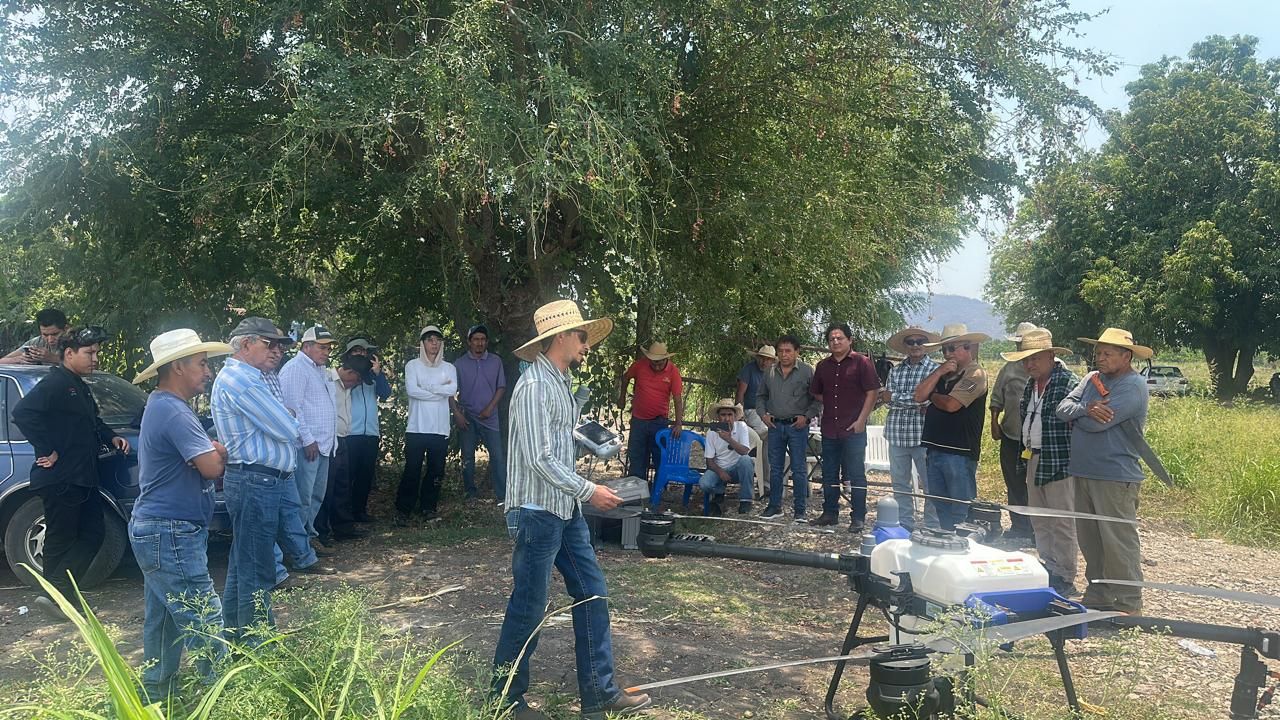
What the Market Means for Buyers
A growing market gives buyers more choice and more noise. Models and forecasts arrive quickly. A field-ready support system takes longer to build.
Before choosing a platform or partner, check five things:
- Job fit: Match payload, flow, swath, terrain, and sensors to the crop.
- Full-cycle output: Time transport, setup, refill, charging, cleaning, and battery swaps.
- Application quality: Verify coverage or spreading uniformity in a representative field.
- Local compliance: Confirm aircraft, pilot, chemical, insurance, and operating requirements.
- After-sales support: Ask who stocks parts, trains crews, and responds during the season.
The 2026 agricultural drones market is growing because it solves real timing, access, and labor problems. Start small. Test the workflow, measure the result, and expand only when the value repeats.
Planning ahead? Ask EAVISION for a field demo and a local support plan.
FAQ
How Big Is the Market in 2026?
Current estimates range from USD 3.45 billion to USD 5.19 billion. Scope, included products and services, base years, and methods explain the difference.
How Fast Is the Market Growing?
Current forecasts publish CAGRs of 16.8% to 33.1% over different periods. Each figure is tied to its report's definition, not a guaranteed result.
Which Region Leads the Market?
Asia-Pacific leads in two major 2026 reports, supported by manufacturing scale, labor pressure, government programs, and field use.
What Is Driving Agricultural Drone Growth?
Labor gaps, short weather windows, targeted inputs, automation, services, and dealer networks drive growth.
Are Spray Drones the Fastest-Growing Segment?
Spraying is a visible application, but reports segment the market differently. Compare definitions before saying one segment grows fastest.