Drone Spraying Corn: 5 Best Settings for Fungicide


Planning to spray fungicide on corn with a drone? Start with the product label and focus on good coverage.
Use enough spray volume to reach the crop canopy. Choose medium droplets if the label allows. Keep the drone at a steady height above the tassels. Fly slowly enough to get even coverage. Always test the actual spray width instead of relying on the maximum width in the product description.
These are only starting points for calibration. Every job is different. Follow the pesticide label, local regulations, weather conditions, disease target, and drone manual. If the label does not allow aerial application on corn, do not spray it with a drone.
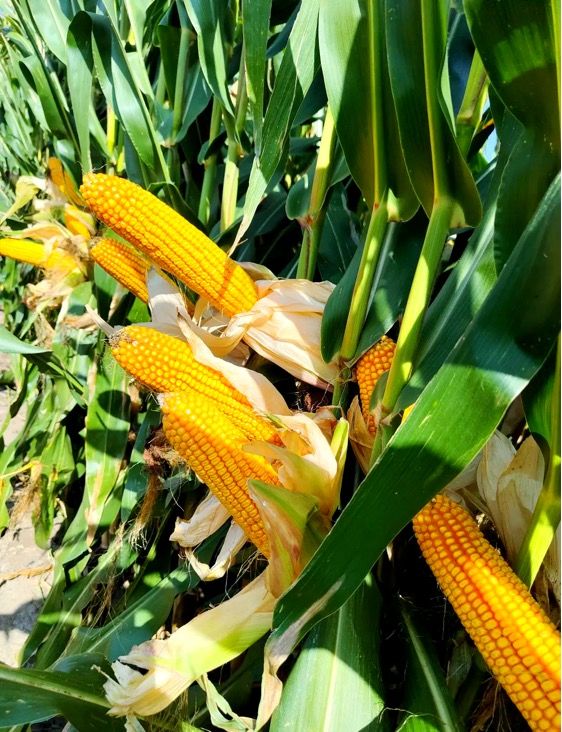
Best Drone Spraying Corn Settings at a Glance
The five controls work as one system: speed changes flow and rotor airflow, height changes drift and swath shape, and droplet size must match volume.
|
Setting |
Practical starting point |
Field pass condition |
|
Carrier volume |
Start at the labeled aerial minimum; compare a higher-volume pass in dense corn. |
Cards show enough droplets at the ear leaf without runoff. |
|
Droplet spectrum |
Medium or the label-required class; avoid the very-fine extreme for routine field work. |
Coverage target is met with acceptable drift risk. |
|
Height |
Test about 7.5-10 ft (2.3-3.0 m) above the canopy if label and aircraft allow. |
Stable clearance, even pattern, no tassel contact. |
|
Speed |
Begin near 9-10 mph (4-4.5 m/s), then adjust from deposition data. |
Coverage remains consistent across the route. |
|
Route spacing |
Use the measured effective swath, not the catalog maximum. |
No weak edge, gap, or excessive overlap. |
1. Carrier Volume for Drone Spraying Corn
Start with the label's minimum aerial carrier volume, then test upward for a mature canopy. Two gallons per acre is a common minimum on some U.S. corn fungicide labels, not a default for every product. A label may require more water, an adjuvant, or a different droplet class.
A 2025 Auburn University corn study compared about 2 and 5 GPA (18.7 and 46.8 L/ha). Higher volume increased coverage and droplet density, and 5 GPA at 3 m produced the highest density. Disease-control differences varied by year, so judge volume with deposition and disease results.
Place water-sensitive cards at the upper canopy and ear leaf. If the top card is saturated while the lower card is sparse, increase volume, reduce speed, or tighten route spacing. Change one control at a time.
2. Choose the Right Droplet Size for Corn Fungicide
A medium spray spectrum is a sound starting point for many corn fungicide labels because it balances impact count with drift control. Very fine droplets remain airborne longer; coarse droplets may leave too few impacts when volume is low.
Use the label's spray-quality class before choosing a micron value. The same controller number can behave differently as flow, formulation, atomizer speed, and wear change. EAVISION's guide to drone spraying droplet size explains how to match range with volume, weather, and canopy target.
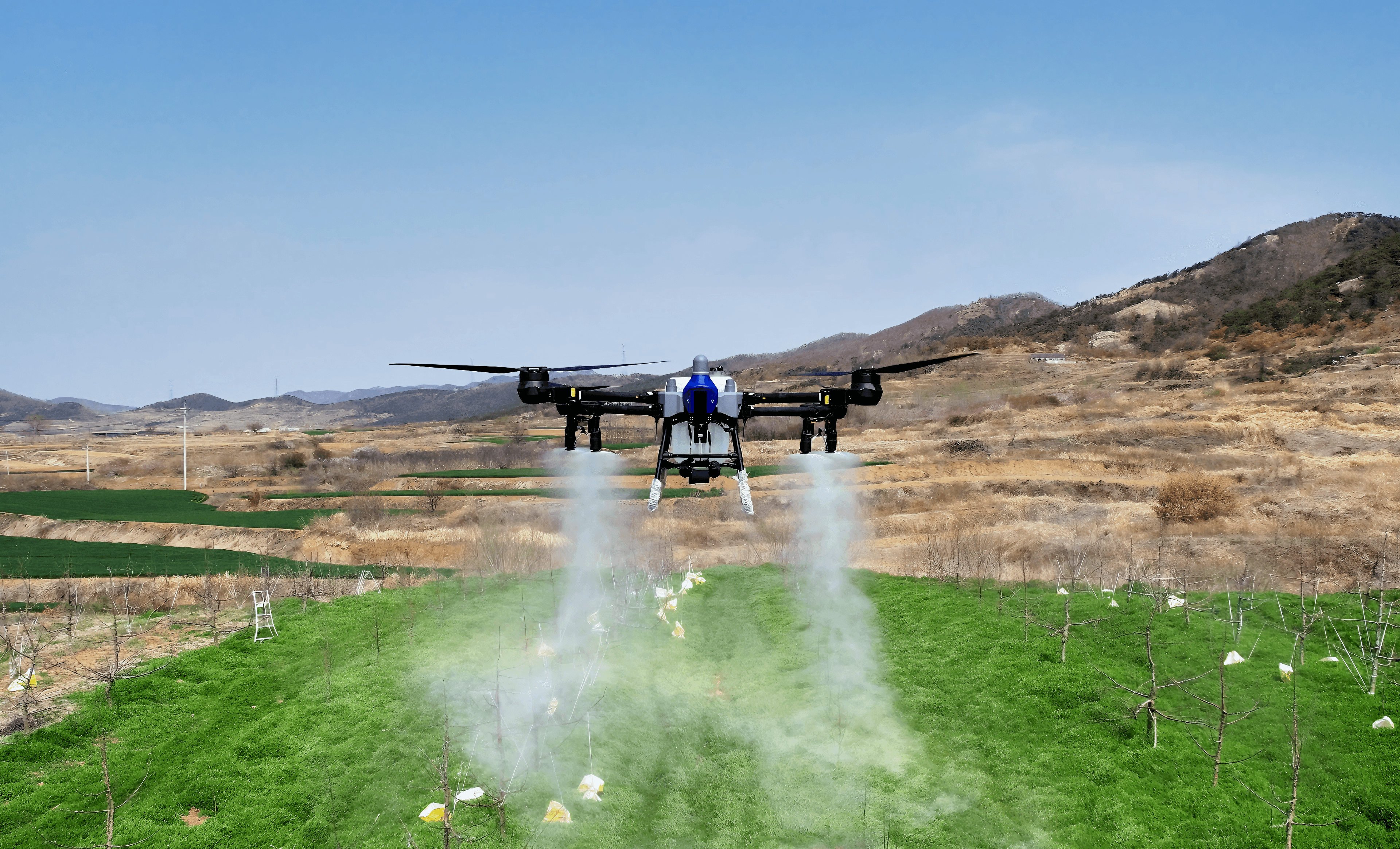
The EAVISION J150 lets you adjust droplet size from 10 to 300 microns. It can also produce a mix of droplet sizes. But these features only matter if calibration shows where the spray actually lands. When applying fungicide, you want enough droplets to reach the leaves that need protection without creating a fine mist that can easily drift away.
3. Best Flight Height When Drone Spraying Corn
Test 7.5-10 ft (2.3-3.0 m) above the canopy when the manual and label permit it. Measure from the tassels, not the ground, and keep clearance for changing plant height, terrain, wires, and poles.
Too high gives droplets more time to evaporate or drift. Too low can make rotor downwash uneven and increases collision risk with tassels. In 2024 University of Kentucky trials, heights of 7.5 and 10 ft produced similar coverage patterns at the same speed. This does not make height unimportant; it means a stable, safe height inside that tested band mattered less than speed in those specific trials.
4. Set Corn Fungicide Drone Speed and Verify Coverage
Start near 9-10 mph (about 4-4.5 m/s), not the aircraft's maximum speed. Final speed depends on flow capacity, volume, height, swath, canopy density, turns, and acceleration.
University of Kentucky research compared 14 and 19 ft/s, or about 9.5 and 13 mph, at two heights. The slower speed produced 2.15-2.76% card coverage, compared with 1.19-1.49% at the faster speed. The researchers concluded that higher speed reduced coverage, even though winds were 4.4 mph or lower.
Do not chase acres per hour until coverage passes. If the pump is already near its practical flow limit, raising speed may lower GPA or stretch the swath pattern. Run a short strip, read the cards, and increase speed only while ear-leaf deposition stays acceptable.
5. Pattern-Test Corn Spray Swath and Route Overlap
Set route spacing from a measured pattern. Catalog spray width describes equipment potential, not the uniform width for one fungicide, corn canopy, height, speed, wind direction, and nozzle setup. Kentucky researchers found a 10-ft effective swath for the T10 used in their trial, then detected greater deposition on one edge even under light wind.
Place cards across at least one-and-a-half expected swaths, including the center and edges. Fly adjacent passes in the planned direction. Tighten route spacing when edge coverage falls below the center, and account for crosswind. Excess overlap can raise dose, create runoff, and reduce output.
The J150 offers an effective spray width of up to 15 meters. For corn fungicide applications, base your settings on the actual width confirmed by a field pattern test. EAVISION's spraying system combines adjustable droplets, flow control, route planning, and rotor airflow; those controls still need validation with the actual tank mix.
Drone Spraying Corn: Check Timing, Weather, and Deposition
Settings cannot rescue a treatment made at the wrong biological time. The Crop Protection Network advises basing corn fungicide timing on disease risk and crop stage; depending on the disease, hybrid, and conditions, applications from VT through R3 may be economically useful. Scout first and use a product rated for the target disease.
Measure wind, gusts, temperature, humidity, and inversion risk at the field. Use the strictest label or local limit. One current EPA-approved corn fungicide label requires at least 2 GPA, medium droplets, no application above 10 mph wind, and no spraying during an inversion. A saved mission never overrides the current label.
Before treating the full field, record product, mix, crop stage, volume, droplet setting, height, speed, effective swath, weather, and card results. If a contractor is doing the work, request the same report. For a comparison of delivery methods after settings are validated, see EAVISION's drone spraying versus helicopter guide.
Conclusion
The five settings must be approved as one field-tested system. Start at the label's aerial carrier volume, select the required spray class, test 7.5-10 ft above the tassels near 9-10 mph, and narrow route spacing to the effective swath shown by cards. Treat the full field only when ear-leaf coverage, weather, aircraft clearance, and label requirements all pass.
Save the final volume, droplet setting, height, speed, swath, weather, crop stage, and deposition results. Reuse that record only when the product, canopy, and conditions are comparable; otherwise, recalibrate before drone spraying corn.
Ask EAVISION or a qualified local dealer to run a water-only pattern test over representative corn before the paid application. A useful demonstration ends with measured coverage, a defensible effective swath, and a saved settings record.
FAQ
Can a drone spray fungicide on corn?
Yes, when the product label permits aerial application to corn and the operator meets aviation, pesticide, and local requirements. Field research shows drones can manage corn foliar disease, but coverage must be calibrated.
What GPA works when drone spraying corn?
Use the label's aerial minimum. Research has tested about 2-5 GPA, with higher volume often improving droplet density. Dense canopy or contact coverage may justify a higher labeled volume.
What droplet size works for drone spraying corn?
Start with the label-required spray class. Medium droplets often balance coverage and drift control, but the correct setting depends on formulation, carrier volume, canopy, weather, and nozzle or atomizer performance.
How high should a corn-spraying drone fly?
A practical test band is about 7.5-10 ft above the tassels when the label and aircraft manual allow. Verify safe clearance and pattern uniformity in the actual field.
When should a drone spray corn fungicide?
Base timing on disease, hybrid, forecast, and crop stage. VT through R3 can be useful for several foliar diseases, but spraying without meaningful disease risk may not pay.