Drone Spraying Wheat: Fungicide, Herbicide, and Field Efficiency Guide


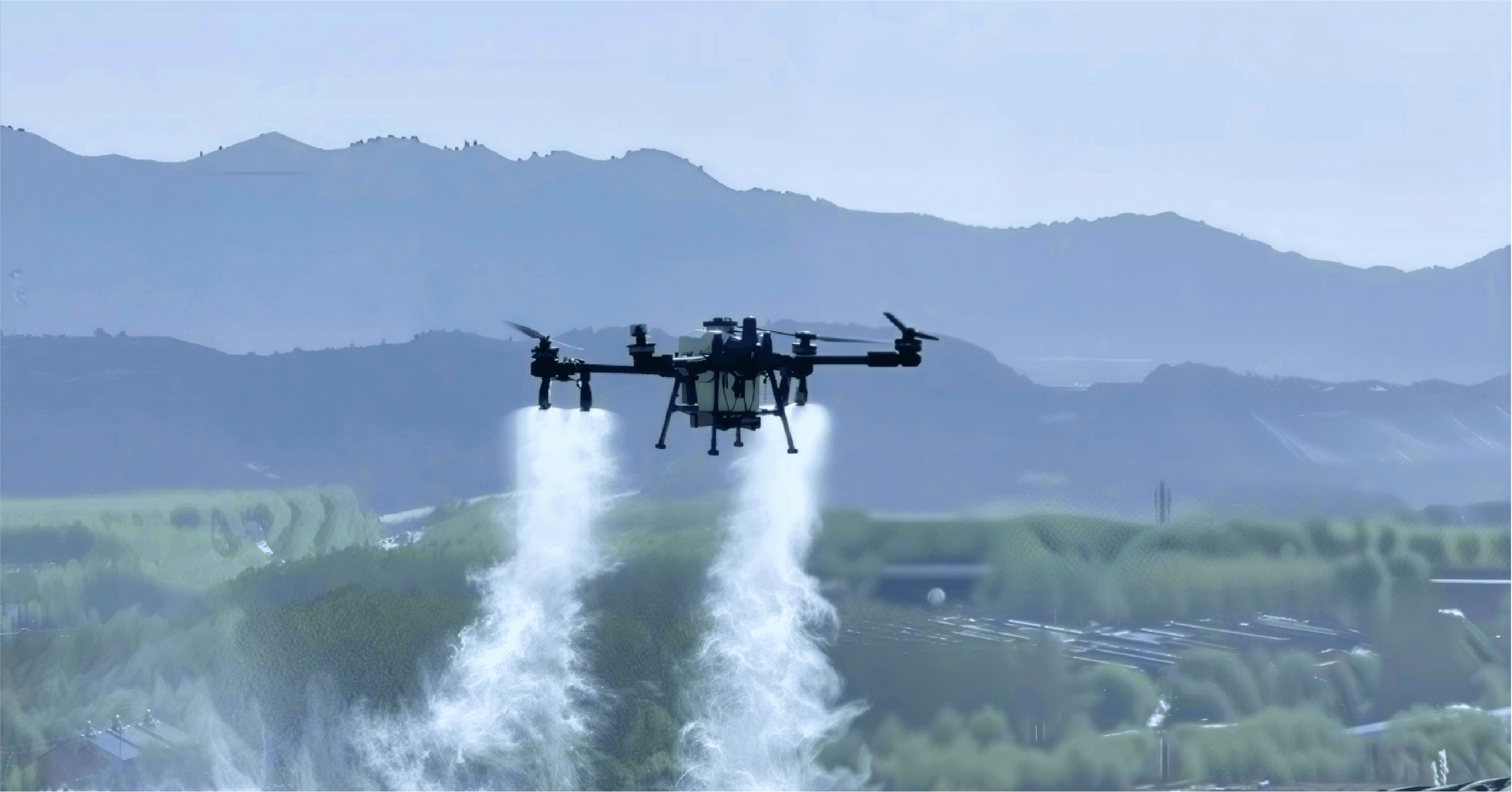
Drone spraying wheat is becoming more attractive because wheat protection depends on short timing windows. Herbicide passes must match weed size, crop stage, and product label. Fungicide spraying must often protect the flag leaf or target flowering windows for Fusarium head blight risk. When wet soil, tall crop, or limited labor delays ground equipment, a crop spraying drone can protect timing.
This guide explains where spray drones fit in wheat, how to think about herbicide and fungicide timing, and what field efficiency really depends on. It is written for commercial investigation, so it includes practical questions for farmers, dealers, and service operators. Always confirm the product label, local pesticide rules, aviation rules, crop stage, weather, and agronomic recommendation before spraying.
EAVISION positions its agricultural drones for grain crops such as rice, wheat, and corn. For wheat work, the main question is not simply whether the drone can fly. The better question is whether the drone, label, crop stage, operator, and weather window all match.
Why Wheat Is a Good Fit for Spray Drones
Wheat is often grown across large, open fields, which can be efficient for route-based drone spraying. The crop also has application windows where timeliness matters. Spring herbicide delays can allow winter annual weeds to compete. Fungicide delays can leave the flag leaf or head exposed during disease-favorable weather. Late ground passes can create wheel tracks or crop damage.
Drone spraying wheat can make sense when:
- Fields are wet and ground sprayers would rut soil
- Wheat is too tall or dense for comfortable ground access
- The farm needs a fast response during a disease-risk window
- Fields are fragmented and hard to reach with larger equipment
- A service provider needs to spray many smaller farms in sequence
- A farmer wants targeted treatment instead of a full ground-rig pass
The EAVISION spraying solution notes that drones can follow pre-planned routes and operate efficiently across field crop conditions. Actual wheat output will depend on field size, product volume, wind, refill workflow, battery rotation, and operator discipline.
Wheat Herbicide Work: Timing, Labels, and Crop Safety
Drone herbicide application in wheat should begin with three checks: weed pressure, crop stage, and product label. Purdue Extension notes that wheat herbicide programs are often limited by crop-stage restrictions, and that some common broadleaf herbicides such as 2,4-D and MCPA have short spring windows between tillering and before jointing. That matters because a drone can improve access, but it cannot make a late label window safe.
Before using a drone for wheat herbicide, verify:
|
Check |
Why it matters |
|
Weed species and density |
Confirms whether treatment is economically justified |
|
Wheat growth stage |
Many labels restrict timing by leaf, tiller, jointing, boot, or flag-leaf stage |
|
Carrier volume |
The drone must deliver the required water volume uniformly |
|
Droplet requirement |
Herbicides often need drift-conscious droplet choices |
|
Sensitive neighbors |
Broadleaf crops, orchards, gardens, and waterways may require extra buffers |
|
Plant-back restrictions |
Important when wheat is followed by soybean or another crop |
|
Tank cleanout |
Residue can injure the next crop or the next customer field |
Do not treat "aerial application" as automatic approval for every drone job. The pesticide label and local regulations decide what is allowed. If the label is unclear, confirm with the chemical supplier, regulator, extension specialist, or qualified crop adviser.
Fungicide Spraying in Wheat: Protect the Upper Canopy
Fungicide spraying in wheat is usually about protecting yield-critical tissue at the right moment. The flag leaf contributes heavily to grain fill, and the head can be vulnerable during flowering when Fusarium head blight risk is present. Michigan State University Extension emphasizes scouting, growth stage, disease pressure, variety susceptibility, and weather when making wheat fungicide decisions.
Key decision points include:
- Full flag leaf emergence: consider whether disease is active on the flag leaf or the leaf below it
- Boot stage: monitor disease in the mid and upper canopy and check label restrictions
- Beginning flowering: evaluate Fusarium head blight risk and local disease models
- After flowering: check whether the useful application window has already closed
The drone advantage is speed and access. If wet soil blocks a ground rig during the flag-leaf or flowering window, a drone may keep the farm from missing a critical pass. The limitation is coverage quality. Fungicide still needs the right droplet setting, carrier volume, swath overlap, flight height, and route plan.
For Fusarium head blight, timing and product choice are especially important. Follow local recommendations, label restrictions, and disease-risk tools. Some fungicide groups may not be appropriate at certain wheat stages, so do not build a spray program from drone availability alone.
Field Efficiency: Speed, Swath, Flow, and Refills
Field efficiency is where many wheat spraying estimates go wrong. The theoretical swath number is not the same as a real workday. A drone must turn, refill, charge batteries, check wind, manage boundaries, and keep records.
Use this simple planning formula:
Gross hectares per hour = speed (m/s) x swath width (m) x 0.36
Adjusted hectares per hour = gross hectares per hour x field efficiency factor
For open wheat fields, field efficiency may be relatively high if the fields are rectangular, refill support is ready, and routes are clean. Efficiency drops when fields are small, boundaries are irregular, wind changes, water supply is far away, or the label requires higher carrier volume.
For planning, ask:
- How many hectares or acres need treatment?
- What carrier volume does the product require?
- How many tanks will the job need?
- Where will water and chemical mixing happen?
- How many batteries and chargers are available?
- How far is the next field?
- What wind limits will stop the job?
Answering these questions gives a better estimate than quoting a single acres-per-day number.
Wet Fields, Tall Crops, and Ground Rig Limits
Wheat often creates access problems. In spring, the field may be too wet for heavy equipment. Later, tall wheat can be damaged by wheel tracks. Disease and weed pressure do not always wait for perfect soil conditions.
This is where drone spraying wheat can be valuable. A drone can enter the field from the air, reduce traffic damage, and serve small or scattered fields without moving a large ground sprayer between locations.
However, access is not the same as permission. If wind is too strong, the label requires a setup the drone cannot deliver, or nearby crops are highly sensitive, the job should wait or use another method. Wheat spraying is a crop-protection decision first and a flight decision second.
J150 or J70 for Wheat Spraying?
Model choice should match acreage, spray frequency, crew size, and service demand.
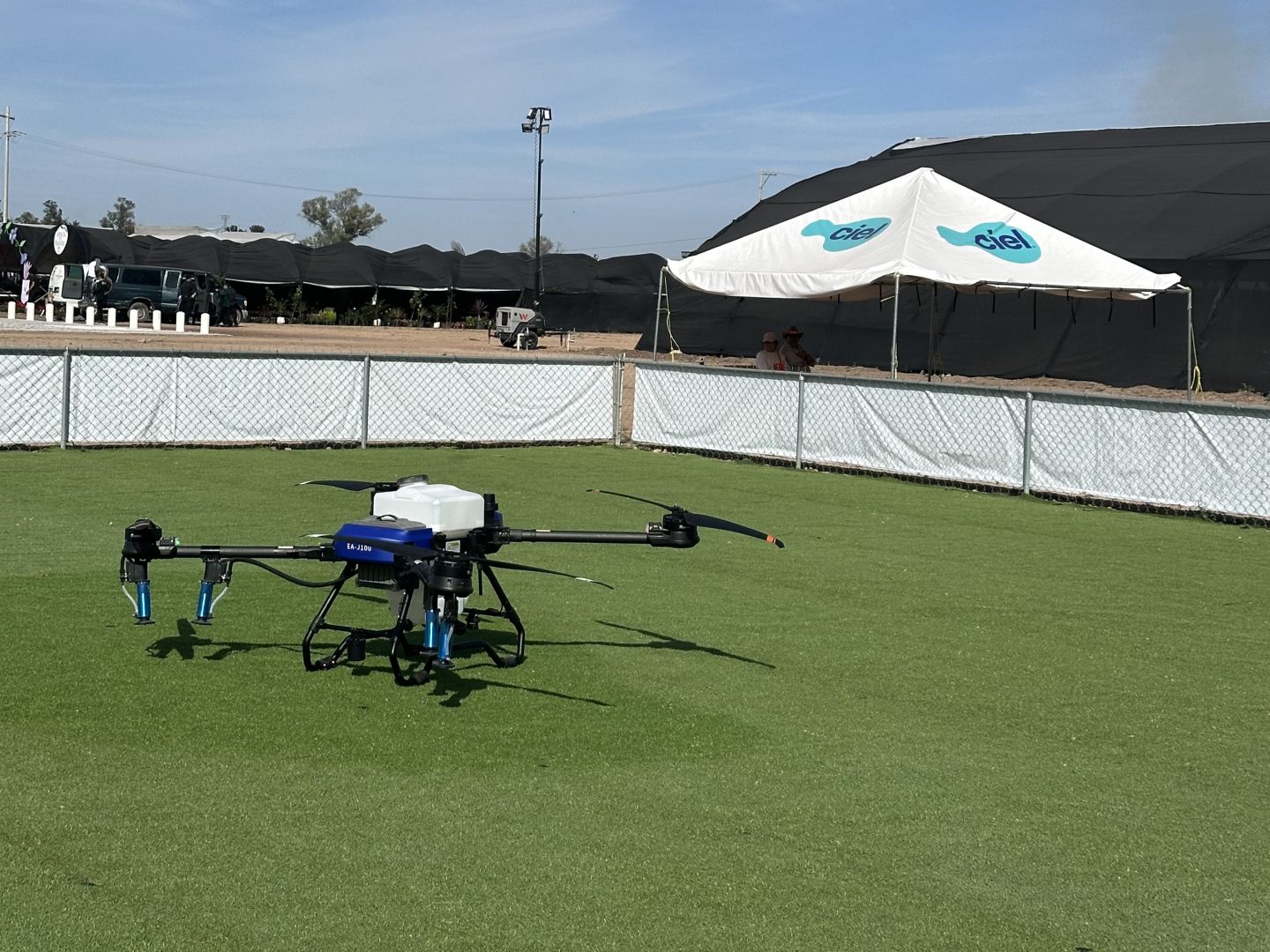
The EAVISION J150 is the stronger fit for larger wheat acreage, custom operators, high seasonal utilization, and farms that want maximum field productivity. Its 70 L tank, high flow capacity, route planning, droplet control, and field-crop workflow make it suitable for repeated wheat passes and multi-farm service work.
The EAVISION J70 is a better fit where compact operation matters. It lists a 35 L tank, 24 L/min maximum flow with four nozzles, 10 m maximum effective spray width, 10-300 micron droplet range, and 12 min/9 min work and charge time under typical spraying conditions. It may suit smaller wheat farms, fragmented plots, solo operators, or dealers that need a flexible entry platform.
Use this quick fit table:
|
Wheat operation |
Main need |
Model direction |
|
Large grain acreage |
Daily capacity and refill workflow |
J150 |
|
Custom spray service |
Uptime, route efficiency, customer records |
J150 |
|
Small or fragmented farms |
Compact transport and practical setup |
J70 |
|
Trial programs or dealer demos |
Lower barrier to field demonstrations |
J70 or J150 depending on acres |
|
Mixed crop service |
Capacity plus crop-specific calibration |
Compare both |
The best model is the one that can complete the planned spray window without overloading the crew or leaving the drone underused.
ROI: What Changes the Payback Period?
Agricultural drone ROI for wheat is driven by treated acres, number of spray passes, avoided outsourcing cost, labor savings, and service revenue. Wheat may have several useful passes, but the drone should not be justified on one emergency fungicide window alone.
Include these ROI inputs:
- Owned wheat acres
- Herbicide, fungicide, and optional insecticide passes
- Custom application fees avoided
- Yield protection value from timely application
- Labor, water, fuel, battery, transport, and maintenance cost
- Service acres from nearby farms
- Training, licensing, insurance, and recordkeeping cost
If the drone also serves rice, corn, soybean, vegetables, orchards, or spreading jobs, the same machine can spread ownership cost across more work. For a wheat-only farm, payback depends heavily on acreage and service opportunities.
Conclusion
Drone spraying wheat is strongest when it solves a timing or access problem. Herbicide work depends on weed pressure, crop stage, label limits, and drift control. Fungicide work depends on scouting, flag-leaf protection, flowering timing, product selection, and coverage quality. Field efficiency depends on more than flight speed; it also depends on swath, flow, refills, batteries, field shape, weather, and records.
For larger wheat acreage or service businesses, the EAVISION J150 offers strong capacity with a 70 L tank, high flow capability, route planning, and droplet control. For smaller farms or fragmented fields, the EAVISION J70 can offer a more compact workflow. In both cases, the best wheat spraying program starts with the crop and label, then chooses the drone setup that can complete the work safely and on time.
FAQ
Can drones spray wheat fungicide?
Yes, drones can spray wheat fungicide when the product label, local rules, equipment setup, crop stage, and weather conditions support the application. Timing is critical, especially around flag leaf and flowering windows.
Is drone spraying wheat better than a ground sprayer?
It depends on the job. Drones can be better for wet fields, fragmented fields, urgent spray windows, and reduced crop traffic. Ground sprayers may be better for very large fields, higher carrier volumes, or labels that require ground equipment.
Can a drone apply wheat herbicide safely?
Yes, but only with label-compliant setup, correct crop stage, drift control, buffer planning, cleanout discipline, and qualified operation. Herbicide work requires more caution than many fungicide or foliar nutrition passes.