Fruit Tree Drone Spray: How to Reach Under-Leaf and Inner-Canopy Targets


Fruit trees are one of the hardest tests for agricultural drones. A flat crop may only require uniform top coverage, but fruit trees have layered canopies, shaded leaf surfaces, dense inner branches, uneven tree height, and pests that often hide where spray is hardest to reach. That is why a fruit tree drone spray program should start with target zones, not just tank size or hectares per hour.
This guide explains how to plan orchard drone spraying for under-leaf pest control and inner-canopy targets. The goal is practical: help growers understand what to adjust before expecting a drone to deliver useful canopy penetration.
Why Under-Leaf and Inner-Canopy Targets Are Hard to Reach
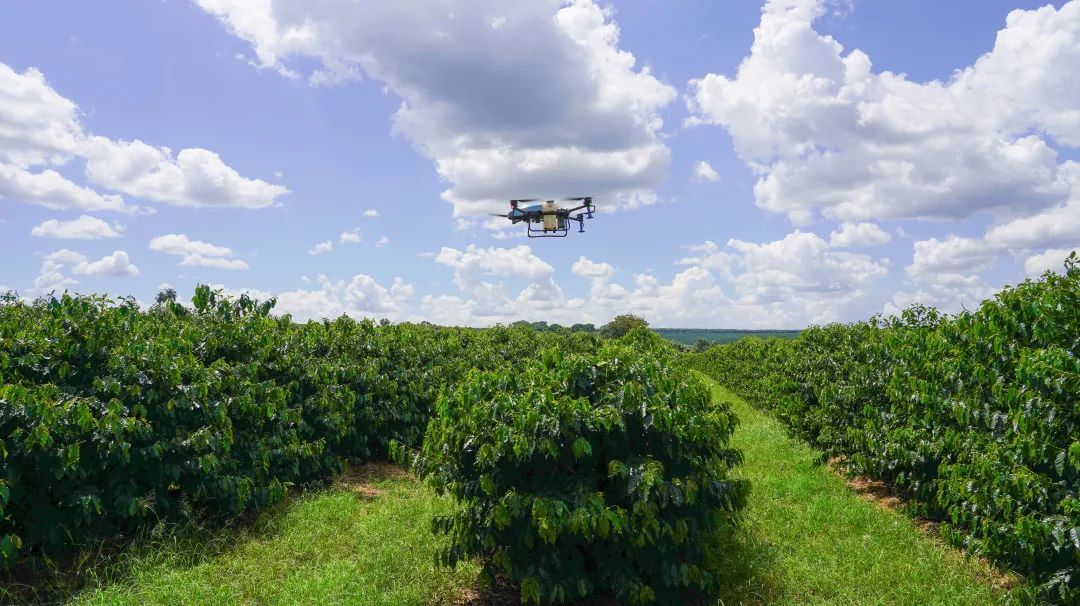
Fruit tree canopies are three-dimensional. Leaves overlap, branches block airflow, and the outer canopy can intercept spray before it reaches the inner zone. The challenge becomes even harder when the target pest lives under leaves, inside dense shoots, around fruit clusters, or deep in the canopy.
Common problem zones include:
- Undersides of leaves where mites, whiteflies, or young pest stages may shelter
- Inner canopy zones where humidity and disease pressure can be higher
- Tall tree tops that receive uneven coverage from ground sprayers
- Lower skirt areas that are shielded by outer foliage
- Row edges where wind and drift can change deposition
- Fruit clusters that need coverage without excessive residue risk
Traditional orchard sprayers use air assistance to push droplets into the canopy. Drone spraying has a different airflow pattern, so operators must manage flight height, speed, row direction, droplet size, swath overlap, and weather more carefully. A drone flying too fast or too high may wet only the outer leaf layer. A drone flying too low or too slow may create over-application in one zone while missing another.
The first rule is simple: identify the target before choosing the setting.
1. Identify the Target Zone Before Setting the Drone
A good fruit tree drone spray plan begins with scouting. Walk the block and decide where the spray must land. Is the target on new flush, the underside of leaves, fruit clusters, upper canopy, lower canopy, or the inner core? The route and spray setup should match that answer.
Before spraying, record:
1. Tree species and variety
2. Tree height, row spacing, and canopy width
3. Canopy density and pruning condition
4. Pest or disease target location
5. Product label, rate, PHI, REI, and allowed application method
6. Wind speed, wind direction, temperature, and humidity
7. Obstacles such as wires, poles, nets, slopes, and uneven terrain
8. Sensitive neighbors, roads, water, or nearby crops
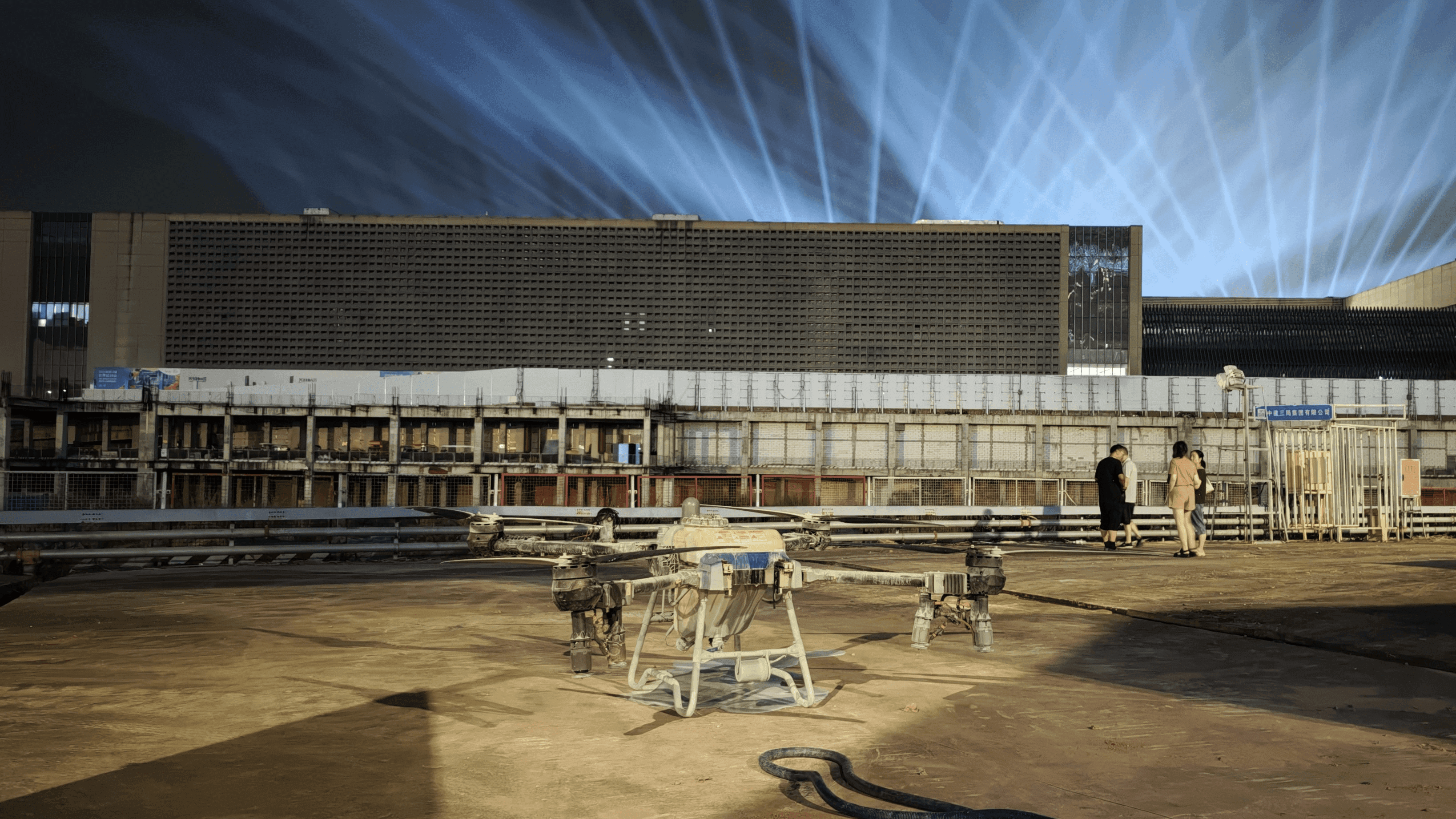
Route planning matters because fruit blocks are rarely simple rectangles. Slopes, missing trees, terraces, irregular rows, and wind direction can all affect coverage. EAVISION J150 route planning and orchard positioning are useful because orchard drone spraying needs stable flight in complex terrain, not only open-field speed.
Use coverage checks when testing a new block. Water-sensitive paper, leaf samples, or marked test branches can show whether droplets reached the intended surface. If the underside or inner canopy is dry, adjust the setup before treating the full block.
2. Match Droplet Size to Leaf Surface and Canopy Depth
Droplet size is one of the main levers in under-leaf pest control. Larger droplets are less drift-prone and can coat exposed leaf surfaces well, but they may not move easily into hidden zones. Smaller droplets may follow airflow deeper into a canopy, but they are more sensitive to wind, evaporation, and drift.
That is why a single droplet idea can be too simple for fruit trees. EAVISION's J70 page describes exclusive hybrid droplet technology that can deliver four droplet sizes in a single flight: larger droplets coat leaf surfaces while smaller droplets help cover the underside. It also describes MCRFF, the Mist Counter-rotating Rolling Flow Field, which creates multi-directional vortex movement for dense orchard canopies.
Use this practical framework:
|
Target |
Setup Priority |
Watchout |
|
Outer leaf surface |
Uniform coating and drift control |
Avoid excessive runoff |
|
Under-leaf pests |
Airflow plus fine or mixed droplets |
Watch wind and evaporation |
|
Inner canopy |
Penetration and route overlap |
Avoid only wetting the outside |
|
Fruit clusters |
Label rate and residue safety |
Avoid over-application |
|
Tall canopy |
Height consistency and obstacle safety |
Confirm coverage at top and inside |
Droplet size should never be chosen only for appearance. A mist cloud may look impressive, but the test is deposition on the target surface.
3. Use Airflow and Flight Speed to Push Mist Into the Canopy
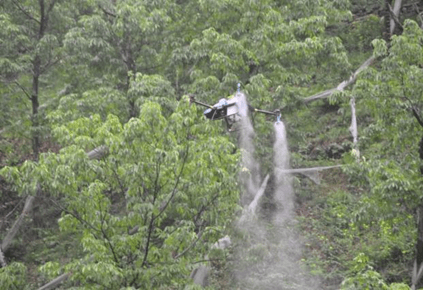
Airflow is the hidden variable in fruit tree drone spray work. Droplets do not move into the canopy by magic. They move because of rotor downwash, surrounding air movement, row geometry, and the drone's flight speed.
EAVISION's From Coverage to Penetration article explains that airflow determines penetration, not droplets alone. This is especially important in orchards because the outer canopy can act like a screen. If airflow does not move mist through the leaf layer, inner-canopy targets may remain untreated.
Practical setup points:
- Fly at a height that lets mist interact with the canopy, not drift above it
- Avoid excessive speed that reduces dwell time over target zones
- Match row direction to wind where possible
- Keep consistent distance from canopy surfaces
- Use overlap to avoid dry gaps between passes
- Reduce work during unsuitable wind or high evaporation conditions
- Recheck coverage after changing speed, height, or droplet setting
In dense fruit trees, slower is not always better and faster is not always more efficient. The right speed is the one that gives useful deposition without drift, runoff, or missed zones.
Fruit Tree Spray Setup Checklist
Use this checklist before running a fruit tree drone spray job.
|
Step |
What to Confirm |
|
Target |
Pest, disease, nutrient, or fruit-zone objective |
|
Label |
Crop, rate, method, PHI, REI, PPE, drift limits |
|
Canopy |
Height, density, pruning, row spacing, slope |
|
Drone |
J150 or J70, tank size, flow rate, droplet range |
|
Route |
Boundaries, row direction, obstacles, turn zones |
|
Settings |
Volume, droplet size, speed, height, swath, overlap |
|
Weather |
Wind, temperature, humidity, rain risk |
|
Coverage |
Water-sensitive paper or leaf-surface checks |
|
Cleaning |
Tank, lines, nozzles, filters, chemical residues |
|
Support |
Parts, training, maintenance, and after-sales support |
For growers, the most important habit is testing. Do not assume that a setting works because the drone flew the route. Confirm coverage in the target zone.
Conclusion
Fruit tree drone spray success depends on more than flying over the orchard. Under-leaf and inner-canopy targets require a clear target map, label review, droplet strategy, airflow management, route planning, coverage checks, cleaning, and support.
FAQ
Can drones spray fruit trees effectively?
Yes, but fruit tree drone spray work requires careful setup. Operators must consider canopy density, pest location, droplet size, airflow, speed, height, weather, and label requirements.
What is under-leaf pest control?
Under-leaf pest control focuses on pests that live or feed on the underside of leaves. It requires spray movement beyond top-surface coverage, often using airflow, mixed droplet strategy, and coverage checks.
Why does droplet size matter in orchard drone spraying?
Droplet size affects coverage, penetration, evaporation, and drift. Larger droplets are less drift-prone, while smaller droplets may help reach hidden surfaces when airflow and weather conditions are suitable.
How do I know if spray reached the inner canopy?
Use water-sensitive paper, leaf samples, or marked test zones inside the canopy. Check both outer and inner leaves, including underside surfaces, before scaling the setting across the block.
Which EAVISION drone is better for fruit trees?
J150 is a strong fit for larger orchard service providers and high-capacity work. J70 may fit smaller orchards, compact blocks, and demonstration programs. The best choice depends on canopy, workload, and support needs.