Agricultural Drone Spraying Near Me: 8 Questions to Ask Before Booking


If you search agricultural drone spraying near me, you are probably not looking for a general explanation of drones. You need someone who can arrive in the right spray window, understand your crop, follow the product label, document the job, and avoid turning a short application into a season-long problem.
The nearest provider is not always the best provider. A capable drone spraying team should be able to explain licensing, field boundaries, chemical handling, weather limits, swath control, coverage proof, pricing, and what happens if an aircraft or pump goes down during your spray window. This guide gives farms, farm managers, crop consultants, and dealers eight practical questions to ask before booking a local drone spraying service.
Before you compare agricultural drone spraying near me results
Local search results are useful for building a shortlist, but they are not a quality audit. A page that ranks for agricultural drone spraying near me may be a true aerial applicator, a general drone service, a new operator, a reseller, or a broker who sends work to another crew. The first screening call should establish who will actually fly, who holds the documents, and who is responsible if the job is delayed or disputed.
Write down the crop, field size, target pest or disease, product label, desired water volume, terrain, nearby sensitive areas, water source, gate access, and the latest possible treatment date before you call. A good service provider will ask for those details. If they only ask for acres and location, keep asking questions.
8 questions to ask before booking a drone spraying service
1. What licenses, approvals, and insurance does the operator hold?
Drone spraying is not the same as taking aerial photos. In the United States, operators who dispense chemicals from aircraft may need FAA authorization for agricultural aircraft operations under 14 CFR Part 137, and they may also need to comply with small UAS, Remote ID, state pesticide applicator, product-label, and business requirements. Other countries and regions have their own aviation and pesticide rules. Do not treat this paragraph as legal advice; treat it as a prompt to ask for proof.
Ask the provider to send documents before the job is scheduled. At minimum, the name on the contract should match the business, insurance, and applicator documents. If a subcontractor will fly, ask for that subcontractor's documents too. If the aircraft is an EAVISION model in the U.S. market, also review EAVISION's Remote ID statement and ask the provider how the specific aircraft is operated in compliance with current rules.
· Ask who is the pilot in command and who is the certified pesticide applicator.
· Confirm liability insurance and any chemical application coverage.
· Ask whether waivers, exemptions, or local notifications are required for your location.
· Require written confirmation that the product label allows the proposed application method.
2. Which crops, terrain, and field conditions has the team sprayed?
Experience should be specific. A team that performs well in flat rice fields may still need a different plan for citrus blocks, vineyards, terraced orchards, cotton defoliation, pasture edges, wet lowlands, or small irregular vegetable plots. The service provider should understand canopy height, row direction, slope, access lanes, refill logistics, and the difference between treating the outside of a canopy and reaching interior target zones.
Ask for examples of fields similar to yours. The answer does not need to reveal another farm's private information, but it should include crop type, approximate acreage, terrain, application volume, timing, and how coverage was checked. If the operator has only flown demos in open fields, consider starting with a small test block before booking the whole farm.
3. What drone, tank, flow rate, and droplet range will be used?
The aircraft and spray system shape the service you receive. A small tank may work for spot treatment but create too many refill cycles on larger acreage. A high flow rate can support higher application volumes, but it still has to match speed, swath, droplets, canopy, and label directions. Obstacle sensing and terrain-following functions matter more in orchards, terraces, poles, wires, and sloped fields than in open row-crop blocks.
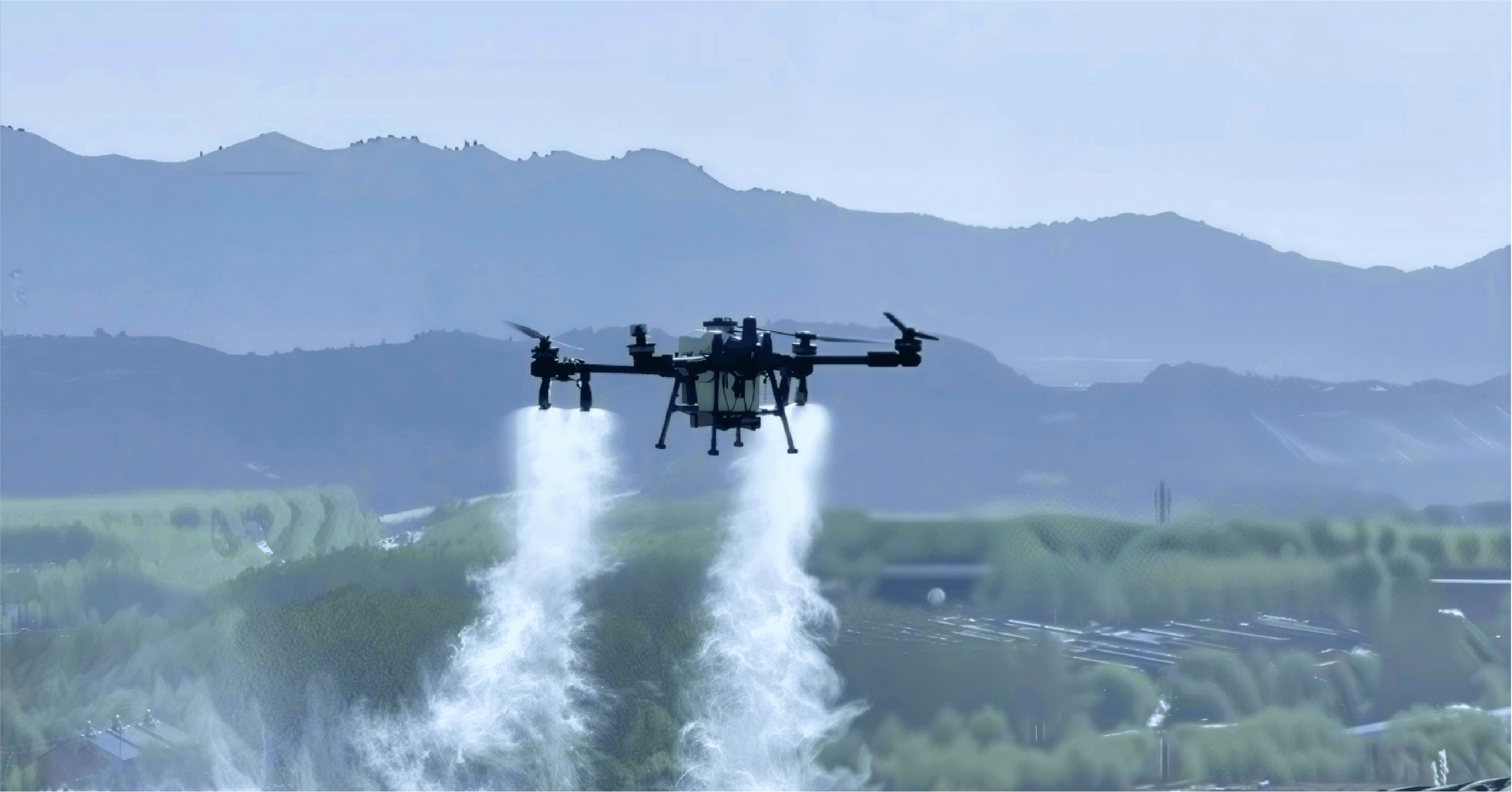
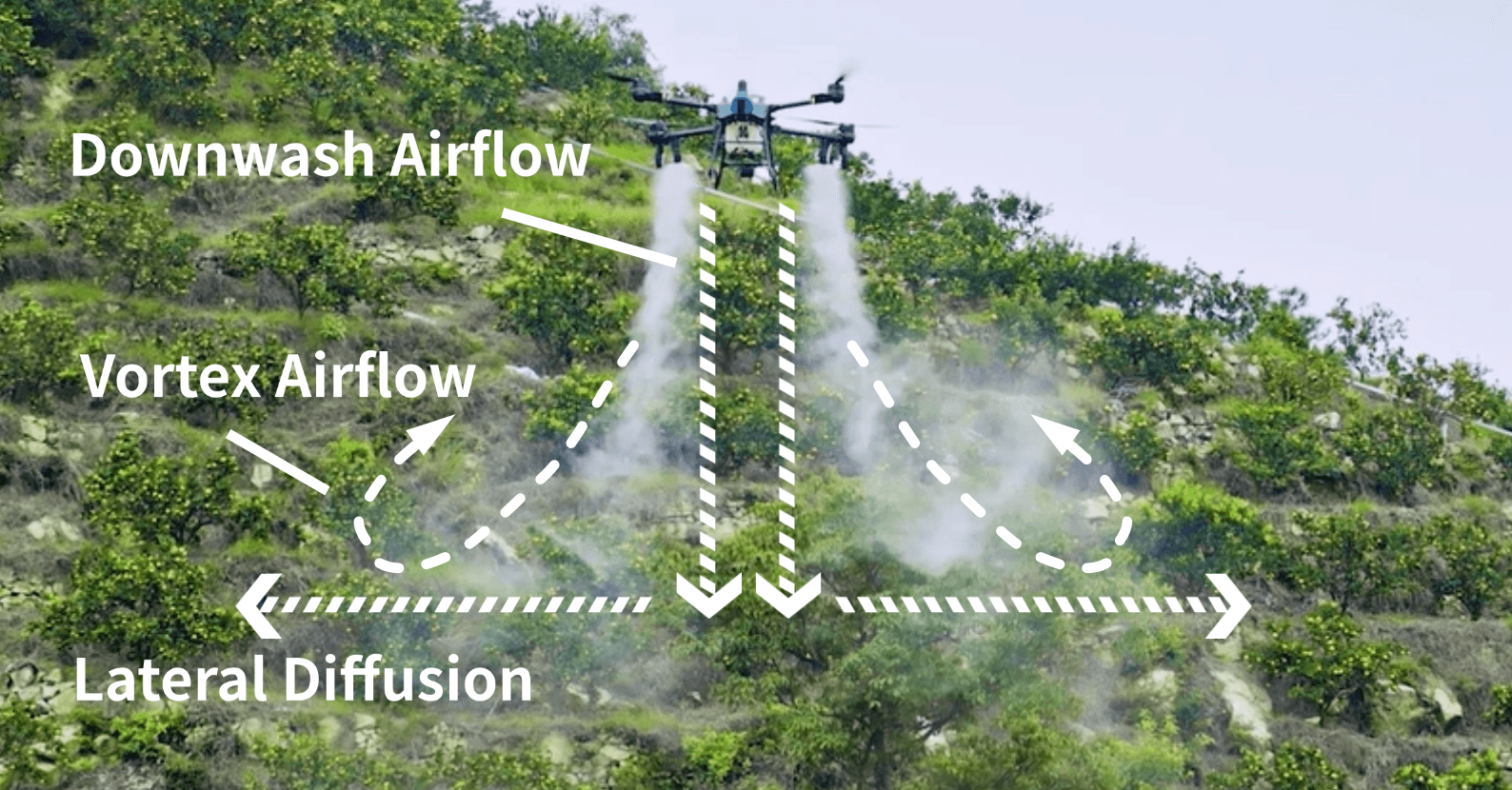
For example, EAVISION's EA-J150 agricultural spraying drone page lists a 70 L spray tank, 15 m effective spray width, 10-300 µm droplet size range, and 40 L/min maximum flow rate. EAVISION's spraying solution page also explains its fourth-generation CCMS bimodal mist nozzle, adjustable droplets, and airflow use for canopy penetration. Those published specifications are useful benchmarks, but the local provider still needs to explain the exact configuration, settings, and limitations for your job.
When comparing agricultural drone spraying services, ask the provider to write down the planned application volume, speed, height, swath, droplet setting, overlap, tank mix process, refill method, and expected acres per hour. That information turns a marketing claim into an operating plan.
4. How will they prove coverage, swath, and canopy penetration?
Coverage proof is where serious providers separate themselves from casual operators. A drone can make an impressive cloud, but the crop only benefits when spray reaches the intended target at the right dose and uniformity. Ask how the crew confirms effective swath, handles overlap, checks deposition across the row, and adjusts when canopy density or wind changes.
For high-value crops, ask whether the team uses water-sensitive paper or another field check before the main job. Place cards in representative zones: outside leaves, interior canopy, lower canopy, edge rows, and a known difficult corner. After a test pass, review deposition with the operator. If the pattern is weak or uneven, the crew should adjust route spacing, altitude, speed, flow, or droplet settings before continuing.
· Ask for a test pass on a representative row or block.
· Confirm how swath width is selected and whether it changes by crop.
· Ask how the crew handles headlands, borders, trees, poles, ditches, and irregular shapes.
· Request photos or records from coverage checks when the crop value justifies it.
5. What weather limits and drift controls are written into the plan?
When a local service is under pressure to finish many farms, the weather conversation matters. Wind speed, wind direction, temperature, humidity, temperature inversions, rain risk, and nearby sensitive areas can affect drift, coverage, and efficacy. Ask the provider for written go/no-go limits before booking. The plan should also say who has authority to pause or cancel the job.
Pesticide labels are legally important documents. The U.S. EPA's pesticide-label guidance explains that the label contains directions, precautions, and use requirements. Before any drone spraying job, confirm that the product label, local rules, and operator approvals allow the proposed aerial or drone application. If the label, weather, or field condition is not right, the professional answer is to wait, change the plan, or decline the job.
Nearby neighbors, bee yards, waterways, greenhouses, organic fields, schools, roads, and livestock areas should be marked before flight. Do not rely on a quick conversation at the gate. Ask for a field map, buffer discussion, and a record of the weather readings taken during the job.
6. How is the quote built, and what is not included?
Searchers comparing agricultural drone spraying near me results often focus first on price per acre. That number is useful, but it can be misleading without scope. A quote may or may not include travel, minimum acreage, water sourcing, mixing support, field data collection, scout time, product handling, extra tanks, difficult terrain, nighttime operation, repeat passes, coverage verification, or written reports.
Ask for a line-item quote. The quote should state the crop, field ID, mapped acres, target date range, application volume, estimated product volume, whether chemicals are supplied by the farm or applicator, who provides water, who handles rinse and disposal, and whether cancellation or rework fees apply. If the acreage is small, ask whether the provider has a minimum charge or can combine nearby fields.
The cheapest quote is not always the best value. A slightly higher quote can be more economical if the provider shows stronger compliance, better records, reliable coverage checks, and backup support. The reverse is also true: a premium quote should come with a clear operational reason.
7. What records and post-job reports will you receive?
A completed drone spraying job should leave more than an invoice. Ask for records that support agronomy, compliance, and future planning. At a minimum, the job record should include date, start and finish time, field name or boundary, acres treated, product and rate, tank mix, operator, aircraft, application volume, route data, weather conditions, and any untreated areas or exceptions.
Good records help answer practical questions later: Was the wet corner skipped? Did the operator slow down near the tree line? Was the wind within the agreed limit? Which block was treated before the rain? If you plan to repeat drone spraying, consistent records also make it easier to improve timing, route design, water volume, and scouting priorities.
8. Who supports the aircraft if something fails during the spray window?
Local availability is only useful if the operator can finish the job. Ask what happens if a pump fails, a battery overheats, a propeller is damaged, a controller loses signal, or the aircraft needs a firmware or sensor check. The provider should have a plan for spare batteries, chargers, nozzles or atomizers, pumps, filters, hoses, propellers, cleaning supplies, and technical support.
If the provider uses EAVISION equipment, ask how they work with the brand's after-sales support and local dealer network. If you are considering buying equipment instead of hiring a service, use the service provider's workflow as a benchmark for your own crew: aircraft, operator training, refill logistics, spare parts, documentation, and backup capacity all matter.
Red flags when hiring agricultural drone spraying near me
Use red flags to narrow your shortlist quickly. One weak answer may be fixable. Several weak answers usually mean the provider is not ready for your field, crop, or compliance environment.
· The provider cannot identify the pilot, applicator, aircraft, or spray system before booking.
· The quote only says price per acre and does not define application volume, minimums, maps, or reporting.
· The operator says drone spraying is always allowed without checking the product label or local rules.
· No one discusses wind, drift-sensitive areas, water sources, obstacles, or weather cancellation.
· The team cannot describe how coverage or swath will be verified.
· The provider has no plan for breakdowns, spare parts, batteries, or dealer support.
· They pressure you to spray outside the label, outside agreed weather limits, or without written scope.
A simple booking workflow for farms
After you shortlist local providers, use a simple workflow. First, send a field packet with boundaries, crop, target pest or disease, label, desired timing, obstacles, water location, and contact person. Second, ask the provider to return a written plan and quote. Third, review documents, insurance, and approvals. Fourth, schedule a test pass or small first block when the crop value or field complexity justifies it. Fifth, approve the full job only when weather, label, product, crew, and equipment are ready.
If you are comparing hiring a service with building your own drone program, use the same questions. EAVISION's agricultural drone product page and spraying solution can help buyers evaluate tank capacity, swath, droplet control, airflow, data capture, spreading, lifting, and support in a structured way. A demo is most valuable when it follows the same standard you would expect from a professional service provider.
FAQ
How do I choose agricultural drone spraying near me?
Choose a provider by checking licensing, insurance, crop experience, product-label compliance, equipment, coverage verification, written weather limits, pricing scope, records, and support. Distance matters, but reliability and documentation matter more.
What should I ask a drone spraying service before booking?
Ask who will fly, who is the applicator, what aircraft and spray system will be used, whether the label allows the application, how the field will be mapped, how coverage will be checked, what weather limits apply, what the quote includes, and what report you will receive afterward.
Do agricultural drone spraying operators need FAA approval in the United States?
Many U.S. drone spraying operations that dispense chemicals from aircraft involve FAA agricultural aircraft rules, including Part 137, along with other UAS and Remote ID requirements. State pesticide applicator rules and product-label requirements may also apply. Ask the provider to show the documents relevant to your job.
How is agricultural drone spraying usually priced?
Pricing is often quoted per acre, but the final cost can depend on minimum acreage, travel, crop type, field complexity, water volume, chemical handling, mapping, coverage checks, reporting, and weather delays. Ask for a written line-item quote instead of relying only on a headline per-acre rate.
What proof should I ask for after drone spraying?
Ask for a job report with field boundaries, treated acres, date and time, product and rate, application volume, operator, aircraft, weather conditions, route data, skipped areas, and any exceptions. For high-value crops, ask whether coverage checks or photos can be included.