Drone Lifting Capacity: How Much Can Farm Drones Carry?


A farm drone may carry liquid, fertilizer, seed, feed, tools, or a suspended cargo load. That part sounds simple. Then the spec sheet arrives with tank volume, payload, empty weight, and maximum takeoff weight, and suddenly it is not so simple anymore. These numbers are related, but they are not the same thing.
The short answer is that today’s large agricultural drones can carry roughly 35 to 80 kilograms in common spray, spread, or lift configurations. The exact figure depends on the model and module. More importantly, the maximum printed number is not always the best working load for every route. Let us make the math simple.
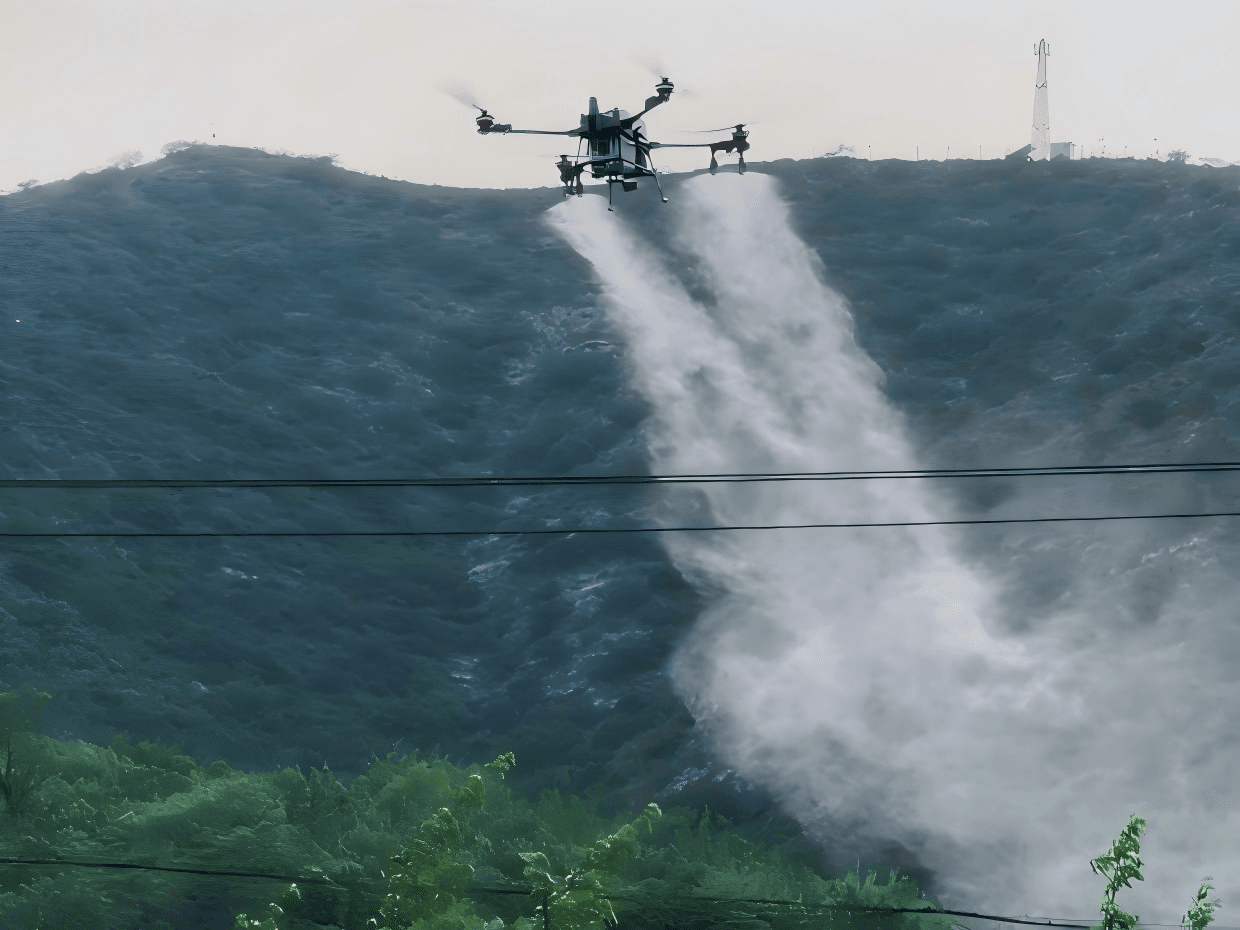
What Does Drone Carrying Capacity Mean
Drone carrying capacity is the mass the aircraft can transport in a stated configuration. That may mean liquid inside a spray tank, dry material in a spreader, or cargo on a lifting hook. A manufacturer should identify which configuration the rating describes. If it does not, ask before comparing models.
Drone payload capacity is often used as a general term for the useful load. Yet the useful load can include more than the product you want to move. A tank, hopper, pump, hook, cable, container, sensor, or accessory may use part of the available weight allowance. This is why one drone can publish different spray, spread, and lift figures.
Drone Payload Capacity vs Tank Size and MTOW
Three specifications matter most. Tank capacity is volume, usually shown in liters. Payload is mass, usually shown in kilograms. Maximum takeoff weight, or MTOW, is the total permitted mass of the aircraft at takeoff under the stated configuration and conditions.
|
Specification |
What it measures |
What the farmer should check |
|
Tank capacity |
Liquid volume |
Rated volume, usable volume, residual liquid, and product density |
|
Payload |
Useful carried mass |
Whether the rating includes the module, container, rigging, or accessories |
|
MTOW |
Total takeoff mass |
Aircraft, battery, module, product, rigging, and every installed item |
|
Empty weight |
Aircraft baseline mass |
Whether the battery and working module are included in the published figure |
A 70-liter tank can hold about 70 kilograms of water because one liter of water is close to one kilogram. A denser liquid can weigh more. A lighter mixture can weigh less. Volume alone cannot confirm takeoff mass. Use the product density from its documentation and stay inside the aircraft limits.
How Much Weight Can an Agricultural Drone Carry
For a useful real-world reference, EAVISION's current products show how capacity changes by job. The EA-J150 has a 70-liter rated spray tank, an 80-kilogram maximum spreading payload, and a lifting solution rated up to 75 kilograms. Its published maximum takeoff weight is 145 kilograms for spraying and 149.9 kilograms for spreading or lifting.
The more compact EA-J70 uses a 35-liter spray tank and lists a 50-kilogram spreading load. Its product page highlights lifting capability up to 60 kilograms. Published values can vary by module, market, and document revision, so the model name alone is not enough. Confirm the exact aircraft, attachment, firmware, manual, and local approval before planning work.
|
Model |
Spray tank |
Spread load |
Lift rating |
Best starting point |
|
EA-J150 |
70 L |
80 kg max |
Up to 75 kg |
Large farms, commercial routes, higher-volume work |
|
EA-J70 |
35 L |
50 kg |
Up to 60 kg* |
Compact transport, mixed tasks, smaller routes |
Specification note The J70 page contains configuration-specific lifting figures. Confirm the supplied lifting kit and current technical manual with the dealer.
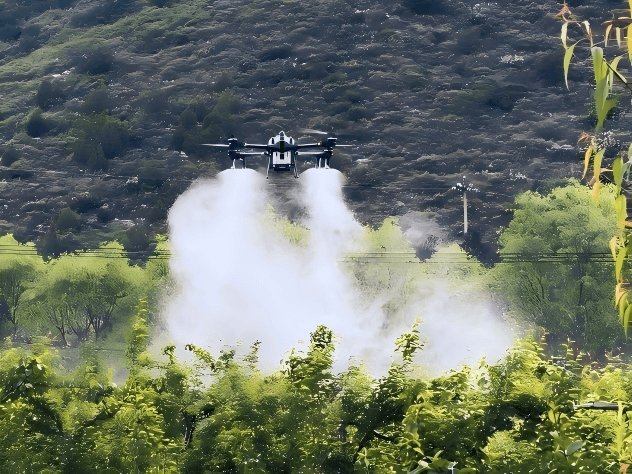
How to Calculate Usable Drone Payload Capacity
Start with the applicable MTOW, not the biggest payload number in a brochure. Then subtract everything already on the aircraft. The exact empty-weight definition matters, so use the manual for the selected module.
Available load = applicable MTOW − operating aircraft weight − installed equipment
For spray work, convert volume into mass before takeoff. Multiply liters by the liquid density in kilograms per liter. Then add the tank, pump, hoses, and any accessories that are not already included in the published operating weight. For lifting, include the hook, cable, sling, crate, and packaging. The farm product is only one part of the suspended load.
Suppose a lifting setup allows 75 kilograms and the hook, cable, sling, and crate weigh 7 kilograms. The cargo itself has no more than 68 kilograms available before any additional operational margin. If the route, weather, or manual calls for a lower limit, use the lower number.
Why Maximum Payload Changes in the Field
A maximum rating is a boundary, not a promise that every mission should launch at that number. Payload affects power demand, acceleration, braking, climb rate, battery reserve, and emergency options. A load that works on a short flat route may be a poor choice for a steep climb on a hot, windy afternoon.
- Elevation and air density. Higher or hotter air can reduce lift and cooling performance.
- Wind and gusts. A suspended load can swing and create more drag than a tank inside the airframe.
- Route length and vertical change. Longer climbs need more energy and reserve.
- Load shape and balance. Compact, centered loads are easier to control than wide or shifting cargo.
- Battery condition. Temperature, age, state of charge, and cell health affect available power.
- Obstacles and landing options. Complex routes may justify a more conservative load.
How Spraying, Spreading, and Lifting Affect Payload Requirements
- Spraying is mainly a liquid-volume problem. Check density, target application rate, tank residual, flow, and refill workflow. A larger tank may reduce refill frequency, but it does not replace coverage and deposition checks.
- Spreading is a material-flow problem as well as a weight problem. Granule size, moisture, bridging, feeder calibration, and field rate can limit output before maximum payload becomes the bottleneck.
- Lifting adds rigging and load motion. Weigh the complete suspended assembly. Keep the center of gravity predictable. Use a secure loading point and a clear drop zone. Never place people beneath the route.
How to Choose the Right Drone Carrying Capacity
Begin with the job, not the aircraft. List the heaviest normal load, its dimensions, the module and rigging weight, route distance, elevation change, wind exposure, number of trips, and required turnaround time. Then ask the dealer to demonstrate that exact type of route with a safe test load.
A smaller drone can be the better tool when loads are light, fields are tight, transport is frequent, or one person must handle the system. A larger platform makes more sense when the farm repeatedly moves heavier inputs and has the crew, charging, loading, transport, maintenance, and operating permissions to support it.
If purchase cost is part of the decision, the agricultural drone total cost of ownership guide helps add batteries, power, parts, training, transport, and downtime.
How to Test Drone Payload Capacity Before Buying
Ask for a loaded demonstration, not only an empty flight beside the dealership. Use a known test weight and a route similar to the farm. Record takeoff mass, temperature, wind, elevation change, flight time, battery used, landing reserve, turnaround time, and any warnings. For lifting work, watch load swing during takeoff, turns, braking, and descent.
Repeat the cycle several times. One successful flight shows that the drone can lift the load once. A useful farm system must move it consistently while keeping the required battery reserve and completing the daily workload. Put the tested configuration and operating limits in the purchase record.
For a configuration review, field demonstration, or local support discussion, contact an EAVISION representative. Businesses that want to provide product sales, training, parts, and service can also apply to become an EAVISION dealer.
FAQ
What is the difference between drone carrying capacity and payload capacity?
They are often used in the same way. In practice, carrying capacity should be tied to a specific spray, spread, or lift configuration. Payload may include the working module, container, rigging, and accessories as well as the farm material.
How much weight can an agricultural drone carry?
Common large agricultural platforms carry roughly 35 to 80 kilograms, depending on the model and task. EAVISION publishes a 70-liter spray tank, an 80-kilogram maximum spreading payload, and a lifting capacity of up to 75 kilograms for the J150 platform.
Does a 70-liter tank always mean a 70-kilogram payload?
No. Seventy liters of water is close to 70 kilograms, but other liquids can have different densities. The tank, pump, residual liquid, accessories, and applicable maximum takeoff weight must also be considered.
Can a farm drone lift its maximum payload in strong wind?
A maximum rating should not be treated as a target in every condition. Wind, heat, elevation, route length, climb, load shape, battery condition, and the manufacturer's operating limits can require a lighter working load.