Drone Spraying Cost Per Acre: What Will a Farm Pay?


You call a drone spraying service and ask one simple question: how much per acre? The answer may sound simple too. Then the quote arrives with a minimum charge, travel, a field data fee, or a second pass. Suddenly the headline rate is not the number on the invoice.
For U.S. planning, a useful starting point is about $16 per treated acre for custom drone spraying, usually before the cost of the chemical. That is a benchmark, not a fixed national price. The real drone spraying cost per acre depends on the job size, crop, application volume, field layout, travel, timing, and exactly what the service includes.
How Much Does Drone Spraying Cost Per Acre?
University of Missouri Extension's 2025 ownership model gives three numbers that are easy to confuse. A farm spraying 1,000 acres per year had an estimated ownership and operating cost of $12.27 per acre. A custom operator spraying 4,000 acres had an estimated internal cost of $7.39 per acre. The publication then used about $16 per acre as a typical custom-hire rate.
The $7.39 figure is not what a farm should expect to pay. It is the modeled cost for a high-use operator before margin and business risk. For a farm requesting a quote, the $16 benchmark is the more relevant starting point.
|
Cost view |
Benchmark |
Annual acres |
What it means |
|
Farm ownership model |
$12.27/acre |
1,000 |
Farm's modeled full cost |
|
Custom operator model |
$7.39/acre |
4,000 |
Operator cost, not customer price |
|
Custom-hire benchmark |
About $16/acre |
Varies |
Farm's base service rate |
What Is Included in a Drone Spraying Price Per Acre
A base application rate normally pays for the aircraft, pilot or crew, standard field setup, flying, refilling, and ordinary job records. It may also reflect insurance, training, maintenance, batteries, vehicle cost, and compliance. Those costs are already inside the service provider's business model, even when they do not appear as separate lines.
Chemicals are often separate. Missouri's 2025 custom-rate survey states that reported custom service rates exclude the materials being applied. A grower should never assume pesticide, adjuvant, fertilizer, or seed is included unless the written quote says so. Water supply, mixing labor, disposal, and coverage checks also need a clear owner.
Use this simple invoice formula before comparing offers:
Farm invoice = base application + chemicals + mobilization + special services + repeat work
What Factors Affect Drone Spraying Cost Per Acre?
- Field Size and Minimum Charges: Large, connected fields spread setup and travel across more acres. A five-acre block still requires loading, transport, field data collection, safety checks, mixing, cleanup, and records. Many providers therefore use a minimum job charge. On a small field, divide the final invoice by treated acres to see the effective per-acre rate.
- Application Volume and Refill Time: More gallons per acre mean more refills and fewer acres per hour. Dense orchards may need slower flight and more liquid than open row crops. That does not make the drone inefficient. It means the operator is pricing the coverage target instead of chasing speed. For a deeper throughput calculation, see EAVISION's guide to how many acres a spray drone can cover per hour or day.
- Terrain Obstacles and Field Shape: Long rectangular fields are easier to route than terraces, orchards, power-line corridors, or several separated plots. Complex terrain increases field data collection, turns, repositioning, and observation time. It may also require a platform with stronger terrain following and obstacle sensing.
- Travel Timing and Documentation: A distant farm may pay mobilization or mileage. Emergency work, night operation, a narrow weather window, extra scouting, coverage cards, prescription maps, or detailed customer reports may also change the quote. Ask the provider to price these items before the crew arrives.
How to Calculate the Effective Drone Spraying Cost Per Acre
Use paid acres, not farm acres. If a 120-acre farm treats only 80 acres, divide the invoice by 80. Include mandatory fees and exclude optional work you did not buy. This makes small jobs, minimum charges, and partial-field applications easier to compare.
Effective cost per acre = total job invoice / actual treated acres
Also ask whether the quoted acre is mapped, contracted, or actually treated. Headlands, buffers, waterways, skipped wet spots, and untreated obstacles can create differences. The post-job map should show what the drone covered.
Is It Cheaper to Hire a Drone or Own One
Hiring is usually the cleaner first step for a farm with limited annual use. The provider spreads equipment, batteries, training, insurance, repairs, and compliance across many customers. The farm pays for the application window without carrying the system all year.
Ownership becomes more interesting as repeat acreage rises. Under the University of Missouri model, farm ownership became competitive with $16 custom hire at about 980 sprayed acres per year. That is not a universal break-even point. The model used a specific package, one drone, three batteries, an $8,000-acre service life, labor assumptions, and an 8% interest rate. Change those inputs and the answer changes.
Before buying, review EAVISION's agricultural drone total cost of ownership guide. It covers batteries, field power, training, parts, transport, and downtime that a per-acre service quote normally keeps off the farm's balance sheet.
How Drone Choice Affects Cost Per Productive Acre
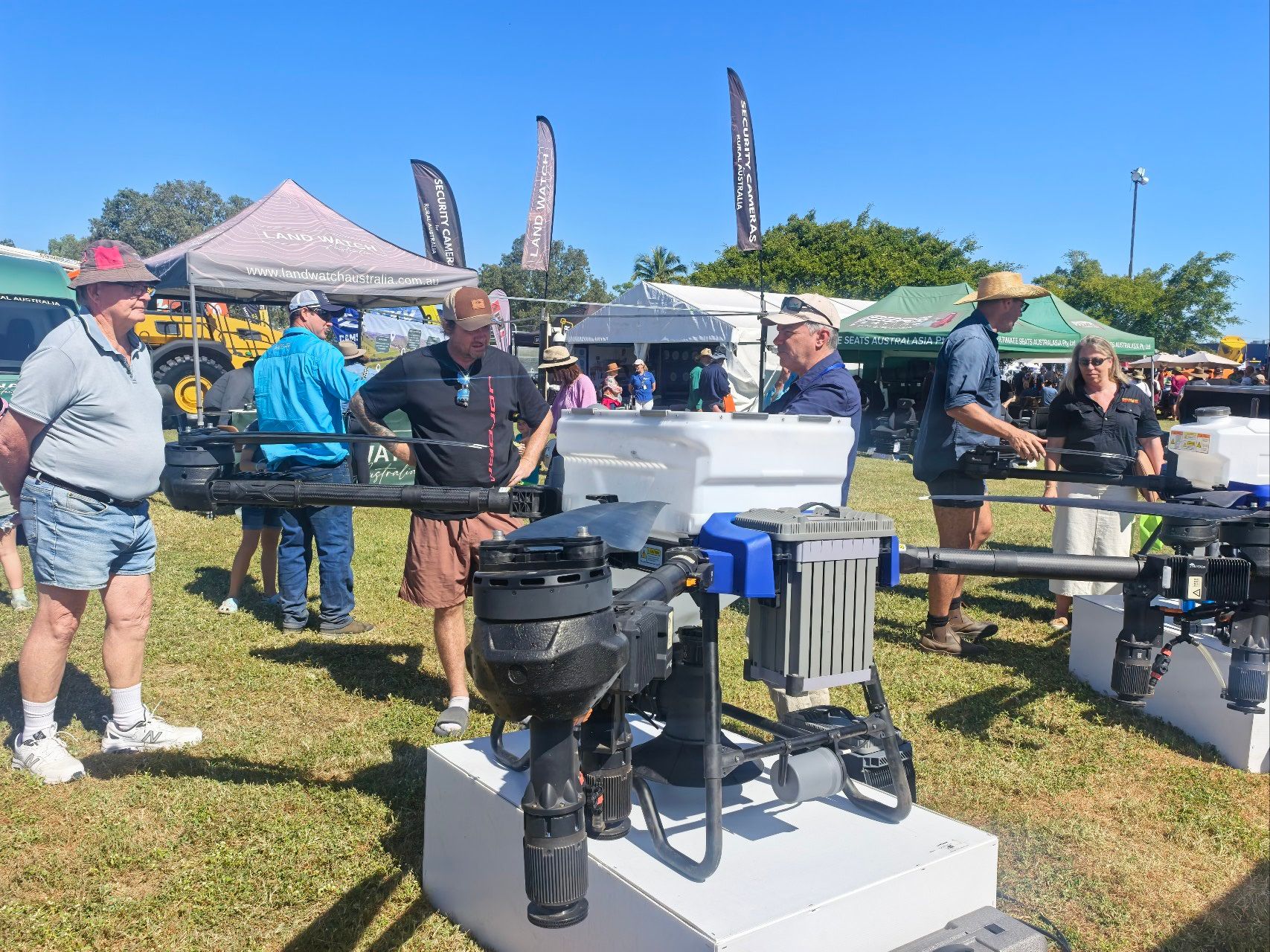
Tank size alone does not set the rate. Productive acres depend on application volume, effective swath, speed, refilling, battery rotation, field shape, and spray quality. A large drone that waits for water can cost more per acre than a smaller system with a smooth field workflow.
For larger fields and higher-capacity work, the EAVISION J150 uses a 70 L spray tank, up to a 15 m effective spray width, and fast battery charging. For solo operation or more compact jobs, the EAVISION J70 uses a 35 L tank and up to a 10 m spray width. Published specifications help plan a demo, but they do not guarantee an hourly or per-acre result.
Questions to Ask Before Accepting a Per-Acre Quote
- Is the chemical included, or is this application only?
- Is there a minimum job, travel charge, or mileage zone?
- Which acreage figure controls the invoice?
- What application volume, swath, and coverage check are included?
- Who supplies water, mixes product, and handles rinse or disposal?
- What records, maps, and proof of treatment will the farm receive?
- What happens if weather stops the job or a repeat pass is needed?
Related reading: Crop Spraying Drone Price Breakdown
Get a Drone Spraying Quote
Start with the base rate, but do not stop there. Put the treated acres, chemical responsibility, minimum charge, travel, application volume, coverage plan, records, and weather terms on one page. Then compare the complete invoice and the quality of the work. That is the number your farm will really pay.
If your business wants to provide local product demos, training, parts, and support for agricultural drone operators, apply to become an EAVISION dealer.
FAQ
How much does drone spraying cost per acre?
A useful U.S. planning benchmark is about $16 per treated acre for custom application. EAVISION cites a broader contracted range of roughly $15 to $21 per acre. Chemicals, minimum charges, travel, field complexity, and extra services may be additional.
Does the per acre rate include pesticides?
Often it does not. Custom service rates commonly exclude the material being applied. The quote should state who buys the product, supplies water, mixes, and handles rinse or disposal.
Why does a small field cost more per acre?
Travel, setup, field data collection, safety checks, mixing, cleanup, and records take time even when the field is small. A minimum job charge spread across fewer acres raises the effective rate.
When should a farm buy instead of hire?
Ownership may make sense with high repeat acreage, trained staff, reliable field logistics, and local support. In one University of Missouri model, ownership became competitive at about 980 sprayed acres per year, but every farm should recalculate the assumptions.