How Can a UAV for Farming Boost Your Crop Yields


A weak patch appears near the far edge of a field. Is it dry soil, insects, disease, or a blocked irrigation line? Walking the whole farm may take hours. Waiting until the damage is obvious can cost part of the crop. A UAV can show you where to look while there is still time to act.
That is the real value of a UAV for farming. It does not create yield on its own. It helps you protect yield by finding problems earlier, applying inputs more accurately, and finishing urgent work inside a short weather window. When those decisions improve, the crop has a better chance to reach its potential.
What Is a UAV for Farming
A UAV is an unmanned aerial vehicle. On a farm, it may carry an RGB, multispectral, or thermal camera. It may also carry a spray tank or a spreader. Mapping UAVs collect field data. Application UAVs deliver crop protection products, nutrients, or seed. Some operations use both as one workflow: map, verify on the ground, decide, and then treat.
The important word is workflow. A colorful map is not a recommendation, and a spraying drone is not a substitute for agronomy. The yield benefit comes when reliable field information leads to a timely, label-compliant action.
How a UAV for Farming Finds Crop Stress Earlier
Crop problems rarely begin evenly. Water stress may follow a soil zone. Disease may start in a humid corner. A nutrient issue may trace an old drainage line. Repeated UAV flights make these patterns easier to see than a single walk through the field.
RGB images can reveal gaps, lodging, storm damage, and changes in canopy color. Multispectral data can highlight differences in crop vigor that deserve closer inspection. Thermal imagery can help identify temperature patterns linked to water stress. The next step is still ground-truthing. Visit the flagged area, inspect plants, and confirm the cause before choosing a treatment.
That faster feedback loop matters. USDA research notes that in-season UAV imaging can help farmers measure crop health and estimate within-field yield variation before harvest. A recent review of 70 studies also found strong potential for high-resolution yield prediction, while warning that models must match the field scale and use good ground-truth data. In plain language: the image is useful, but the decision must be verified.
Why Timely UAV Spraying Can Protect Yield
A good product applied too late may still give a poor result. Wet soil can keep a ground rig out of the field. Tall crops can make wheel traffic damaging. Small or irregular fields may be awkward for larger equipment. A spraying UAV can often enter sooner and work without driving over the crop.
Penn State Extension highlights three practical advantages: better access to wet fields, less crop damage from wheel traffic, and more timely applications in small or irregular fields. Those advantages do not guarantee a larger harvest. They reduce the risk that weeds, insects, or disease get extra days to spread while equipment waits at the field edge.
How Precision Application Supports More Uniform Crops
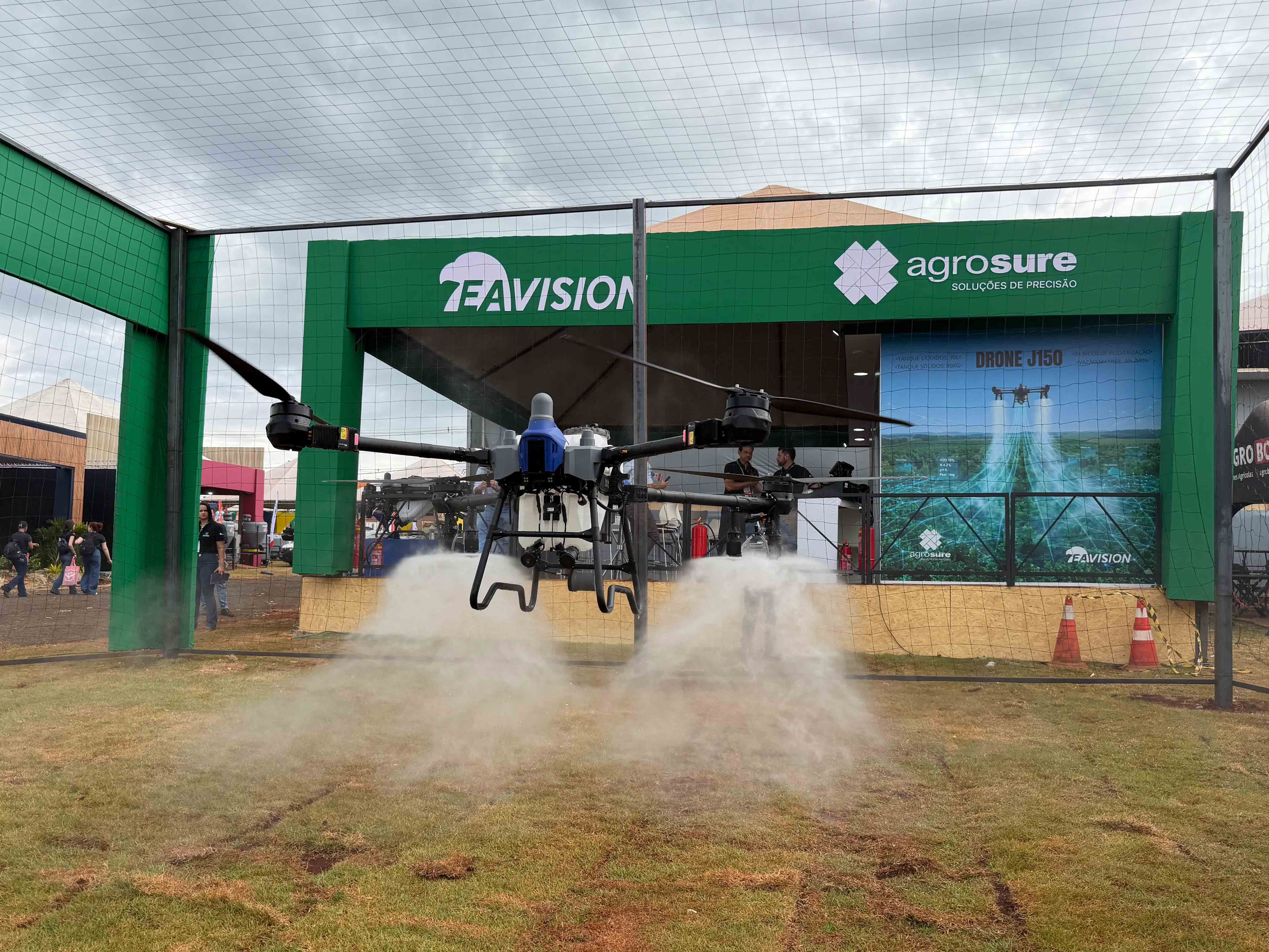
Consistency matters as much as speed. Missed strips leave pests untreated. Excess overlap wastes product and can raise crop or environmental risk. A capable farming UAV follows a planned route while controlling speed, height, flow, and swath. The goal is repeatable placement, not simply flying fast.
Droplet size, carrier volume, canopy density, wind, flight height, and route overlap all affect coverage. Penn State cautions that spray volume and height can influence efficacy, and that drift must be managed carefully. Always use a product that allows the intended aerial application. Follow the label, local rules, and weather limits. Calibrate with water-sensitive paper or another approved coverage check before treating the full field.
For a closer look at canopy penetration, read EAVISION's agricultural drone spraying solution. Its discussion of droplet control and rotor airflow shows why hardware settings must match crop structure.
Can a Farming UAV Reduce Crop Damage and Soil Compaction
Every ground pass has a physical cost. Tires can crush plants in established rows. Heavy equipment may compact wet soil. Repeated traffic can also create permanent lanes that produce less than the surrounding crop. Because a UAV works from the air, it avoids fresh wheel tracks during scouting, spraying, and some spreading jobs.
The benefit is especially clear late in the season, in soft fields, and in orchards or terraces where access is difficult. It also gives a grower another option for spot treatments. Instead of crossing an entire field to reach one problem area, the crew can plan a smaller mission and leave the rest of the crop undisturbed.
Related article: Precision Agriculture Drone vs Tractor: Which Is Better?
Which EAVISION UAV Fits Different Farm Conditions
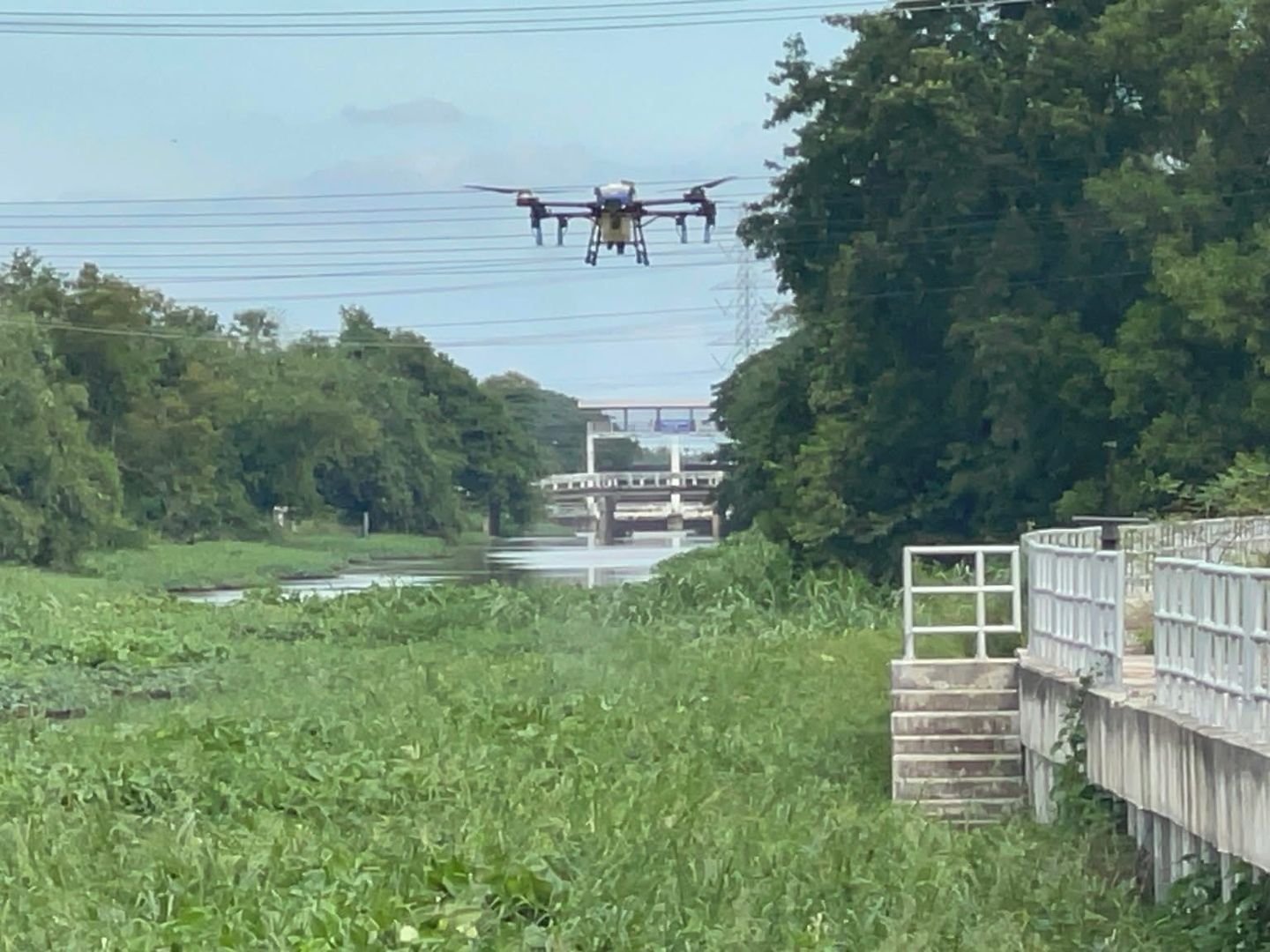
The right platform depends on the crop, terrain, application volume, field size, and crew. A compact system may be easier for a solo operator and fragmented fields. A larger platform can reduce refill stops on broad-acre work. Orchards and slopes put more weight on obstacle sensing, terrain following, and canopy penetration.
The EAVISION J70 uses a 35 L spray tank, up to a 10 m effective spray width, adjustable 10-300 micrometer droplets, and autonomous route planning. It is designed for single-operator workflows and mixed farm tasks.
The higher-capacity EAVISION J150 pairs a 70 L spray tank with a spray width of up to 15 m. Its terrain-following, obstacle-avoidance, and hybrid-droplet features are aimed at larger fields and complex canopies. Published specifications are planning inputs, not a promise of field output. Actual performance changes with application rate, crop, terrain, weather, and refill logistics.
How to Get Better Results From a UAV for Farming
Start with one repeatable job rather than trying to automate the whole farm at once.
1. Define the agronomic question. Decide whether you need scouting, spraying, spreading, or a linked workflow.
2. Capture a baseline. Record crop stage, weather, problem areas, and current application method.
3. Ground-truth every field data set. Inspect flagged zones before turning imagery into a treatment decision.
4. Calibrate the application. Confirm flow, swath, height, speed, droplet choice, and coverage for the target canopy.
5. Measure the result. Compare treated and untreated strips when practical, and track control, crop response, cost, and harvest yield.
For crop-specific examples, browse EAVISION's crop science research. The trials show why application parameters should change with crop stage, canopy, pest, and product rather than being copied from one farm to another.
How to Measure the Yield Impact
Do not judge the UAV only by acres per hour. Measure whether the operation solved the field problem. Useful records include application timing, treated area, spray volume, refill time, weather, coverage checks, pest or disease control, crop injury, and yield by strip or zone. Keep the comparison fair. The same crop, variety, field condition, and harvest method matter.
After a season, you should be able to answer three questions. Did the UAV help you act earlier? Did it maintain acceptable coverage? Did it protect enough crop or save enough input and labor to justify the cost? That evidence is more valuable than a generic yield claim.
Build the Workflow Before You Chase the Yield Number
A UAV for farming is most valuable when it shortens the distance between seeing a problem and fixing it. Start with a clear question. Verify the data. Calibrate the machine. Follow the label. Then measure what changed in the field. That is how a drone moves from an interesting aircraft to a useful crop-management tool.
If your business wants to sell, train, or support agricultural UAV users locally, apply to become an EAVISION dealer.
Frequently Asked Questions
Does a UAV for farming directly increase crop yield?
Not by itself. A UAV can support higher or more stable yields when earlier detection, timely treatment, accurate application, or reduced crop traffic prevents avoidable loss. Results depend on agronomy, calibration, weather, product labels, and operator skill.
What sensors are useful on a farming UAV?
RGB cameras are useful for visible scouting and field data collection. Multispectral sensors help compare crop vigor, while thermal sensors can reveal temperature patterns related to water stress. Choose the sensor from the decision you need to make, then confirm findings in the field.
Is UAV spraying suitable for every pesticide?
No. The product label and local regulator determine whether aerial or UAV application is allowed. The required rate, carrier volume, droplet size, buffer, weather limits, and personal protection rules still apply.