How to Choose the Right Agricultural UAV in 2026


Buying an agricultural UAV in 2026 isn't the same decision it was even two years ago. The agriculture drone market is estimated at USD 3.45 billion in 2026 and is projected to reach USD 14.42 billion by 2031, at a CAGR of 33.1%. More players, bigger payloads, smarter software, and a lot more noise to cut through before you write a check.
The "best" drone doesn't exist. The right one does. And it depends on your crops, terrain, scale, and the kind of support you'll need after the sale. We've learned that most buying mistakes come down to six overlooked factors.
Let's break them down.
Why the Agriculture UAV Market Is Growing So Fast
While manufacturers continue introducing larger platforms and new automation features, buyers are increasingly making purchasing decisions based on long-term productivity, operational efficiency, and support rather than just payload capacity.
Labor shortages and the need to reduce manual labor are accelerating drone adoption for spraying and surveying. Advances in AI, imaging, and sensors are making drones more effective and affordable, while supportive regulatory frameworks are helping adoption. But with more options comes more confusion. So before comparing product pages, get clear on what problem you're actually solving.
6 Factors to Consider When Choosing an Agricultural UAV
Here's what actually matters. These six factors will tell you more than any spec sheet.
Payload & Tank Capacity
Daily productivity depends on more than tank size. Battery workflow, refill time, dealer support, FAA requirements, and long-term ownership all affect how much work you can finish during a spray window.
Yes, a bigger tank means fewer trips back to refill. Our EA-J150 agriculture drone carries a 70L spray tank, which is nearly double the capacity of some competing models. In practical terms, that means fewer refill trips. But don't stop there. Every landing, tank refill, and relaunch eats 5–10 minutes. Over a full day of spraying, those minutes stack into hours. So look at the whole system, not just one number.
Terrain Handling Separates Good From Great
This is where most spec sheets fall short. A drone might look great on flat broadacre land but struggle the moment you put it on a hillside vineyard or terraced citrus grove.
EAVISION's J150 adjusts to terrain in real time, maintaining steady flight and consistent application even on hills and irregular ground. Built on automotive-grade LiDAR and a triple-radar array, it provides 360-degree environmental awareness, allowing the drone to master complex, high-difficulty terrains such as steep grass-covered terraces and dense orchards.
If you're farming flat wheat fields in the U.S. Midwest, honestly, most modern drones will get the job done. But if you're managing sugarcane on hillsides in Brazil, citrus groves in Southern Europe, or rice paddies with irregular borders in Southeast Asia? Terrain-following is the baseline.
Multi-Function Capability Saves You From Buying Three Machines
Modern farming UAVs aren't just sprayers anymore. The best platforms in 2026 handle spraying, spreading, lifting, and field data collection from a single airframe. That saves you from buying 3 separate machines.
Our J150, for example, supports:
- Spraying: 70L tank, 15m spray width, 40 L/min flow rate.
- Spreading: A 100L hopper with 80 kg dry capacity for granular materials.
- Lifting: A maximum lifting weight of 80 kg for transporting supplies across difficult terrain.
- Field Data Collection: A 2K fisheye FPV camera with electronic stabilization, automatic cloud backup, and seamless data transfer after landing.
If you're evaluating an agriculture UAV and it only sprays, ask yourself: will you need a second machine for seeding, fertilizer spreading, or field mapping within the next 12 months? Probably yes. Factor that into your cost calculation now.
Droplet Control Matters More Than You Think
Here's something most buyers overlook: not all spray systems are equal. The difference between good and mediocre pest control often comes down to droplet size and canopy penetration.
EAVISION has been pioneering proprietary nozzle technology since 2017. Our 4th-generation CCMS® bimodal mist nozzles feature a three-stage droplet fragmentation and dual-channel flow design. This allows our drones to consistently produce droplets as fine as 10μm.
Why does that matter? Four droplet sizes in a single flight, with each nozzle adjustable between 10–300 μm. Larger droplets coat leaf surfaces while smaller droplets fully penetrate the canopy underside, creating multi-layer coverage from canopy to core.
Farms may decrease their water use for spraying by up to 90% using drones for precise spraying and monitoring. That's not a small number. It directly affects your chemical costs and environmental footprint, both of which matter to regulators and buyers of your produce.
After-Sales Support
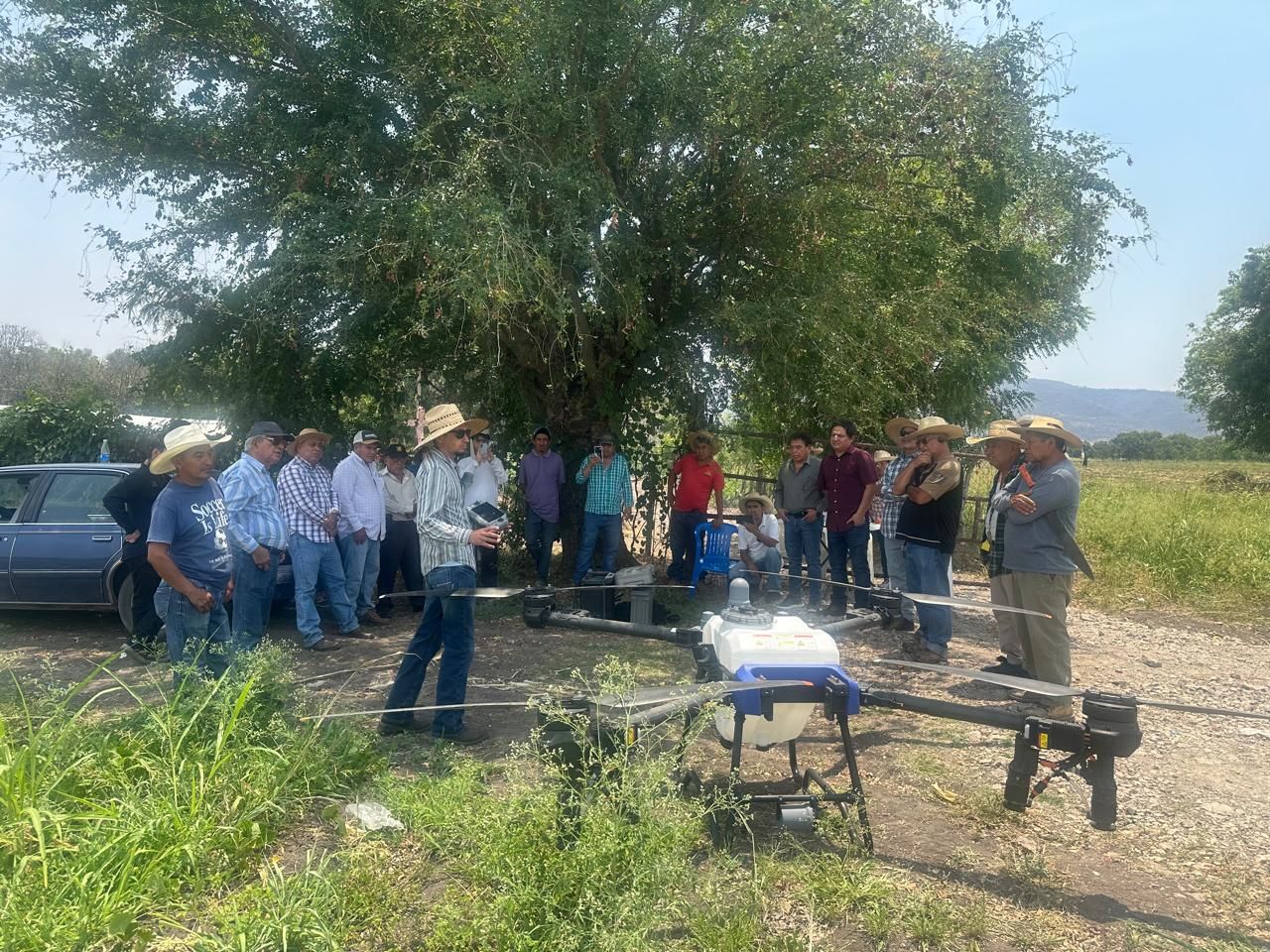
Dealer support has become a key buying factor. As crop spraying drones become long-term business investments, growers are placing greater importance on access to training, replacement parts, technical service, and ongoing product support to minimize downtime during critical application windows.
EAVISION has established a global presence across 36 countries and regions, including the United States, Japan, and Southeast Asia, with over 10 years of operations across 3 R&D centers, 2 production facilities, and 2 service centers. And we're actively expanding our dealer network. If you're interested in local support or becoming a partner, you can apply through our dealership program.
Before you buy any agriculture UAV, ask the manufacturer: "If this thing goes down mid-season, how fast can I get a replacement part?" If there's no clear answer, that's your answer.
Regulatory Weight Class
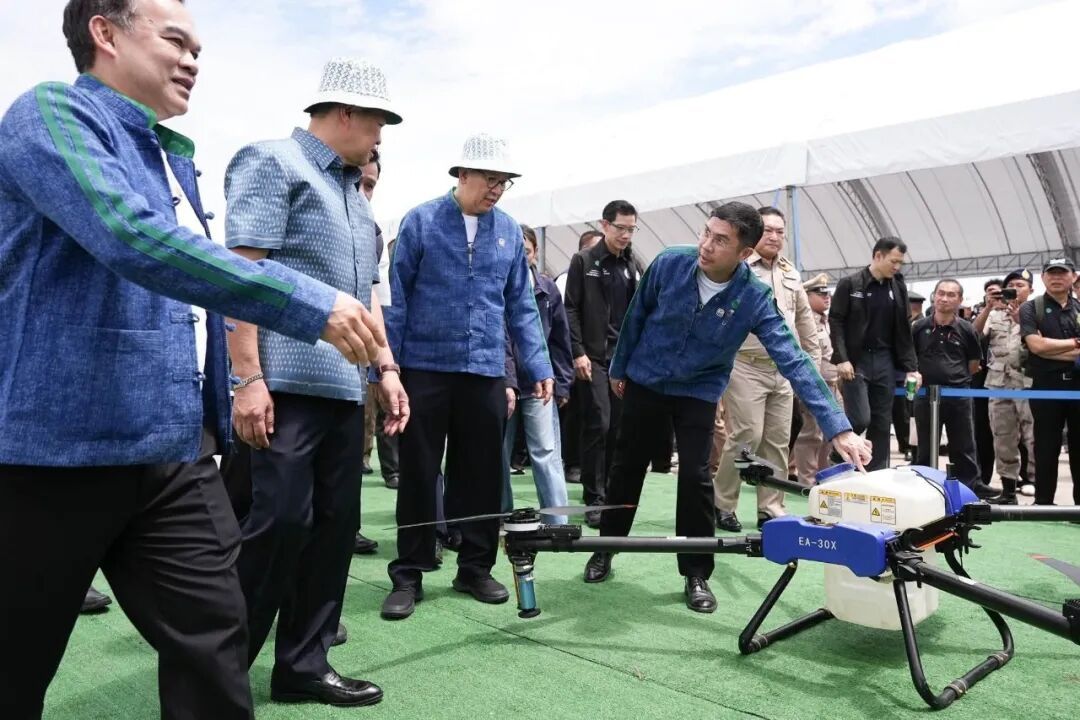
Here's one most people miss entirely. The J150 offers a 70L tank and 15 m spray width while staying under the 150 kg MTOW limit, reducing regulatory burden. Some competing models carry 100L but at 175 kg MTOW, requiring additional flight approvals in most countries.
In the U.S., you'll need a Part 137 agricultural aircraft operator certificate. Drones over 55 lbs fall into the FAA Section 44807 exemption category, which adds extra steps. Lighter platforms under 150 kg typically have a simpler approval path.
Those extra paperwork hours and approval delays? They translate directly to lost revenue during tight spray windows.
Quick-Reference: Agricultural UAV Buying Checklist
|
Factor |
What to Ask |
|
Payload & Tank |
What's the total cycle time (fill + fly + land + swap battery)? |
|
Terrain |
Can it handle slopes, terraces, and dense canopy? |
|
Multi-Function |
Does it spray, spread, lift, and collect field data? |
|
Spray Precision |
What's the droplet size range? Can it adjust mid-flight? |
|
Support Network |
How many dealers/service centers in my region? |
|
Regulatory Class |
What's the MTOW? Will it trigger extra certification? |
Ready to Choose an Agricultural UAV?
The agricultural UAV you pick in 2026 should fit your farm, not the other way around. Don't chase the biggest tank or the flashiest spec sheet. Think about your terrain, your crops, your season length, and who's going to pick up the phone when something breaks.
The best approach is to start with the hardest part of your operation, such as the steepest slope, the densest orchard, or the tightest spray window, and work backwards from there.
And if you want to see how our systems handle those exact challenges, we're always happy to talk.
FAQs
What is an agricultural UAV used for?
An agricultural UAV (unmanned aerial vehicle) is used for crop spraying, fertilizer spreading, field data collection, and crop health monitoring. These drones carry out various precision agricultural tasks, including aerial planting, crop spraying, field and soil analysis, and monitoring crop health and irrigation systems. Modern platforms like the EAVISION J150 also handle seed spreading and cargo lifting.
How much does an agricultural drone cost in 2026?
Prices range widely, from entry-level models around $2,000 to mid-range options between $6,000 and $14,000, up to high-end commercial platforms from $15,000 to $25,000+. For serious commercial spraying operations, expect to invest in the higher range. Factor in batteries, chargers, and training costs too.
Can agriculture drones work on hilly or uneven terrain?
Some can, but not all. Field tests highlight the J150's terrain-following capability, as the drone successfully navigated challenging grass-covered terraces with steep earthen steps used for erosion control, maintaining consistent altitude and spray coverage. Always ask for field performance data on terrain similar to yours before buying.
Do I need a license to fly an agricultural UAV?
In most countries, yes. In the U.S., you'll need at minimum an FAA Part 107 certificate plus a Part 137 agricultural aircraft operator certificate for commercial spraying.Regulations vary by country across Latin America, Southeast Asia, and Europe. Always check local requirements before purchasing.