Vegetable Drone Spraying: Foliar Fertilization and Pest Control Setup


Vegetable crops create a different spraying challenge from rice, orchards, cotton, or broadacre grains. They are often high-value, sensitive to residue and crop injury, and managed on tight spray schedules. A vegetable drone spraying program therefore needs more than a drone that can fly over the field. It needs the right product label, application volume, droplet setting, route plan, drift control, cleaning routine, and operator training.
This guide explains how drones can support two common vegetable workflows: foliar fertilization and pest control.
Why Vegetables Need a Different Drone Spraying Setup
Vegetable growers often work with many crop types, growth stages, and canopy structures. Leafy greens, cabbage, peppers, tomatoes, onions, cucurbits, brassicas, and root crops do not all behave the same under a spray drone. Leaf angle, waxiness, canopy density, plant height, and row spacing can change how droplets land and whether the target surface receives enough coverage.
Crop sensitivity is also important. Vegetable crops can show leaf spotting, burn, residue issues, or market-quality problems if a product is applied at the wrong rate, with the wrong adjuvant, at the wrong temperature, or during a sensitive growth stage. That is why vegetable drone spraying should be treated as a calibrated application method, not a generic drone service.
The strongest use cases are usually:
- Foliar fertilization when the crop needs fast nutrient support
- Insect or disease treatments when the pesticide label allows drone or aerial application
- Small or irregular blocks where large ground equipment is inefficient
- Wet fields where tractors may cause compaction or crop damage
- Service routes where one trained operator supports multiple growers
Before spraying, growers should confirm the product label, local pesticide rules, crop stage, weather, buffers, water volume, nozzle setup, and cleaning procedure.
1. Vegetable Foliar Fertilization Drone Workflows
A vegetable foliar fertilization drone workflow is different from spreading granular fertilizer. Foliar fertilization applies liquid nutrients directly to leaf surfaces. It may help correct short-term nutrient stress, support crop recovery, or supplement a soil fertility program, but it should not replace a full fertility plan.
For vegetable growers, the key questions are:
1. What nutrient problem is being solved?
2. Is the foliar product suitable for the crop and growth stage?
3. What application volume is needed for coverage?
4. What droplet size reduces drift while still reaching the leaf surface?
5. What temperature, humidity, and wind limits does the product require?
6. Is there a risk of leaf burn or residue on marketable parts?
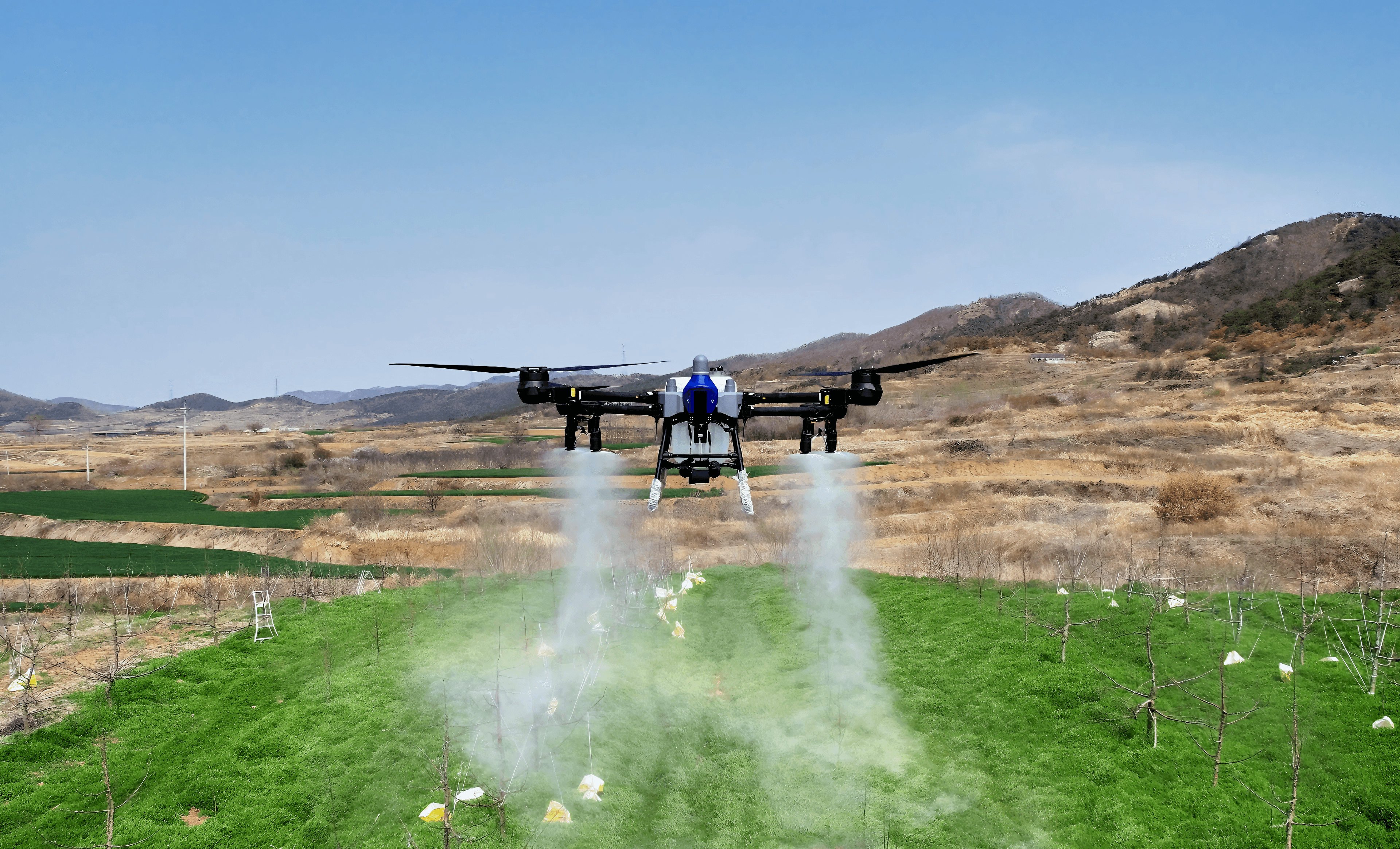
EAVISION J150 and J70 both show vegetable foliar fertilization as an application scenario.
Dealers should demonstrate vegetable foliar fertilization with water or an approved low-risk product first. Show route planning, refill workflow, spray cards, droplet setup, and cleaning. A grower should see not only that the drone can fly, but that the application process is repeatable.
2. Drone Pesticide Application for Vegetable Pest Control
Drone pesticide application in vegetables requires extra care because pest targets may sit under leaves, inside canopies, along field edges, or on tender new growth. Some vegetable pests are exposed and easier to reach. Others require more coverage and better canopy penetration.
Before any pesticide job, the product label is the first authority. The label should be checked for crop, pest, rate, water volume, application method, re-entry interval, pre-harvest interval, personal protective equipment, drift restrictions, buffer zones, adjuvant instructions, and weather limits. In the United States, EPA pesticide label and drift resources are useful general references, while local rules must still be confirmed.
For vegetable pest control, drone setup should consider:
- Target pest location on the plant
- Crop height and canopy density
- Droplet size and drift risk
- Application volume and swath width
- Wind speed and direction
- Neighboring crops and sensitive areas
- Worker safety and re-entry timing
- Cleaning before the next crop
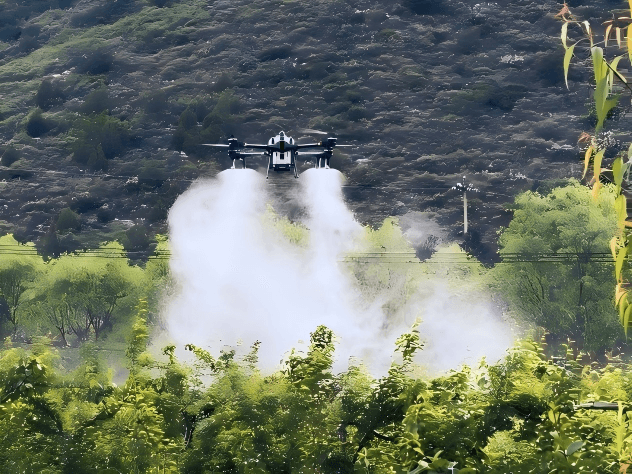
EAVISION's under-leaf pest control materials are relevant because many vegetable pests hide below leaf surfaces or inside canopies. A drone setup that only wets the top leaf surface may look good from above but fail the actual pest-control target. Growers should use coverage checks when testing a new crop or product.
Spray Setup: Volume, Droplet Size, Drift, and Crop Safety
Vegetable spraying should be planned as a setup process.
|
Setup Area |
What to Decide |
Why It Matters |
|
Product label |
Crop, pest, rate, method, PHI, REI |
Protects compliance and crop safety |
|
Volume |
Liters per hectare or gallons per acre |
Determines coverage and refill plan |
|
Droplet size |
Fine, medium, or coarser setting as allowed |
Balances coverage and drift |
|
Swath width |
Effective spray width in real field conditions |
Prevents skips and overlaps |
|
Flight route |
Boundaries, turns, obstacles, buffers |
Keeps application consistent |
|
Weather |
Wind, temperature, humidity, rain risk |
Reduces drift and crop injury |
|
Cleaning |
Tank, lines, nozzles, filters |
Prevents residue transfer |
Drift management is especially important in vegetables because neighboring blocks may be sensitive or close to harvest. Use buffer zones, avoid unsuitable wind conditions, choose label-compliant droplets, and keep records of weather, product, field, rate, pilot, and route.
Model Fit: J150 and J70 for Vegetable Farms
EAVISION J150 is better suited to larger vegetable operations, service providers, and dealers who need higher capacity. It offers a 70 L spray tank, high flow rate, wide spray capability, fast charging, and multi-scenario functions for spraying, spreading, lifting, and mapping. For contractors, J150 can support higher daily workload if the operation has enough batteries, chargers, refill workflow, and trained staff.
EAVISION J70 is a more compact option. With a 35 L spray tank, 24 L/min maximum flow rate, up to 10 m spray width, and vegetable foliar fertilization scenario support, it may fit smaller vegetable farms, tighter blocks, entry-level dealers, and demo programs.
The better model depends on field size, crop value, spray window, access, transport, battery workflow, and local service support. The largest drone is not always the best choice for vegetables. Consistency, crop safety, cleaning, and support can matter more than tank size alone.
Conclusion
Vegetable drone spraying can be valuable when it is treated as a precise crop application workflow rather than a generic flying service. Foliar fertilization and pest control both require crop-specific setup, label review, droplet control, drift management, coverage checks, cleaning, and maintenance.
FAQ
Can drones spray vegetable crops?
Yes, when the crop, product label, local rules, weather, crop stage, and setup are suitable. Vegetable drone spraying should be calibrated carefully because crop safety and residue requirements are important.
Is a vegetable foliar fertilization drone workflow different from pesticide spraying?
Yes. Foliar fertilization focuses on liquid nutrient application, while pesticide spraying targets insects, diseases, or weeds. Both require label review, correct volume, droplet setup, weather limits, and cleaning.
What makes drone pesticide application risky in vegetables?
Risk comes from wrong product use, off-label application, unsuitable droplet size, drift, excessive overlap, high temperature, sensitive crop stage, poor cleaning, or residue concerns near harvest.
Which EAVISION drone fits vegetable spraying better?
J150 fits larger service providers and high-workload farms. J70 may fit smaller blocks, compact farms, and entry-level dealers. The right choice depends on crop, field size, workload, and support needs.